
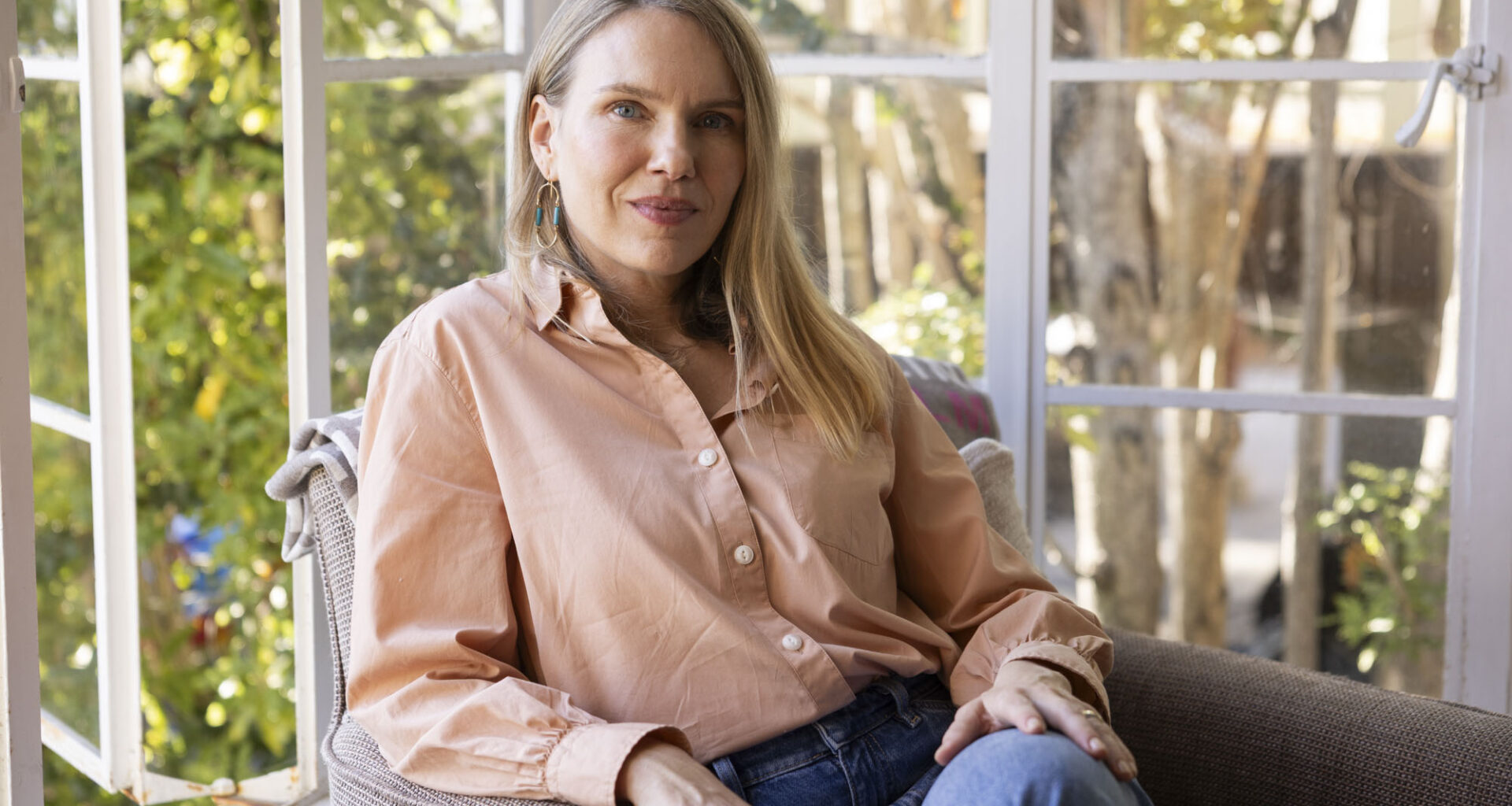
If the measure becomes law, it would require Medi-Cal and other large group health plans to cover scalp-cooling treatments.
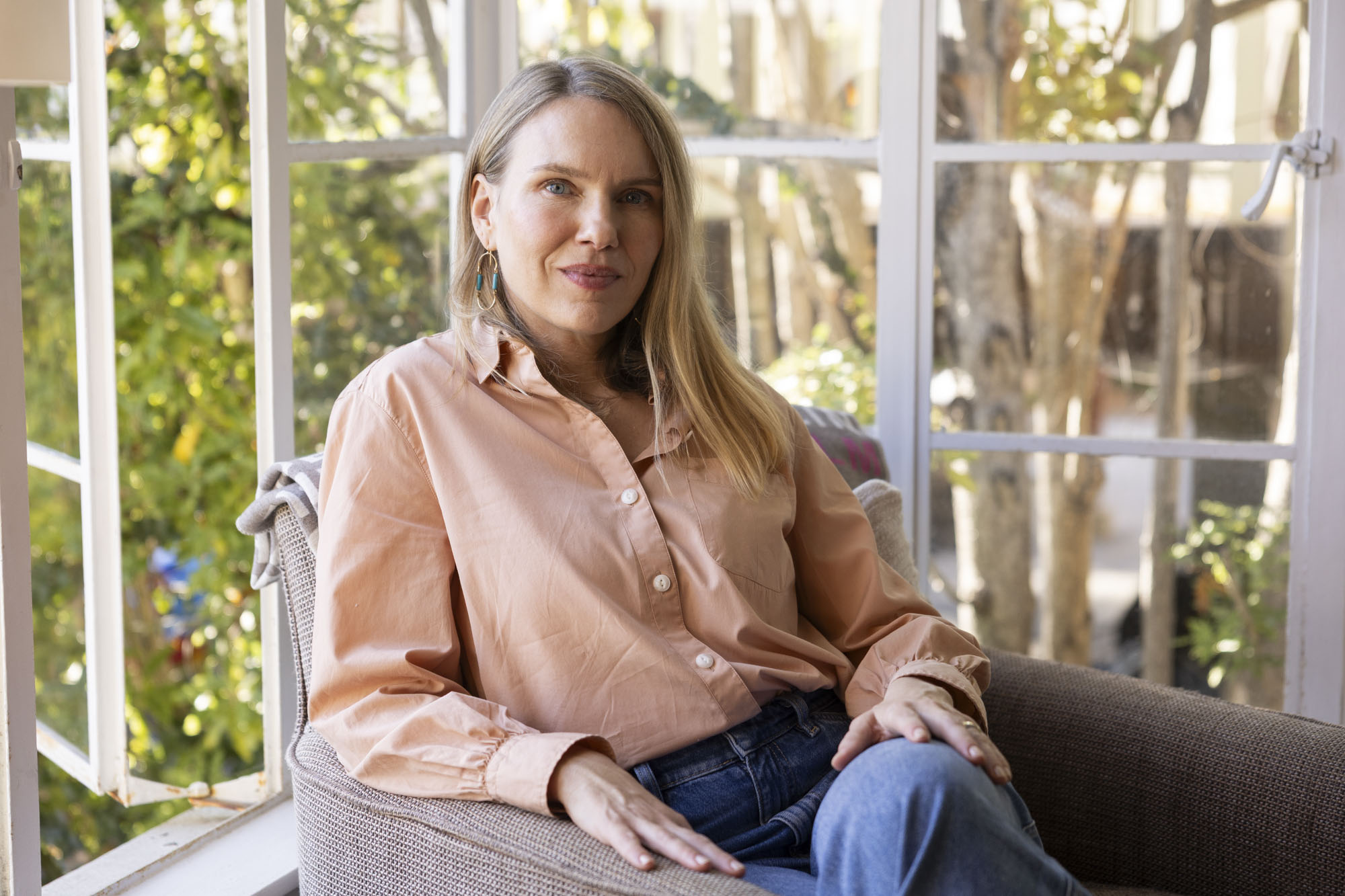
Cancer survivor Anna Karrer Manley poses for a portrait in her home in Oakland on Sept. 13, 2026. (Nina Glick/KQED)
Oakland mom Anna Karrer Manley remembers one of the hardest conversations she had two years ago.
She was 45 and had recently learned about her breast cancer diagnosis. She needed to share the news with her two kids, then ages 6 and 11, to prepare them for her battle with the disease — six rounds of chemotherapy and their most recognizable side effect, hair loss.
“My son had just started a new school in sixth grade, and he sheepishly asked me, ‘So, Mom, are you still gonna come to pick up?’” Karrer Manley said. “[My daughter] just cried because she didn’t want Mommy to change.”
Soon after her diagnosis, Karrer Manley joined a breast cancer patient support group, Bay Area Young Survivors, where she learned about scalp cooling, an FDA-cleared treatment that helps patients keep their hair through cooling caps, which can be worn before, during and after chemotherapy infusions. The technology helps restrict blood flow and reduce the amount of medication that reaches the hair follicles. The vast majority of people who use scalp cooling, like Karrer Manley, are battling breast cancer, according to research presented at the American Society of Clinical Oncology in 2021.
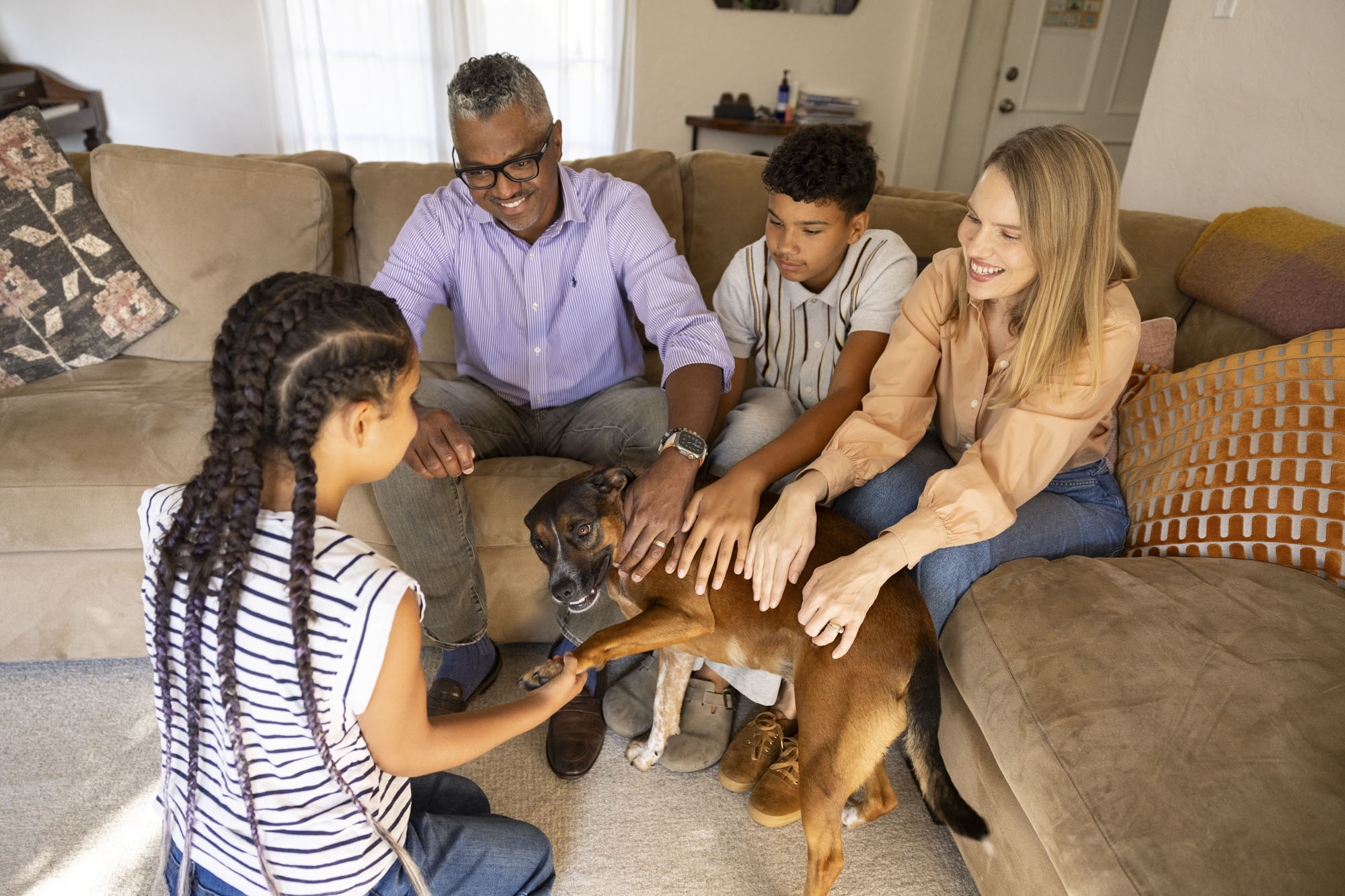 Ines (from left), Stacey Manley, Etienne, Anna Karrer Manley, and their chemo puppy, Asa, at their home in Oakland on Sept. 13, 2026. (Nina Glick/KQED)
 Anna Karrer Manley shows strands of her hair that grew back darker and curlier after falling out during chemotherapy.
 Anna Karrer Manley holds a photo of herself wearing a cold cap at her home in Oakland on Sept. 13, 2026.
The technology wasn’t covered through insurance, but Karrer Manley said she and her husband scraped around $5,000 to pay for the treatment. (She returned to work part time during treatment.) The cooling caps allowed her to keep 70% of her hair, she said.
Her vibrant complexion and beyond-shoulder-length hair belie the difficult journey of survival — and advocacy — she’s undertaken. Karrer Manley has since joined survivors, medical professionals and public health advocates calling for the passage of AB 1682, which is currently on Gov. Gavin Newsom’s desk, that aims to make automated mechanical scalp-cooling devices more accessible, beginning in 2027.
“To move about the world during chemo treatment with your hair and not everybody realizing what’s going on with you or staring at you, I think that’s really meaningful and important, and it has such an impact on your mental health,” said Karrer Manley, sitting at her dining room table alongside Asa, the “chemo puppy” she adopted for treatment support. “You know, cancer takes so much from you, it really robs so much of you, but at least I had a little bit of hair.”
 Anna Karrer Manley (center) with her children Etienne (left) and Ines (right) at their home in Oakland on Sept. 13, 2026. (Nina Glick/KQED)
 Anna Karrer Manley walks her dog, Asa, whom she got while she was undergoing chemotherapy, near her home in Oakland on Sept. 13, 2026.
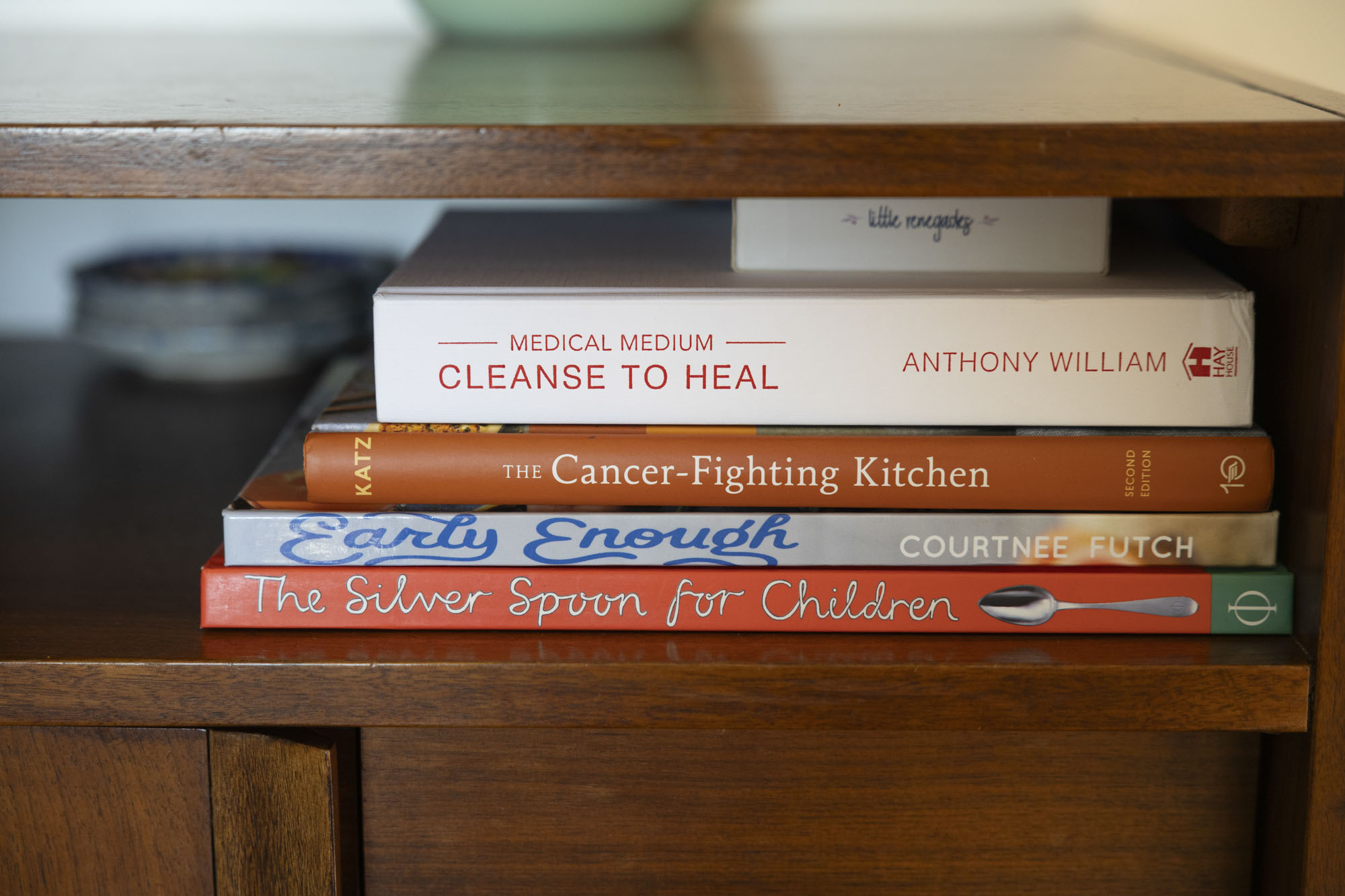 Cookbooks, including The Cancer-Fighting Kitchen: Nourishing, Big-Flavor Recipes for Cancer Treatment and Recovery, in Anna Karrer Manley’s home in Oakland on Sept. 13, 2026.
The insurance lobby group California Association of Health Plans has opposed the measure, arguing that Californians are facing a health care affordability crisis, citing a health tax redesign recently approved by the governor that the California Medical Association, a physician advocacy group, has warned could pass through to consumers in the form of higher premiums.
“At the same time, six additional health care mandates, including AB 1682, have been sent to the governor for his signature that will altogether increase premiums by more than $170 million, piling on even more health care costs for working families across the state,” the CAHP said in a statement.
The governor’s office declined to comment on bills pending action from Newsom by a Sept. 30 deadline. He is no stranger to the disease, as he has previously spoken about being with his mother during her assisted suicide in 2002 after her yearslong battle with breast cancer.
Karrer Manley hopes that he will advocate for supportive cancer care for people who otherwise cannot afford it.
“There are just too many people impacted by cancer, and yet the fiscal impact is so small,” she said.