
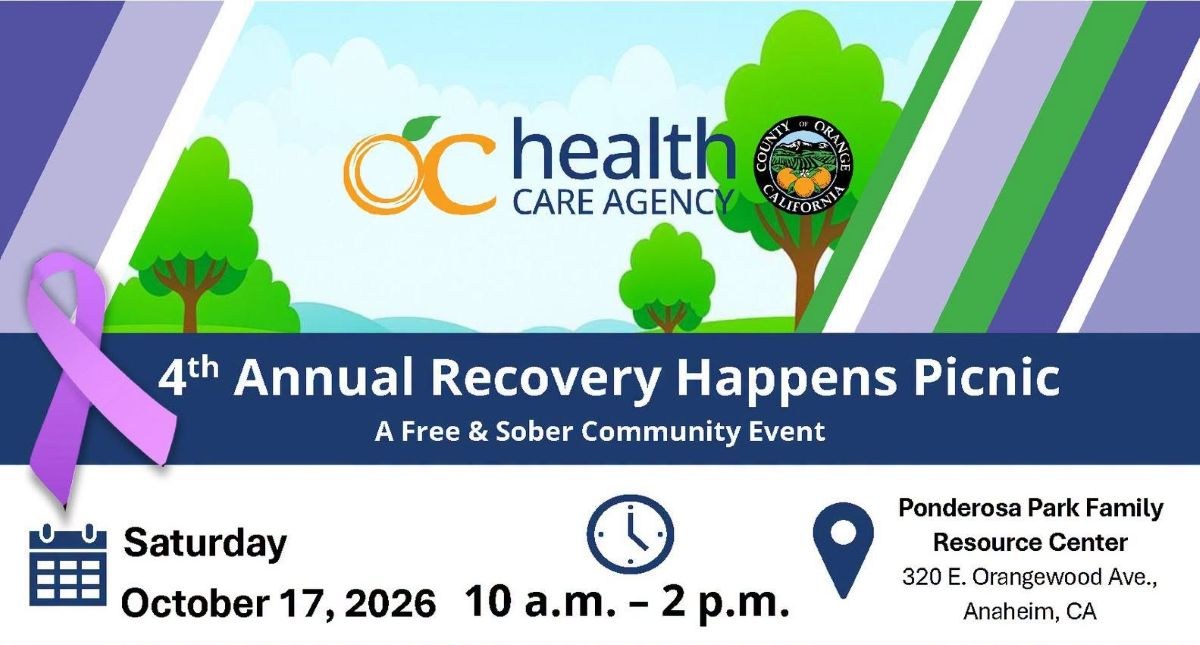
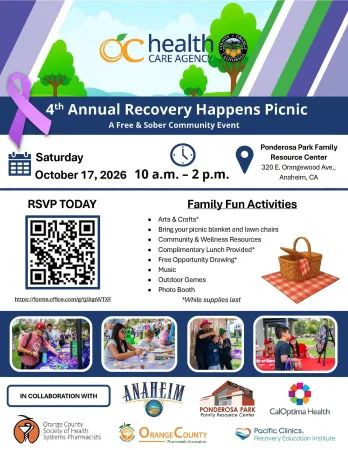
The OC Health Care Agency is promoting its 4th Annual Recovery Happens Picnic, a free, sober, family‑friendly community event scheduled for Saturday, October 17, 2026, from 10 a.m. to 2 p.m. at the Ponderosa Park Family Resource Center in Anaheim.

The event celebrates recovery, connection, and wellness with arts and crafts, outdoor games, music, a photo booth, community resources, and complimentary lunch (while supplies last). RSVP link: https://forms.office.com/g/tjJJqpWTXF.
Alcohol and Drug Abuse Trends in Orange County
Recent public‑health data shows that substance‑abuse remains one of the most persistent behavioral‑health challenges in Orange County. Alcohol continues to be the most widely misused substance, followed by methamphetamine, opioids, and cannabis. Countywide indicators show:
Alcohol‑related ER visits exceed 10,000 per year, with steady increases since 2020.
Drug‑related ER visits surpass 8,000 annually, driven largely by methamphetamine and fentanyl.
Fentanyl‑related deaths increased more than 600% between 2018 and 2025, making synthetic opioids the fastest‑growing cause of accidental death in the county.
Methamphetamine remains the top drug cited in OC treatment admissions, accounting for more than 40% of all entries into publicly funded programs.
Estimating How Many OC Residents Are in Recovery
Recovery is difficult to quantify because many individuals participate in private programs, faith‑based groups, or informal support networks. However, using treatment‑admission data, recovery‑program enrollment, and national recovery‑prevalence estimates:
Orange County has approximately 3.2 million residents.
National surveys estimate 7–10% of adults are in active recovery from substance‑use disorders.
Applying that range locally suggests 225,000 to 320,000 OC residents are currently in some stage of recovery, whether through formal treatment, peer support, or long‑term sobriety.
This population includes individuals recovering from alcohol misuse, opioid addiction, methamphetamine dependency, and polysubstance use.
Impact of Alcohol and Drug Abuse on Families and Communities
Substance‑abuse affects far more than the individual user. In Orange County, the ripple effects are visible across neighborhoods, schools, and workplaces.
Families experience:
Increased domestic conflict and instability
Financial strain from medical bills, legal issues, and lost income
Emotional trauma for children exposed to addiction
Higher risk of homelessness or housing insecurity
Communities experience:
Higher rates of DUI crashes, public intoxication, and drug‑related arrests
Strain on emergency rooms, behavioral‑health clinics, and first responders
Increased homelessness tied to untreated addiction
Reduced quality of life in areas with open drug use or chronic alcohol‑related disorder
Events like the Recovery Happens Picnic aim to counter these impacts by strengthening community support systems and celebrating individuals who have rebuilt their lives.
OC Cities With the Most Alcohol Retailers
Alcohol availability is a major environmental factor influencing consumption and related harms. Based on ABC licensing data and municipal business‑license counts, the cities with the highest concentration of liquor stores, markets, bars, and other alcohol retailers include:
Anaheim – largest number of total alcohol licenses due to tourism, sports venues, and dense commercial corridors
Santa Ana – high concentration of small markets and liquor stores in residential and mixed‑use areas
Huntington Beach – large number of bars and restaurants tied to coastal nightlife
Garden Grove – significant number of retail outlets and banquet halls
Fullerton – heavy bar density around downtown and college‑area nightlife
These cities consistently rank at the top for alcohol‑license volume, which correlates with higher alcohol‑related calls for service and DUI enforcement activity.
Key Recovery and Support Resources in Orange County
Below is a list of reputable recovery, treatment, and harm‑reduction resources serving Orange County residents:
Related
Post navigation