
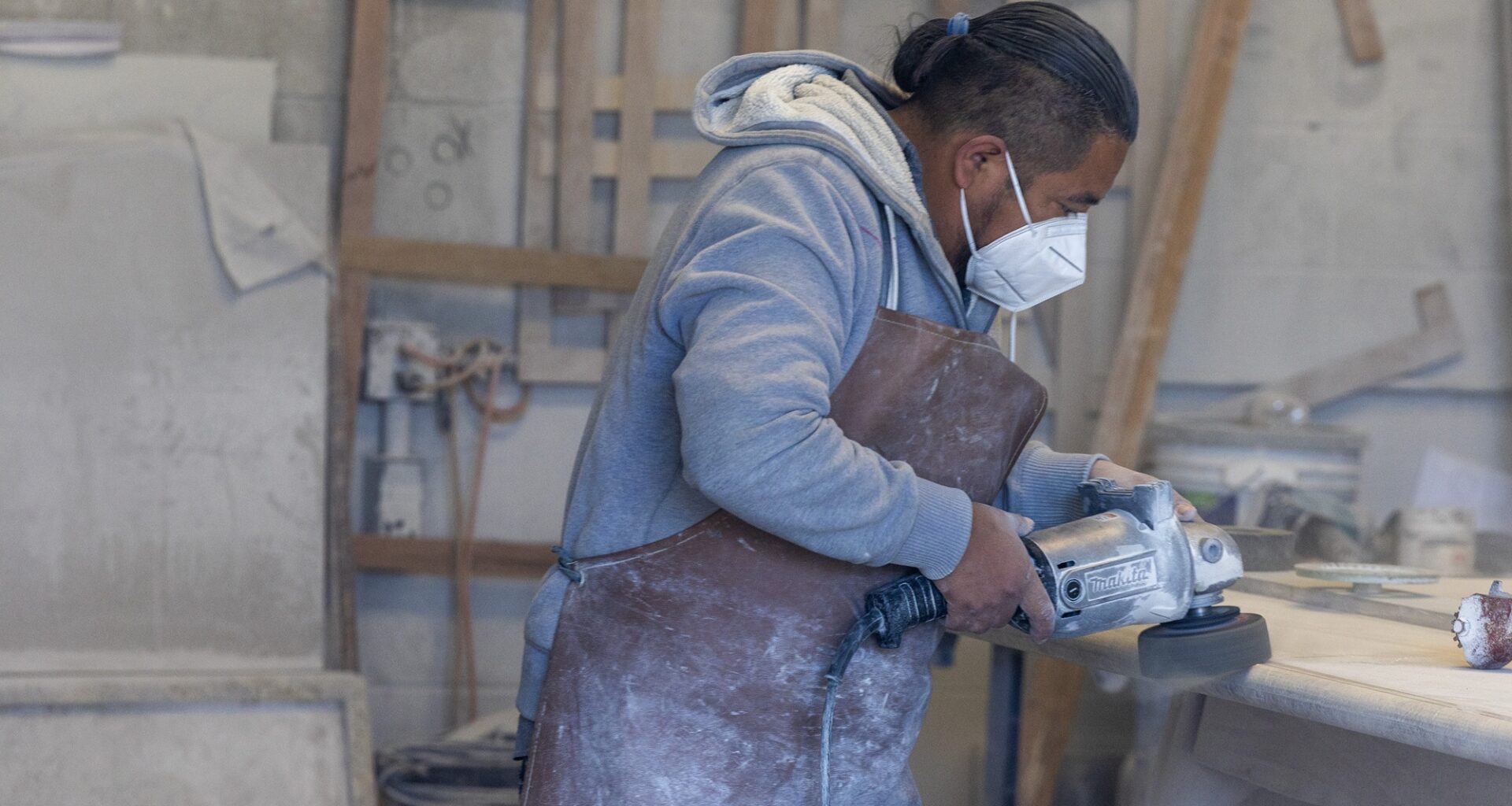
The Cal/OSHA draft would give fabrication shops nearly six months to phase out inventory of the popular countertop material, which is linked to a deadly lung disease among stonecutters.
Sep 18, 2026
Updated 9:26 am PT
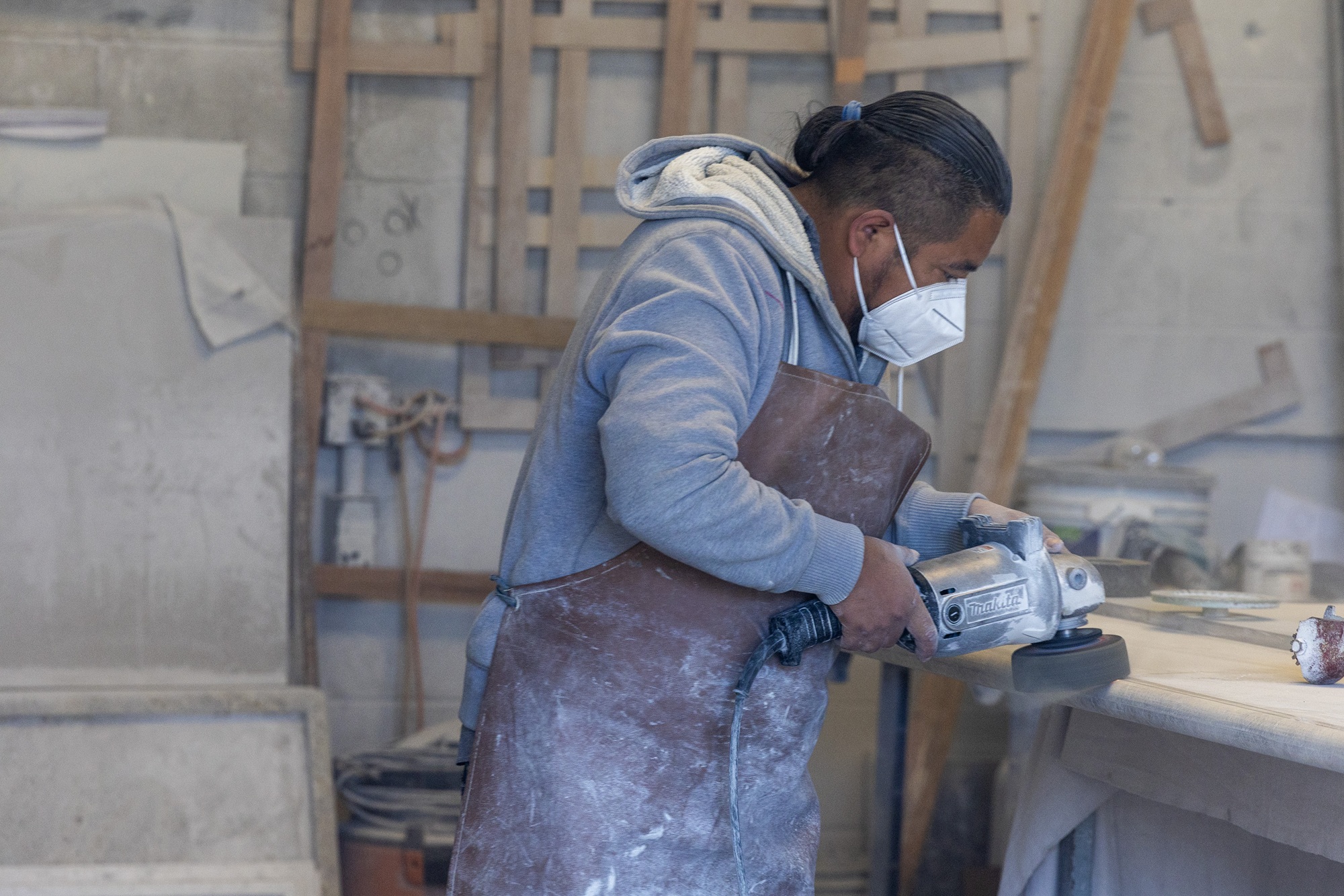
A stone countertop fabricator wears a mask to help protect against airborne particles, which can contribute to silicosis, at a shop on Oct. 31, 2023, in Sun Valley, California. (Brian van der Brug/Los Angeles Times via Getty Images)
California workplace regulators pushing to ban the use of a popular countertop material linked to a deadly lung disease released on Wednesday a proposed roadmap, the nation’s first.
Cal/OSHA’s discussion draft would give fabrication shops nearly six months from the date a final rule goes into effect to phase out their use of artificial stone with more than 1% crystalline silica, common in kitchen and bathroom countertops and other construction surfaces.
The factory-made slabs, also known as quartz or engineered stone, release ultra-toxic silica particles that have sickened more than 650 stoneworkers who inhaled them while cutting or polishing the material, according to the California Department of Public Health.
Dozens of Latino men, often immigrants who didn’t know about the dangers of handling engineered stone until they got sick, have undergone lung transplants or died from silicosis since 2019.
Cal/OSHA officials estimate that without a prohibition, about 1,000 more silicosis cases will develop over the next two years in California, the only state actively tracking the disease in the multi-billion-dollar industry.
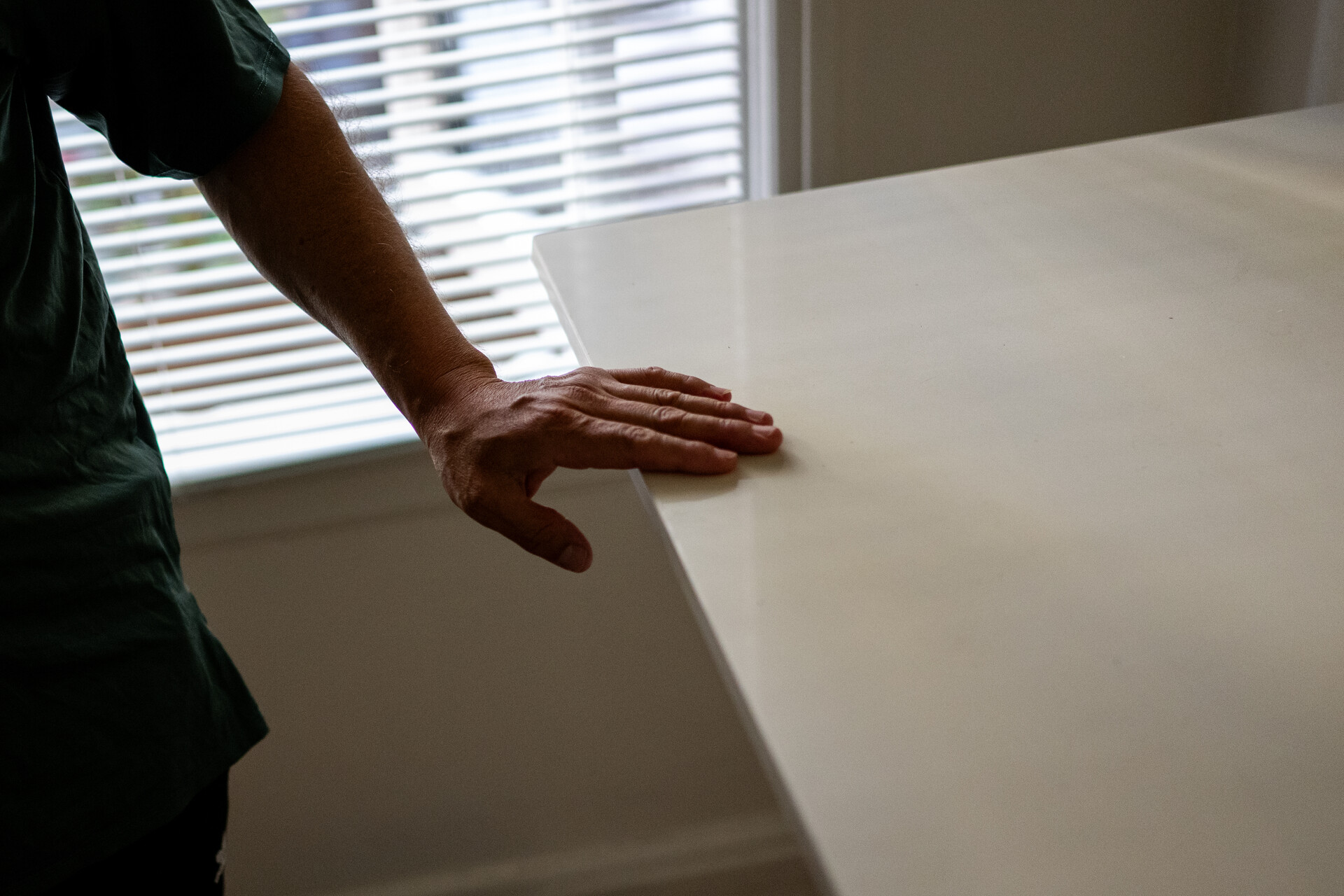 Jorge Moreno places his hand on a table that he cut at his home in San Francisco on Oct. 17, 2023. (Beth LaBerge/KQED)
“I hope that we will look back at Cal/OSHA’s emergency standard as the beginning of the end of this terrible quartz countertop silicosis epidemic,” said David Michaels, a former head of federal OSHA who teaches at the George Washington University School of Public Health.
Consumers prefer quartz to lower-silica natural stones because it’s cheaper, stain-resistant and designed in attractive palettes. But its skyrocketing popularity has coincided with a deadly silicosis trail among stoneworkers in countries like Israel, Spain, the United Kingdom and Australia, which became the first to prohibit the material’s import, supply and fabrication in 2024. Australia’s ban triggered cost increases and supply chain delays in the construction industry, according to some reports, but warnings that residential and commercial development would collapse have not proven to be true.
Some large manufacturers developed alternatives made with amorphous silica, which is considered safer for stonecutters. Public health experts like Michaels believe that California’s proposed ban would encourage more big box stores, designers and consumers to opt for safer alternatives for the workers who shape and install countertops.
 Eleazar Resendiz Cortes’ wife shows scans of his chest in their home on Thursday, May 14, 2026, in Bakersfield, California, that revealed particles around his lungs linked to his silicosis diagnosis. (Julie Leopo for KQED)
Nate Kolenski, president of Black Tops Countertop Surfaces in Sacramento, told Cal/OSHA staffers at a July public meeting that his company has two years’ worth of inventory already stockpiled, valued at $1 million or less. He said the state should consider a buy-back program, akin to those related to guns, to minimize financial losses.
“If the state wants to ban this product, they should be buying back our inventory because we’ll have no use for it. It will be worthless, and thousands of fabricators will have the same situation with inventory and capital that’s sitting out there that they won’t get,” said Kolenski, who opposes a prohibition. “Plus we’ll have to buy the new product.”
The state’s plan comes as major manufacturers of high-silica quartz have pushed for a bill in Congress that would dismiss hundreds of lawsuits against them by sick stoneworkers seeking damages. Most of the handful of cases that have reached trial resulted in multi-million-dollar verdicts for workers or their families.
The largest U.S. manufacturer, Cambria, fought efforts by worker advocates and doctors to get California to take steps toward a prohibition, maintaining that their products can be handled safely if the proper precautions are followed. But growing evidence shows that the dust generated when cutting or polishing artificial stone is so toxic that it can sicken people at sophisticated fabrication shops following Cal/OSHA’s current rules, which prohibit dry cutting of the material and require advanced respiratory protection.
A representative for Cambria did not immediately return a request for comment.