
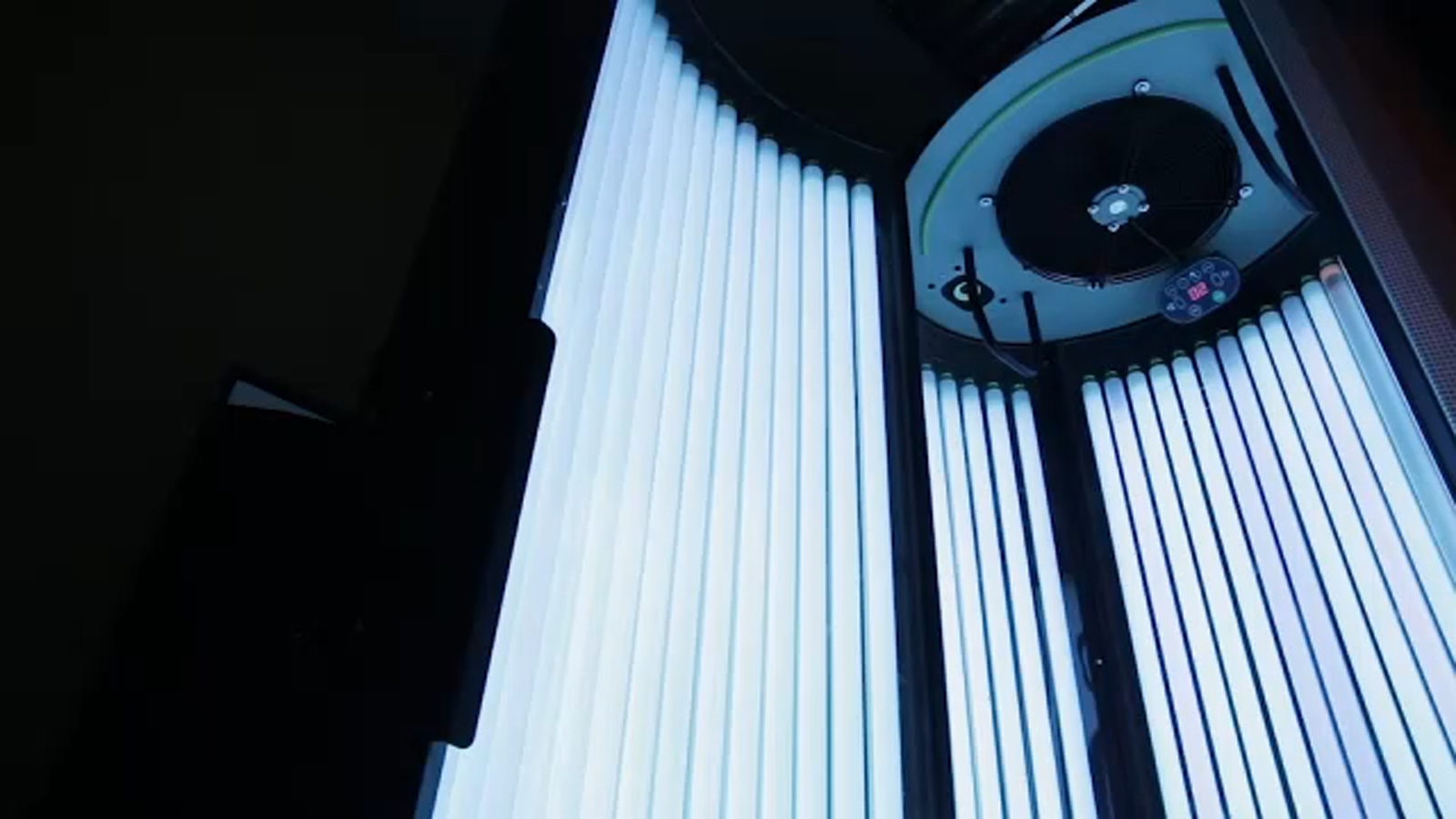
FRESNO, Calif. (KFSN) — Some local doctors say they are seeing a resurgence in the use of tanning beds, particularly among young people, and are warning about the health risks associated with indoor tanning.
According to local dermatologists, exposure to ultraviolet, or UV, radiation at a young age can increase the risk of developing skin cancer later in life. California law prohibits anyone under 18 from using indoor tanning beds and booths, even with parental consent.
“This is about helping young people understand that tanning isn’t harmless. It is UV exposure, and it causes cumulative skin damage,” said Dr. Catherine Manabalt, a dermatologist with Kaiser Permanente in Fresno.
Dr. Manabalt said tanning beds can increase the risk of skin cancer and contribute to premature skin aging by breaking down collagen, causing wrinkles, sunspots and uneven pigmentation.
“Tan skin is actually a response to the U.V. damage already. Your skin produces more pigment as part of its response to that injury. The color may look healthy, but the process producing it isn’t healthy for the skin at all,” Dr. Manabalt said.
According to the American Academy of Dermatology, using indoor tanning beds before age 20 increases a person’s risk of developing melanoma, a deadly form of skin cancer, by as much as 47%.
“We know that for this year, there are going to be 112,000 people in the U.S. who are expected to be diagnosed with invasive melanoma. And more than 8,500 are expected to die from melanoma itself,” Dr. Manabalt said.
She warns users that using base tan is also not a protective shield.
“A lot of people think that a base tan before vacation will protect them from sunburn. That’s actually a myth and doesn’t make UV exposure safe. It provides very limited protection and doesn’t prevent the underlying DNA damage caused by UV radiation, so you’re essentially accumulating UV damage before vacation even starts.” Dr. Manabalt said.
For those who already use tanning beds, Dr. Manabalt said it is never too late to make healthier choices for their skin. She recommends sunless tanning products as an alternative.
“You can get those over-the-counter tanning products that can mimic a tan. Lotion and moisturizer and such without exposing your skin to the U.V. radiation,” Dr. Manabalt said.
Dr. Manabalt said protecting skin can be as simple as following three steps: seeking shade, wearing protective clothing and using sunscreen.
“Use a broad-spectrum, water-resistant SPF 30 or higher. Reapply about every two hours when you are outdoors and after swimming or sweating, and avoid tanning beds altogether,” Dr. Manabalt said.
For news updates, follow Danyelle Burke North on Instagram and TikTok.
Copyright © 2026 KFSN-TV. All Rights Reserved.