
Efforts to boost housing construction in San Diego have hit a potential setback: the San Diego Housing Commission refuses to stop charging a hefty fee that discourages developers by making projects more expensive.
Critics say the Housing Commission’s stance could stymie some potential local projects and persuade housing developers to shift their focus to projects elsewhere in California where the fee isn’t being charged.
A 2024 state law prohibits local governments from charging the income-eligibility “monitoring” fee that the Housing Commission wants to continue charging.
The law – Assembly Bill 2430 – seeks to eliminate unnecessary and redundant income monitoring. It only applies if all the units in a project are rent-restricted, because the state already monitors whether each tenant living in such state-subsidized projects is income-eligible.
The law’s author, Assemblymember David Alvarez, D-San Diego, says the goal is reducing the notoriously high cost of building subsidized housing by eliminating one of the many unusual fees that come with such projects.
“No project should be charged two times for the same bureaucratic review,” Alvarez said Friday.
But the Housing Commission contends the law doesn’t apply to it based on a technicality. The commission says the law explicitly applies to cities and counties, arguing that a city commission like itself is exempt.
Housing Commission officials also argue that the fee is justified because the commission’s version of income-monitoring is more rigorous than the state’s, making such local monitoring crucial to ensuring subsidized apartments are occupied only by eligible tenants.
There’s a lot at stake.
The fee, $163 per unit per year, adds up to nearly $50,000 per year for a 300-unit project. And over the course of such a project’s rent restrictions – almost always 55 years – the total fees collected would exceed $7 million.
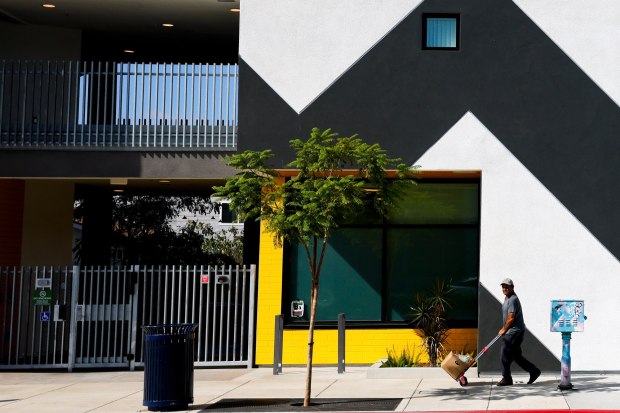 A person walks past Cuatro at City Heights Apartments at 4050 El Cajon Blvd. The apartments are part of the affordable housing development funded in part by the city of San Diego’s Bridge to Home Program. The San Diego Housing Commission refuses to stop charging a hefty fee that discourages developers by making these types of projects more expensive. (Meg McLaughlin / The San Diego Union-Tribune)
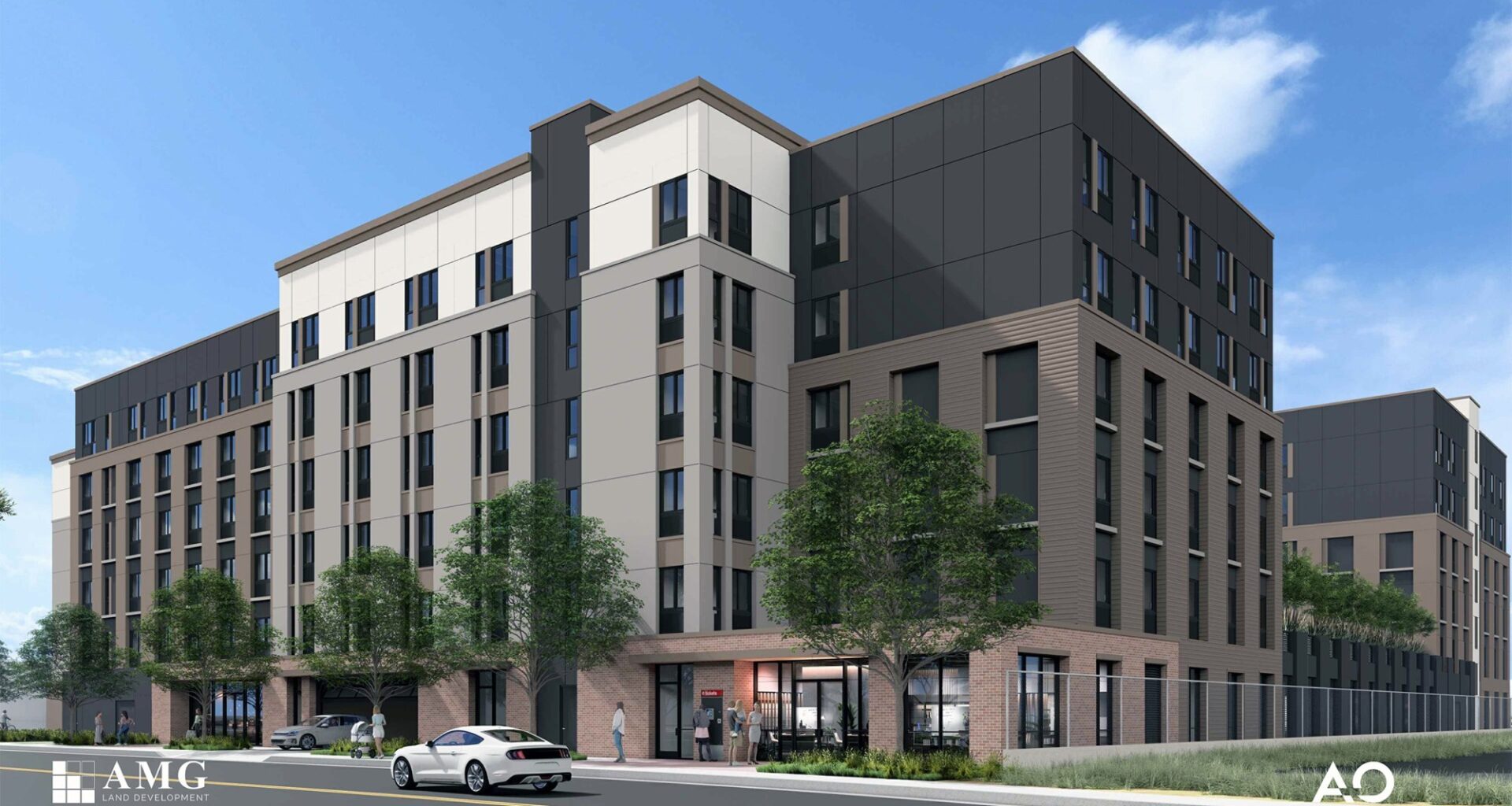
That kind of money can make a real difference in whether a project gets built, said developer Gene Broussard, whose 330-unit Trolley Stop Apartments in San Ysidro has become a test case for the feud between Alvarez and the Housing Commission.
“This is a pretty serious matter,” Broussard told the Housing Commission during its meeting last week. “It’s a tax on affordable housing. Other developers are going to look at this – it’s not easy to get these projects out of the ground.”
In a phone interview Friday, Broussard said the fee amounts to somewhere between $700,000 and $1 million in higher up-front costs because it affects a project’s financing.
“They are creating financing gaps that are significant,” he said.
He estimated that roughly one-third of new housing projects in San Diego are affected by the ongoing dispute because they are projects where all the units would be rent-restricted.
Broussard, whose company AMG Land Development pursues projects across the state, said AB 2430 is being honored everywhere else in California.
Broussard is moving forward with his project in San Ysidro despite the Housing Commission’s insistence on charging the fee. But his attorney filed a protest in August under the state Mitigation Fee Act in an attempt to get the fee waived.
Lisa Jones, chief executive of the Housing Commission, says the commission is exempt from AB 2430 because of what she calls “unique legal circumstances in the city of San Diego.”
Referring to the Housing Commission as SDHC, she points out that the language of AB 2430 prohibits only “a city, county or city and county” from charging a monitoring fee.
“SDHC is neither a city nor a county,” she said in an August letter to Alvarez. “We are a public agency formed under the Housing Authority law of the State of California.”
She contends the commission is separate from the city.
“SDHC, the city of San Diego and the Housing Authority of the city of San Diego are all separate, individual legal entities,” she said. “Additionally, SDHC is not a department of the city of San Diego or the county of San Diego, and our staff are not city of San Diego or county of San Diego employees.”
Alvarez strongly disagrees with the commission.
He stressed in a recent letter that the commission was created by the city in 1979 to administer the city’s housing programs, making it clearly an arm of the city and clearly subject to the requirements of AB 2430.
He said exempting city or county commissions from the law makes no sense.
“This would allow any city to insulate its monitoring fee practice simply by routing fee collection through an affiliated public body, a result the Legislature plainly did not intend,” he said.
He also noted that the Housing Commission lobbied aggressively against the law while he was working through the details two years ago.
“The commission retained Lighthouse Public Affairs, a Sacramento lobbying firm, to engage directly with my office and seek amendments to the bill,” he said. “An entity that does not believe a law applies to it has no reason to hire lobbyists to modify that law. It cannot now reverse that position to avoid compliance.”
Alvarez said Friday that he plans to make sure the Housing Commission stops charging the fee, one way or another.
“SDHC must come into compliance on this project in San Ysidro and every other housing project,” he said. “If this does not get resolved, I’m prepared to introduce legislation in January that closes off any ambiguity so that this does not happen again.”
In an email Friday to the Union-Tribune, the Housing Commission defended its stance.
“At $163 per unit per year, SDHC’s compliance monitoring fee is a small price to pay to ensure that some of the most vulnerable households in our community are able to and actually do live in the housing units built to serve them,” the commission said.
The commission also noted that state monitoring relies on something called “self-certification,” where developers submit documents testifying that all tenants meet income requirements.
“While the state allows developers to self-certify their compliance with affordability requirements, SDHC’s compliance monitoring role provides additional protection and support for residents with lower incomes,” the commission said.
The commission also noted that it has collected the fee for many years without incident.
“We have monitored thousands of deed-restricted affordable housing units for years, and this is the first time a developer has complained about the fee for this vital service that we provide,” the commission said.
The commission also contends the San Diego City Council would have to amend the city’s municipal code to allow the commission to stop charging the fee.
Broussard said the state’s self-certification for incomes is adequate, noting that state officials spot-check what gets submitted. He said developers have enormous incentive to comply.
“If we don’t do it correctly, we could lose the tax credits,” he said.
He also questioned the size of the Housing Commission’s fee. He said $50,000 seems a lot of money to check eligibility for 300 units once a year, suggesting the effort would take an entry-level worker no longer than two weeks.
The YIMBY Democrats of San Diego County, a pro-housing group, has been harshly critical of the Housing Commission’s stance.
“This is an unnecessary tax on affordable housing,” said Zack Defazio-Farrell, the group’s treasurer. “If we really want these 100% affordable housing projects, then what are we doing here?”
He said the commission does not seem to understand the new state law.
“You can’t say ‘I don’t like this law and I do a better job of monitoring,’” Defazio-Farrell said.
Construction began two weeks ago on the Trolley Stop Apartments, located on Beyer Boulevard in San Ysidro next to the trolley’s Blue Line.