
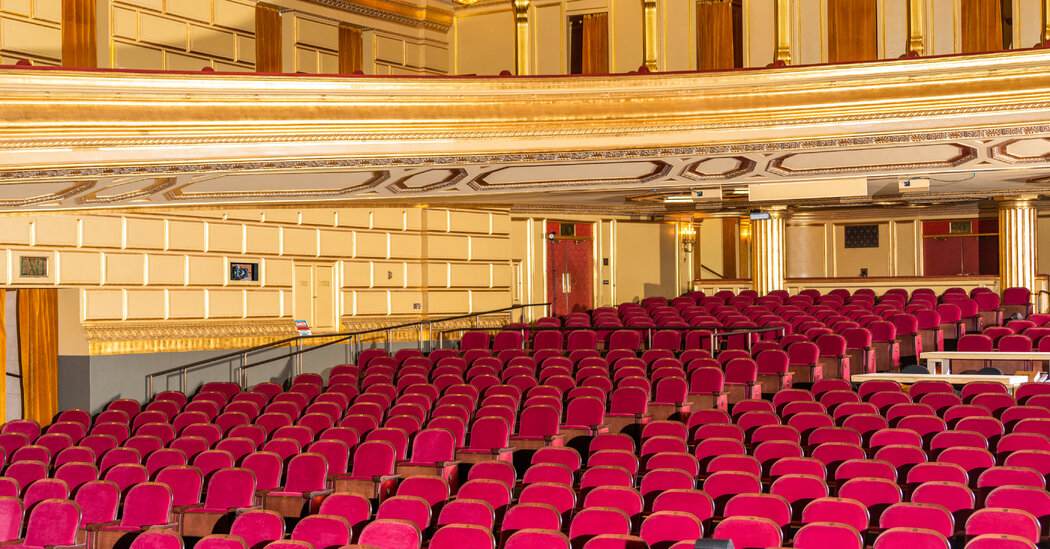
The San Francisco Opera and its orchestra announced a tentative deal for a four-year contract on Thursday, ending a musicians’ strike that had forced the cancellation of the opening of the season.
The opera and its orchestra will reunite Tuesday night with a performance of Verdi’s “Simon Boccanegra,” providing that the deal is ratified by the union. That was the opera that was canceled on Saturday when the union, saying it would not work without a contract, voted to strike. Many patrons were already in their seats when Matthew Shilvock, the general director of the San Francisco Opera, came out to tell them the show was off.
The four-year contract was negotiated by the opera and the musicians, represented by the American Federation of Musicians Local 6. Details of the agreement, beyond its duration, were not immediately released.
Gabe Young, an oboist who is the lead negotiator for the players’ union, said in a statement that the tentative deal provided “a fair contract and stability for the members of the orchestra.”
Shilvock said the deal addressed “important structural changes while providing a fair agreement for our musicians.”
The opera, pointing to a recurring annual deficit of $15 million and a declining workload for the players, had sought to impose a five-year freeze on salaries. The union rejected that proposal, saying it failed to give the players enough money to keep pace with rising costs.
The opera has sought to change its salary structure to reflect that it is producing far fewer operas than it once did. Players are now paid a base rate of $118,000 for 24 weeks of work — actual salaries can be twice that, based on seniority — and Shilvock had said there was not enough work to fill that time.
Last year the company staged 42 performances and six productions, compared with 98 performances and 16 productions in 1981.
If approved, the new contract will last from Aug. 1, 2026, through July 31, 2030.
The strike drew widespread attention because it took place on opening night — typically the highest-profile date on the calendar for an opera company. That it took place in San Francisco, whose opera is widely viewed as one of the healthier members of a fiscally challenged industry, was a reminder of the woes facing classical music companies.