
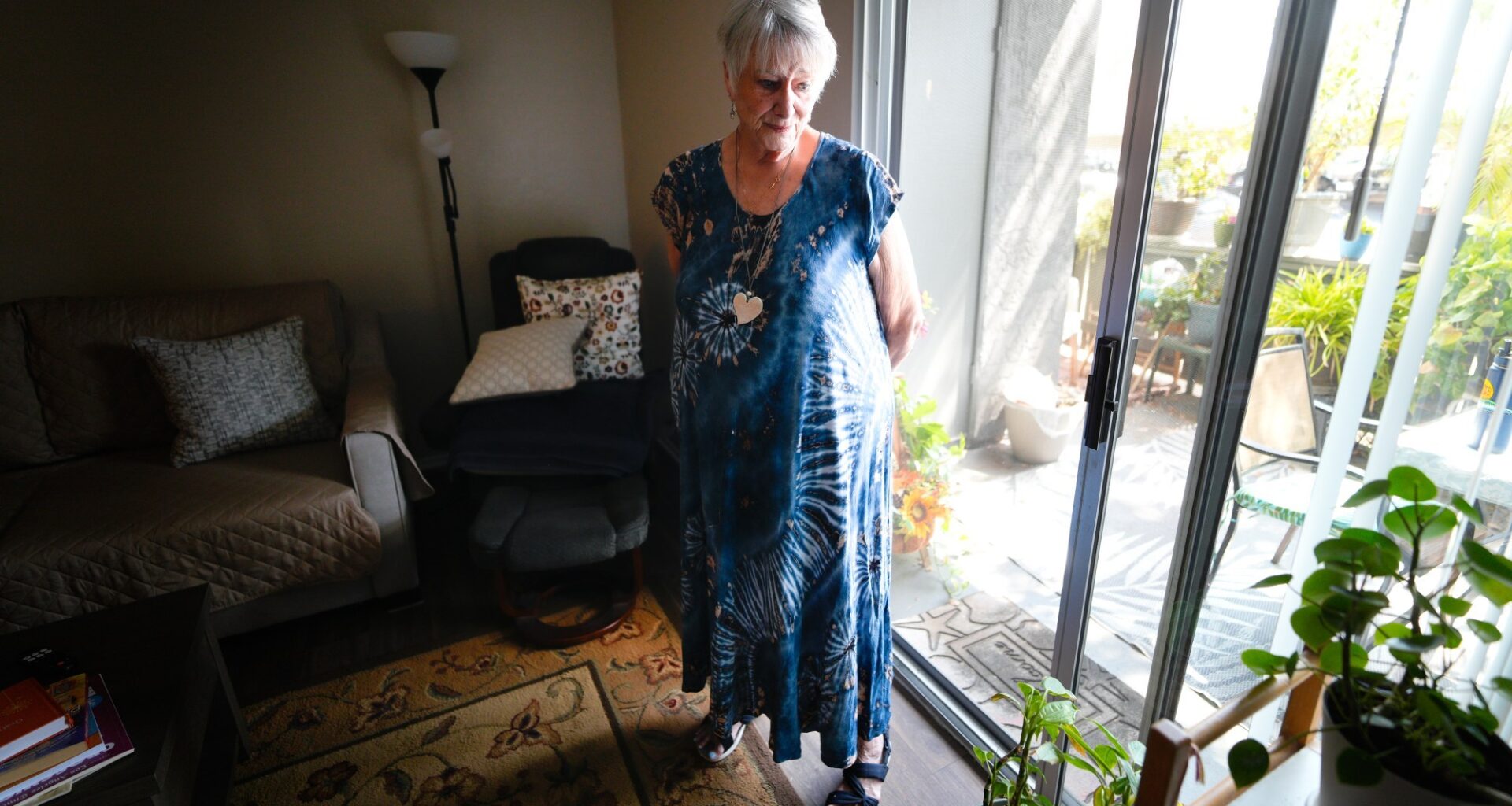
About five years ago, Kathryn Garner sold her home in Phoenix and moved to San Diego County to support her daughter, who was receiving medical treatment.
Living on Social Security and an annuity from the sale of her Arizona home, Garner moved into an apartment complex for older adults. But over the past few years, her rent went up, her income did not. Then she learned about a county program that could help.
Garner, 80, was part of the first round of San Diego County’s Shallow Rental Subsidy Program, which started as a pilot in 2023. It provided $500 a month to residents who were 55 years old and over, had a household income at or below 50% of the area median and used more than half of their income toward housing.
“With the income that I had, I was barely making it and then when that subsidy kicked in, I got to breathe, I got to sleep at night,” Garner said.
Without the subsidy, she said, she was working on a monthly margin of roughly $600. Rent for her is about $1,900 a month and she brings in about $2,500 without any assistance.
By the end of the year, however, Garner’s rental assistance will end due to a change in qualifications for the program, according to the county’s Office of Homeless Solutions. Garner said she’s scared she may end up living in her car, couch-surfing or worse.
“Things were tight, but we always made it and I was never concerned about being homeless,” Garner said. “This is the first time in my life.”
Changing qualifications
Dijana Beck, director of the county’s Department of Homeless Solutions, said her department’s program was originally funded by the American Rescue Plan Act. To keep the program going, the Board of Supervisors voted in March to use unlocked reserves.
But that came with new qualifications for this latest round, which aims to begin early next year. Instead of 55 or older, the head of household must now be 60 or older and their income needs to be at or below 30% of the area median income.
New recipients also cannot have participated in the program before, which means the hundreds of people who have relied on rental assistance, some for over two years, cannot any longer.
Beck said the program was always meant to be temporary and that each round was only designed to last 18 months. Garner, and some others, were granted a year-long extension.
Ingrained in the program’s origin was that the county would wean its recipients off assistance. Beck said follow-up can include connecting them with other resources or enrolling them in another program. Of the rent subsidy program’s 380 households it served in the first two rounds, all but 40 have exited, according to Beck.
“We’ve seen different exits, but overall, so far, none of the exits have been out to homelessness,” Beck said.
All 40 of the households, including Garner’s, that are still being funded by the program’s first two rounds will see that income end come December, Beck said.
Health and Human Services Agency spokesperson Cassie Saunders said prior recipients are not eligible for the next round to “ensure equitable access to new households,” which “ensures that services reach more households in need.”
A fast-growing demographic
With many increasingly strapped for cash and on a fixed income, the rising cost of living in San Diego County is a major factor as to why adults over the age of 55 are among the fastest growing demographic of people falling into homelessness, according to local experts and data.
Beck said that around the county’s 2021 point in time count, they started to see a growing percentage of people 55 and older experiencing homelessness. The 2026 point in time count showed older adults made up 33% of unsheltered homeless people and 23% sheltered. (Source)
“It’s very alarming and we were seeing that in practice, out in the field… folks that generally just have been priced out of their homes,” Beck said.
Limited household budgets, inability to join or rejoin the workforce, health issues and making difficult decisions on whether to buy groceries, medication or pay the rent have all contributed to a growing number of older adults experiencing homelessness, Beck added.
Garner said she worked several different jobs, mostly in sales and business development. Before coming to San Diego County, she worked as a receptionist until about eight years ago. She’s been on a fixed income since, she said.
Now, at 80 years old, she’s considering going back to work.
“My generation was sold on the American dream. You know, a car, a home, a job, a retirement — the American dream. And the American dream died,” said Garner. “And I think that that’s part of why we are finding ourselves in the place that we are now, is because we banked on that.”
What’s next
Garner is still trying to figure out what she’s going to do when the subsidy ends. She said a county caseworker is trying to get her into another program, one that can help with rising costs.
She worries about herself, her daughter’s health and older adults all over the county, many of them without pensions or retirement savings. She feels a lot of people like her are just one emergency away from living on the street.
“We’re like in a box and we don’t know how to get out of it,” Garner said through tears. “This little tiny bit of money makes such a huge difference and that’s why I want all these entities to know, that it doesn’t take much.”
In 2021, a needs assessment study found that over half of interviewed older adults said an additional $300 a month would increase their rent security.
Beck said efforts to continue the program beyond 2027 are underway. The strategy includes showing results, sharing the stories of recipients and continuing their research.
The county plans to evaluate the effectiveness of the program by following households after they exit and noting the difference between those who received the subsidy and those who qualified, but didn’t receive it. A report on the evaluation will be released sometime next year, Beck said.
“Of course, the ultimate decision whether to continue to fund new rounds will come from the board,” Beck said. “But we share all the data and all the good stories.”
The third round of rental assistance will serve roughly 200 households, according to the county.