
A new fine dining restaurant championing Filipino flavors and ingredients is coming to San Francisco in December. Restaurant Naides is the debut restaurant for chef Patrick Gabon and partner Celine Wuu, taking over the former Sons & Daughters space at 708 Bush Street in Nob Hill.
The duo met at Alexander’s Steakhouse in San Francisco; Gabon went on to work under chef Harrison Cheney at two-Michelin-starred Sons & Daughters, while Wuu moved on to a leadership role at three-Michelin-starred Benu. The couple then moved abroad to work at the two-Michelin-starred Restaurant Milka in Slovenia for a year before coming back to the Bay Area.
For years, Gabon had ambitions to open his own restaurant, though a Filipino restaurant wasn’t always the plan, he says. But as he worked more in fine dining restaurants, he began to see how his cooking experiences — especially learning fermentation and making preserved ingredients — melded with his Filipino upbringing. “The more I got into working at Sons & Daughters, working at Milka, there were flavors that got me thinking,” Gabon says. “This is actually something that I grew up with; it’s very familiar — I grew up with the flavor. It may not be exactly the same, but it reminds me of it.”
Named after Gabon’s mother, Restaurant Naides will offer an 11- to 15-course tasting menu. It’s not entirely traditional Filipino food, but an appreciation for the cuisine and its flavors. As Wuu puts it, “As you age and you grow, you tend to go deeper in your roots, and, ‘How can I make something so traditional the best it can be?’” Restaurant Naides is Gabon’s answer to that question.
Don’t expect lumpia and caviar, they say — that’s not quite the vibe they’re going for, and yes, they’ve already been asked. A bread course at the upcoming restaurant, for instance, will feature pandesal with brioche nuances, but rather than a cultured butter served alongside the bread, Gabon plans for a trio of condiments to accompany the course: sisig made with chicken, a chicken liver spread, and pickled, grated green papayas known as atchara. Sisig is typically a pork dish that is mixed with chicken liver, and arrives at the table on a sizzling platter, but for Restaurant Naides, Gabon pulls those elements apart for a Choose Your Own Adventure moment where diners can dress their bread as they like. “It’s a pretty fun course because you could just eat the bread with the liver and the pickles, and then you can combine everything,” he says. (“It’s very flavorful, very punchy,” Wuu adds.)
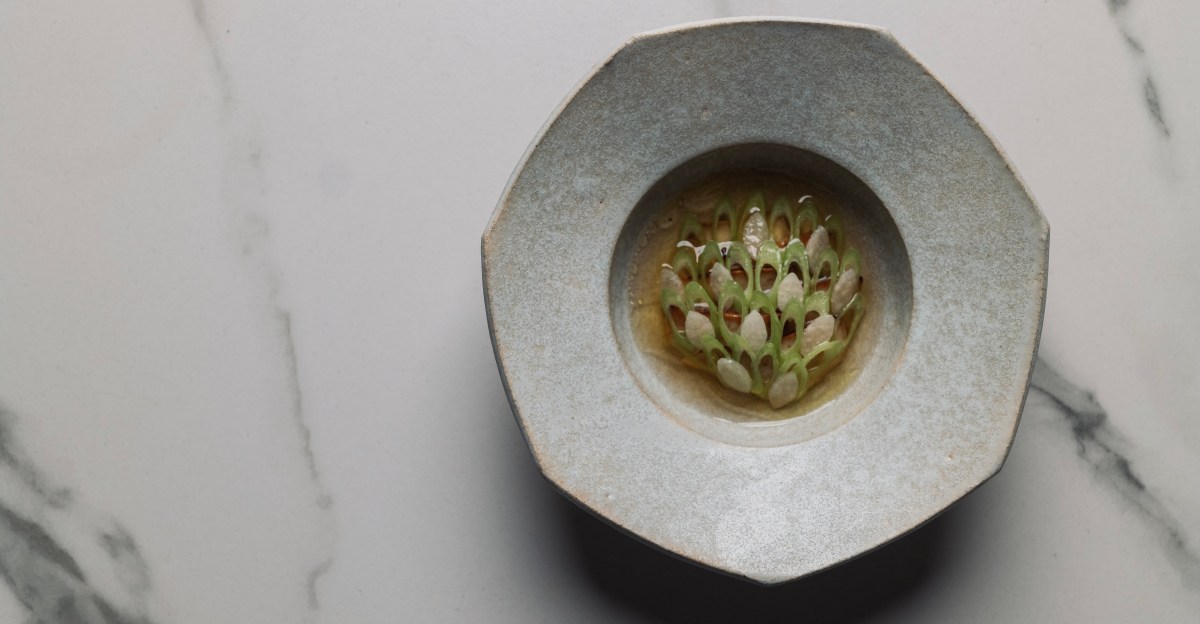
The tamarind-flavored sour soup, sinigang, gets its own update from Gabon. This soup is often served with pork or shrimp, but the star here will be barbecue abalone. The broth is made with dry-aged beef stock, seasoned with tamarind, then clarified, and plated with pickled daikon. “I would say the flavor is more on the Filipino side, and I’m very excited about that dish,” Gabon says. “I think it speaks a lot to what we’re trying to do and what we’re trying to achieve.” Many courses contain fermented pickles or incorporate other preservation techniques, Gabon says.
Wuu will take charge of drink pairings alongside her front of house duties. For wine pairings, she hopes to work with smaller producers that are organic, sustainable, and biodynamic. She is most excited for the nonalcoholic beverage pairings, taking lessons learned from her time at Milka where the ethos was to create drinks using scraps from the kitchen and ingredients local to the restaurant. Constraints, such as not using citrus at Milka since they’re in an alpine area, meant making more creative drinks and finding components that mimic the flavors you’re seeking, like using fig leaf to replace coconut. “You get to create a flavor profile that would really match whatever the food is, and you play with the body of it, the texture, and the whole idea of pairing,” Wuu says. You can fine-tune it.”
Though Gabon’s gone elsewhere to train, he’s now finding his place in Filipino food, done his way with Naides. “Everything was beautiful and I just loved the experience [of working at Milka],” Gabon says. “But … now I really want to do nontraditional Filipino food. We always say it’s going back to our roots — that’s how we think of this restaurant opening.”