
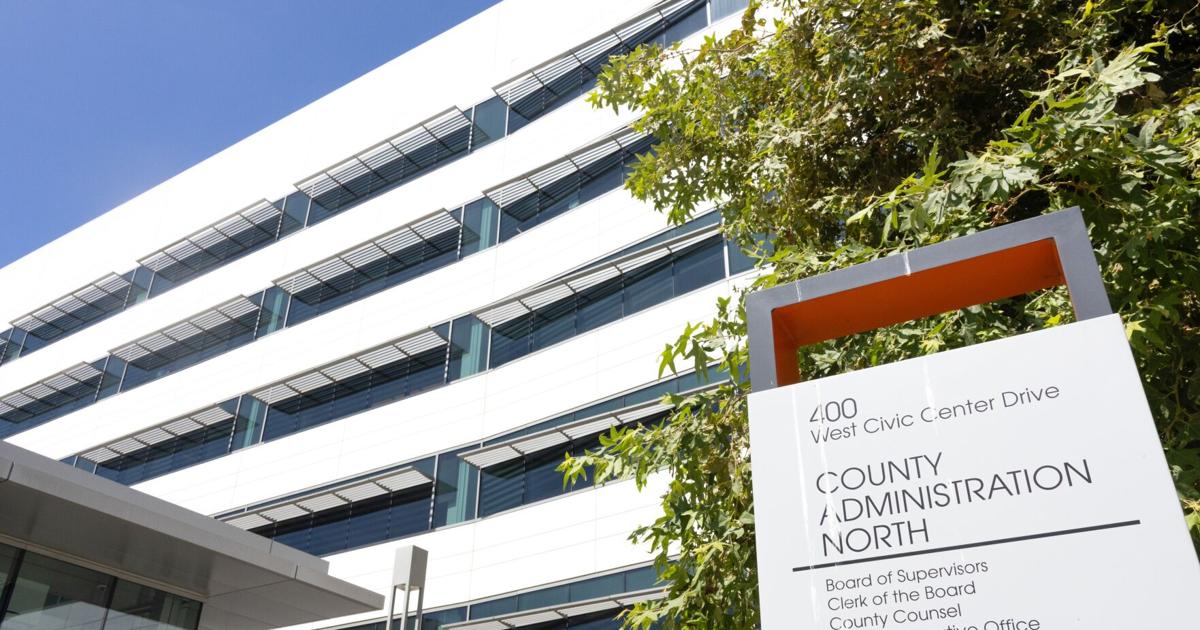
The Orange County Board of Supervisors postponed its vote to approve a proposed response to a grand jury report criticizing state housing mandates to allow board members additional time to evaluate the draft and reach a consensus.
The delay follows an earlier decision by the Board of Supervisors on Aug. 11 to push the item to the Sept. 15 meeting.
The 67-page grand jury study, released in late May, examines state housing mandates requiring cities and counties to increase housing availability, including the Housing Element and the Regional Housing Needs Allocation (RHNA), the first two steps of a multi-step plan that determines and allocates housing needs for cities and counties in California.
The Housing Element Law requires local governments of cities and counties to include the housing needs of all income levels in their general plans, which serve as representation for how a city or county will develop to include eight elements, such as housing, transportation and safety.
Both are part of the California Department of Housing and Community Development’s (HCD) framework, which works to expand stable and affordable housing throughout the state. Part of its work includes funding the purchase and rehabilitation of buildings for individuals at risk of experiencing homelessness and tracking progress in the construction and planning of affordable homes.
The grand jury report states that these measures were created in response to the state’s growing concerns of “perceived housing shortages.” However, the grand jury found that the requirements do not adequately account for factors such as land and construction costs, labor shortages, funding limitations and infrastructure capacity.
The report stated that housing mandates have created “unnecessary local government costs, confusion, inequity, and growing tension between state directives and local realities,” resulting in housing quotas not being met.
The grand jury provided 20 recommendations in its report, including expanding the RNHA technical assistance and training programs, city partnership with the Board of Supervisors to assess countywide infrastructure capacity and enhancing city relationships with nonprofit affordable housing developers.
The county’s proposed response to the report included agreement with the grand jury’s finding that state housing regulations complicate local procedures, but it rejected recommendations to create a centralized countywide infrastructure-tracking system, stating that city governments manage utilities and housing databases and that countywide tracking of this data is unnecessary.
During the Board of Supervisors’ comments on the item, District 2 Supervisor Vicente Sarmiento said he disagreed with the language used in the grand jury report.
“It basically is saying that there is a ‘perceived’ housing shortage, and there is a ‘perceived’ underbuilding,” Sarmiento said. “Unfortunately, what seems to be overlooked is a lot of the data with respect to folks who are young, folks who are working families, seniors and others who are trying to seek housing in our county and are having a difficult time.”
The meeting comes at a time when the RHNA has required the city of Fullerton to provide 13,209 new housing units by 2029 as part of Cycle 6, a more than 600% increase over the previous requirement of 1,841 units in Cycle 5.
According to a Jan. 14, 2024, City of Fullerton press release, the city reached a settlement following compliance issues relating to the Cycle 6 requirements.
“The City is committed to meeting the requirements of the State Housing Element,” former City Manager Eric Levitt said in the press release, “and at the same time is attempting to balance that requirement with the City’s commitment to maintaining a high quality of life for current and future residents.”
District 4 Chair Doug Chaffee suggested that the board delay their vote until the next meeting. The Board of Supervisors is now set to vote on the proposed response to the report at its Sept. 29 meeting.