
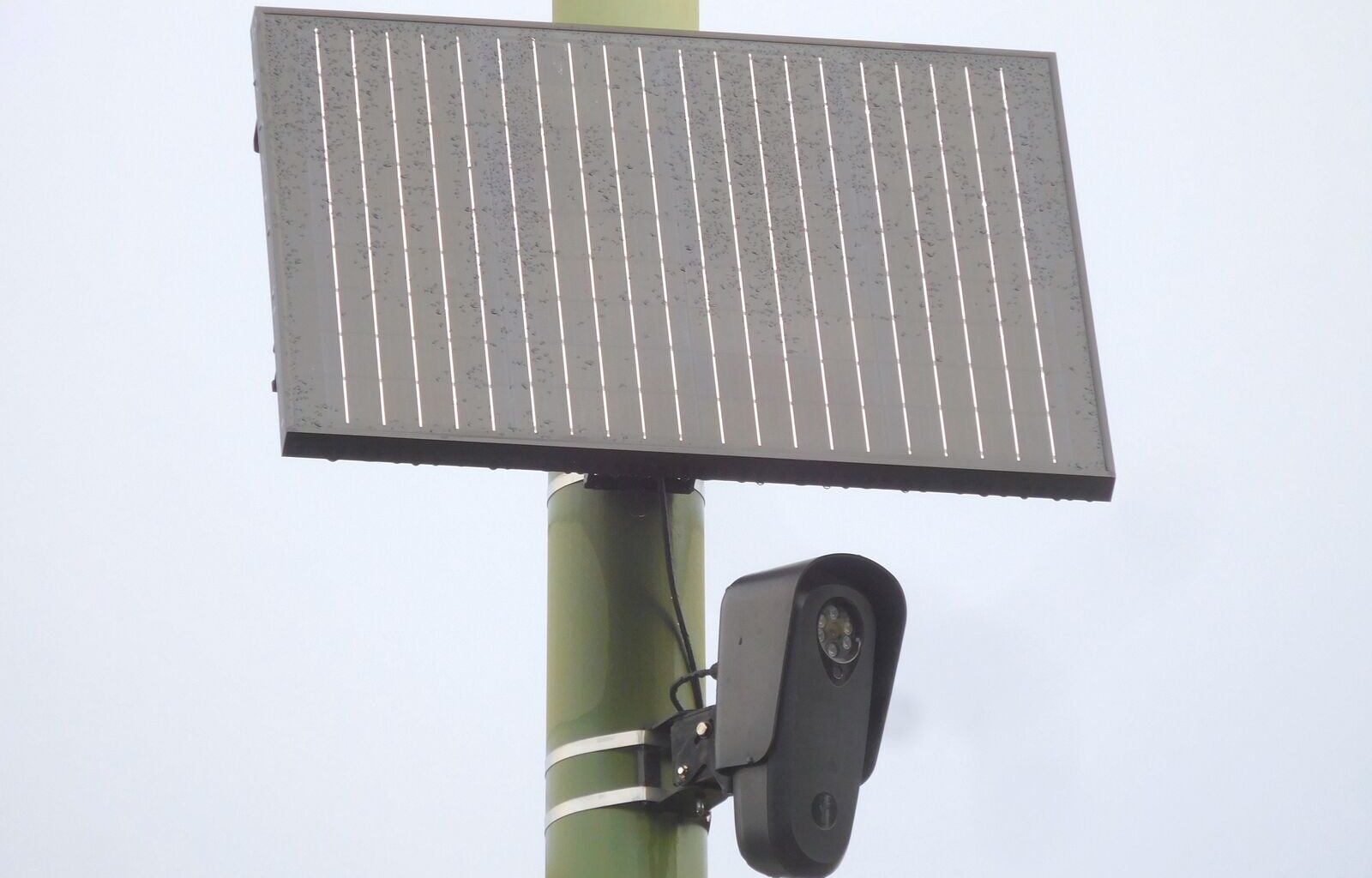
Last December, the Oakland City Council approved a $2.25 million deal with Flock Safety, the controversial surveillance company that’s built a national network of cameras to track the movements of millions of Americans for police departments. But before they agreed to the deal, city leaders, responding to concerns from the community, asked that safeguards be put in place to ensure Flock’s data gathered from Oakland’s streets isn’t misused, as has happened elsewhere.
Among the safeguards were rules limiting who has access to data from the cameras, and stiff financial penalties for data breaches.
The city’s two-year agreement, including these safeguards, would kick in once both parties signed the contract.
But that hasn’t happened.
For months, The Oaklandside has repeatedly asked the city if it has finalized the contract.
Nina Erlich-Williams, a spokesperson for the city attorney, told The Oaklandside on Sept. 9 that Oakland has not yet finalized the contract, “but we expect it to happen soon.” Asked this week about the contract’s status, she said it still has not been executed.
We also sought clarity on whether Oakland is currently paying for Flock’s services, even though no contract has been signed.
“If any further action is required by the City Council, the public will be notified in advance as required by the Brown Act and the City’s Sunshine Ordinance,” Erlich-Williams said in an email.
The Oakland Observer was the first media outlet to report that OPD hasn’t finalized its agreement with Flock, and has continued to raise questions about the incomplete deal.
With the contract unsigned, there’s also an open question as to whether Oakland can enforce anything spelled out in the new agreement. Can the city legally enforce the additional safeguards or the fines against Flock if the company breaks the rules?
We asked the City Attorney about this and were told the office did not have any comment.
The City Administrator’s office and representatives for Flock Safety did not respond to interview requests.
Delay raises questions about whether Oakland has implemented safeguards
The delay in signing Oakland’s contract comes at a time when Flock is experiencing growing pushback in communities across the country.
Some jurisdictions have cut ties with Flock following reports about how police officers have used cameras to illegally stalk people or to provide data to U.S. Immigration and Customs Enforcement. There has also been public concern about how some law enforcement officers have misused equipment to spy on residents. Earlier this month, the San Jose Police Department fired an officer for allegedly using the city’s Flock system to share the location of a woman with a suspect accused of abusing her.
The Oakland City Council was aware of the many concerns about Flock when it approved the company’s contract. To assuage the public, the council added a slew of amendments to the contract to keep residents safe.
These included a provision that explicitly forbade Flock from allowing out-of-state agencies to access data from Oakland’s cameras (this is something OPD already said it doesn’t do). The council also asked that the city’s information not show up in any national or multi-state searches, meaning cops in other parts of the country can’t access Oakland data.
The deal the council approved stated that if Flock allows the unauthorized sharing of data, the city can impose up to $200,000 in penalties.
The council-approved deal requires Flock to alert the city in real-time if it grants any new agency access to Oakland data, if Flock changes any sharing settings, and if any unauthorized agency attempts to run a search.
Flock is also required to submit a certification each quarter to attest that no federal or out-of-state users accessed or attempted to access Oakland’s data; that none of the city’s data was discoverable in any national or multi-state system; and that all access logs delivered to the city are complete and unaltered.
And the council asked the city auditor to conduct four compliance audits to ensure Oakland’s Flock system isn’t sharing data with federal immigration enforcement.
Another provision says that when the contract expires in December 2027, OPD will conduct a competitive bidding process for vendors who can provide surveillance services for the city.
Because the contract hasn’t been executed, we don’t know if any of these safeguards have been implemented, or whether the last nine months will be retroactively included in the contract.
Opposition to mass surveillance is also becoming a bipartisan issue, and congressional representatives from both parties have been putting vendors like Flock under intense scrutiny.
Some communities in Oakland champion the cameras, arguing that they bolster Oakland’s relatively small police force. The Oakland branch of the NAACP has been a major booster of Flock — so much so that the company touts the group’s endorsement in its press materials.
Last year, the San Francisco Standard reported that the San Francisco Police Department had illegally shared data acquired from Oakland’s Flock system with federal law enforcement agencies. Brian Hofer, a former member of the Oakland Privacy Advisory Commission, is pursuing a lawsuit against OPD for allegedly violating state law for sharing Flock data. More recently, some of Oakland’s Flock cameras have been paint- bombed and cut down.
Flock says it has taken steps to address community concerns. For example, in August, Flock announced that it now recommends a default seven-day period for retaining ALPR data, acknowledging that over 90% of ALPR searches are done within a week. Oakland’s agreement currently uses a 30-day period.
“*” indicates required fields