
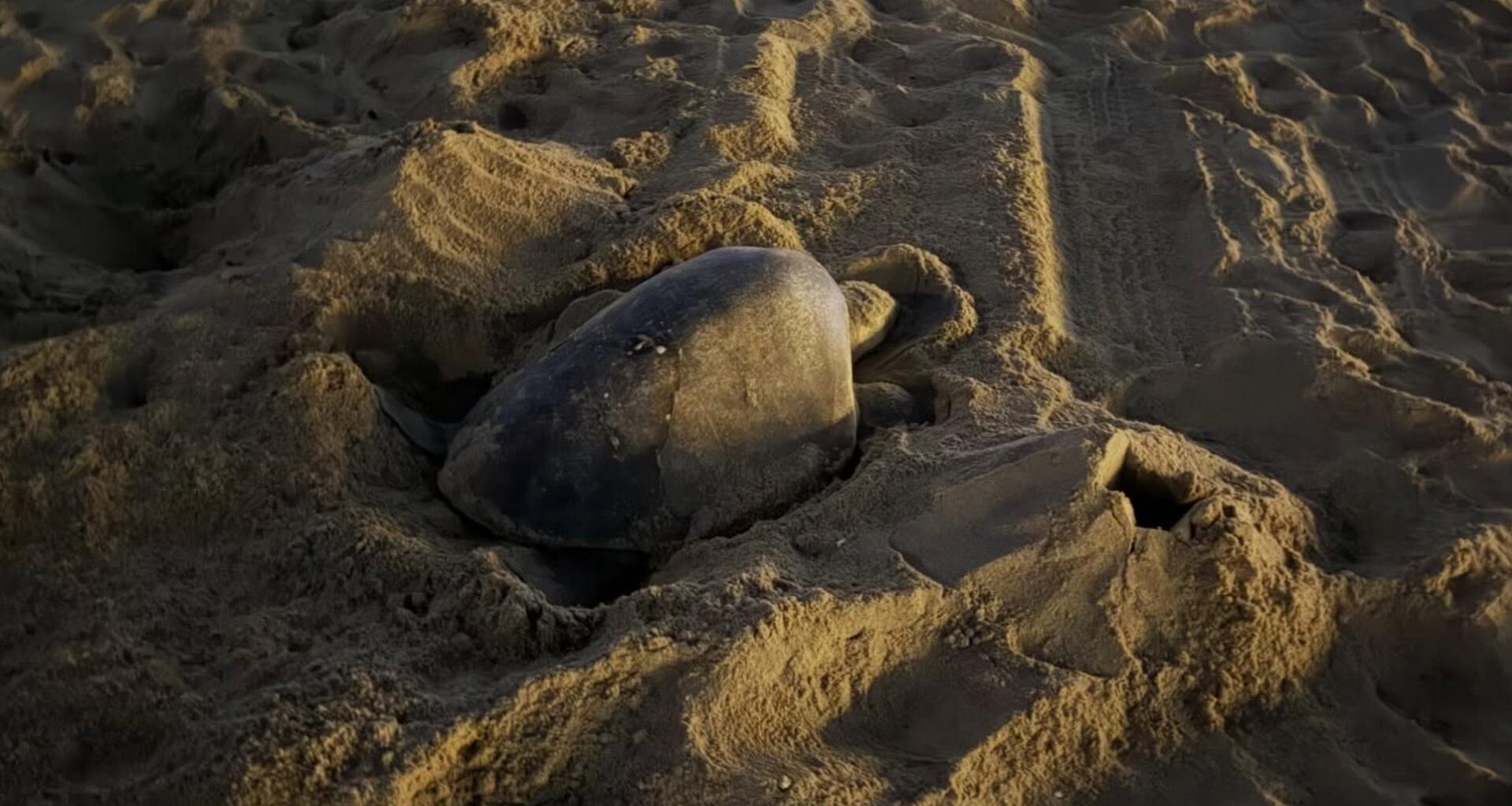
It is the first-ever recorded natural nesting for any sea turtle species on the U.S. West Coast, NOAA Fisheries said.
HUNTINGTON BEACH, Calif. — An olive ridley sea turtle laid eggs on a Southern California beach for the first time in recorded history, officials said Monday.
NOAA Fisheries said the turtle, named after the olive green color of its heart-shaped shell, dug a nest and laid eggs near Seal Beach in Orange County, California, just south of Long Beach.
“This is the first-ever recorded natural nesting for any sea turtle species on the U.S. West Coast,” the service said in a social media post alongside photos and videos of the turtle making its nest and laying eggs.
Days after the turtle was spotted, another was caught laying eggs in Huntington Beach, south of Seal Beach. NOAA Fisheries said they don’t know if it was the same turtle in both instances, but both nests and clutches are now fenced, protected and should remain undisturbed.
Sea turtles are protected under the Endangered Species Act, which aims to conserve endangered and threatened species and their ecosystems.
The typical incubation period for these turtle eggs lasts between 45 and 60 days.
The olive ridley turtle is the “smallest of the sea turtles,” NOAA Fisheries said. Adults weigh up to 100 lbs and can grow up to 3 feet in length. They can live up to 50 years and are found worldwide, but typically stick to the Pacific, Indian, and Atlantic Oceans.
The turtles usually lay eggs across South America’s coastline, primarily in Mexico, Nicaragua, Costa Rica, and Panama.
“While occasionally seen in Southern California following warm currents, this species has never been documented to nest in the United States,” NOAA Fisheries said.
Justin Viezbicke, with NOAA Fisheries, told ABC7 Los Angeles the placement of these nests is not the only odd thing.
“Typically, they (lay eggs) during the night. This one has been a little abnormal in the fact she came up during the day and right as the sun was setting,” he said. “There is potential there could be other nests we do not know about.”