
California is home to one of the biggest economies in the world. But for businesses here, the experience of doing business in the state can be a little more complicated.
Over the past several years, we’ve seen some several major companies move their corporate headquarters out of California, including Chevron, Tesla, Oracle, Hewlett Packard Enterprise, SpaceX and X.
Many of those companies moved to Texas, pointing to things like business growth, costs and access to workers.
However, many still maintain significant operations in California.
According to Governor Gavin Newsom, California’s economy ranks 4th among the largest in the world. But what does that strength actually mean for the businesses that are here?
FOX26 took a closer look at the business climate for large companies that are still here and how they view doing business in California today.
POM Wonderful is one of the California-based companies still operating and growing here in the state.
California’s Business Climate: A closer look at the cost of doing business. (Photo: FOX26 Photojournalist Jordan Callison)
It has been in business since 2002.
We asked Derrick Miller, president of POM Wonderful, what the current business climate looks like for the company.
Miller responded, “The business climate continues to require us to be flexible and adaptable. Many realize that there’s a lot of inflationary pressures that we’re all facing, and we’re no different. We just have to continue to find ways to improve and continuing to improve is at the heart of our operation. So, team members are looking every day on how they can improve their processes, reduce waste and ultimately allow us to stay competitive.”
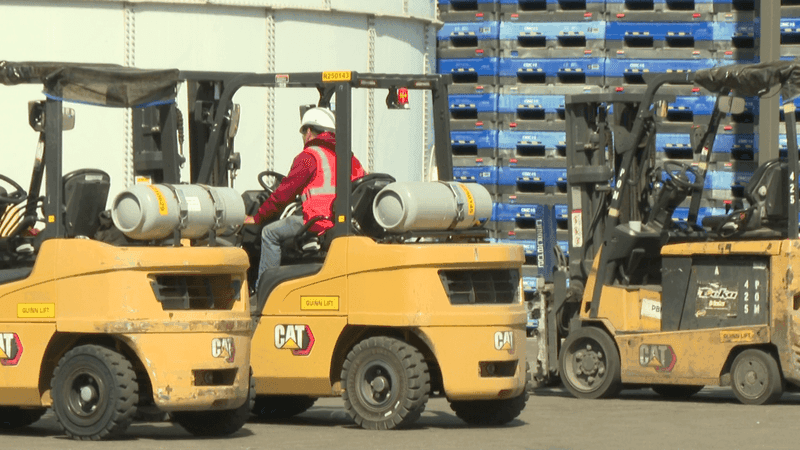
California’s Business Climate: A closer look at the cost of doing business. (Photo: FOX26 Photojournalist Jordan Callison)
We also asked about the cost of doing business from diesel and labor to insurance and fertilizer costs.
He says those costs continue to add up, with nearly every input becoming more expensive.
“Whether it’s freight and diesel, as you mentioned, or also utility costs and packaging. All the inputs are climbing very quickly, so we have to find ways to improve,” he said.
At the same time, Miller says POM Wonderful has continued to see growth in demand for its products.
Looking back over the last decade, he says the company’s focus has remained on finding ways to adapt and stay competitive.
We are just focused on constantly improving and trying to control what we can control.” Miller said. “At the end of the day, hopefully that continues to allow us to thrive and keep the business in a healthy state.
But the experience of doing business in California can look very different depending on the industry.
For California farmers, the business climate is not looking the greatest, says Manuel Cunha, president of the Nisei Farmers League.
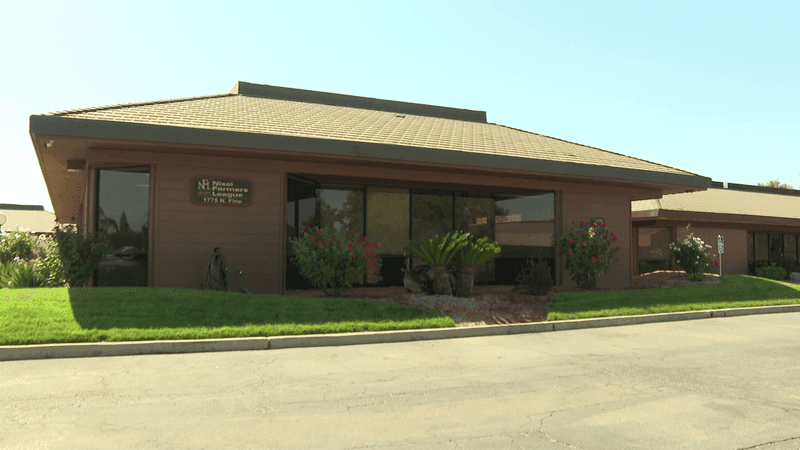
California’s Business Climate: A closer look at the cost of doing business. (Photo: FOX26 Photojournalist Jordan Callison)
From 2010 to now, the climate for farming is horrible in California. Small farmers don’t have a chance at all.
He says the cost of doing business in California is pushing some farmers out of business and, in some cases, out of the state.
Cunha said, “First, is fuel. $8 diesel, you know, $7.50 a gallon, $8 a gallon and to go buy that and then to deal with the fertilizer, the cost of fertilizer coming from other countries on the fuel price issues.”
Cunha says farmers are having to make tough choices just to keep their operations going cutting costs wherever they can.
“Right now, with the price of diesel fuel, our farmers are feeling a tremendous amount of economic cost. I had a grower this morning call me on a 7,000-gallon delivery. 7,000-gallon delivery. He paid close to $7.55 a gallon, and he had to get that to save it. If he didn’t buy that much, he was going to pay $8.22 a gallon,” he said.
He says that’s just one example of the financial pressures farmers are dealing with.
“There is no farmer in California that will tell you things are great, they’re fantastic. No, everyone’s going to say the markets are bad, the regulations are killing us, and the fuel prices are destroying us. And yet, we’re feeding the world,” Cunha said.
And it’s not just large corporations that have been moving out of California. Cunha says farmers are facing pressures that are making it harder for some to stay in business.
He points to a long-term decline in the number of farms across the state.
USDA data show California had about 14,000 fewer farms in 2022 than it did in 1992.
Cunha says he expects that number could continue to decline in the coming years.