
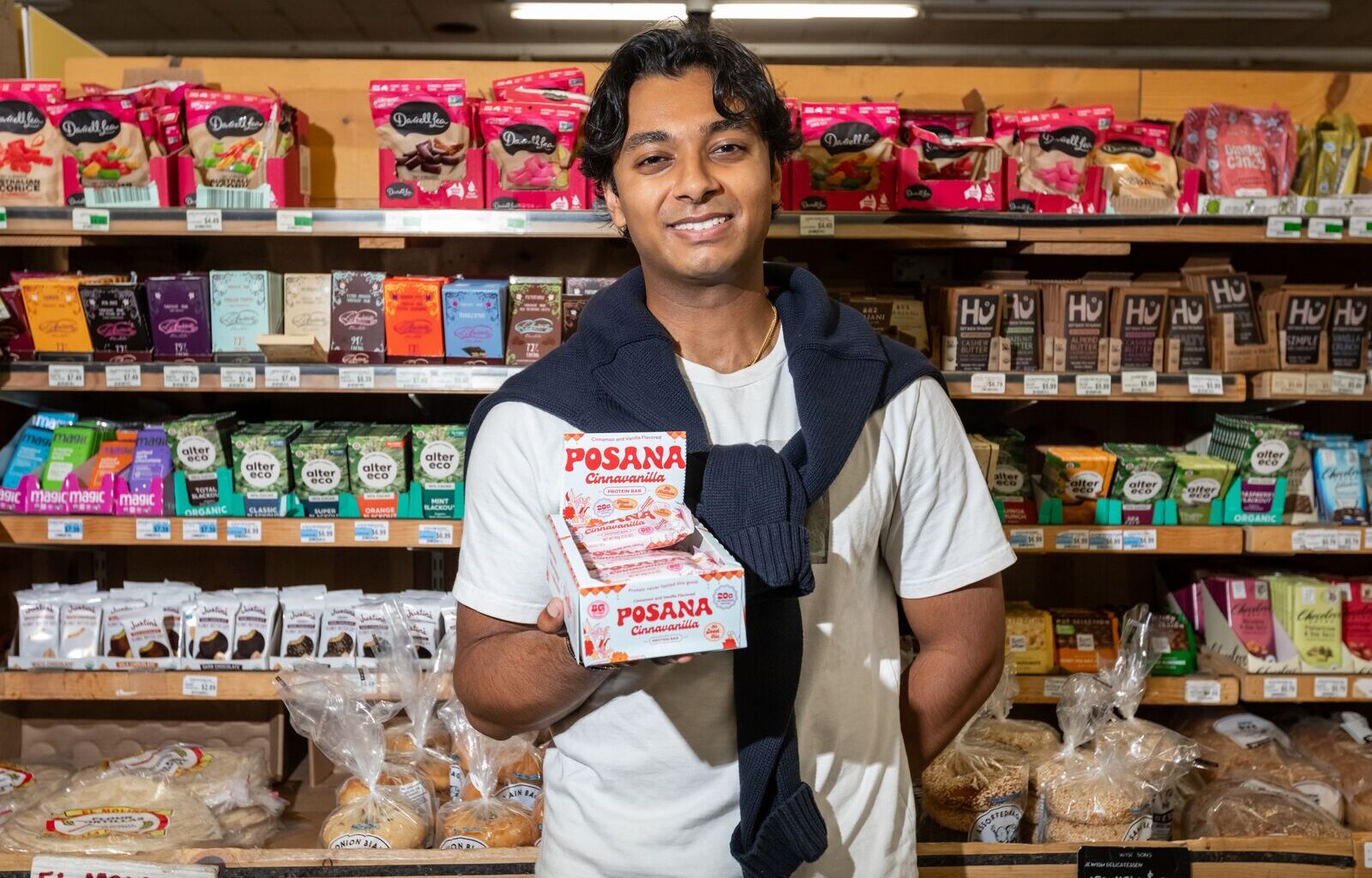
For a while, Aditya Banerjee tried the Cal freshmen thing.
He went where his friends did: squeezing into packed crowds along frat row, shoulder to shoulder with other Cal students hoping to get into parties at houses like Sigma Chi and Tau Kappa Epsilon. He went to big campus events too, the kind that sent students flooding across Sproul Plaza and Memorial Glade clad in navy and gold.
But he never truly found his footing in the everyday college scene. Campus clubs didn’t interest him. Frat parties bored him. Events barely held his attention.
So, what did the UC Berkeley neuroscience and nutrition major do for fun? Make protein bars in his dorm kitchen.
 Originally from Binghamton, New York, Berkeley student Aditya Banerjee started his protein bar company out of his Cal dorm room . Credit: Kelly Sullivan for East Bay Nosh
For hours, the 18-year-old would hover over the shared stove in Towle Hall, tinkering with protein, sweeteners and binders in pursuit of the tastiest protein bar he could craft. What started as a dorm-room experiment eventually grew into Posana, a protein bar company with products inspired by international flavors.
Banerjee’s protein bar venture comes at a time when, across the country, companies and restaurants are cashing in on the “proteinmaxxing” trend, where consumers focus on maximizing their protein intake to boost metabolism, build muscle and manage weight. Consumers are upping their protein intake in various ways — from shakes, to Costco rotisserie chickens, and even mashed potatoes. Banerjee’s quest to craft delicious protein bars stems from his own weight loss journey, and his personal frustration with the limited selection of specialty protein sources offered at grocery stores. As Banerjee puts it — protein bars are boring, so he aims to change that.
“So we see a lot of the same chocolate chip cookie dough, peanut butter, and not enough representation of other cultures and their flavors, and that’s what initially made me start the brand,” Banerjee said. “The whole goal of Posana is to make protein exciting to eat and also flavorful in regards to other cultures and their flavors, apart from America.”
Banerjee, now 20, knew that to start Posana and get his protein bars into grocery stores, he needed some monetary muscle.
“It was just about how do I really get this thing off the ground, and how do I make it into an actual product that I can sell, right? So it was about doing that research and then doing research on the market. So what I soon realized is that my product wasn’t shelf stable. So even though I had a good base recipe, I knew I had to work with food scientists in that regard, and that’s where money starts coming into play.”
So, in true start-up fashion, Banerjee invested $10,000 from his own college fund, a risky move that he said had his parents worried. Then he turned to his community, looking to his wealthier peers at Cal, and local investors in the Berkeley area.
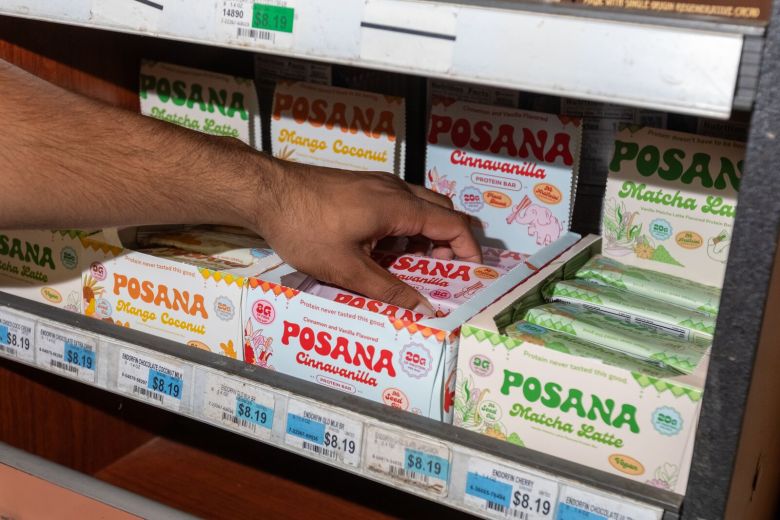 Posana’s protein bar lineup currently has three flavors, but Banerjee has a fourth in the works with its unveiling set for this fall. Credit: Kelly Sullivan for East Bay Nosh
“I took the money from my college savings account and then put some money into the brand, which my parents did not like,” Banerjee said. “Let’s just say my parents definitely feel a lot better for sure. Like in the beginning, it was very worrisome for them, but I think like right now, in this current state, they’re definitely feeling a lot better and they’re definitely a little bit more supportive, which is great because they’ve seen what’s happened.”
After dipping into his college savings, Banerjee decided to double down on his venture. In May, he took a leave of absence from Berkeley to pursue Posana full-time, a decision that wasn’t easy for someone raised in a Bengali household where education was paramount. But as Posana grew, balancing Berkeley’s rigorous academics with a company was becoming increasingly difficult.
“I always knew in the back of my head that I’m probably going to have to take a break at a certain point, right? Just for the sake of me and then the brand as well, like how much momentum we have going for ourselves,” Banerjee said. “Yeah, I mean, it was definitely not an easy decision. I grew up in an immigrant Indian household, and the more obvious thing is this doesn’t usually happen with Indian families and their kids. So I would say the last few months have definitely been pretty rough when it comes to things like me, my parents, our dynamic, the business. What am I really focusing on? What am I really doing?”
Since then, Banerjee has been going to trade shows and traveling across the country to places like Los Angeles, Denver, and New York City to pitch Posana to angel investors, or high net-worth individuals who invest personal funds into start-up companies. But at 20, even traveling for work comes with its own set of obstacles. In general, Banerjee can’t rent a car or book a hotel room, so he’s relied on friends and investors for places to stay along the way. He describes it as “nomadding,” or bouncing between couches as he moves from one trade show or pitch meeting to the next.
“I’ve been nomadding since May, actually. So ever since my Berkeley apartment lease ended I’ve been staying with either investors or my friends,” Banerjee said. “I’m just very lucky. I have investors and good friends that live around the country and they understand my situation. “
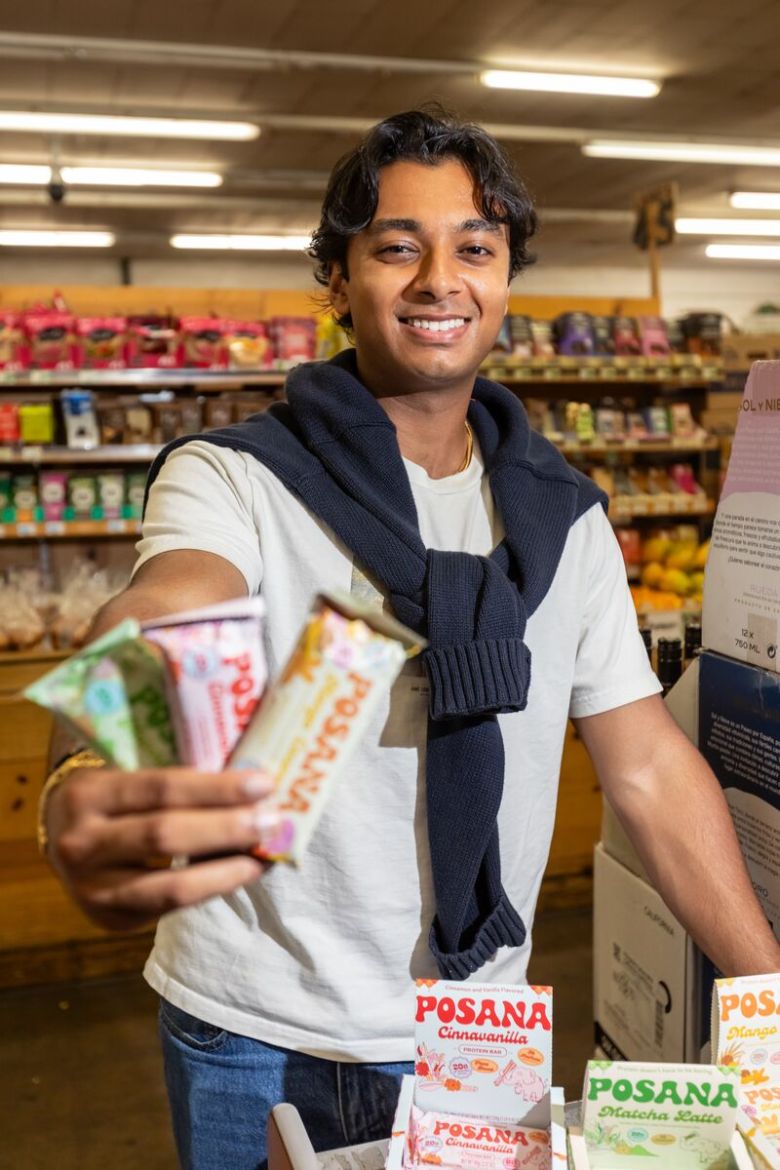 At 20, Banerjee can’t rent a car or purchase a hotel room, so he’s looked to “nomadding,” or bouncing between the couches of friends and investors while on the road for work. Credit: Kelly Sullivan for East Bay Nosh
The hustle is starting to pay off, expanding his network and bringing him face-to-face with investors who have previously backed companies like Ollipop and Skims. Currently, Banerjee has raised $650,000 from investors. Banerjee has two production factories, one in Los Angeles and the other in Chicago, but keeps his operation remarkably small. Banerjee is Posana’s only full-time employee, working alongside a handful of paid high school and college interns to get the company off the ground.
But at the heart of his brand is flavor. Drawing from his South Asian heritage and market trends, Banerjee wanted to create protein bars that people would reach for, with flavors familiar enough to be approachable, yet unique enough to stand out from the usual crowd. Currently, Posana has three flavors in its lineup: cinnavanilla, mango coconut turmeric, and matcha latte.
“So one thing that I really look for is are people loving it, how long is it going to last for, and is it really going to be outstanding?” Banerjee said.
For Banerjee, matcha checked all of the boxes: it’s familiar, popular and, most importantly, it’s here to stay. Banerjee points to its growing presence on coffee shop menus and grocery store aisles as a sign of the flavor’s staying power.
“So for matcha, for example, if you look at every coffee shop now, they carry a matcha latte, right? Or they start to add it to their menu in some regard, and that shows that people are getting used to these flavors, Banerjee explained.
His cinnavanilla is a playful combo that centers the familiar, pairing two approachable flavors together in a combo that Banerjee feels is both fun to eat and say, while his mango turmeric reflects Posana’s broader mission, leaning into the sweetness of mango and coconut and pairing it up with turmeric, an ingredient rooted in South Asian culture.
Banerjee is already thinking beyond his current lineup as he plans for Posana’s next flavor to be a Thai-inspired bar, set to debut this fall. A chai-flavored protein bar is also in the works, with Banerjee hinting that there are more global flavors he plans to introduce to the protein bar market.
“There’s a lot of really cool flavors, especially from Asia, for example, that are growing really fast in the U.S and we definitely want to be the ones showcasing those flavors,” Banerjee said.
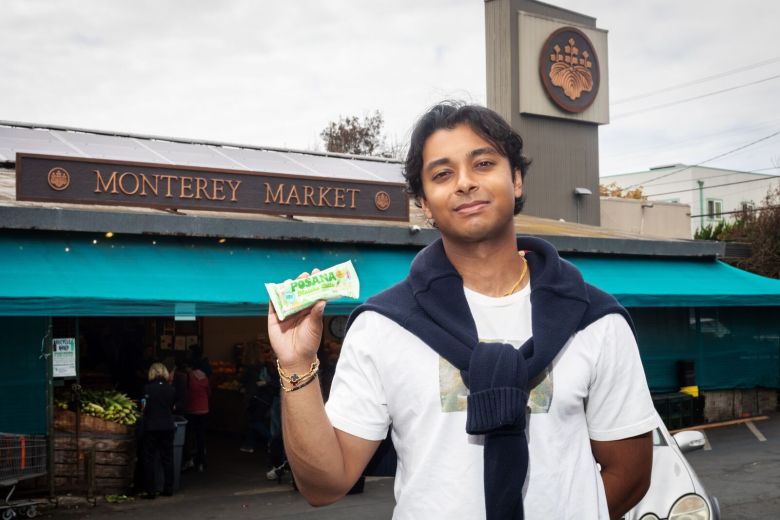
Now, Banerjee’s protein bars can be found in over 150 locations in and around the Bay Area, including places like Monterey Market on Hopkins Street, Berkeley Bowl, Farmer Joe’s Marketplace in Oakland and Luke’s Local in San Francisco. Posana protein bars can also be found in stores across Southern California and New York. Come winter, Banerjee plans on taking Posana further, as he’s in talks with a distributor which may bring Posana to more shops across the Bay Area, including in the San Francisco International Airport.
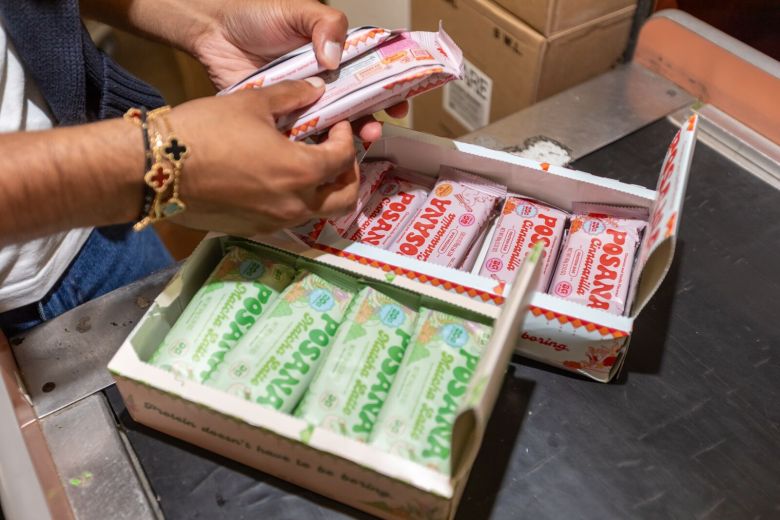 Banerjee’s protein bars can be found throughout Berkeley in stores like Monterey Market, and Berkeley Bowl. Credit: Kelly Sullivan for East Bay Nosh
“So that’s when it’s gonna be very exciting because after the distributors come on board and they obviously like distribute the product for us, we’re gonna be everywhere in the bay, including SFO,” Banerjee said.
Banerjee has also teased that he is in talks with a major grocery store chain, which could grow Posana on a national scale. But even as Banerjee looks to get Posana onto shelves across the country, his ethos is the same: make protein more exciting.
“The whole reason why I started this brand is because every American, especially ones who love global favors, should enjoy protein and eat it on a daily basis and that’s my goal,” Banerjee said. “Because we want to get as many Americans eating protein again. If you can feel that connection, and enjoy it as much as I love making it, that’s all I really care about.”
Related stories
What Cafe Colucci’s signature platter tells us about rising restaurant prices
September 17, 2026Sept. 23, 2026, 11:20 a.m.
From green beans to great coffee: Inside the East Bay’s blooming home roasting scene
September 10, 2026Sept. 11, 2026, 7:41 a.m.
Remembering Eric Pease-Sartenaer, founder of Phoenix Pastificio and Cheese Board sourdough pioneer
September 21, 2026Sept. 21, 2026, 2:18 p.m.
“*” indicates required fields