
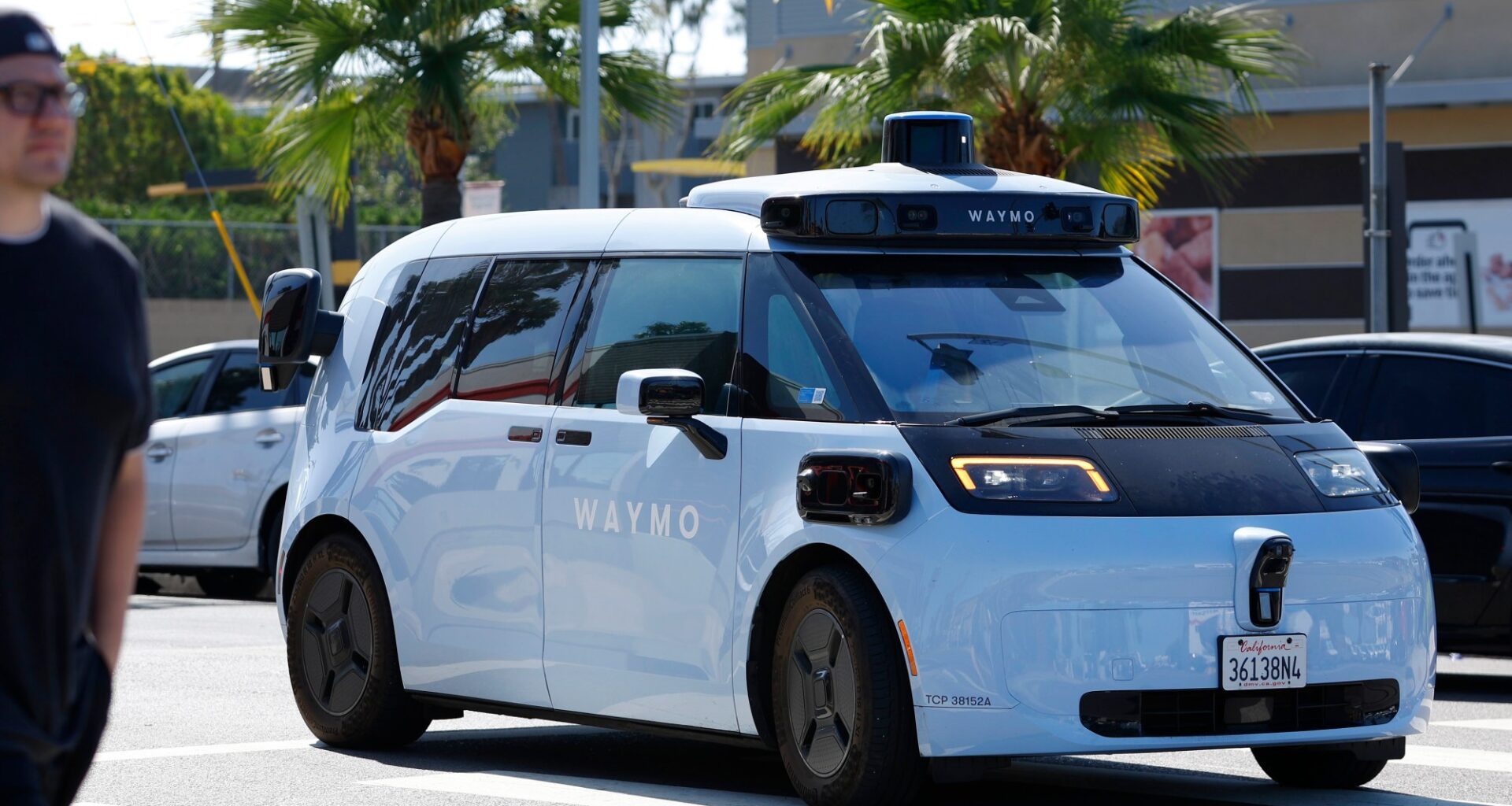
The San Diego City Council earlier this month passed a resolution seeking to throw the rollout of robotaxis into reverse, but Mayor Todd Gloria still supports the deployment of autonomous vehicles across the city.
“My administration’s approach to this is providing every San Diegan with multiple good and safe options to get where they want to go,” Gloria told the Union-Tribune on Wednesday. “I see this as an additional asset in that list of options and choices.”
The council resolution cited a litany of complaints about the introduction of ride-hailing services by companies using autonomous vehicles, or AVs.
Among the issues:
Likely job losses for cabbies and ride-share drivers such as Uber and Lyft
Potential safety concerns from AVs, such as driverless vehicles going through flooded roads, blocking intersections and possibly impeding ambulances and first responders
Lack of input from local authorities when it comes to regulating AVs, with the resolution urging Gov. Gavin Newsom and the California Legislature to get involved.
“San Diego should not be a testing ground where corporations introduce new technology onto our public streets without meaningful local input, accountability or consideration for the people who will be affected,” City Councilmember Sean Elo-Rivera said prior to the resolution passing on an 8-0 vote on Sept. 14.
Alphabet-owned Waymo officially has already launched robotaxi service to early-access customers in a coverage area of roughly 40 square miles in central San Diego.
Amazon subsidiary Zoox announced that it will soon begin testing for its fleet of vehicles. Meanwhile, there have been sightings of gold-colored Tesla Cybercabs roaming around town, fueling speculation that Elon Musk’s company is poised to jump into the San Diego market as well.
The City Council’s resolution does not have the force of law because AVs are currently regulated by state agencies, not local authorities.
“Those concerns that are raised by the resolution are understandable,” Gloria said, “but they don’t have a practical impact (on) regulation-making.”
The California Department of Motor Vehicles issues testing and deployment permits, sets rules for vehicle equipment, and tracks collisions and traffic safety.
The California Public Utilities Commission licenses companies that use autonomous vehicles to transport members of the public and oversees robotaxi pilot programs.
However, local authority has jurisdiction over which ride-hailing services are allowed to pick up passengers at the San Diego International Airport, and Waymo is currently not sending cars there.
The City Council resolution calls on the San Diego County Regional Airport Authority to prohibit AVs from operating at the airport.
“Ultimately, that’s a decision for the airport authority,” Gloria said, “and I know those conversations are ongoing.”
Earlier this year, Gloria was elected president of the U.S. Conference of Mayors, where he said he has seen the debate and deployment of robotaxi services in cities such as San Francisco, Phoenix and Austin, Texas.
“I think there is a potential and promise for reducing (accidents caused by human drivers) through this technology and I think we should try to encourage it,” he said. “But if it’s proven to be unsuccessful, then we will work hard to pull back on it.”
Gloria said he’s taking lessons from what could be generously called the haphazard rollout of dockless bicycles and electric scooters in San Diego several years ago.
Operators were criticized for dockless bikes blocking sidewalks and their often-vandalized bikes thrown into empty lots. Repeated instances of collisions and accidents involving scooters — including a $6.5 million settlement regarding a fatal accident — led to companies pulling out of San Diego.
“I felt like our experience as a city with electric scooters and bicycles was a mistake,” Gloria said. “That was from a previous administration that did not engage aggressively on this issue. I’m not doing that. I’m meeting regularly with these (AV) companies that are coming here, understanding the limited roles that municipal governments may have on this.
“But having an open line of communication (and) really conveying expectations for (AV companies) who wish to operate in our city is pretty important to make sure that we don’t have a repeat of what happened a few years ago.”
The City Council’s resolution also expressed support of a bill on Capitol Hill that wants to establish federal requirements for manufacturers and operators of autonomous vehicles.
Dubbed the AV Emergency Response Coordination Act and introduced by Rep. Kevin Mullin, a Democrat from South San Francisco, the bill’s provisions include creating a 24/7 hotline for public officials to communicate directly with AV businesses whenever incidents occur.