
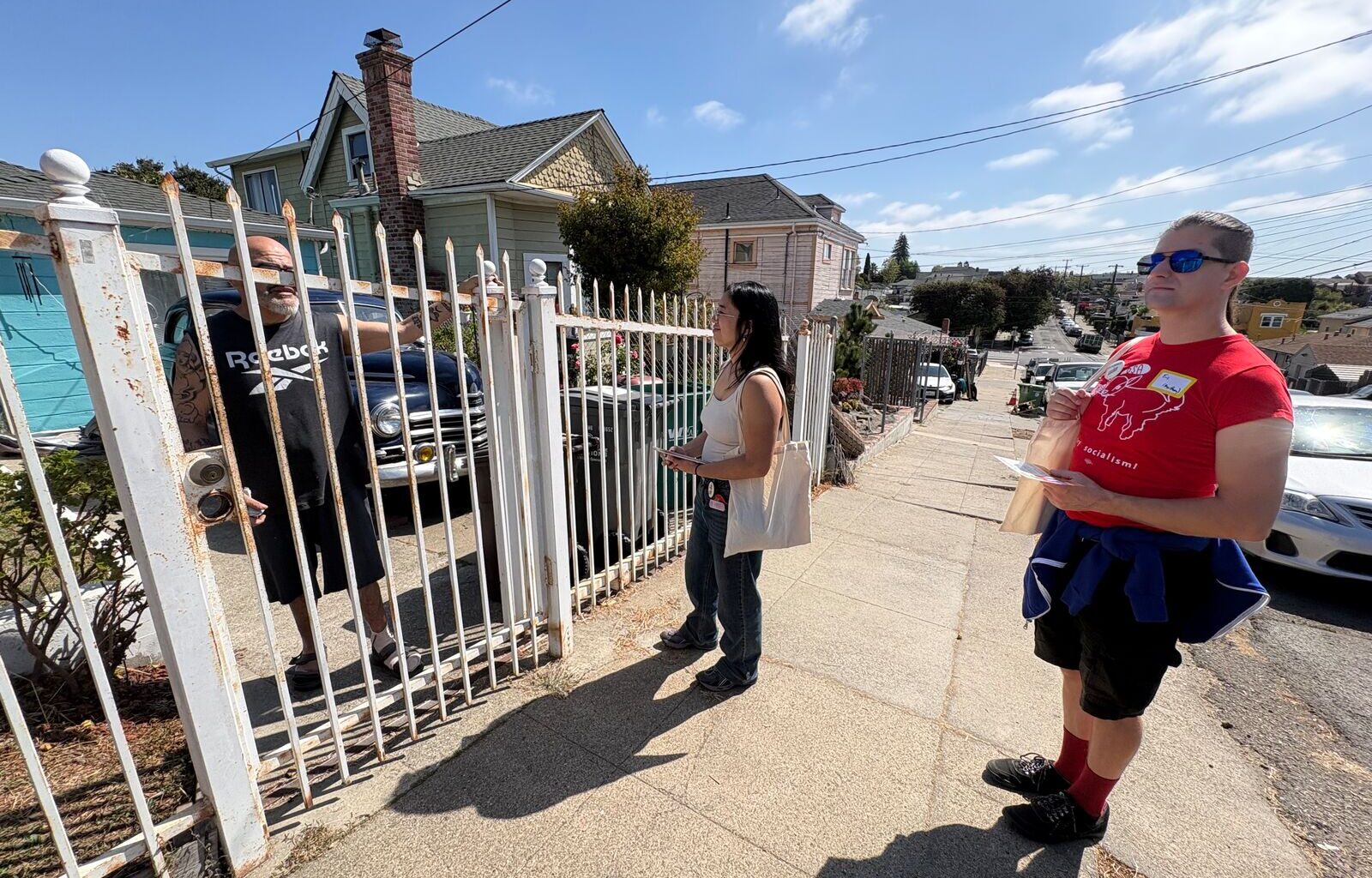
When the canvassers approach the small blue house in Oakland’s San Antonio neighborhood, they find the guy they want to talk to already standing in the yard.
“I’m a volunteer with the Nate Adams for City Council campaign,” says Rachel, speaking animatedly through the metal fence surrounding the property. “We’ve just been around the neighborhood chatting with everybody, to get a sense of what’s working or not working for them when it comes to living in Oakland.”
The man, middle-aged, tatted, in house-work clothes, walks over, game to share his thoughts.
Crime is troubling, but if you can stay out of the fray, “you’re good,” he says. The cost of living is the most pressing concern, especially for younger people. For the older generation, he continues, “our concern is the streets — the streets got holes. The city has done so much to clean Oakland, but yet it stays the way it is.”
Rachel nods. The man doesn’t know it, but he’s recited the exact platform she’s there to promote. Affordability. Busted roads. Unfilled city jobs — some 1,000, the vast majority of them already budgeted for, which Adams has made it his priority to fill.
The man tells Rachel and her canvassing partner Eric that he “doesn’t get into politics,” but he promises to relay the information to his wife. Rachel hands him some rolled-up literature on Adams through the fence.
“When we first got this place, we put these bars up for a reason,” the man says, apologetically. “There’s no need for them anymore. I wish we could take these down, but we already spent the money.”
The person they’re campaigning for on this Saturday in September, about a month and a half until the Nov. 3 election, is an energetic but electorally green activist who’s challenging incumbent Charlene Wang. Chosen during a special election in April 2025, Wang is finishing her first shortened term representing District 2, which encompasses Chinatown and areas east of Lake Merritt, including Lakeshore, Trestle Glen, Cleveland Heights, Little Saigon and San Antonio.
Adams belongs to a cohort of candidates across the country who are members of the Democratic Socialists of America, or DSA. A series of successes — most prominently Zohran Mamdani’s ascent to the New York City mayor’s office, but also victories in state and federal races in New York and elsewhere — has inspired the declaration of a “Summer of Socialism.” The Republican National Committee reportedly coined the term derogatorily, but its targets, including East Bay DSA, have embraced it.
 Candidate Nate Adams at a recent canvassing event for his D2 race. Credit: Natalie Orenstein/The Oaklandside
DSA office-seekers, many of them relatively young and new to electoral politics, are acting on a moment of economic hardship and insecurity, felt by voters at the gas pump and the grocery store, as well as in response to the AI industry that’s raising housing costs in the Bay Area, stoking fear about job losses, and bringing controversial data centers to neighborhoods. On the national level, many of these DSA members also take a clear stand against an issue that’s increasingly unpopular among Democratic voters yet is rarely disavowed by their political representatives: U.S. support for Israel.
While they still secured only a small fraction of all Democratic primary wins this year, their successes suggest a growing disillusionment with the status quo among the party’s typical voters.
“Not just in Oakland, but across the United States, people are feeling a lot of the same things,” Adams said in a recent interview, listing friends who’ve been priced out of the city by landlords and all-cash buyers. “There are just things that are not working right now, that can be addressed by community organizers and people who are beholden to working-class organizations running for office.”
Another person whom Rachel and Eric door-knock this Saturday in San Antonio says Adams himself already stopped by to canvas. The resident liked what he heard.
“If you’re against corporations, and you’re for individual people, then, good,” he says, adding, “What a Zohran Mamdani-looking guy!” (Adams is tall and has a similar haircut and proclivity for dressing in suits.)
But most people can’t be canvassed today; in the course of an hour, Rachel and Eric only speak face-to-face with three. That’s largely because most of the homes on their list of registered voters have imposing metal bars and gates, warding off would-be burglars but also, inadvertently, people coming by to talk politics. So they slip pro-Adams flyers, written in multiple languages, into fence cracks and hang them on doorknobs.
Adams’ website goes into more depth on his policy priorities — things like: Put limits on corporate investment in Oakland’s housing stock; force the city to follow public records laws; build more speed bumps.
A central question looming over Adams’ campaign is whether the national momentum around DSA candidates will carry over to Oakland. Can it propel him into a non-partisan seat on the Oakland City Council?
Adams’ message around affordability and jobs seems to be resonating with at least some D2 voters, but they may have other pressing or unique concerns. Voters might feel more comfortable sticking with Wang, who’s also relatively young and new to elected office but offers more moderate views — at least within Oakland’s spectrum of liberal to far-left politics.
Adams, a former East Bay DSA co-chair who was especially involved in supporting families during the last Oakland teachers strike, noted that membership in the organization has grown enormously both across the country and locally in recent months.
After mulling an electoral foray with fellow organizers, he landed on an answer. “When I was asked, I was like, ‘Let’s do it,’” he said. “This is the right political moment.”
On the Blade, safety appears to be the biggest priority
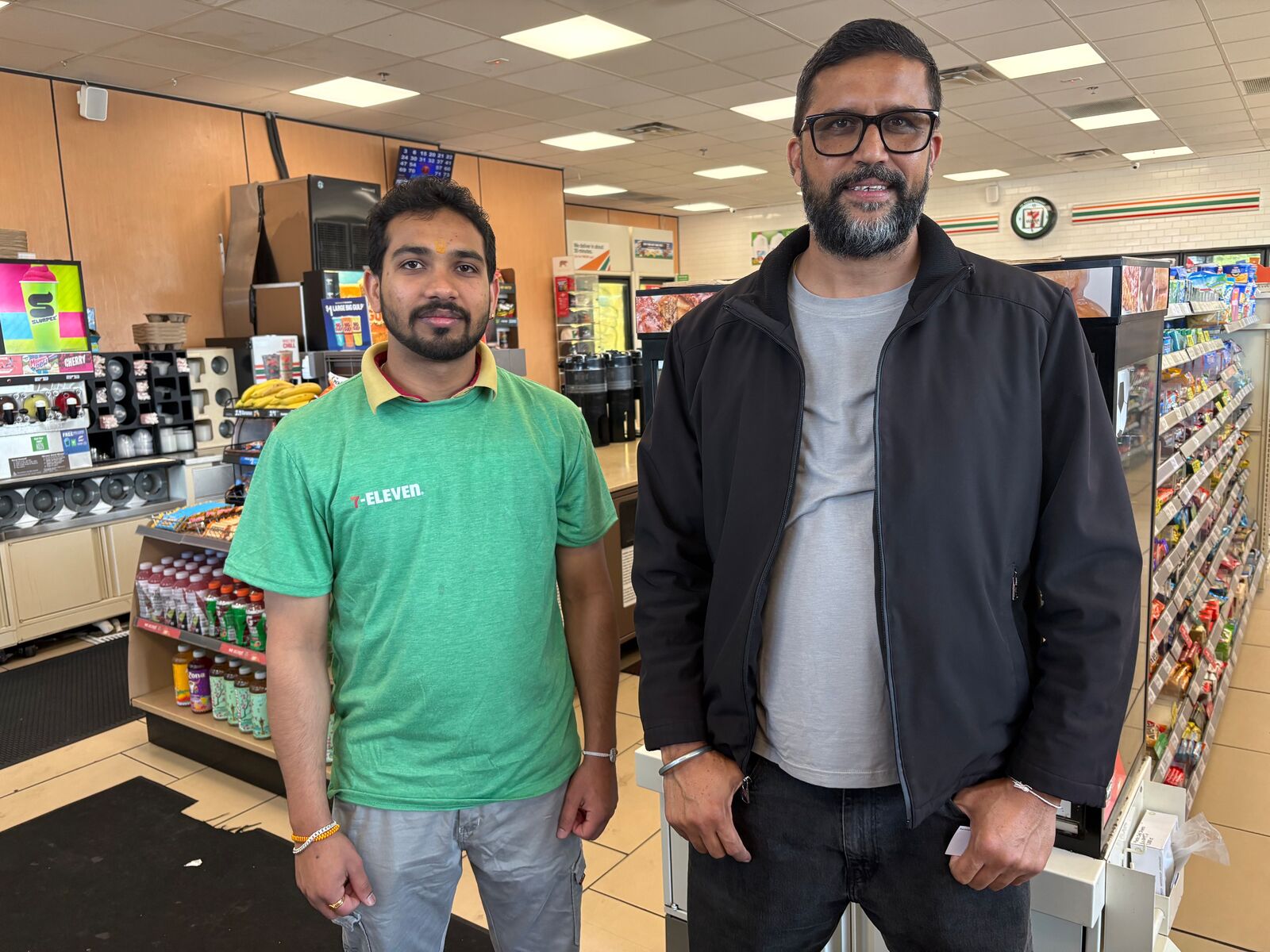 Employee Sagar Sagar, left, and franchise owner AD Brar at the 7-Eleven on International and 5th. Credit: Natalie Orenstein/The Oaklandside
One afternoon last month, a group of about 20 people, most of them teenagers, bombarded the 7-Eleven on International Boulevard and 5th Avenue, stealing goods, and then returning to break in and take even more. Someone reportedly tore the doorknob off, throwing it through the broken glass, and striking an employee.
The scar from that incident is still visible on the worker, Sagar Sagar’s, face, about an inch from his eye.
Sagar has been working at the store for four years and says there’s an incident practically every day. He usually calls the police. “Sometimes they come right away, and sometimes they don’t come,” he tells The Oaklandside. He lives a couple of blocks away, and there are issues there too.
When we reached out to Wang to schedule a phone interview about the District 2 race and the DSA member who’s trying to unseat her, she suggested we instead meet her in the district on a recent Friday — specifically on a stretch of International Boulevard known for its high crime rate and prevalence of sex trafficking. She wanted to introduce us to some business owners and residents.
The point Wang was trying to communicate was clear: idealism about affordability and changing the system is nice, but D2 residents have more immediate safety and survival concerns.
“You have to meet people where they’re at,” Wang said. “What you’ll consistently hear is desperation, urgency. People don’t have 10, 15 years for the root-cause [services] to take. People need action.”
We meet first at the popular, nearly 40-year-old Vietnamese deli and bakery Cam Huong, on International and 7th Avenue.
“The main concern weighing on me as a business owner is that I get home at night. And sometimes I feel like I won’t,” says Lele Quach, who has four children between the ages of 10 and 24.
There was the big commercial truck that ram-raided her shop, including after she paid thousands to install roll-up doors. There is the constant theft — daily, she says. And there are the incidents related to the sex trafficking common on this stretch of International, often referred to as “the Blade.”
One time at 7 a.m., two girls ran into the shop and hid behind boxes, according to Quach. She asked them to leave because her customers and staff felt uncomfortable. “Then she showed me her leg,” Quach says about one of the girls. “She said that someone had run over her, hit her with a car.” She begged Quach not to call the cops, the business owner said, and accepted an Uber ride away from the neighborhood.
Another time, Quach gave food and water to a sex worker who said she’d been on the streets for 48 hours but hadn’t been allowed by her pimp to keep enough money to buy a water bottle.
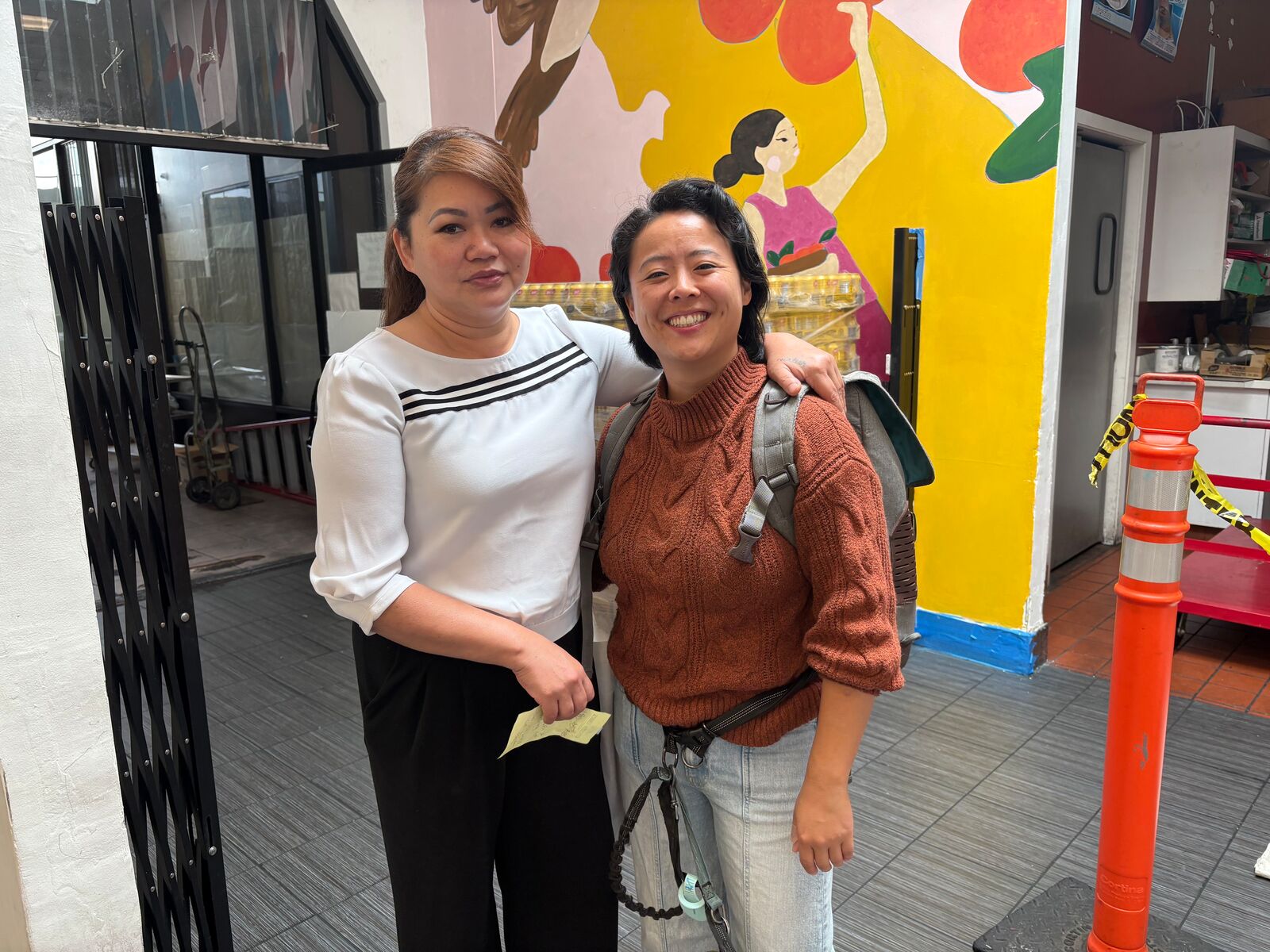 Cam Huong owner Lele Quach, left, with District 2 incumbent Charlene Wang. Credit: Natalie Orenstein/The Oaklandside
For Wang, the issue of trafficking of minors in her district feels personal. She has been open about the sexual abuse she experienced by her father as a child. Wang authored legislation that imposed fines for pimps and johns, designing it so the revenue would go to a fund supporting survivors. She also used her office’s discretionary fund to install street barriers around the Blade, hoping to disrupt people from turning onto side streets and soliciting sex workers.
Adams told us he thinks sex trafficking and sex work is “less of a barrier issue and more of an economic issue.” He thinks the deterrents will just relocate the activity, and wants to prioritize crossing guards for the nearby school and safe houses for survivors instead.
“There’s a lot I actually agree with the democratic socialists on, like expanding the social safety net,” Wang says while we’re in Cam Huong. “I mean, I’ve spent my career basically doing that.”
In the past, Wang, a graduate of Harvard’s Kennedy School of Government, held jobs dealing with homelessness and healthcare policy on the East Coast, as well as universal pre-K in New York City. Shortly before joining the council, she worked for the Biden administration on reconnecting communities that had been fractured by the construction of the federal highway system decades ago, and for the Environmental Protection Agency.
But she argues that even when social services exist in Oakland, like free after-school programs, there are families who won’t participate because they feel unsafe. She sees the issue as one that’s chicken-or-egg in nature; the city relies on tax revenue from businesses to fund social programs and tackle the root causes of crime, but businesses often won’t come here, or they quickly close shop, because of the crime.
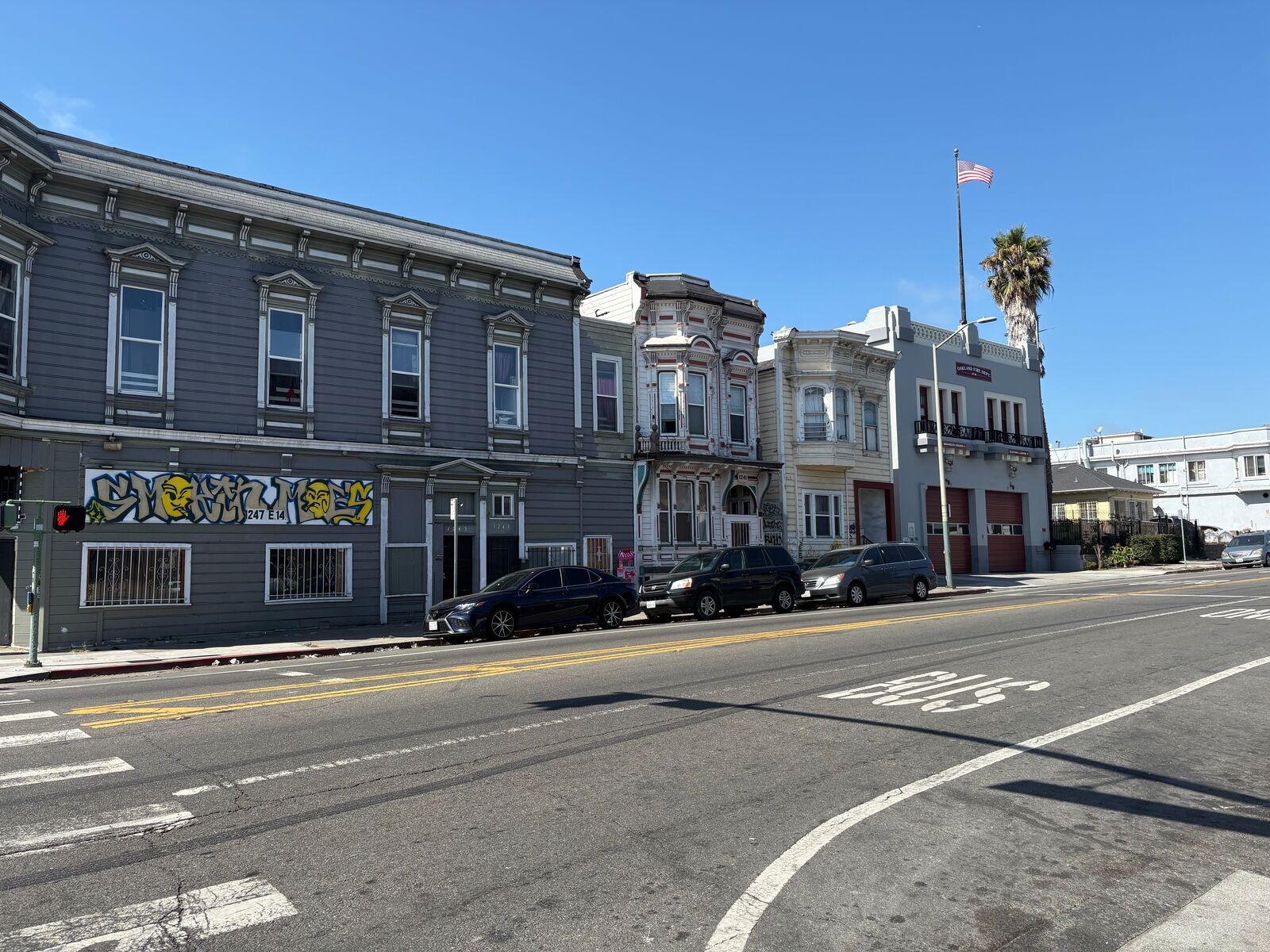 District 2 stretches from Chinatown through the San Antonio neighborhood, including a large stretch of International Boulevard. Credit: Natalie Orenstein/The Oaklandside
Back at the 7-Eleven where the recent robbery occurred, franchise owner AD Brar says employees typically quit after each major incident. Why doesn’t he, too? For one, franchise contracts are typically 10 to 15 years long, says Brar, who serves on the boards of multiple industry professional organizations.
For another, “I’m a minority here, and I was a minority back in India,” says Brar, who translates for employee Sagar in Punjabi during one part of our interview. “The community we serve is mostly Asian and Black community. If we close, then this community’s got to go a lot further for their day-to-day business.”
Sagar is clear on what he wants from his city leaders: “Money to protect employees, and lots of police and cameras.”
Wang voted to approve Oakland’s $2 million Flock Safety surveillance camera plan in December, and the city currently has about 290 Flock cameras in use. Oakland police say they used data from the license-plate readers to make 162 arrests, recover 174 stolen vehicles, and seize 51 guns last year.
Adams opposes Flock. And it’s not only people on the left who agree with him. Reacting to reports of Flock data being used by ICE and to go after people who get abortions, and to Flock lying to cities, government leaders across the political spectrum have been canceling contracts.
Wang and colleague Rowena Brown added a bunch of limitations into Oakland’s plan, like prohibiting out-of-state and federal police agencies from accessing Oakland’s Flock data and prohibiting it from being used to prevent reproductive care. But it’s unclear if these safeguards are enforceable, in part because Oakland hasn’t finalized its contract with the company.
The pain and pressure felt by workers, business owners, and residents we spoke to on International Boulevard that Friday was palpable. But it’s worth noting that Wang took us to one of Oakland’s most dangerous areas.
Across the city, crime is down. Oakland saw a historic drop in homicides from 2024 to 2025. Violent crime of all sorts went down by 25% and commercial burglaries dropped almost in half, according to police data. District 2 includes plenty of neighborhoods where the sorts of incidents recounted on the Blade almost never occur, and where public safety might not be every resident’s top political priority.
“In other parts of the district, safety concerns take other forms,” Wang acknowledged when we asked her about crime outside of the Blade. For example, “car theft is consistently brought up as an issue in Cleveland Heights and Bella Vista,” she said in an email, along with 911 response times and traffic safety. If reelected, she plans to ramp up work on recruitment to both dispatcher and other city-wide OPD jobs, tapping local organizations and education programs. But she said her approach is to focus resources on the parts of the district with the highest needs.
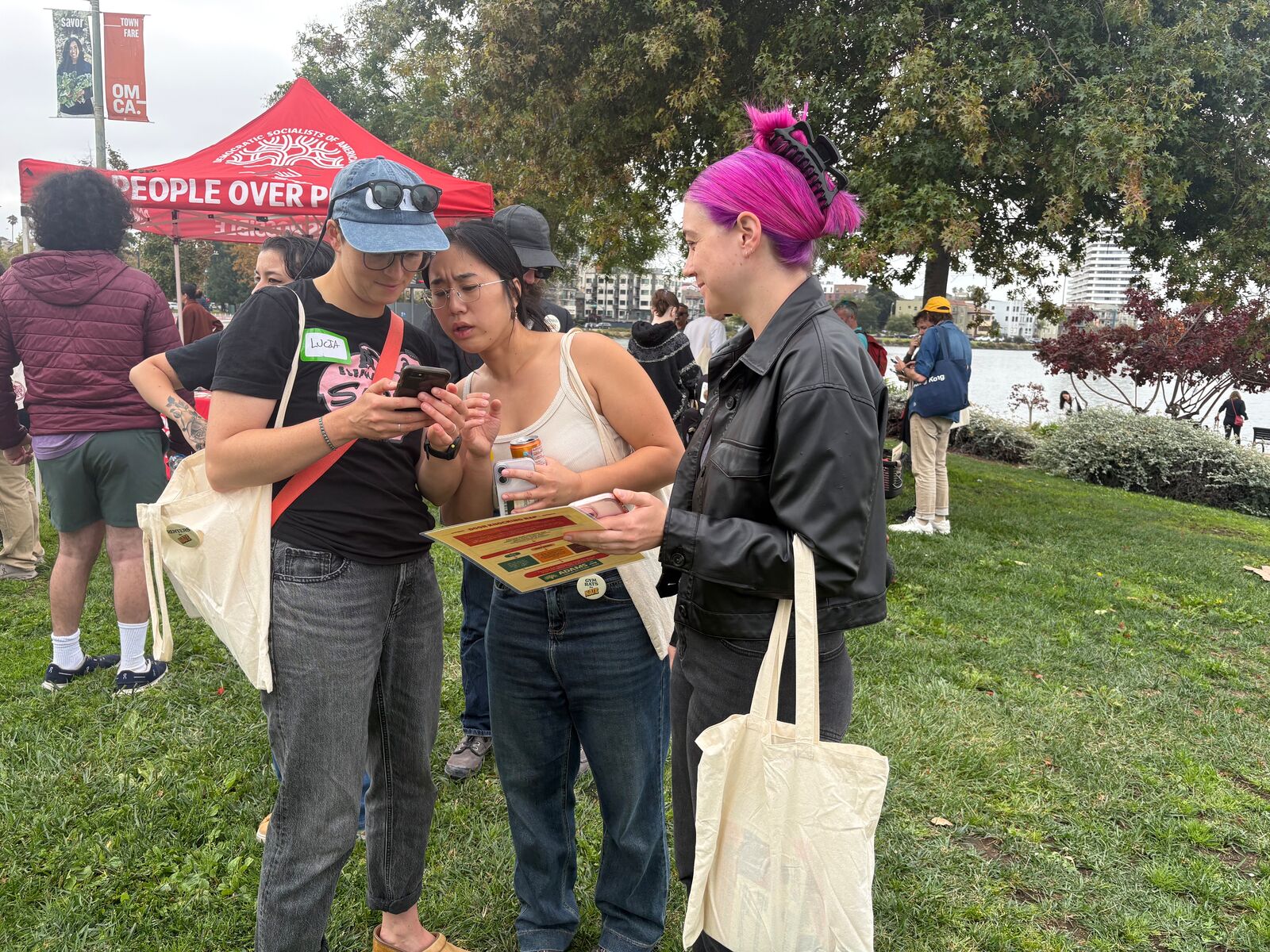 Adams supporters consult a canvassing app before fanning out to different neighborhoods. Credit: Natalie Orenstein/The Oaklandside
Of course, neither of the candidates in the D2 race is running on a single issue.
Adams’ platform names several public safety priorities, too. He wants to invest in traffic-calming measures, street lights, and pothole-filling; he’s fond of pointing out how much money Oakland spends on trip-and-fall lawsuits — dollars that could instead go to fixing sidewalks, in his view. There have been some high-profile collisions and fatalities in the district that advocates say would have been prevented by safer streets and infrastructure.
On crime, his plans focus mainly on preventative measures and non-police response. He supports expanding the Department of Violence Prevention, community ambassadors, and MACRO, and working with the county to bolster opioid overdose prevention. Adams also wants to fill 911 dispatcher vacancies, to speed up emergency response times, and improve dispatchers’ working conditions.
Wang also names affordability as a top priority on her website, and she lists numerous policy achievements she puts in this bucket. One of the city measures on the ballot this November, Measure FF, was written by Wang and would remove an exemption that lets banks and investors get out of paying taxes to the city when they foreclose on a property in Oakland. She believes this tax, which is estimated to bring in up to $13 million annually, would disincentivize institutions from kicking people out of their homes.
She also notes that she’s been helping Grocery Outlet clear bureaucratic hurdles as it plans a move to the district. And she points out that she was in the small minority on the council to support state legislation that would bring scrutiny of PG&E and exploration of other utility models, even though a lobbyist for the company asked her not to. PG&E is one of the largest businesses based in Oakland.
Wang and Adams are powered by different bases
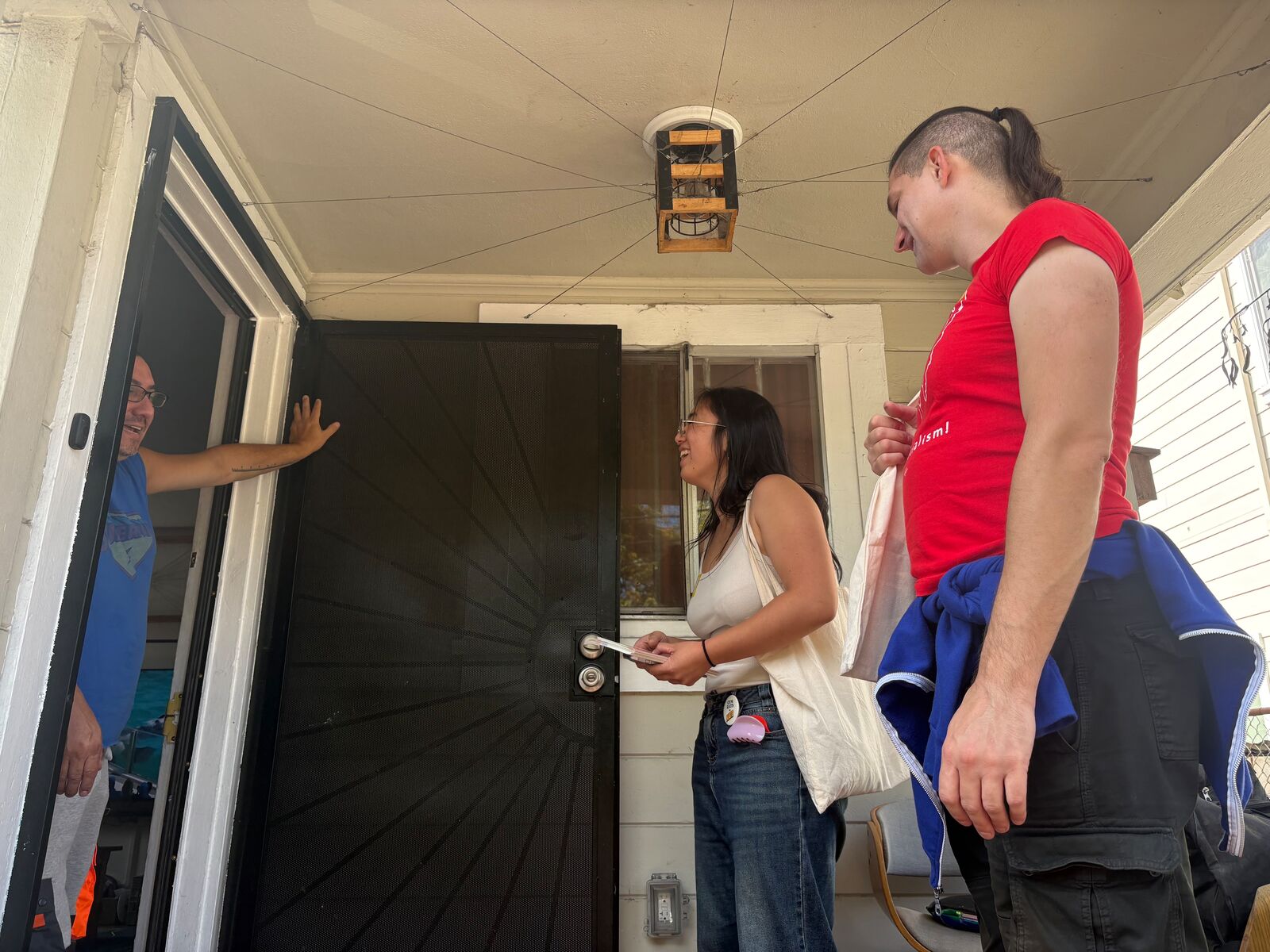 Canvassers speak with a resident, who says he appreciates Adams’ anti-corporate politics. Credit: Natalie Orenstein/The Oaklandside
Across the country, DSA membership is exploding — up to a reported 120,000 people as of August. National media describe an “electric” feeling at conventions and gatherings.
The East Bay chapter is also “seeing an incredible growth in membership,” said co-chair Dori Goldberg. East Bay DSA, covering Alameda and Contra Costa counties as well as parts of Napa and Solano, grew 40% last year, according to him, now at 2,400 members.
“I think DSA is offering something people are really seeking right now,” Goldberg said, “an alternative to the way we’ve been doing politics in this country for a long time.”
Goldberg first got involved in 2018, campaigning for Jovanka Beckles for State Assembly. He officially joined the organization in 2021, when the chapter was organizing around COVID-19 hazard pay for public transit workers.
“I think Nate’s campaign is basically a local manifestation of an emphasis we’ve seen from DSA candidates across the country — affordability and government accountability,” he said. “These are really the priorities we’ve seen from D2 residents,” too.
Adams’ campaign has engaged 150 volunteers, who’ve knocked on 8,000 doors, according to East Bay DSA. “The style of politics that we want to do is not just engage people and ask for their vote, but really have deeper conversations with neighbors,” said Goldberg.
One of Wang’s constituents, who spoke with us that Friday on International, said he doesn’t like how DSA is approaching the race.
He accused the organization of running a “smear campaign” against Wang, pointing to a recent Instagram post that featured the councilmember’s image and claimed she wants to criminalize sex work.
“I’m not a liberal, I’m a leftist,” said the resident, Yannez Brown, adding that he’s thrilled by the electoral wins in New York. “That’s how I identify with my politics, 100%. But the core of what Charlene’s administration is trying to do, her constituents agree with. They are desperate for anything to happen” to reduce crime. Brown pointed to a patch on the wall of his house, which he added after a stray bullet punctured it.
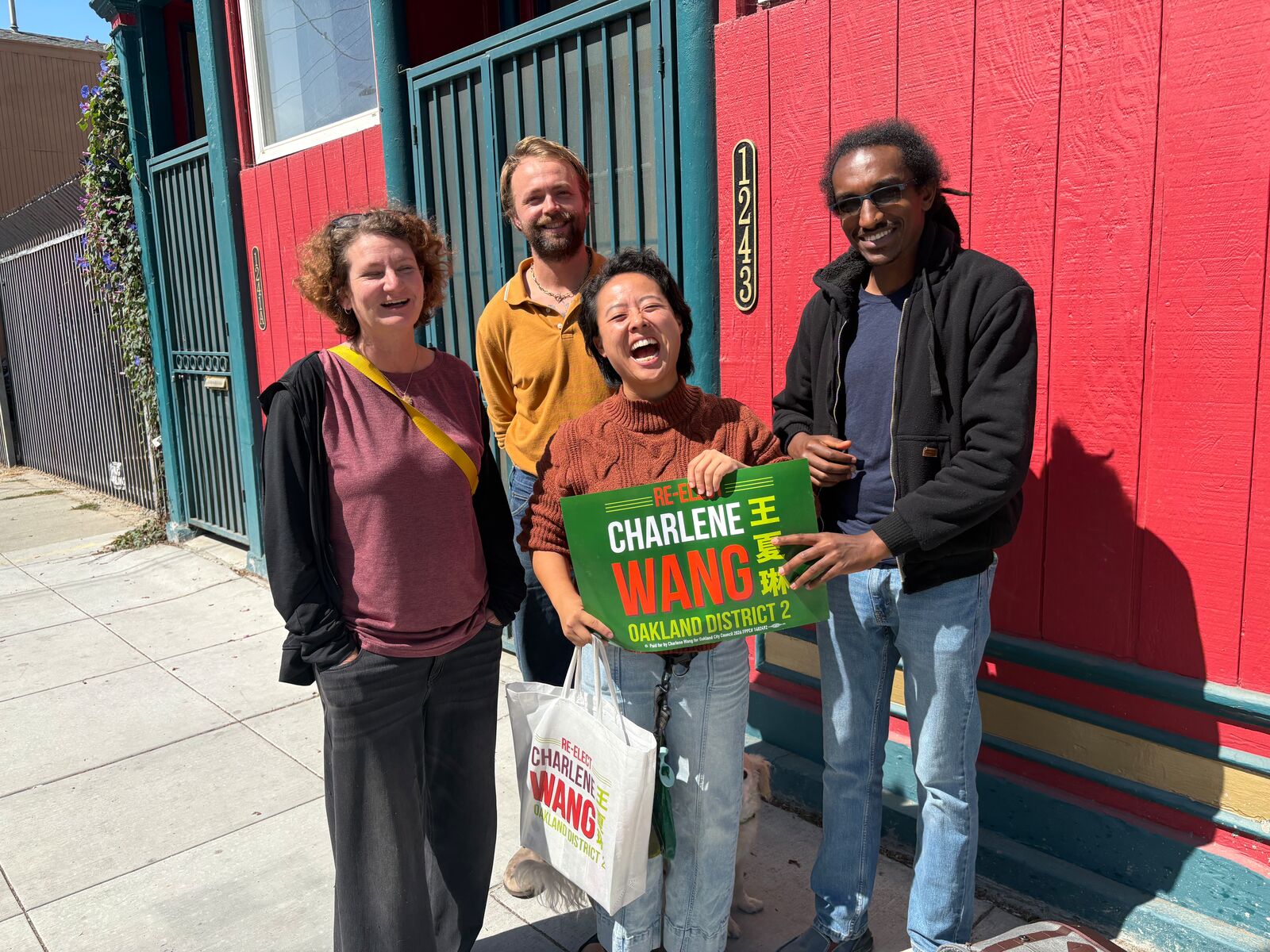 District 2 residents (from left) Sara Rowley, Yannez Brown, and Michael Andemeskel say Wang is responsive to their safety concerns. Credit: Natalie Orenstein/The Oaklandside
Goldberg, though, is adamant Adams will win, and the chapter has endorsed 10 other local candidates as well, including Jennifer Brouhard and Valarie Bachelor for Oakland school board.
“These candidates are winning by putting the needs of working people first in their messaging,” he said. He added that “people-power doesn’t just end at the ballot box”; East Bay DSA is hoping to parlay the momentum and membership boost into more trained organizers and participants in their campaigns around worker support, divestment, and more.
Adams developed his political chops during early COVID, after graduating from UC Berkeley, which he transferred to from community college. He joined the Emergency Workplace Organizing Committee, a national project of the DSA and a labor union. They fought for safety protections for people on the front lines.
“That was the type of work that was very politicizing for me, because it really revealed to me the power of when a lot of people, whether in their workplace or in their apartment building, come together around a set of demands,” Adams said. He’s currently employed as an organizer for the Richmond Progressive Alliance, the political coalition that made a name for itself by winning local elections and taking on Chevron.
But he was actually raised conservative, by his single, Japanese-American mother, in Sacramento. Both he and Wang, the child of Chinese immigrants, had grandparents who lived in Oakland. Both say they experienced economic insecurity growing up.
While Adams’ base of support is rooted deeply in the dynamic and surging DSA, Wang’s endorsements are spread across an array of established leaders and groups, including the Alameda County Democratic Party. Her list of supporters includes state and local politicians, including Mayor Barbara Lee, State Senator Jesse Arreguín, and all but one member of the current City Council. She also touts the backing of organizations like the Sierra Club, the Building & Construction Trades Council of Alameda County, and Empower Oakland.
Both campaigns have brought in a decent amount of money, but Wang has still far outraised and outspent Adams.
Their disparate supporters neatly sum up their distinct pitches to voters.
Both candidates claim to speak to the working, struggling, sick-and-tired residents of District 2. But one says these voters’ needs will be best met with pragmatic policy and the strength of a more seasoned official who can build on recent wins.
The other is betting that a lesser-known community organizer who shares their feeling of betrayal by the government, and seeks systemic solutions, is the answer to their frustration.
“*” indicates required fields