
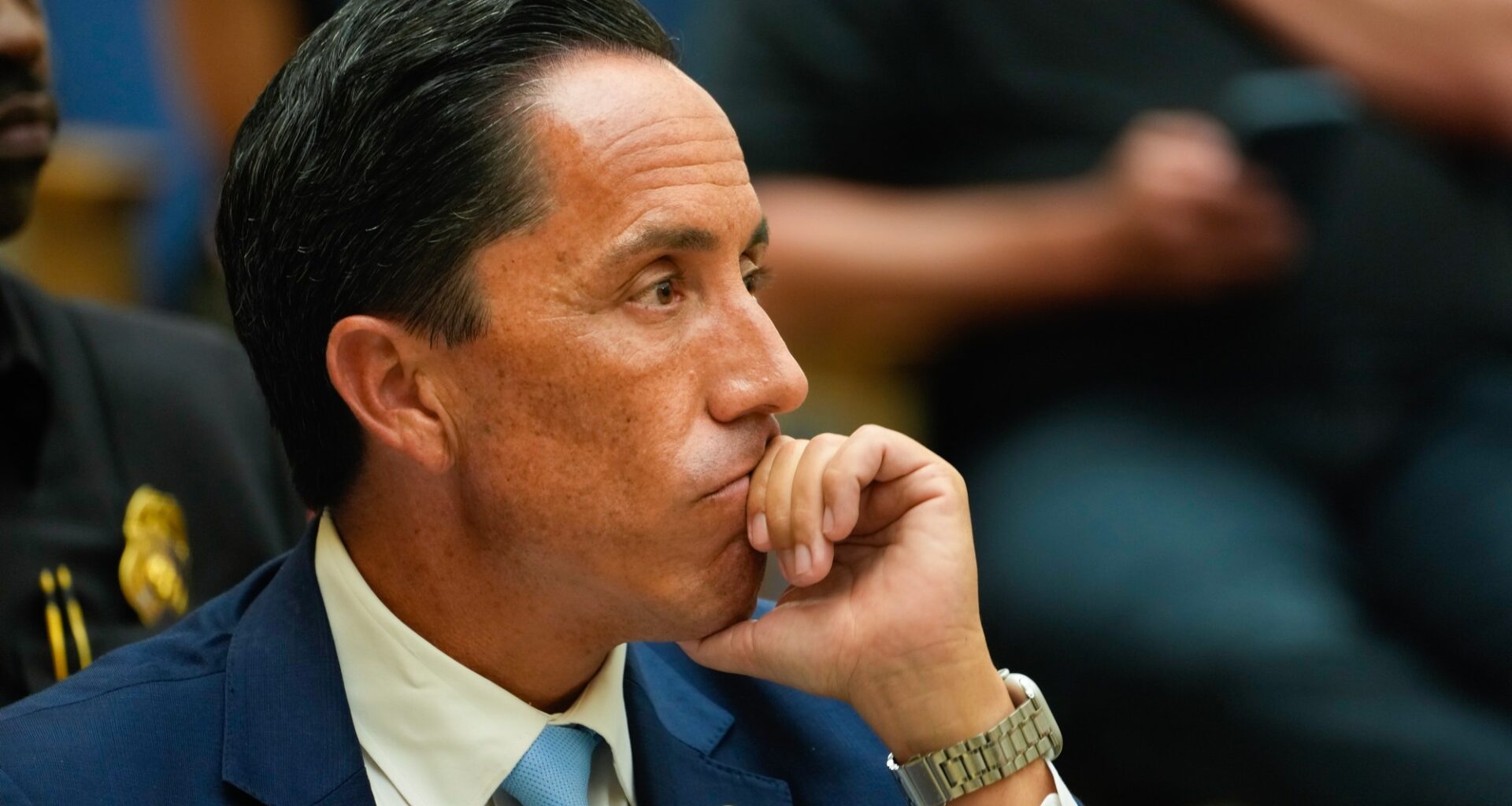
This week’s bombshell U-T reports about 87,000 San Diego households being overbilled, some massively, for annual trash service being collected via county property taxes for the first time on behalf of the city understandably triggered public fury. But after nearly two years of civic stupidity — most egregiously in the June decision to close 13 public bathrooms in a city park visited by 15 million people a year — what it did not trigger was surprise. Competence is not a strong suit at City Hall, and it’s fair to say Mayor Todd Gloria deserves the most blame.
In June, when Gloria took over as president of the U.S. Conference of Mayors at a gathering in Long Beach, he expounded on his “Mayors Deliver” agenda. Here’s what he’s delivered in his hometown: an elaborate bait-and-switch on the size of the new trash fees that were imposed on 220,000-plus single-family homeowners in a June 2025 City Council vote; dishonest claims that fees were higher than projected because of requests by residents at “hundreds of community meetings” for expanded city service; and a refusal to acknowledge that San Diego voters made clear their support for outsourcing services like trash collection in 2006.
For a long time, the mayor seemed to think this was all going well. In August 2025, in a report published by Bloomberg Cities Network (affiliated with the Bloomberg Center for Public Innovation at Johns Hopkins University) that appeared to be based entirely on interviews with Gloria’s staff, the city’s trash program was depicted as a thoughtful model for the nation. Incredibly, it said the Gloria administration was “offering lessons to local leaders everywhere about not just enduring budget stress, but making the most of it.” Drawing specific praise: the city’s decision to “seamlessly” include trash fees on residents’ property tax bills. Feel free to laugh, wince or scream. San Diego is a civic horror show, not a model for the nation.
And as City Attorney Heather Ferbert reminded us this week, the blame goes beyond Gloria. In June, city voters rejected Councilmember Sean Elo-Rivera’s Measure A, a tax on “second homes” that are unoccupied most of the year. The City Council voted to put the measure on the ballot despite warnings from member Raul Campillo that a very similar San Francisco law was blocked in 2024 by a state judge who agreed with property owners that it violated state law and the U.S. Constitution. Unsurprisingly, on Sept. 11, a state appeals court ruling threw out the San Francisco law.
Ferbert could have headed off the debacle that would have resulted if Measure A passed by publicly warning city elected leaders that they risked making a costly mistake — as predecessors Mara Elliott, Jan Goldberg and Mike Aguirre had often done on other big issues. But in her response to criticism she faced over her dereliction of duty, Ferbert not only defended keeping her advice to council members confidential, she said her handling of Measure A had the effect of “protecting the public interest.”
Once again, feel free to laugh, wince or scream. The only thing “seamless” about City Hall is the way one example of awful governance flows into the next.