
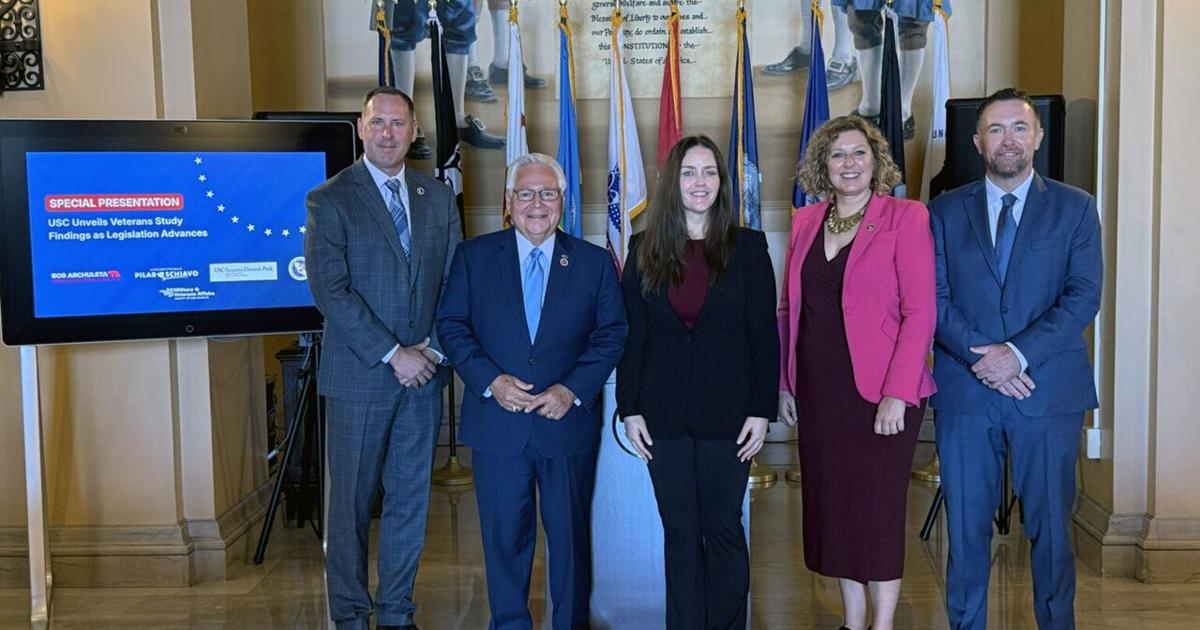
A study conducted by the University of Southern California has found that veterans reported meaningful improvements in their health, financial security, employment, housing stability and overall quality of life after working with county veterans service officers. The research study was released Sept. 10, in a special presentation at Bob Hope Patriotic Hall in Downtown LA.
The study examined the experiences of 565 veterans who received services from county veterans service officers in Los Angeles, Santa Clara and Nevada counties. County veterans service officers, commonly known as CVSOs, are trained and accredited professionals who help veterans, transitioning service members and their families navigate complex benefit systems and access earned compensation, health care, education, housing and other services.
Two in five veterans surveyed had tried unsuccessfully to file a benefits claim before seeking help from a CVSO, the study found, while 72%t were satisfied with the assistance they received and 51% said their overall quality of life had improved through their work with CVSO services to obtain benefits.
“After so much sacrifice and service, our veterans deserve timely access to the support they have earned,” said Los Angeles County Board Chair and First District Supervisor Hilda L. Solis. “This pilot program demonstrates that when we intentionally streamline services and reduce barriers, veterans are better able to access housing, health care, mental health support and other essential resources. We have a responsibility to ensure no veteran is left navigating unnecessary bureaucracy when seeking the care and services they need.”
Veterans also reported reductions in unmet mental and physical health needs, unemployment, food insecurity and difficulty obtaining needed health care. Because the pilot study relied on participants’ retrospective reports, researchers noted that the improvements cannot be attributed solely to CVSO services or benefits. The findings nevertheless provide an exploratory look at how veterans’ lives may improve after working with CVSO services to obtain benefits.
“The findings demonstrated that CVSOs provide a vital and essential service. Many veterans reported they weren’t sure what they would have done without the support they received. Respondents described many improvements to overall well-being, and wished CVSO services were more readily available,” said Dr. Sara Kintzle, a research professor at the USC Suzanne Dworak-Peck School of Social Work and the study’s principal investigator.
The research also identified a significant challenge: The demands placed on many CVSO offices exceed their available staffing and resources. Veterans described difficulty obtaining appointments, long waits and inconsistent follow-up, even while expressing appreciation for staff members working to serve large caseloads.
Researchers recommend increasing CVSO resources and capacity, strengthening staff training and evaluation and continuing to collect data measuring veterans’ experiences and outcomes.
“For the first time, we have independent research measuring veterans’ experiences and outcomes after working with county veterans service officers, and the answers came from veterans themselves,” said Jim Zenner, director of the Los Angeles County Department of Military and Veterans Affairs. “I’m grateful to the veteran service officers who do this work every day, often while facing demands that outpace available resources. We owe it to our veteran community to keep veterans and those who serve them at the table as we assess needs, shape solutions and advance legislation that strengthens the services veterans and their families rely on.”
Veterans interviewed for the study described CVSO expertise as essential to navigating the benefits process, understanding eligibility requirements and communicating how their military experiences affected their lives. They also emphasized that the quality of their experience often depended on individual staff members’ expertise, communication and ability to provide timely follow-up.
“The study confirms what CVSOs already know: expertise and follow-up change outcomes. AB 2219 is our commitment to raise that standard and keep improving the service veterans receive, county by county.” said Morgan Boyd, president of the California Association of County Veterans Service Officers and the San Luis Obispo County veterans service officer.
The study was released alongside a discussion of Assembly Bill 2219 (AB 2219). The enrolled bill would establish statewide standards intended to strengthen the consistency, capacity and coordination of county veteran services.
AB 2219 would require CVSO vacancies to be filled within 12 months and newly appointed officers to obtain and maintain accreditation from the California Department of Veterans Affairs within nine months. It would also establish minimum training requirements addressing equitable access to earned benefits, awareness of no-cost disability claims assistance and improved data collection.
By Jan. 1, 2029, the bill would require the state to implement a statewide system that distributes appointments, disability claims and appeals among county offices regardless of where a veteran lives. It would also establish a service capacity and performance framework to inform funding allocations, expand statewide reporting and create a standardized survey measuring veterans’ access, trust, service effectiveness and overall experience.
“It is so important that the community, the state of California, and the nation understand what these County Veterans Service Officers do. They are the qualified and trustworthy professionals that create a lifelong connection to vital benefits and services for veterans and their families,” said Sen. Bob Archuleta, chair of the California Senate Committee on Military and Veterans Affairs. “I am so proud of this study and of our unwavering commitment in Sacramento to ensuring veterans continue to get the expert, no-cost services that they deserve.”
The bill passed both houses of the California Legislature without opposition and was enrolled Aug. 24.