
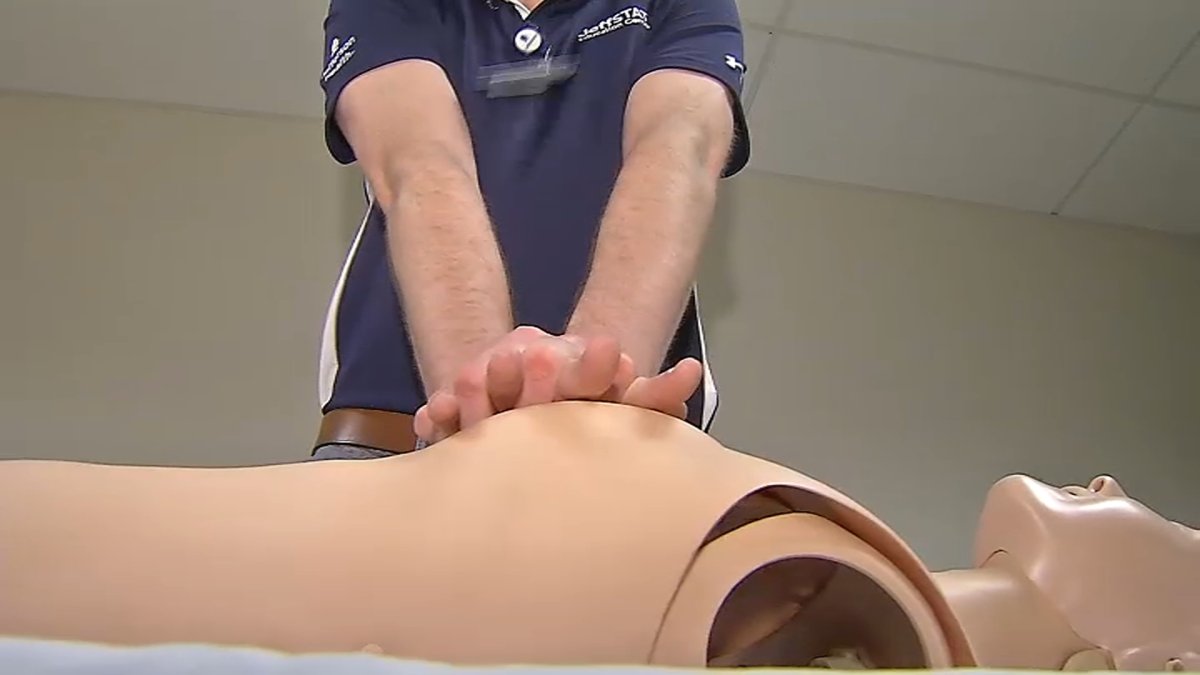
The regional initiative began in early 2024 with the goal of training 1 million people in hands-only CPR to “close the gap in emergency care during a cardiac event before medical professionals arrive,” according to a statement from the county and university. In late August, the two confirmed 1,011,034 people have been trained in the lifesaving technique as part of the program.
“Cardiac arrest can happen to anyone, anywhere, at any time,” said Dr. Kristi L. Koenig, San Diego County’s emergency medical services director. “Nearly half of the people who suffered an out-of-hospital cardiac arrest in San Diego County last year received CPR from a bystander before emergency responders arrived. Achieving the goal of more than a million trained means more people are now prepared to act when every second counts.”
UCSD’s Herbert Wertheim School of Public Health and Human Longevity Science was the county’s main partner, but the Revive & Survive San Diego coalition includes 49 total partners — including schools, first responders, health centers and businesses — that hosted a total of 25,138 free training events.
“When we envisioned a community CPR education program, we set the ambitious goal of training a million people because of the strength of public health partnerships in San Diego,” Anderson said. “This community could quickly grasp the importance of having 1 in 3 residents in our region being ready to save a life if someone’s heart stops beating.”
Natasha Martin, professor of medicine at UCSD School of Medicine, used simulation modeling to estimate five years of training could result in more than 1,600 additional bystanders performing CPR, a 40% increase, and save roughly 400 additional lives.
“Every second matters when it comes to cardiac arrest,” said Jeff Collins, director of San Diego County Fire. “Brain death begins to occur within four to six minutes after cardiac arrest without CPR. And, for every minute that it is delayed the chances of survival decrease by 7 to 10%.”
According to the county statement, hands-only CPR keeps blood flowing to vital organs using chest compressions alone. The method focuses on calling 9- 1-1 and performing compressions at 100 to 120 beats per minute.
More information and upcoming training opportunities are available here.