
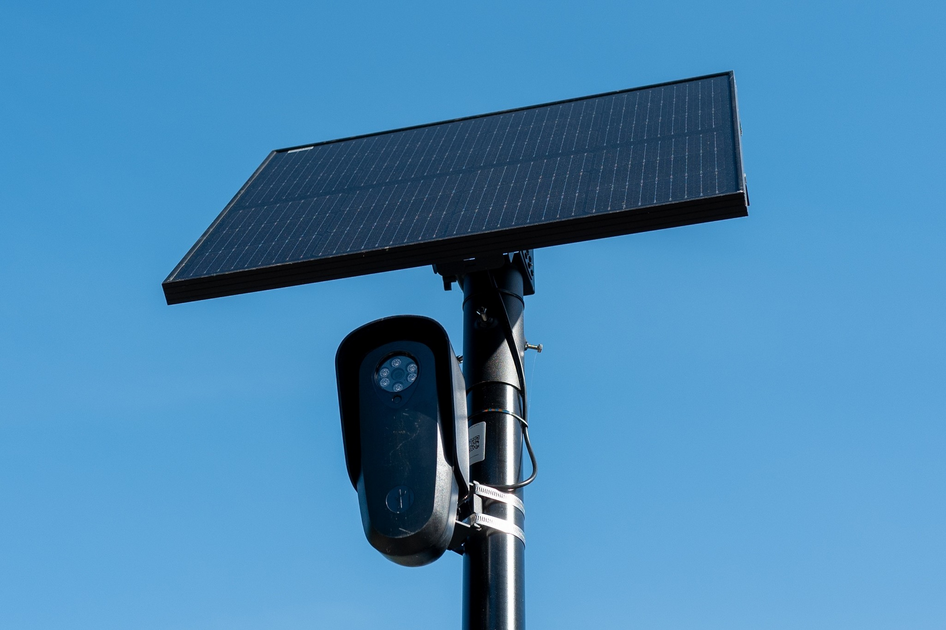
San Francisco Mayor Daniel Lurie will tighten rules limiting how police and Flock Safety use surveillance data, a signal that he’s standing by the controversial tech company amid a national backlash over privacy concerns.
Lurie’s administration announced a sweeping package of new rules Tuesday designed to prevent the misuse of surveillance data. The mayor’s policy changes will limit how long data from cameras is stored by Flock and require stricter oversight for when San Francisco Police Department employees can access it.
“San Franciscans expect us to keep them safe and protect their privacy,” Lurie said in a statement. “This technology helps us keep workers, small business owners and families safe — because we will not go back to a time when people could break into cars, rob businesses, or commit serious crime without consequences.”
The mayor’s announcement comes as Flock — the vendor for the city’s network of nearly 500 cameras and other devices — has faced growing public backlash over concerns about mass surveillance and unauthorized federal access, including fears that the data could aid President Donald Trump’s immigration crackdown.
But leaders of San Francisco’s moderate political establishment have doubled down on their support for SFPD’s surveillance efforts, citing the city’s plummeting crime rates in recent years. The Board of Supervisors is expected to vote on whether to extend Flock’s contract with the city early next year.
Lurie’s policy changes, which he can impose administratively without approval from the Board of Supervisors, require Flock to remove automated license-plate reader data from its systems after 30 days. The mayor’s office said SFPD will have sole control over the data afterward. Previously, Flock had access to the data for 12 months.
SFPD employees will likewise be limited in how long they can access the data. After 30 days, police personnel will be required to get command approval to access it and must document how the information is used related to ongoing investigations. In most cases, SFPD will be required to delete the data after 12 months.
The mayor’s office said the policies are closely modeled after similar protections adopted by the state of Oregon and recently proposed by San Jose Mayor Matt Mahan.
Lurie was expected to discuss the policy changes during a news conference this morning alongside District Attorney Brooke Jenkins and Assemblymember Matt Haney. Haney said he will carry state legislation next year that would strengthen California’s penalties for the unauthorized disclosure or misuse of public-safety data — current state law doesn’t outline any penalties for misusing license-plate reader data.
San Francisco’s approach is a contrast to some other deep-blue cities that have reversed course on police surveillance due to concerns about Flock and data privacy.
Across the country, nearly 150 cities and local governments (opens in new tab) have deactivated cameras or canceled their contracts with Flock due to public backlash. Several Bay Area localities — including Richmond, Half Moon Bay, Mountain View and Redwood City — have also debated whether to pause or cancel contracts.
But Lurie and moderate Democrats, who hold a majority on the San Francisco Board of Supervisors, have largely defended the program while touting the city’s recovery from pandemic-era decline that led to deteriorating street conditions, widespread retail theft and surging fentanyl overdoses.
Crime in San Francisco, especially property crime, has plummeted in recent years, a trend that has continued since city voters approved a March 2024 ballot measure to expand SFPD’s authority to use drones and cameras. Car break-ins, which increased during the pandemic, are at a 22-year low and homicides rates are at the lowest level since 1954.
Still, concerns about Flock cameras have led to protests from progressive activists who argue the cameras are yet another example of Big Tech’s grip on political power in San Francisco.
A September 2025 Standard investigation found that the city’s Flock license-plate database was illegally accessed 1.6 million times by out-of-state agencies. Additionally, the San Francisco Police Department came out with its own internal audit, confirming that outside agencies had unauthorized access to local cameras.
Jenkins, the district attorney, said city leaders must show voters the program has proper oversight at the same time they explain the public-safety benefits of surveillance technology. She argues San Francisco voters remain largely supportive of police using surveillance cameras.
“We don’t want to wait until there’s a ground swell of concern,” Jenkins said. “It’s our responsibility to make sure that people understand why the technology is useful. We, as a city, need to continue to embrace it.”