
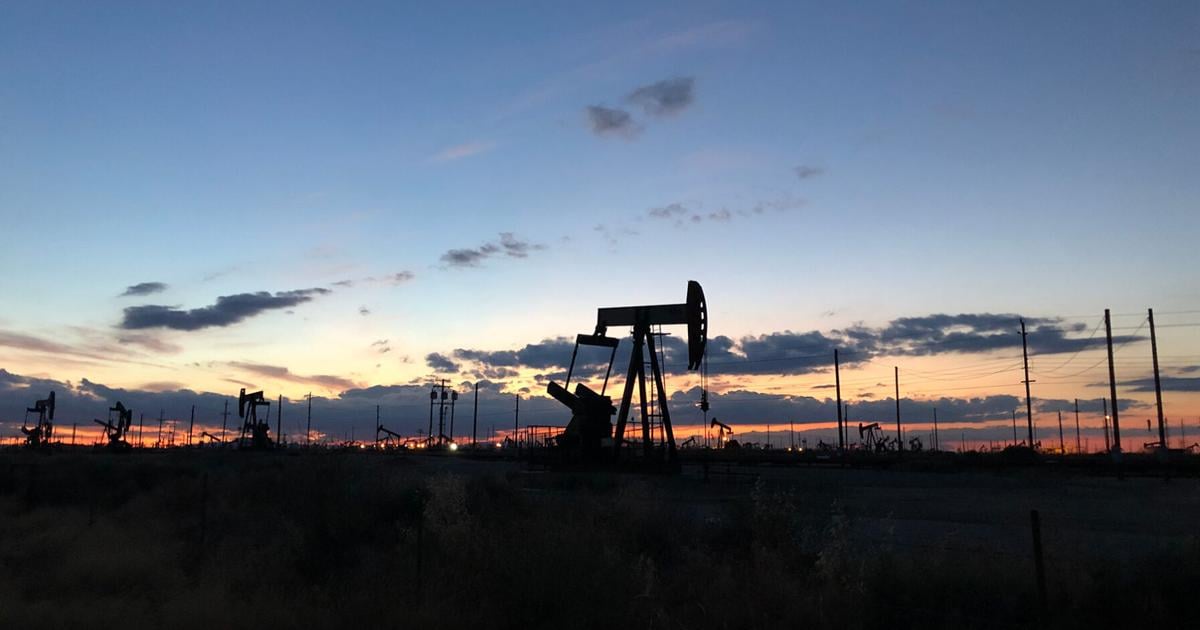
UC Berkeley researchers just unearthed more of what causes Valley fever, a fungal lung infection, and the answer sits right under oil and gas wells in the Central Valley.
Researchers with the Remais Lab at UC Berkeley published a paper Sept. 1 finding that oil and gas development in the San Joaquin Valley correlates with an 11% greater chance of contracting Valley fever, which can be fatal without proper antifungal treatment.
The infection, also called coccidioidomycosis, stems from two species of Coccidioides fungi found in soil. Fungal spores can disperse and be cast miles away by disruptions to soil, including wind, farming and construction, like those involved in oil drilling. Spores can grow in lungs after people inhale them, causing the infection to spread within the body.
Scientists correlated the number of oil and gas wells constructed in California between 2007 and 2022 with data on Valley fever cases. They zoomed in on data for Kern County — the county with the highest incidence of Valley fever in the U.S. — which is also home to the most intensive oil and gas development in California, according to the paper. The researchers found 73% of the county’s residents lived within about 3 miles of at least one well that was in preproduction.
“These findings are novel in that they identify a previously unknown adverse health outcome of oil and gas construction (risk of fungal infection), and a novel route of Valley fever exposure,” said Lisa Couper, the paper’s corresponding author and a UC Berkeley postdoc, in an email.
David González, an assistant professor of environmental sciences at the UC Berkeley School of Public Health, studies the effects of oil drilling.
“For Valley fever, we’re predominantly worried about sources of dust, and we know that oil and gas drilling produces dust,” González said. “So it naturally raised this question of, ‘Could that be causing problems for people with respect to contracting Valley fever?’”
John Taylor, a professor of plant and microbial biology, became interested in Coccidioides in the 1990s and has spent the past few years collecting soil samples in southern Central Valley.
Taylor said it’s hard to avoid breathing in spores in areas where Coccidiodes lives, but for workers in industries that demand soil excavation work — from construction to solar panel installation and movie set development in the Central Valley — masking could help their chances.
“The only way to avoid being infected by this fungus would be to wear a HEPA-filtered, powered full-face mask all the time,” Taylor said. “So nobody’s going to do that. In fact, they don’t even do it when they’re excavating.”
The Centers for Disease Control and Prevention receive reports of about 20,000 Valley fever cases per year, but according to a spokesperson, the real number of cases is much higher since many people either never get tested or are diagnosed with a different illness.
“If 1,000 people have this fungus in their lungs, 600 won’t know it.” Taylor said.
The infection can cause flu-like symptoms such as fever, cough and shortness of breath, as well as chest pain, joint pain and rashes. There is currently no vaccine for Valley fever.
From 2011 to 2014, a Valley fever outbreak occurred at two San Luis Obispo County solar farms. Then in 2024, public health officials linked a Valley fever outbreak that infected nearly 20 people to a music festival in Kern County.
According to González, worsening droughts and precipitation patterns that are drying out parts of southern Central Valley also make it more likely that people could contract Valley fever, since drier soil means more dusty conditions.
On the upside, oil and gas well production is generally going down in California, according to González.
“In previous studies, we’ve been focused on the risks from air pollution when you’re drilling a well or the potential for chemicals that are used in well drilling to contaminate water,” González said. “Now we also know that there’s another concern, which could be the potential for spreading this fungal disease in places where the disease is prevalent.”