
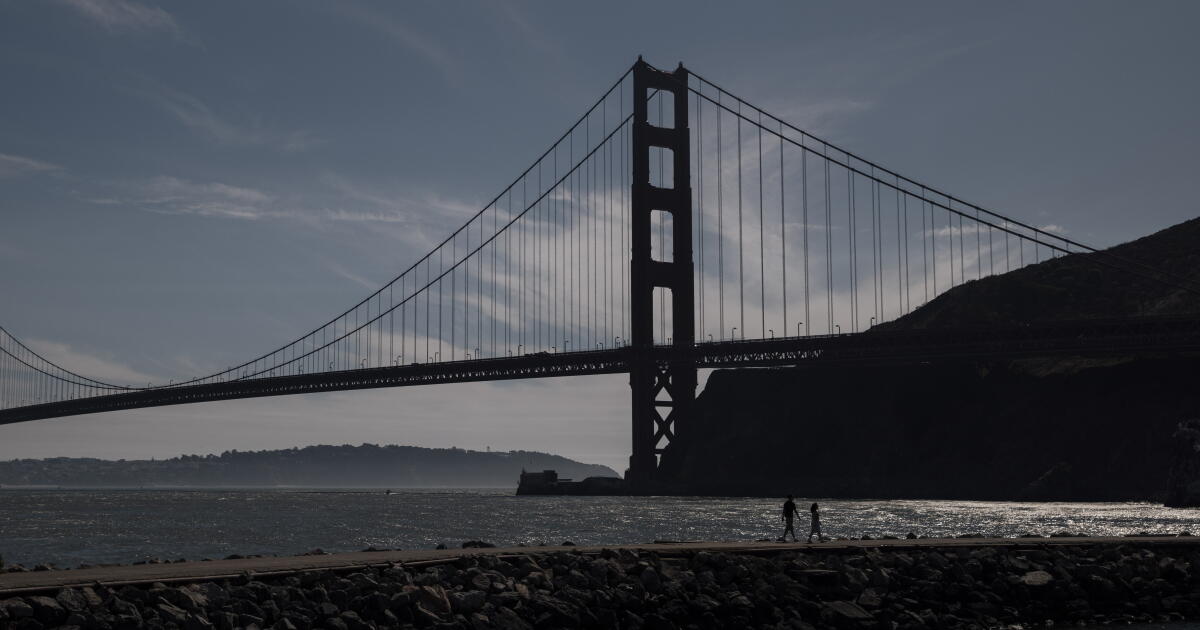
For the first 80 years of its existence, the Golden Gate Bridge called out to people in crisis for all the wrong reasons.
From its 1937 opening to 2018, when construction finally began on a safety barrier spanning the length of the bridge, an average of 30 people died from suicide every year at the San Francisco landmark.
Iconic structures like the Eiffel Tower, the Empire State Building and the Sydney Harbor Bridge had long since put up the necessary fences to reduce such deaths. The Golden Gate Bridge’s governing board rejected proposal after proposal, citing everything from costs to aesthetics.
One 1950s supervisor framed his disapproval in stark (and highly inaccurate) terms: Since people were going to kill themselves anyway, better to do it in the bay.
Eventually, the board relented. The steel barrier was completed in January 2024. By the end of that year, suicides dropped by 73%, my colleague Terry Castleman reported. A year later, they were down by 87%.
You’re reading the Essential California newsletter
L.A. Times reporters guide you through the most important news, features and recommendations of the morning.
By continuing, you agree to our Terms of Service, which include arbitration and a class action waiver. You agree that we and our third-party vendors may collect and use your information, including through cookies, pixels and similar technologies, for the purposes set forth in our Privacy Policy such as personalizing your experience and ads.
September is Suicide Prevention Month
As a Times health and science reporter, I write about suicide frequently: who is at risk, who can help, how such deaths can be prevented. I’ve spent the last year researching the particular risks facing autistic individuals, and how support strategies can be adapted for neurodivergent people at all ages.
As Suicide Prevention Month comes to a close today, it’s that second word — prevention — that I want to emphasize. Suicide is a public health issue that responds to intervention. The better we understand who is at risk and when they are most vulnerable, the more opportunities we have to prevent future deaths.
Ideally, suicide prevention starts long before someone reaches a literal precipice. Safety planning is an evidence-based practice in which a person at risk works with a mental health provider to map out signs of an approaching crisis, reasons to keep living and specific actions they’ll take to keep themselves safe as distress increases. Zooming out further, access to housing, jobs and healthcare all contribute to mental health outcomes and suicide rates.
But that bridge supervisor was not correct when he argued that a person prevented from taking their life in one location will simply do it somewhere else. Even when someone has been experiencing generalized suicidal thoughts for some time, the decision to act on them is often an impulsive one, particularly for young people.
One study of suicide attempt survivors ages 13 to 34 found that nearly half had deliberated for less than 20 minutes before acting. For 24% of them, less than five minutes elapsed between deciding to end their life and attempting to do so. A different survey of hospitalized survivors found that nearly half acted on their suicidal thoughts within just 10 minutes of having them.
To make it another day
In 1978, UC Berkeley professor Richard H. Seiden published a study called “Where Are They Now?” that tracked 515 people who attempted suicide at the Golden Gate Bridge but were prevented from completing it. Seiden found that about 90% were either still alive or had died of natural causes, in many cases decades after the suicidal episode.
A barrier does not heal psychological pain or treat a chronic mental health condition. It doesn’t solve the complex problems that precede a suicidal crisis. But it can prevent someone from making an irrevocable decision in a moment of crisis, which is not a good time to make any big decisions at all.
It can allow someone simply to make it to another day — a day in which they do, in fact, get better.
Ken Baldwin, who went over the Golden Gate Bridge’s railing in 1985, is one of only a handful of people who have survived the fall. As soon as he did it, he told the journalist Tad Friend in 2003, “I instantly realized that everything in my life that I’d thought was unfixable was totally fixable — except for having just jumped.”
If you are experiencing thoughts of suicide, or are worried about someone who is, you can call or text the 988 Suicide & Crisis Lifeline 24 hours a day, seven days a week.
Top stories 
(Jim Watson / AFP via Getty Images)
Bad news for Trump in new California poll76% of Republicans in the state approve of the president’s performance, down from 83% last year, according to a new poll by the UC Berkeley Institute of Governmental Studies, co-sponsored by The Times.Only 44% of Republicans in California said they strongly support Trump’s performance, down from 57% in August 2025.More election newsNewsom pushes back on Trump’s immigration agendaGov. Gavin Newsom signed more than 20 bills aimed at curbing immigration enforcement in California, including bans on electric shock gloves and law enforcement face coverings.The measures make it easier to sue federal agents over alleged civil rights violations and require public hearings and a 180-day wait before local approval of new detention centers.More newsCommentary and opinionEditor’s pickMore picksThings to do 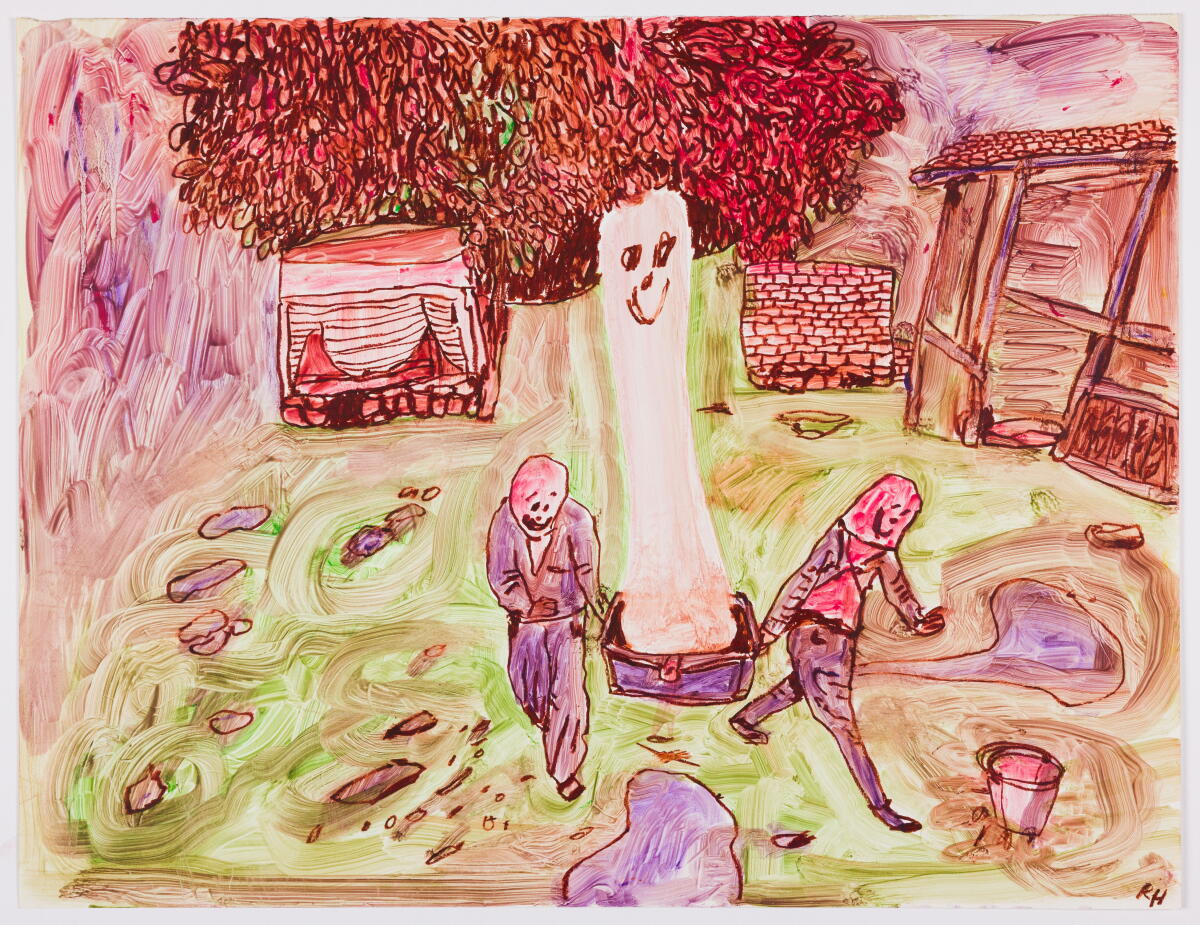
Kathleen Henderson, “Bloodgood,” 2025.
(Kathleen Henderson / Track 16)
Today’s recipe 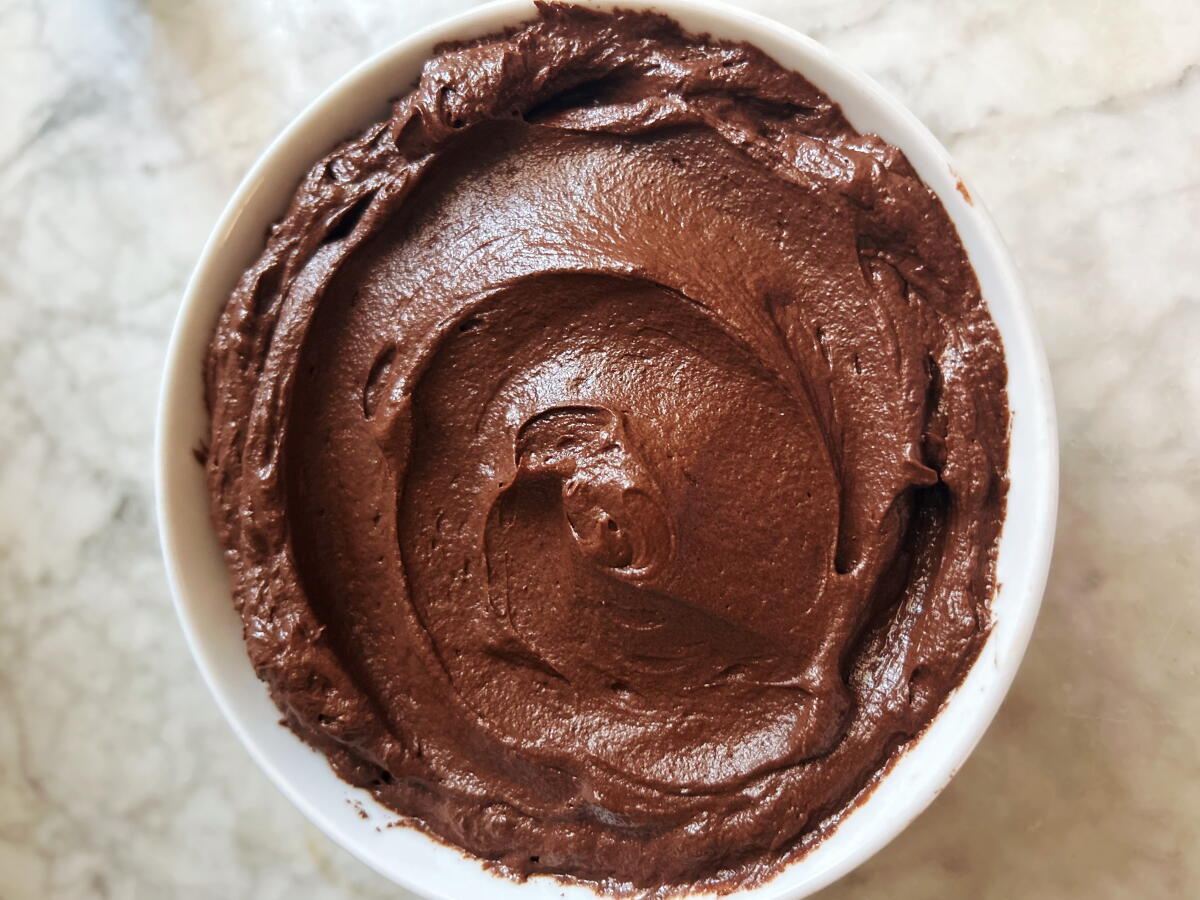
Smooth, creamy chocolate frosting.
(Carolynn Carreño / For The Times)
Carolynn Carreño’s recipe for this smooth, creamy chocolate frosting is easy to make, with none of the potential pitfalls of fussy European buttercreams. It’s perfect for kids and adults.
Question for you
What’s a television show that takes place in California that you’d recommend to friends?
Lawrence S. says, “‘Bosch’ because it was filmed all over LA and shows all aspects of city life.”
Email us at essentialcalifornia@latimes.com, and your response might appear in the newsletter this week.
Photo of the day 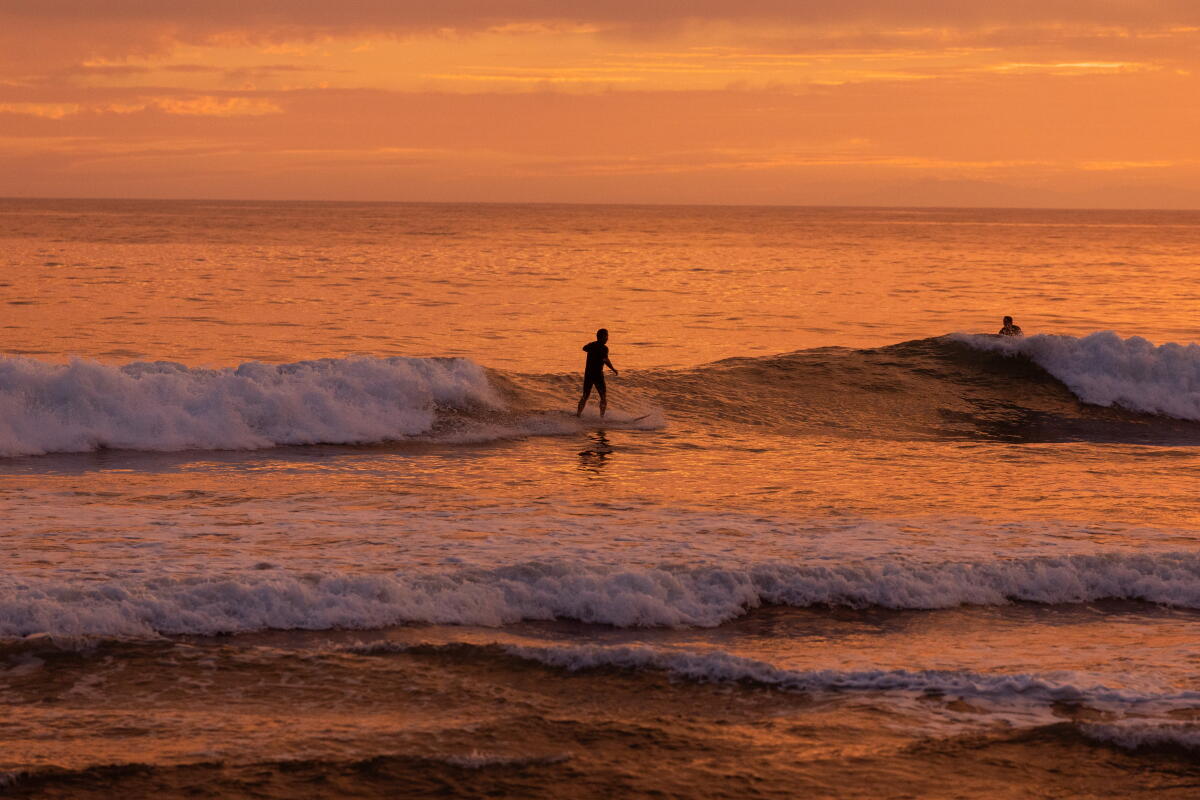
The sun sets as a surfer rides a wave at Trestles Beach in San Clemente.
(Ronaldo Bolanos / Los Angeles Times)
Games 
Here’s today’s mini crossword, plus our other free, daily crossword puzzle, sudoku, word search and jigsaw games.
Have a great day, from the Essential California team.
Jack Dolan, investigative reporter
Hugo Martín, assistant editor, Fast Break desk
Kevinisha Walker, multiplatform editor
Andrew J. Campa, weekend writer
Karim Doumar, head of newsletters
How can we make this newsletter more useful? Send comments to essentialcalifornia@latimes.com.