
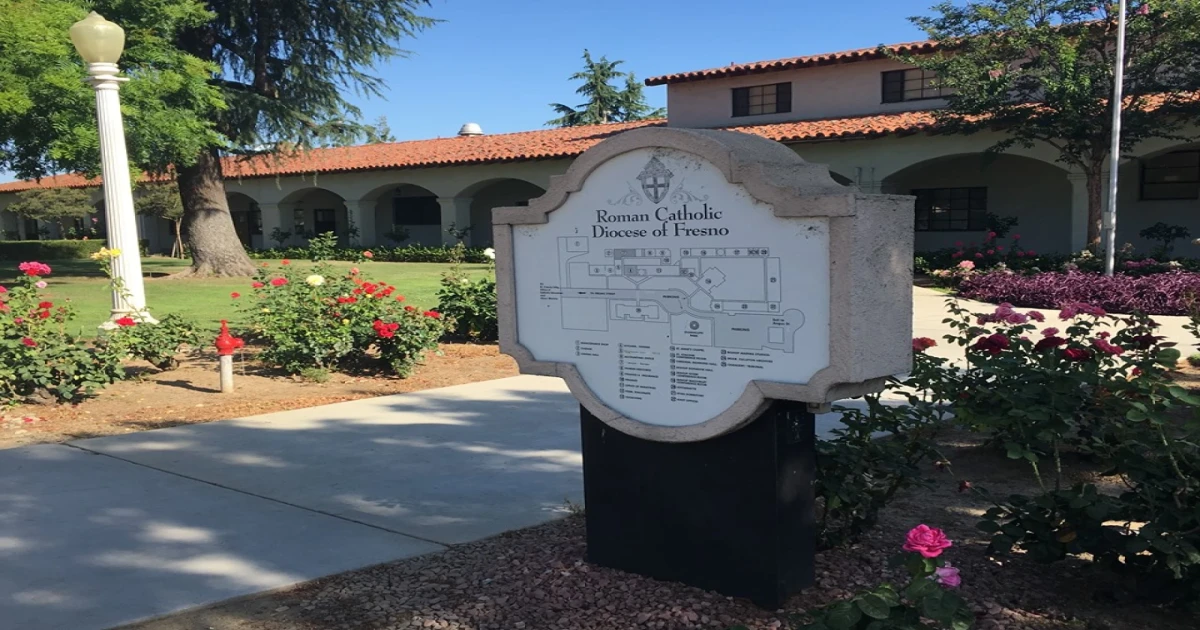
FRESNO, Calif. – After working as a teacher for 17 years at St. Helen’s Catholic School in southeast Fresno, Kathy Carbaugh thought she had settled into a stable retirement in Coos Bay, Ore.
That changed in August when Carbaugh received a letter from Bishop Joseph Brennan informing her the retirement plan she paid into while as a Diocese of Fresno employee was “significantly underfunded” and that her benefits “will be reduced.”
Carbaugh subsequently learned that her monthly $789 pension would expire after December. To help make ends meet, the 72-year-old has since returned to work.
“That just scared the holy living daylights out of me,” Carbaugh said of her initial reaction to the news. “It rattled my cage for a good month.”
Carbaugh is not alone in her predicament – nor are nearly 1,800 other former employees of the Diocese of Fresno.
Dozens of Roman Catholic dioceses across the U.S. have faced difficult decisions and painful cuts after finding out their employee retirement plans – all managed by Christian Brothers Services, a Catholic financial services firm – faced a reported $800 million shortfall as of last year.
Christian Brothers provides retirement services for approximately 40,000 employees and retirees, according to the company’s website. The pension shortfall reportedly affects more than 180 church-based organizations.
In his Aug. 5 letter, Brennan indicated all benefit accruals under the Christian Brothers plan were frozen effective June 30. This means active employees haven’t accrued any additional benefits since that date.
“The Fresno Diocese has faithfully made all the contributions required by the plan,” Brennan wrote. “The underfunding is the direct result of actions or inactions by Christian Brothers and was not caused by the pending bankruptcy proceedings.”
The Diocese of Fresno filed for Chapter 11 bankruptcy in July 2025, seeking to address 154 decades-old abuse claims against the diocese. Court documents entered into federal court earlier this month now list 1,792 former employees who are enrolled in the pension plan as potential creditors in the bankruptcy case. The amount each is owed is not known.
Joan Pacella, a former Catholic school administrative assistant, said she and other pensioners have not been given clear answers from either the Diocese of Fresno or Christian Brothers.
“Communication has not been forthcoming,” Pacella said. “The diocese says we’re supposed to call Christian Brothers. But Christian Brothers says we’re supposed to call the diocese’s [human resources] department. We’ve sort of been put in a loop without a satisfying response.”
In his letter, Brennan said the diocese is trying to find an alternative for the current retirement account plan and is working with attorneys and the federal court overseeing the bankruptcy proceedings to limit the impact on current and former employees.
Christian Brothers representatives did not respond to attempts for comment by KVPR.
However, after several Midwestern and East Coast dioceses learned about the pension shortfall in 2025, the financial services firm produced a brochure and video that acknowledged the situation and essentially blamed it on the 2008 recession and an increase in the ratio of retirees to active employees.
“In 2007, the plan was overfunded. We did what most plans in that situation did: We increased benefits. Shortly after that, the market conspired against us,” David Enenbach, a Christian Brothers employer retirement plan board member, said in the video.
It’s not clear why Diocese of Fresno employees found out about the shortfall more than a year after Christian Brothers went public with its financial situation.
Chandler Marquez, the Diocese of Fresno spokesman, said Brennan informed affected retirees about the pension issues “weeks” after he also found out.
For Carbaugh, Pacella and other retirees, their legal options are limited.
Church pensioners do not enjoy the same legal protections as those enrolled in other private pension plans due to a complex series of laws and interpretations by the IRS, according to Norman Stein, a Drexel University law professor.
For instance, private companies that declare bankruptcy generally have their pensions assured by the Pension Benefits Guaranty Corporation, an independent federal agency.
For former church employees, however, Stein said the only legal recourse is to file a lawsuit.
“The individuals can sometimes bring an action under state law, but it can be difficult in some cases to find a legally responsible party with the ability to make the plan whole,” Stein, who serves as legal and policy adviser to the Washington D.C.-based nonprofit Pension Rights Center, said.
Pacella said she and other Diocese of Fresno retirees have sought legal counsel. However, they’ve been stymied there as well.
“The problem with that is most local attorneys are involved with the diocese over Chapter 11 [bankruptcy], so it’s a conflict of interest,” Pacella said. “We can’t find anyone to talk to us.”
Carbaugh, who recently returned to work as a special education teacher’s aide in Oregon, said losing her pension has made her question her career path.
“I always taught my students to love thy neighbor and do right by thy neighbor, and that is not being reciprocated,” Carbaugh said. “The church is not doing this for us. It feels hypocritical to me.”