
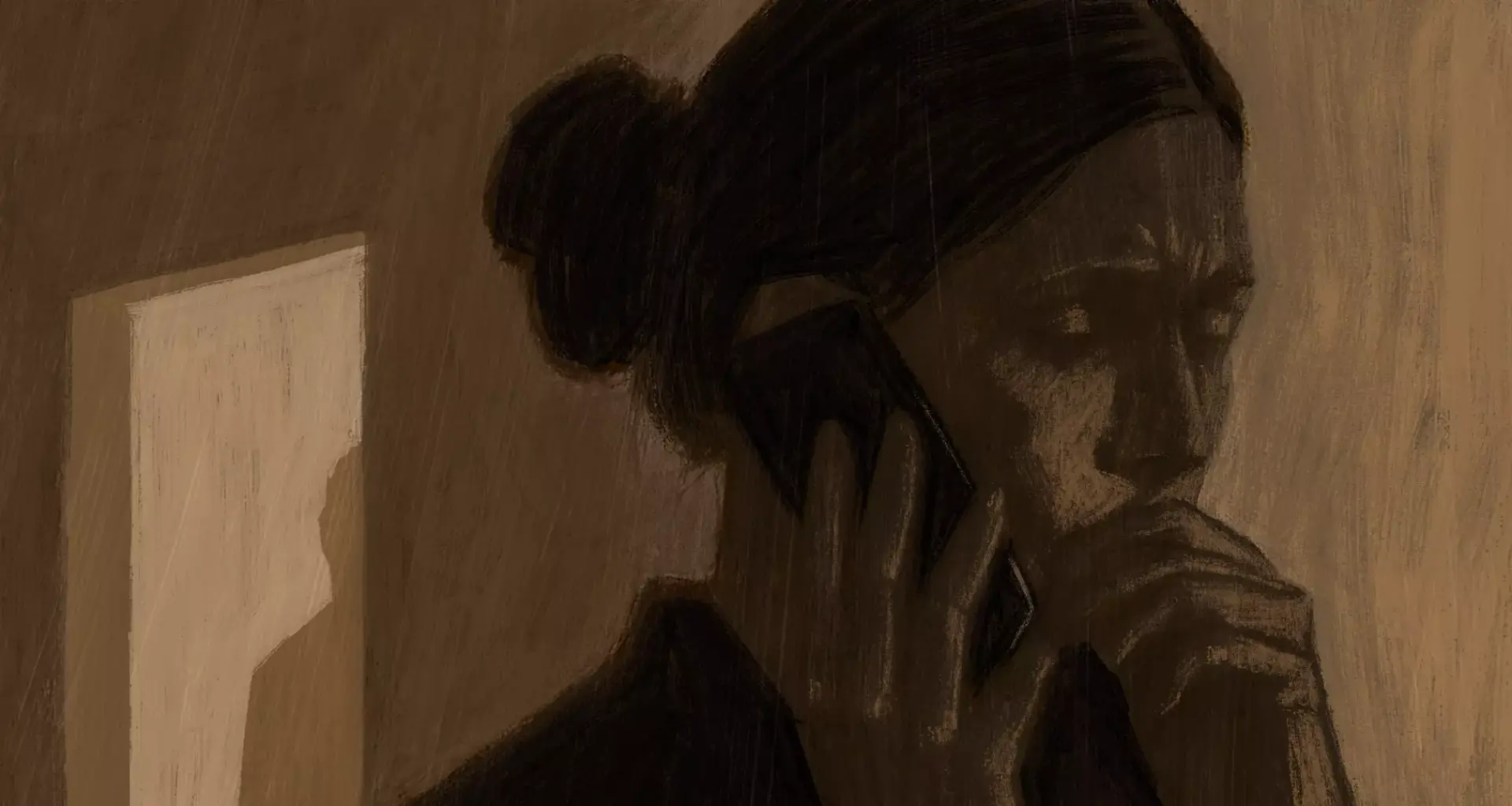
In October, Mayor Daniel Lurie stood on the steps of City Hall, surrounded by a sea of purple — the color associated with Domestic Violence Awareness Month. He began his speech before the gathered survivors, advocates, and elected officials by remembering Claire Joyce Tempongko.
The San Francisco woman had tried desperately to leave her abuser, Tari Ramirez — she had called police multiple times and was granted a restraining order. But in 2000, Ramirez stabbed her to death in front of her two children.
Tempongko’s murder led San Francisco officials to finally heed advocates who had long demanded that crimes against women be taken seriously. The Commission on the Status of Women and its corresponding Department on the Status of Women pushed policies that improved police response and coordinated prosecutions. The moves drastically lowered the city’s domestic violence homicide rate and funneled money into critical services for survivors.
In his speech last month, Lurie praised the city’s progress and touted his commitment to survivors of domestic violence: $30 million for transitional housing, additional hotel vouchers, and “more resources and more staff” for the DOSW.
But his speech omitted hard truths.

The Standard spoke with more than 70 survivors, advocates, judges, police officers, city officials, and attorneys over several months to understand how San Francisco responds to acts of domestic violence. What emerged is a system hanging by a thread and survivors who are too often left unprotected.
Our series “Unprotected in SF” is the result of that reporting. The Standard found that survivors face eerily similar failures to those that led to Tempongko’s murder 25 years ago: restraining orders dismissed or mishandled, criminal cases stalled or dropped, shelters overflowing, and legal aid in short supply.
Nearly half of California women have faced violence from an intimate partner, according to the Centers for Disease Control and Prevention. But despite this pervasiveness, survivors of domestic violence can be shrouded in shame — told they could prevent their victimization if they just leave their abusers. In San Francisco, that advice often leads them straight into a system that fails to protect them.

Around 90% of domestic violence incidents never result in criminal charges. In 2024, only about 20% of 911 calls related to domestic violence led to an arrest — and fewer than 2% ended in a conviction.
The San Francisco Police Department’s Special Victims Unit — which investigates cases involving domestic violence, sexual assault, rape, and child abuse — is at its lowest staffing level ever. In 2019, the SVU had 60 investigators; it’s now down to 28. The SVU has shrunk at more than twice the pace of the SFPD overall.
Survivors wait months or years for prosecution, if it comes at all.
“ I’ve had cases where it took almost six years to get to a jury trial,” said veteran SFPD investigator Tony Flores. “So I want you to imagine that victim. For six years, it’s on hold. On pause. How are you expecting them to heal? How are you expecting them to move on?”

Victims of domestic abuse are often told to take their abusers to civil family court and seek restraining orders. It’s a complex, grueling process. Most survivors say they can’t imagine going through it without an attorney. But few can afford one.
In 2022, San Franciscans voted to pass Proposition D, which promised free civil representation for survivors of domestic violence. The measure still has not been funded. Last year, 90% of survivors seeking restraining orders represented themselves.

Meanwhile, family court judges wield extraordinary power with little oversight. There are no juries in family court; judges rule on custody and protection inconsistently, often forcing survivors to relive trauma before strangers who may not believe them. Survivors, even when they do have legal help, have little recourse to combat bias on the bench. The most judicial complaints in California are made against family courts, but those records are kept secret.
Last year, just 7% of the 1,718 complaints received by the Commission on Judicial Performance were investigated. Thirty-nine judges received some form of discipline, but the commission would release (opens in new tab)the names of only nine (opens in new tab). The others received an advisory letter or “private admonishment.”

Victims of domestic crimes often turn to their communities for help. In San Francisco, a network of roughly 20 nonprofits, each with its own specialty, works across neighborhoods to step in when the city-run system falls short. But over the last six months, that network has begun to unravel.
Federal policies under President Donald Trump’s administration have rolled back protections — and crucial grant money — for women and survivors of domestic violence nationwide, making local support systems all the more critical.
In this summer’s budget cycle, the DOSW lost its grant portfolio, and Lurie’s administration merged it with the Human Rights Commission. The city’s gender-based violence nonprofits — shelters, hotlines, legal services — lost funding. The Commission Streamlining Task Force recently recommended that the Commission on the Status of Women become an “advisory body,” which would mean an even greater loss of power.
“I can never take for granted that the city of San Francisco is committed to making sure domestic violence survivors have safety,” said Emberly Cross of the Cooperative Restraining Order Clinic, a nonprofit that provides free legal representation to survivors in family court. “I feel like a lizard sleeping with one eye open.”

The $30 million for transitional housing that Lurie touted during last month’s rally was earmarked for survivors through a housing bond approved by voters well before he took office. The hotel vouchers he cited will support only 10 families.
Tempongko’s murder was a turning point, as Lurie noted, but it was also a warning of what can happen when San Francisco treats domestic abuse as an issue of personal responsibility rather than a matter of public safety or justice.
The question now is whether San Francisco will remember the lessons of its past — or repeat them.