
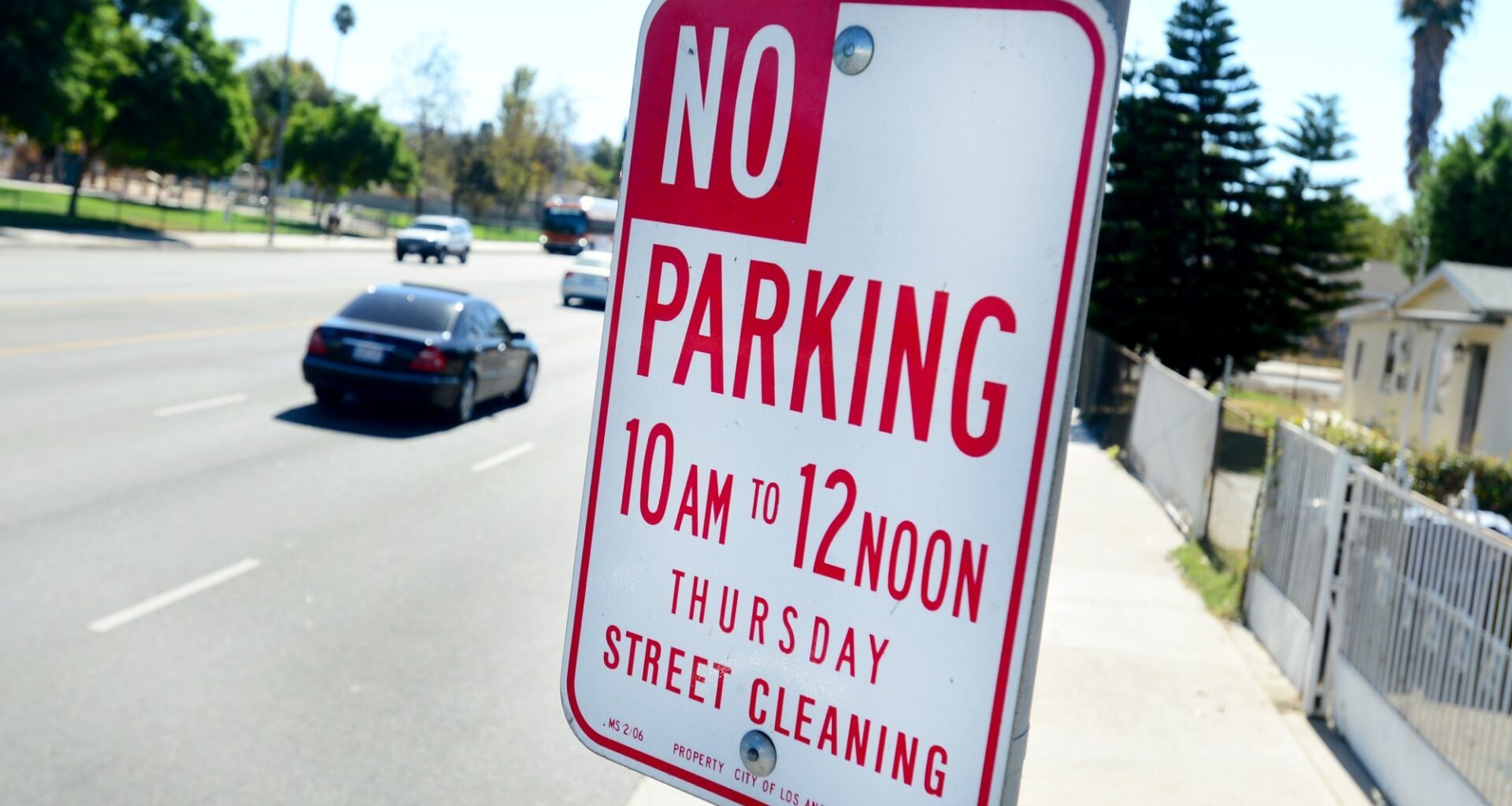
Los Angeles could move toward restoring weekly street sweeping under a plan approved by the City Council on Wednesday that also seeks to overhaul how the city handles parking tickets issued when streets are not actually swept.
The City Council voted unanimously to direct city departments to determine how much money, staffing and equipment would be needed to return to weekly street sweeping citywide, five years after staffing shortage prompted Los Angeles to reduce service on regularly scheduled residential routes to every other week.
The plan also calls for the city to explore text-message and multilingual street-sweeping alerts, develop a process to reimburse motorists within 15 days when they are wrongly ticketed and study the use of automated parking enforcement technology on street sweeping vehicles.
The changes come as street-sweeping violations remain the most common parking citation in Los Angeles. The Los Angeles Department of Transportation issued about 544,300 street-sweeping tickets in the 2025-26 fiscal year, accounting for roughly 26% of all parking citations, according to a city report.
About 2,165 of those tickets were issued when a route was not scheduled to be swept or had been canceled, the report found. All but 191 were dismissed before payment or later reimbursed.
Councilmember Eunisses Hernandez, who introduced the original proposal last year, said Wednesday that the changes are intended to address a disconnect between street sweeping and parking enforcement that emerged after pandemic-era budget and staffing cuts.
“We’ve seen that the services have been dropped, but posted street signs have never been updated. And so we have to stop penalizing working families for city miscommunication and underfunding our departments,” Hernandez said.
Los Angeles reduced street sweeping on posted routes from weekly to every other week in 2021 after staffing reductions during the COVID-19 pandemic. But the city did not change street signs showing the parking restrictions because of staffing and resource limitations, according to a joint report from StreetsLA and LADOT.
Instead, StreetsLA released a courtesy online notification system to inform residents about the change.
Posted routes cover about 34% of city streets. Commercial corridors, which account for another 11%, are swept every three to four weeks, while the remaining 55% of streets do not have regular posted sweeping schedules and are swept quarterly as resources allow, according to the city report.
Restoring weekly service could require substantially more staffing and equipment. The city’s street-sweeping program has a roughly $13 million budget this fiscal year, according to city documents. StreetsLA and LADOT have said staffing shortages already make it difficult to coordinate parking enforcement with the city’s more than 1,300 sweeping routes.
LADOT does not have a dedicated team of officers assigned to street-sweeping enforcement. Instead, parking officers are assigned based on available staffing while also handling responsibilities including abandoned-vehicle complaints and traffic control.
Lionel Mares, a Sun Valley resident, said Wednesday that his neighborhood has gone without street sweeping for a long time, leaving leaves, litter and other debris to build up on local streets. He said he worries lower-income neighborhoods may not be receiving the same level of attention and maintenance as other parts of the city.
“As taxpayers, we deserve reliable and equitable city services, regardless of where we live,” he said. “Clean and well-maintained streets are essential to the health, safety and quality of life of all residents.”
Under the plan approved Wednesday, StreetsLA must calculate the number of sweepers, operators, mechanics and supervisors, as well as maintenance and overtime costs, that would be required to restore weekly service. LADOT must separately determine what additional parking-enforcement staffing and vehicles would be needed.
The city will also examine whether automated license plate readers could be mounted on street sweepers to coordinate enforcement directly with cleaning. City officials have said current state law would need to be amended to allow Los Angeles to use the technology that way, and the council directed the City Attorney to identify the necessary changes.
The proposal also calls for studying improvements to the city’s notification system, including text-message alerts and notifications in languages including Spanish and Mandarin.
Hernandez said Wednesday the goal is to create “a clear path toward reliable weekly street sweeping across Los Angeles.”