
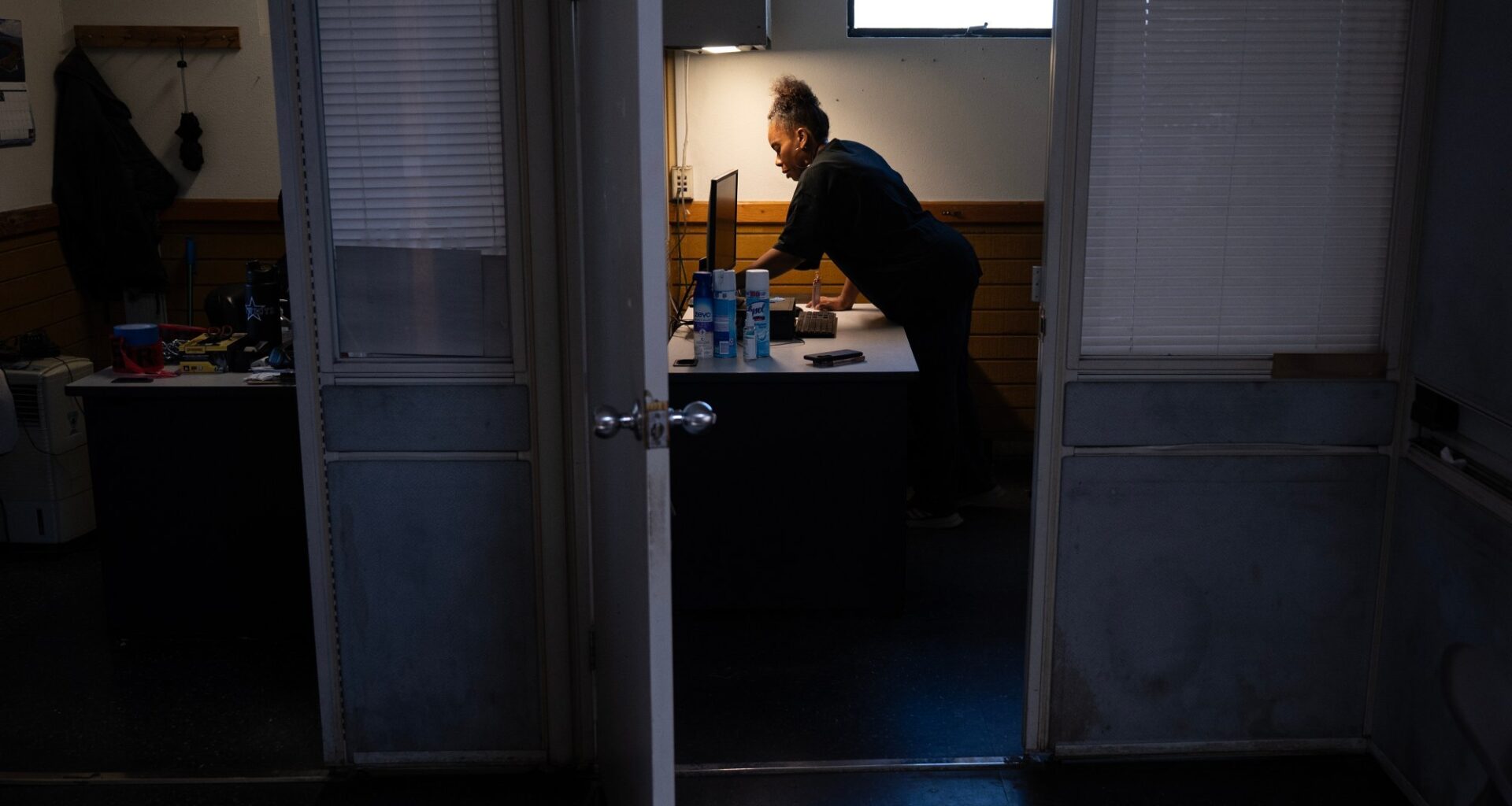
A city-funded day shelter for homeless people closed its doors for good Wednesday after more than three decades in downtown San Diego’s East Village.
Almost everything, including services, will be moved two blocks to the Joan Kroc Center at the corner of 15th Street and Imperial Avenue.
Representatives say the Neil Good Day Center’s replacement will open Thursday morning. It will be slightly smaller than its predecessor. Possessions cannot be stored, there will be slightly smaller bathrooms and instead of four washers and dryers, there will only be two.
 Volunteers from the Navy move furniture into a moving truck on Wednesday, Sept. 30, 2026, at the Neil Good Day Center in San Diego, CA. (Luke Johnson / The San Diego Union-Tribune)
On Wednesday, volunteers and employees of Father Joe’s — operator of the day center and one of the largest providers of housing and homeless services in the region — were seen boxing up offices, packaging equipment and moving furniture into loading trucks.
That afternoon, an employee from the city of San Diego was to pick up the keys to the building. San Diego leases the land from the California Department of Transportation, a complication that may determine the future of the property.
Earlier in the morning, the city of San Diego cleared people and their possessions along the stretch of 17th Street near the day center. Most people gathered their belongings and shuffled into the shelter, where many stayed until it closed for the last time.
Typically, employees said, people would go back onto the street until the next morning. Then, they would return to the day shelter to use the restroom, charge their phones, do laundry, check their mail, get connected to resources or lounge in the courtyard. That cycle was repeated for years.
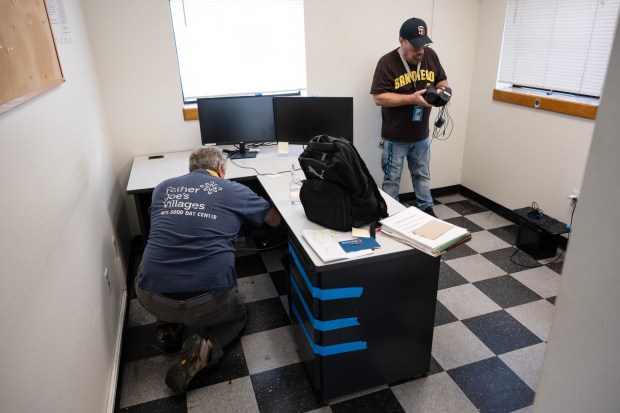 Paul Sheck, program manager for the day center, and Paul DeLessio, director of coordinating services, pack up an office on Wednesday, Sept. 30, 2026, at the Neil Good Day Center in San Diego, CA. (Luke Johnson / The San Diego Union-Tribune)
Paul Sheck, manager of the center, said the closure will be a huge disruption. Despite employees handing out notices for the past month and posting signs, many using the shelter Wednesday, some who have been doing so on a near-daily basis for years, did not realize it would be closed come Thursday morning.
“There’s going to be a lot of people waking up tomorrow wondering where they’re going to go to the bathroom,” said Sheck.
 Brittany Brunner, an unhoused woman, on Wednesday, Sept. 30, 2026, at the Neil Good Day Center in San Diego, CA. (Luke Johnson / The San Diego Union-Tribune)
Brittany Brunner, 33, said she’s been coming to the center and living on the streets intermittently for about eight years. Brunner, like many at the shelter on Wednesday, said she doesn’t know where she’ll go on Thursday morning.
“We’re not welcome anywhere, you know. People don’t like us anywhere,” Brunner said as she sat among about 60 people lounging or sitting in the day center’s courtyard.
The center’s closure has been anticipated for some time. The city opted not to continue funding the shelter earlier this year.
The cut was made as local governments in the region are beginning to offload homelessness and housing services to local nonprofits. This, in turn, comes amid a rollback of one-time state and federal grants relied upon for the better part of this decade.
However, advocates of keeping the shelter open have said the city’s decision isn’t just about money. Many accused the city of wanting to improve the optics of the area around the day center and took this fiscal year’s budget debate as an opportunity to do so. The city maintains its decision was purely financial and that it funded the center despite complaints from neighbors about open drug use and vandalism.
The city provided nearly $950,000 of the $1.7 million a year it cost to operate the day center. The cost of operating its replacement at the Joan Kroc Center will be fully absorbed by Father Joe’s. The city said it has worked with Father Joe’s on the transition and that the organization “remains an important city partner across multiple homelessness programs.”
Matt Hoffman, a spokesperson for the city of San Diego, said there are more shelter options available now than when the center opened in 1991. Today, according to the city, the city funds approximately “2,600 sheltering options across nearly two dozen programs.”
“As our homelessness response has evolved, we are prioritizing limited resources toward programs that maximize shelter capacity and help connect people to permanent housing,” Hoffman said.
Hoffman added the city is currently working with Caltrans to “transition the property back to them.” It has not been announced whether the building will be demolished, repurposed or sold.
The center provided services for at least 200 people a day. The replacement facility will only be able to accommodate 160, according to Father Joe’s.