

The Oakland Police Department has been released from federal court oversight, ending the longest-running court-ordered reform program of a police agency in U.S. history.
During a hearing at the San Francisco federal courthouse Tuesday afternoon, U.S. District Judge William Orrick said he is dismissing the case that placed OPD under his watch. The police department and Oakland city leaders, the judge said, have demonstrated their commitment to constitutional policing and improvements in the department’s culture.
OPD was put under oversight in 2003 following the Riders scandal in which a squad of West Oakland patrol officers was accused of beating people, planting drugs, falsifying reports, and other crimes. The city settled that lawsuit by agreeing to a list of 51 reforms designed to prevent future police abuses of power. Achieving these goals proved difficult, and over the subsequent two decades, the department was engulfed in new controversies, from illegal strip searches and police shootings of unarmed people, to a sexual abuse scandal and botched internal affairs cases.
Past court hearings in the case involved lengthy interrogations of police leaders and examinations of data. The tone of Tuesday’s hearing differed significantly. Orrick, Oakland Mayor Barbara Lee, attorneys for the city, and civil rights attorneys cautiously congratulated each other on achieving what for two decades had seemed like an impossible goal.
During the hearing, several people referred to reforming OPD as a Sisyphean task, making metaphors about rolling rocks up hills only to see them tumble down again.
“I was involved in pushing that rock up the hill for 23 years,” said John Burris, one of the civil rights attorneys whose lawsuit led to the reform program. “It backslid at least three times. But now it’s up to the city to take over this rock, not only to push it to the top of the hill, but to maintain it.”
Robert Warshaw, the court-appointed independent monitor, and his monitoring team made a rare appearance in court for the historic decision. Warshaw praised current and former city and police leadership for moving the department forward in a positive direction. He singled out OPD Chief James Beere for doing something that too few previous chiefs did.
“One thing is notable,” Warshaw said. “The chief stood up and said he would take responsibility for that, and that’s not something we would have seen years ago.”
Moments earlier, Beere had acknowledged OPD’s latest stumble in the reform program. The department had failed to comply with one of the reforms, which required completing 85% of its most serious internal affairs cases within 180 days. Warshaw’s last report to the court flagged this problem, saying that he and his monitoring team found the department had completed 83% of such cases within the 180-day timeline during the first quarter of 2026. But the monitor didn’t say whether he felt it required extending oversight.
Burris and his co-counsel, Jim Chanin, said during Tuesday’s hearing that they agreed ending OPD’s monitoring was a reasonable course of action, given the department’s new leadership and evolution into what they described as a “culture of accountability.”
“I feel our time has come, and I’m ready to go,” Chanin told the judge.
“This is not the end — it is a step along the way,” said Burris. “I’m hopeful that what we’ve put in place will continue in the future.”
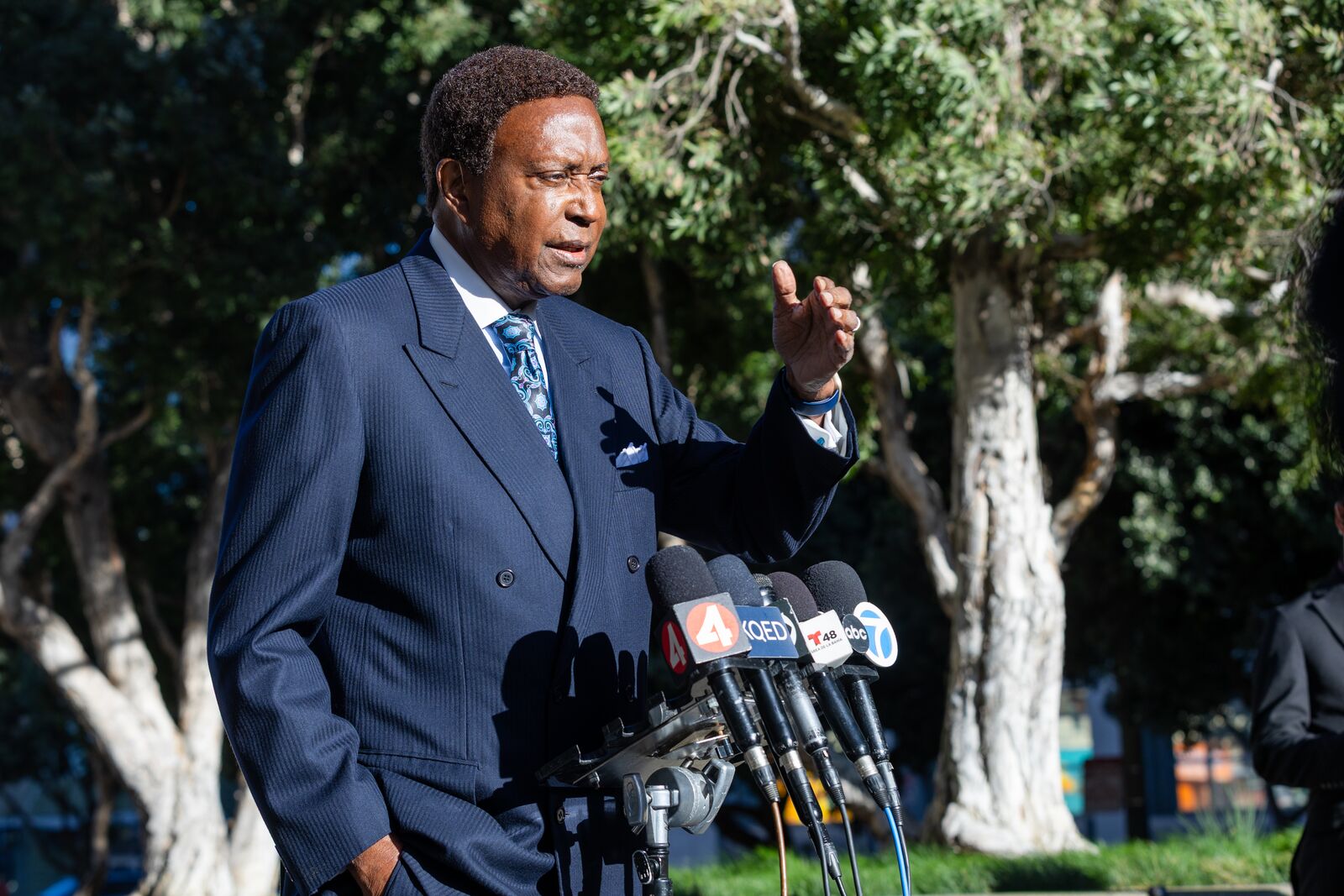 John Burris, one of the civil rights attorneys who sued the city and OPD in the Riders case, addresses reporters outside the federal courthouse. Credit: Estefany Gonzalez for The Oaklandside
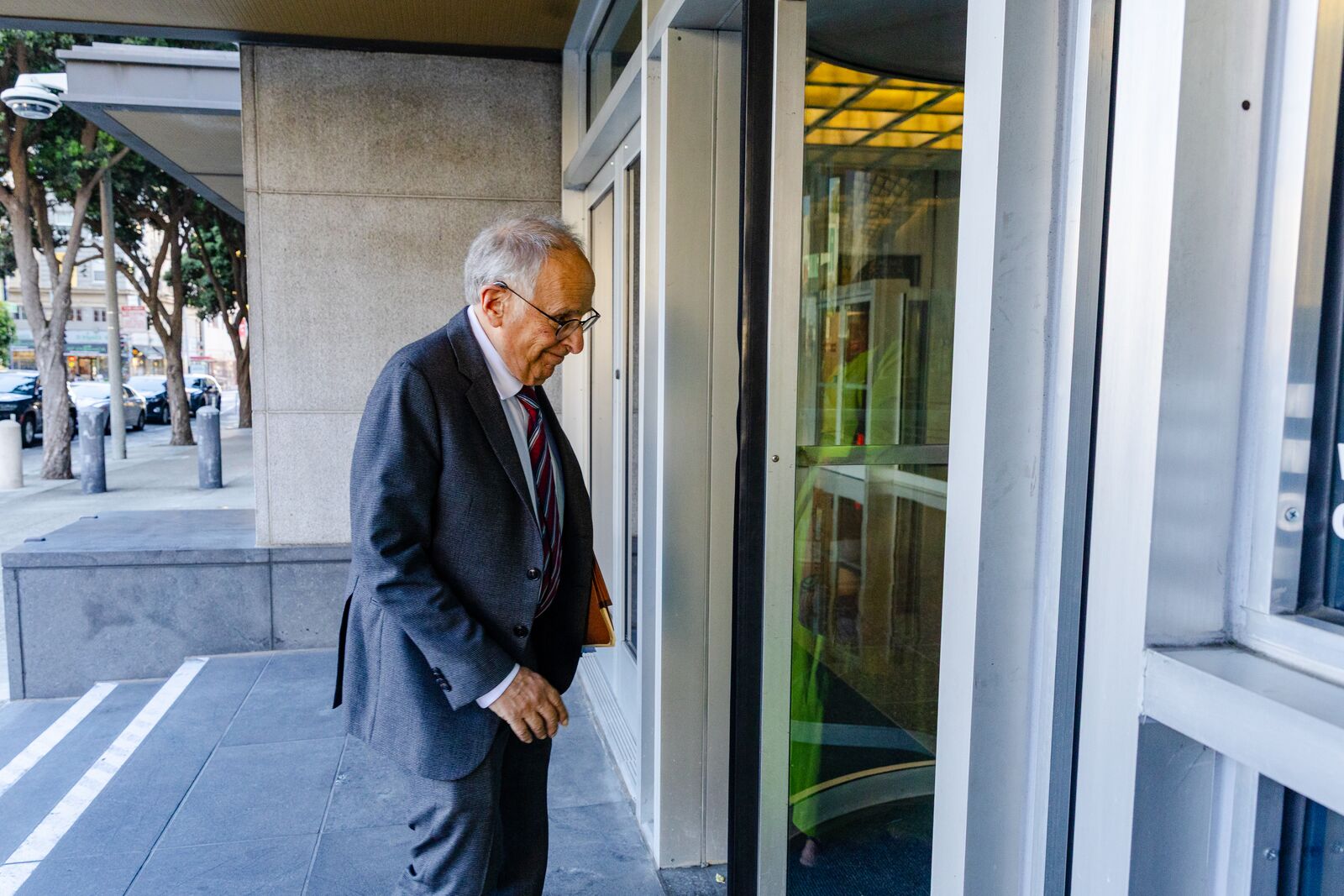 Jim Chanin, Burris’s co-counsel, enters the federal courthouse ahead of Tuesday’s hearing. Credit: Estefany Gonzalez for The Oaklandside
Warshaw on Tuesday said that while federal court oversight is ending, the city and OPD should continue striving for perfection.
“Joy should be tempered with humility,” he said. “The things you’ve accomplished, you should have been doing all along.”
Orrick commended the department for reducing racial disparities in traffic stops, saying OPD officers in 2025 stopped 25% fewer Black drivers than in 2016. He also said the department’s reduction in discretionary interactions between police and residents, combined with better risk management processes, had a “causal effect” on the number of lawsuits filed against the city and OPD, which are down two-thirds from 2003.
Over this time, crime has mostly fallen in Oakland, except for a spike during the first few years of the COVID-19 pandemic. OPD’s latest crime report shows that violent crimes are down 18% year to date compared with the same time last year.
Speaking to reporters outside of the courthouse after the hearing, Burris said he’s “hopeful” the city and OPD will be more transparent with the public following future instances of officer misconduct.
“After 26 years, I feel somewhat relieved, somewhat accomplished, and cautiously optimistic,” he said.
Flanked by Beere, Police Commission Chair Ricardo Garcia-Acosta, City Attorney Ryan Richardson, and other city officials, Lee told reporters outside the courthouse that she’d wanted federal oversight to end when she came into office 16 months ago and was happy to see it become a reality.
“It’s the floor, not the ceiling, but it’s a major step toward constitutional policing and our city taking ownership of the department,” Lee said.
“It’s an historic day for the police department, but also for the community,” added Beere, saying the reforms are codified and institutionalized in OPD’s policies and practices. “The department has grown leaps and bounds.”
Garcia-Acosta, who leads the city’s civilian police oversight body, said he feels confident that the department will sustain the reforms from the NSA.
“I’m committed to ensuring that this infrastructure is stable, our systems are steadfast, and that we have the appropriate leadership to provide the public service that our residents and visitors deserve,” Garcia-Acosta said.
District 2 Councilmember Charlene Wang, who also chairs the council’s Public Safety Committee, said she plans to take the transition seriously from federal court oversight to Oakland’s civilian oversight structures.
After federal court oversight, OPD’s accountability mechanisms include its own Internal Affairs Bureau, the city’s civilian-run Police Commission, and the mayor’s office. The Police Commission consists of the inspector general’s office, which evaluates systemic issues or patterns within OPD and provides recommendations, and the Community Police Review Agency, which investigates community complaints of officer misconduct.
Activists with the Coalition for Police Accountability have repeatedly raised concerns about the City Council not giving CPRA and the Inspector General’s Office adequate staffing or funding to hold the police department accountable, should more scandals arise in the future.
In a letter to the judge before Tuesday’s hearing, the coalition, along with Police Commission Chair Emeritus Regina Jackson and other police accountability advocates, wrote that they felt OPD was not ready to exit federal oversight.
“We cannot pass the job of police oversight over to mechanisms that both do not have the resources to do the job and have been pressured not to advocate for either resources or independence,” wrote CPA members Millie Cleveland and Larry White.
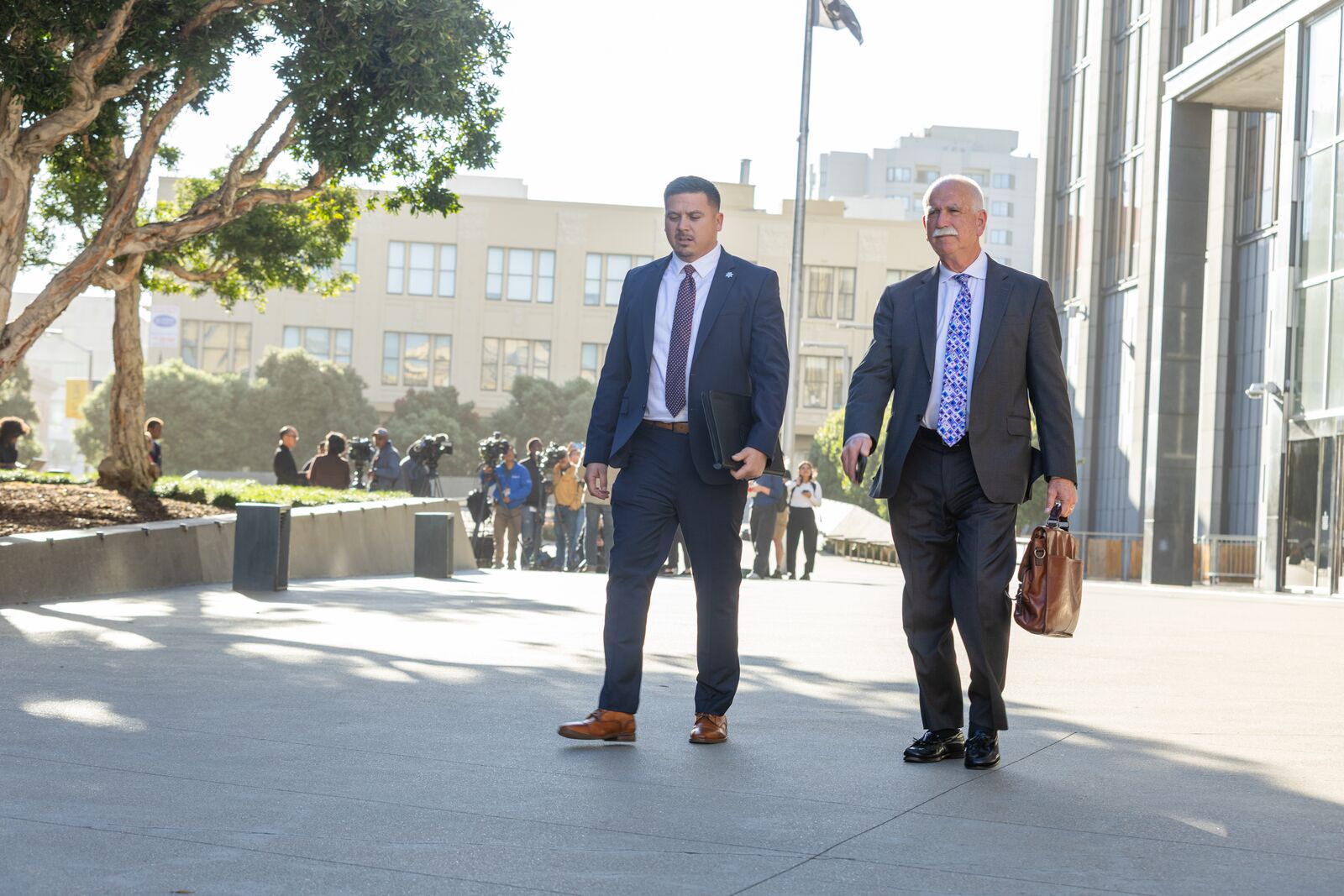 Oakland Police Officers’ Association Interim President Cesar Leyva, left, and Rockne Lucia, attorney for the OPOA, exit the federal courthouse after Tuesday’s hearing. Credit: Estefany Gonzalez for The Oaklandside
Cesar Leyva, interim president of the Oakland police union, said in a statement issued after the hearing that now that OPD is no longer under federal oversight, he hopes the city will focus on hiring and retaining police officers.
“The next chapter for the city and OPD must be about recruiting officers, rebuilding staffing levels, and giving the men and women of OPD the resources they need to keep Oakland safe,” he wrote. “Federal oversight may be ending, but our commitment to professional policing, accountability, and the people of Oakland will continue every day.”
“*” indicates required fields