
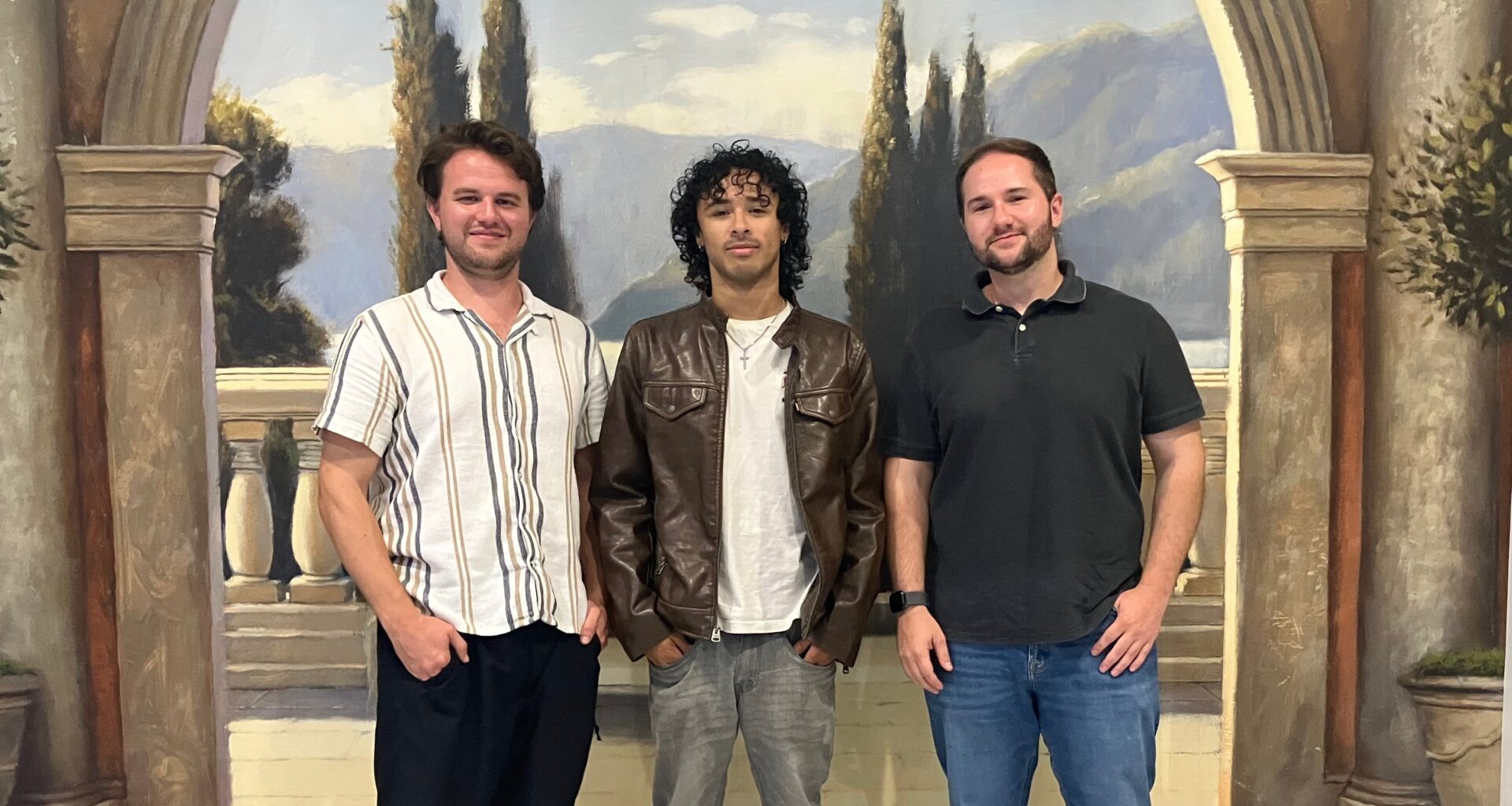
The men behind Infernal: left to right, Brandon Self, Darien Andreas Brown, Adrian Ross
The story is famous enough that it still shows up on cinephile social media, over 25 years later. Peter Jackson was a minor director whose resume included some cult spatter-horror, a well-regarded indie drama, and a big-budget flop. So he did what any crazy dreamer would do and started pitching a two-picture film adaptation of The Lord of the Rings. New Line’s Bob Shaye heard his pitch and asked: why only two movies when there are three books? Crazy, meet crazier. The rest is fantasy movie history.
It feels like San Diego filmmakers Darien Andreas Brown, Adrian Ross, and Brandon Self heard that story and said, “Hold our beers.” They had put out one short film together, so they did what any trio of crazy dreamers would do and made Infernal, the 135-minute first chapter of a multi-film fantasy saga that has so far enjoyed two sold-out screenings in San Diego, won an award for Best San Diego Feature Film, and gotten FilmThreat critic Bobby LePire to write that “another visit to this world and these characters would be most welcome.” And they did it by without formal training, filming on weekends for five months, on a budget south of $10,000 — because, as Brown puts it, “No one told us no.”
Brown, who wrote the original screenplay and also stars, co-directed, co-produced, and worked the boom mic, says that “It started with Adrian coming up with the idea for the short film The Endless, and him getting the ball roll ing.” Explains Ross, who plays the reluctant warrior Hiram in Infernal and also co-wrote and edited, “I was auditioning for a ton of things, and you know how it is: you get some stuff, and you get rejected a lot. We were just like, ‘Let’s make our own stuff, and let that be our audition.’”

“Let’s make our own stuff, and let that be our audition.”
“It inspired all of us,” continues Brown. “We’re three people who don’t really like to wait for an opportunity. It inspired me to be like, ‘Let me try writing a script.’ It came out of a personal experience. I was in debt, and I was facing a decision: either go to my mom’s in Arizona, get a job, and lose my fi lm life and the community I’ve built here, or stay and fight and not allow certain things happening in my life to control my destiny. That’s essentially where the story and themes of Infernal came from. So I ended up writing this big old script, and I brought it to Adrian, and all he said was, ‘Let’s do it.’ We’ve always had the confidence that we could do it. We just needed The Endless to kind of prove it to ourselves that we had what it takes to make a film.”
Infernal tells the story of Azrael, a man troubled by portentous dreams who is captured by the forces of the wicked King Herod and separated from his wife Rheiya, who becomes the prisoner of the King’s Blade, Cain. Azrael escapes with the aid of the charming rogue Ephraim and sets out to find his wife, but both he and she find themselves caught up in something larger and more complicated — something hinted at in the opening monologue’s description of a prophecy regarding a wolf and a falcon.
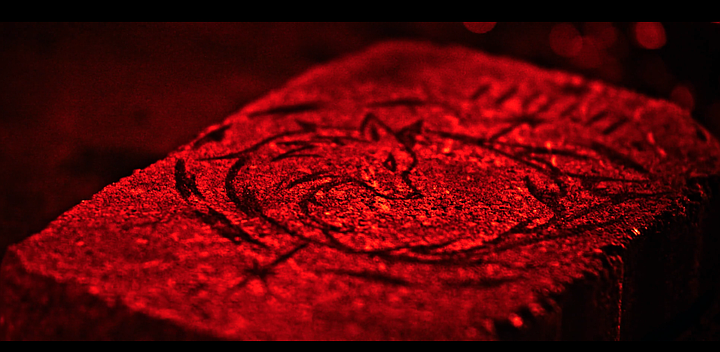
The prophecy at the outset tells of a wolf and a falcon
“I’ve always loved romance,” says Brown. “And then betrayal becomes a theme, because how do you make romance inter esting? You add more elements. And then in the editing room, we came to realize that was the crux of our story.”
“We had almost five hours’ worth of footage,” laments Self. “Trying to trim it down was some of the hardest stuff. But we had a test screening, and there was one piece of criticism that stuck with me: ‘You should really just stick to the core story of what Infernal really is.’ And that was Azrael trying to find his wife. But there’s so much more to the story that we had to cut out. We definitely want this to be part of a bigger world.” He mentions Game of Thrones — with its multiple houses competing for power — as an influence. There are many others. Shakespeare shows in the occasional fl ights of high flown dialogue. The talk between Cain and Rheiya veers into psychological territory, with its talk of broken chains and becoming who you really are. And as the names suggest, says Brown, “the stories in the Bible definitely played a part in crafting the story.”
But Azrael is no saint; he’s not even a pure soul like Luke Skywalker — even if Star Wars clearly informs his relationship with Ephraim. (“I love Star Wars,” grants Ross.) Brown cites Lord of the Rings and Dune as inspirations, but also the video games Elden Ring, Bloodborne, and Dark Souls. “I think that’s what inspired the grittiness of the world, the murky tone.” Self notes that video games even helped shape the story: “At the film’s end, he has an item that he can’t use, because he’s not yet at the level for it. He needs time to build up his skills.”
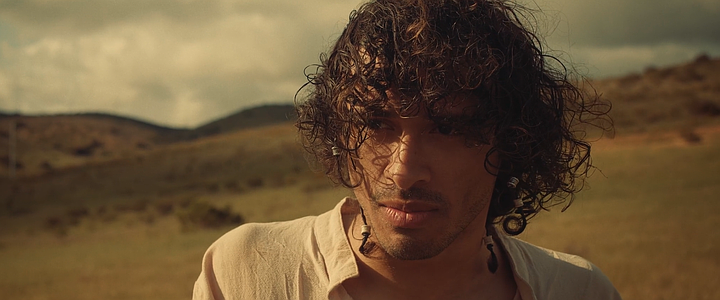
Darien Andreas Brown as Azrael in Infernal
Talking of which: nobody here went to film school. “Our school was being on sets and making the film,” says Self. “You learn terms very quickly when you’re on a set and you get told what something is. It’s better than any flashcards you could make.” On set is where the three came together: Self was the cinematographer (and more) on the micro-budget epic Heroes of Pacific City, in which Ross was acting.
“I’ve known Darien for 15 years or so,” adds Ross. “Shout out to Roosevelt Middle School. We’ve always talked about wanting to make movies, and we’ve made silly things just for fun.” After they hooked up with Self, “The Endless was our first step toward making a legit film: telling an entertaining narrative, finding the crew that were able to bring skills we didn’t have, doing the best we could with the resources we had.”
Ah, resources. Much has been made of the astonishing look of The Lord of the Rings, thanks in no small part to Weta Workshop’s meticulous costume and prop work. The Infernal team had Temu and Etsy, and even that “was a lot of the cost” of the film, says Brown. “In the early stages, we tried making stuff out of cardboard and cans. That wasn’t really getting the job done. But we saved on costs by building our own sets, making our own costumes. Adrian took up sewing.”
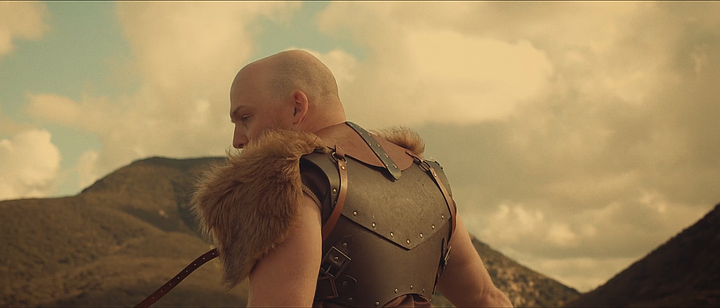
Lord of the Rings had Weta Workshop; Infernal had Temu and Etsy.
“We bought all this fabric,” says Ross, “and I just made all these tunics, and they worked. And we realized pretty quickly that it would cost a ton of money to have a set that looked like an actual set. So we shot 90% of the interior stuff in Darien’s garage. We just hung these bolts of fabric around the interior of the garage to have it feel like the inside of a tent, and used different colors to signify the different camps.” They pulled a similar trick for the standoff between opposing battalions at the end: it’s the same group of actors in different costumes, with scarves covering the bad guys’ faces to hide the double-up.
Self continues: “The budget forced us to think creatively about every single decision. I feel like it helped us create some thing that’s never been told in exactly this way.” Where, say, House of the Dragon puts millions into the spectacle of, well, dragons, Infernal relies heavily on “keeping it close, forced perspective, making sure that 180-degree line was not being crossed” — camera techniques that help the viewer believe spaces are larger than they are. Especially when those spaces are mostly drenched in shadow, the way they would be if torches provided your only source of light.
King Herod’s throne room was perhaps the biggest challenge. “We could do tents and we could do forests,” says Ross. “But we didn’t have a throne room. When we started production, we didn’t know how we were going to do it.” As they neared the end of fi lming, they still didn’t. “We were fortunate enough to use the Actors Workshop Studios space in Sorrento Valley. We built a box, and we found some cardboard pillars. And we had walls, so we bought some stone-patterned wallpaper. Looking back, I think we could have gotten some better wallpaper, but the funds were running out.”
Video:Trailer: INFERNAL
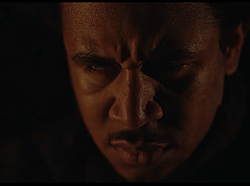
Actors Workshop Studios provided more than just space: it provided key members of the cast. (Notably, instructor Mark Coulter plays Herod, and fellow student Adam Wallace plays Cain.) “We were very fortunate to have that connection,” says Ross. “They were really helpful in finding actors we could pay with screen time, people who wanted to show what they could do. The project just took on a life of its own.” Ricardo Concepcion, who found a dream role in the warrior Kodger, knew Connor McCluskey, who owned lots of swords and spent weeks training the cast to use them. Travis Brock, who worked with the trio on The Endless and plays Ephraim, was engaged to a girl whose family owned a piece of property in Potrero that was varied enough to stand in for a whole world.
“We were really fortunate to find that,” says Self. “But you want to talk about where the budget went? Food and water. The land didn’t have electricity or water or anything like that. I had to coordinate with somebody to bring a port-a-potty out. These are people with bodies you’re dealing with, and these are things you have to think about.”
“We’d spend the whole week preparing,” adds Ross. “All of our gear, our props, our costumes, the set design, what we were going to be shooting. That was, Saturday morning would come around and everybody could just get into character and go through their lines while we were getting all the technical stuff set. We’d shoot any where from six to thirteen hours. It really became a family affair, people putting in everything they had.”
Two years after giving themselves the green light, Brown, Ross, and Self have their movie, and they didn’t even need help from Bob Shaye at New Line. Now they’re submitting to festivals — Beverly Hills, Los Angeles Fantasy Festival, etc. — and waiting to see who notices their 135-minute audition for the next thing.