
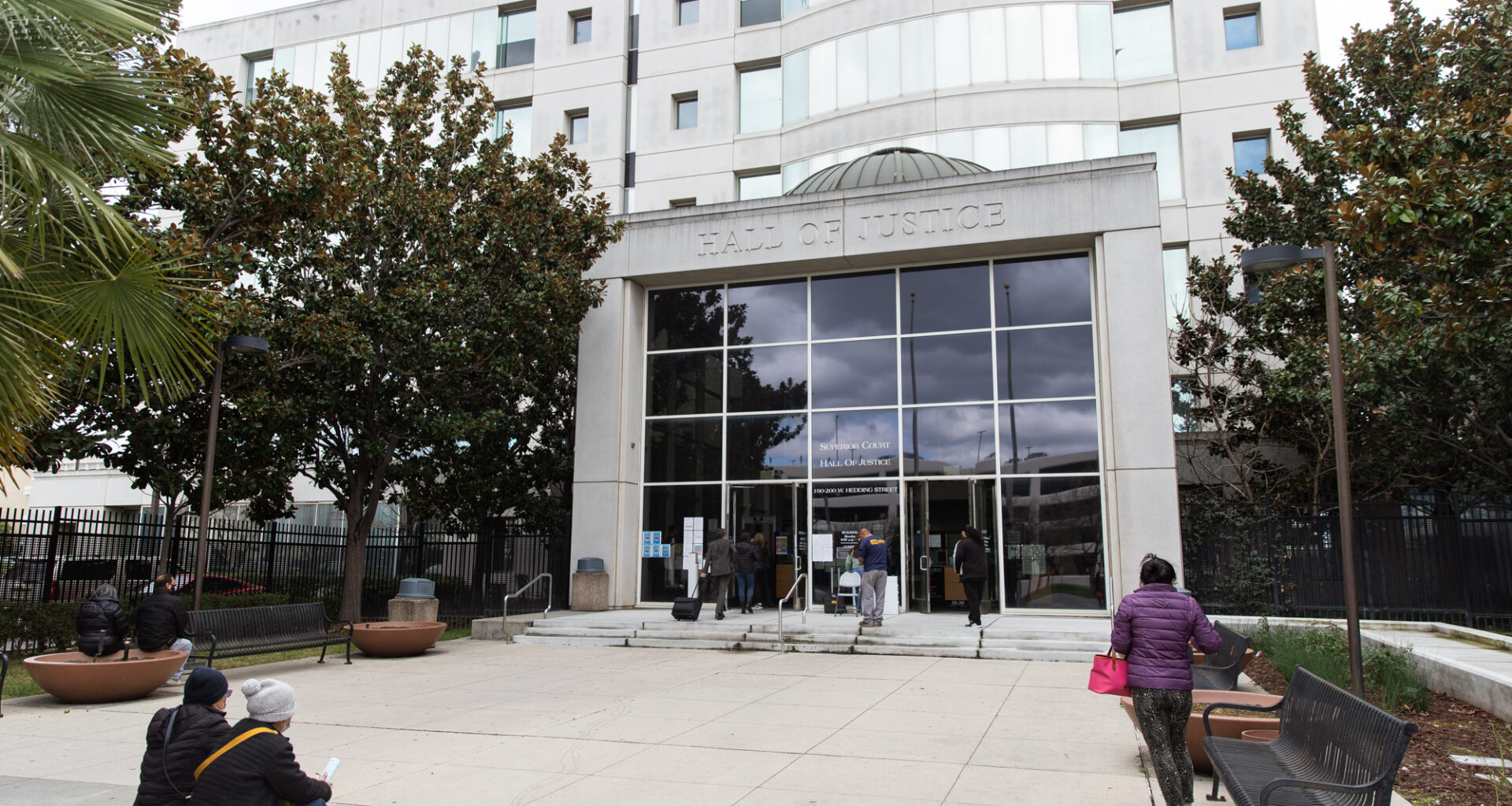
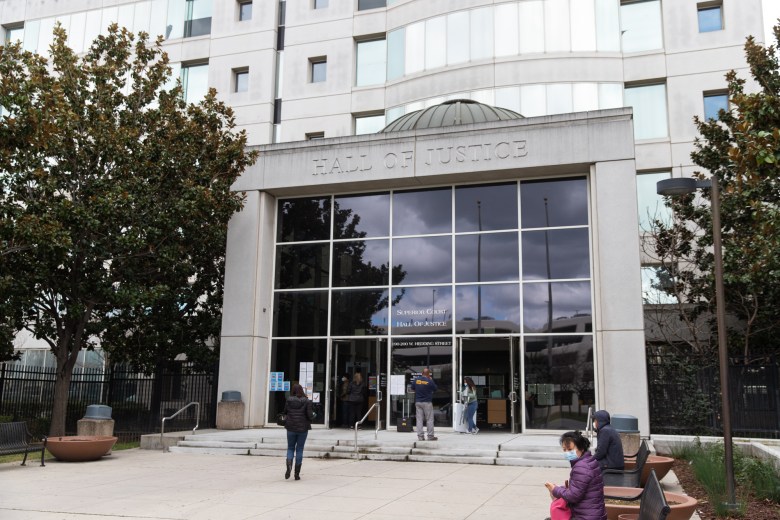
 Santa Clara County Hall of Justice in San Jose on March 11, 2021. Photo by Magali Gauthier.
Getting out of jury duty will soon get a lot easier for eligible California seniors thanks to a new law that drew inspiration from a former Santa Clara County supervisor.
Starting on Jan. 1, 2028, residents who are 80 or older and who do not wish to serve on a jury will have an easy way to get out thanks to Assembly Bill 1359, which was authored by state Assemblyman Patrick Ahrens and inspired by Dianne McKenna, a Santa Clara County supervisor who served between 1984 and 1996.
 Courtesy Patrick Ahrens
Thanks to the bill, eligible seniors will no longer need a doctor’s note to get out of jury duty, as is currently required. They only need to submit a written attestation stating that they have an impairment that permanently renders them incapable of performing jury service. They would receive a permanent exception “without a supporting letter, memorandum, or note from a treating health care provider,” according to the bill text.
“Additional medical documentation shall not be required from the person,” the bill states.
Ahrens, D-Cupertino, said the idea for the bill came out of a community event that he hosted earlier this year that gave his constituents a chance to propose legislation, he said in an email.
“Dianne McKenna shared with me the difficulty of seeking an exemption from jury service for her mother and husband, both elderly and unable to serve because of health conditions,” Ahrens said. “After reviewing the laws of numerous other states that already allow for their elderly residents to opt-out of jury service, I introduced AB 1359 to allow seniors 80+ years old to opt-out of jury service without needing to provide a doctor’s note.
“After 80 years of life and service, the courts should and now will – once fully implemented January 1, 2028 – take our senior’s word if they are no longer able to serve on a jury.”
The desire to give seniors a break from jury duty seems to transcends party lines. The bill cruised through both the state Assembly and state Senate without a single vote of dissent. Gov. Gavin Newsom signed in into law on Sept. 14.
Ahrens noted during at a June hearing that individuals who are 80 or older and have undue hardships already get routinely excused by the courts. AB 1359 will make this easier by simplifying the process.
“Scheduling a doctor’s appointment, acquiring a note with the necessary information, and presenting it to the court is a burdensome and costly process,” Ahrens said. “This is especially true for older individuals who may have chronic health conditions, physical limitations, or lack of technological expertise.”
The bill received strong support from the Alzheimer’s Association. Andrew Mendoza, an advocate with the Alzheimer’s Association, said jury duty is among the items that are discussed when someone with Alzheimer’s or another type of dementia creates a plan as the disease progresses. Mendoza said there have been cases when a caregiver reported a diagnosis of Alzheimer’s to the court and was nevertheless denied an exemption.
“Meanwhile, a significant number of people living with Alzheimer’s disease are without a diagnosis, and not everyone is fortunate enough to have a caregiver to assist with navigating through the system,” Mendoza said. “AB 1359 will simplify the jury service exemption process for individuals living with Alzheimer’s disease, allowing those over 80 to permanently opt out of jury service, no questions asked.”
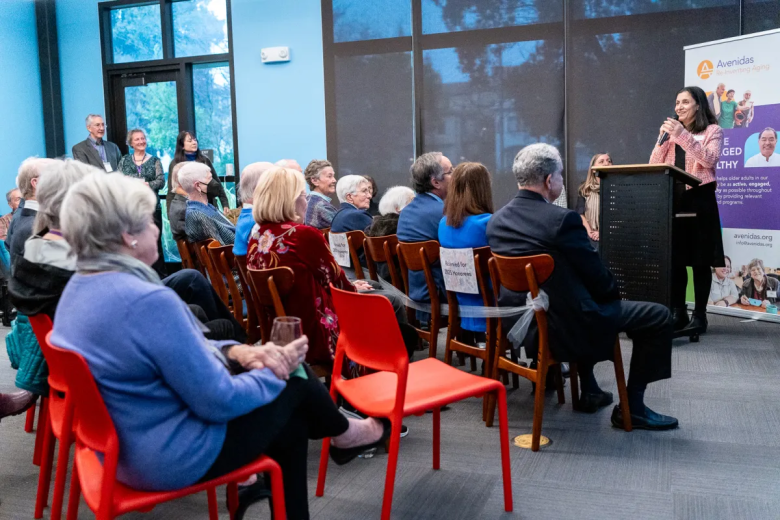 Avenidas hosts a reception for its Lifetimes of Achievement winners in Palo Alto on February 4, 2025. Photo by Anna Hoch-Kenney.
Kristina Lugo, CEO of Avenidas, Palo Alto’s primary provider of senior services, said in an interview the topic of jury duty has been popping up in community conversation groups. She and others at Avenidas are generally in favor of the bill because it gives older adults a greater say in whether or not to serve on the jury.
“It’s quite a hassle to go through hoops if you don’t want to or are not able to do jury duty,” Lugo said. “We believe older adults still have a lot to contribute to our community and that includes having the agency to make this choice for themselves.”
Support more reporting like this
For over 45 years, the Palo Alto Weekly has delivered independent, community-focused journalism. Your donation helps our reporters continue covering the stories that matter most.