
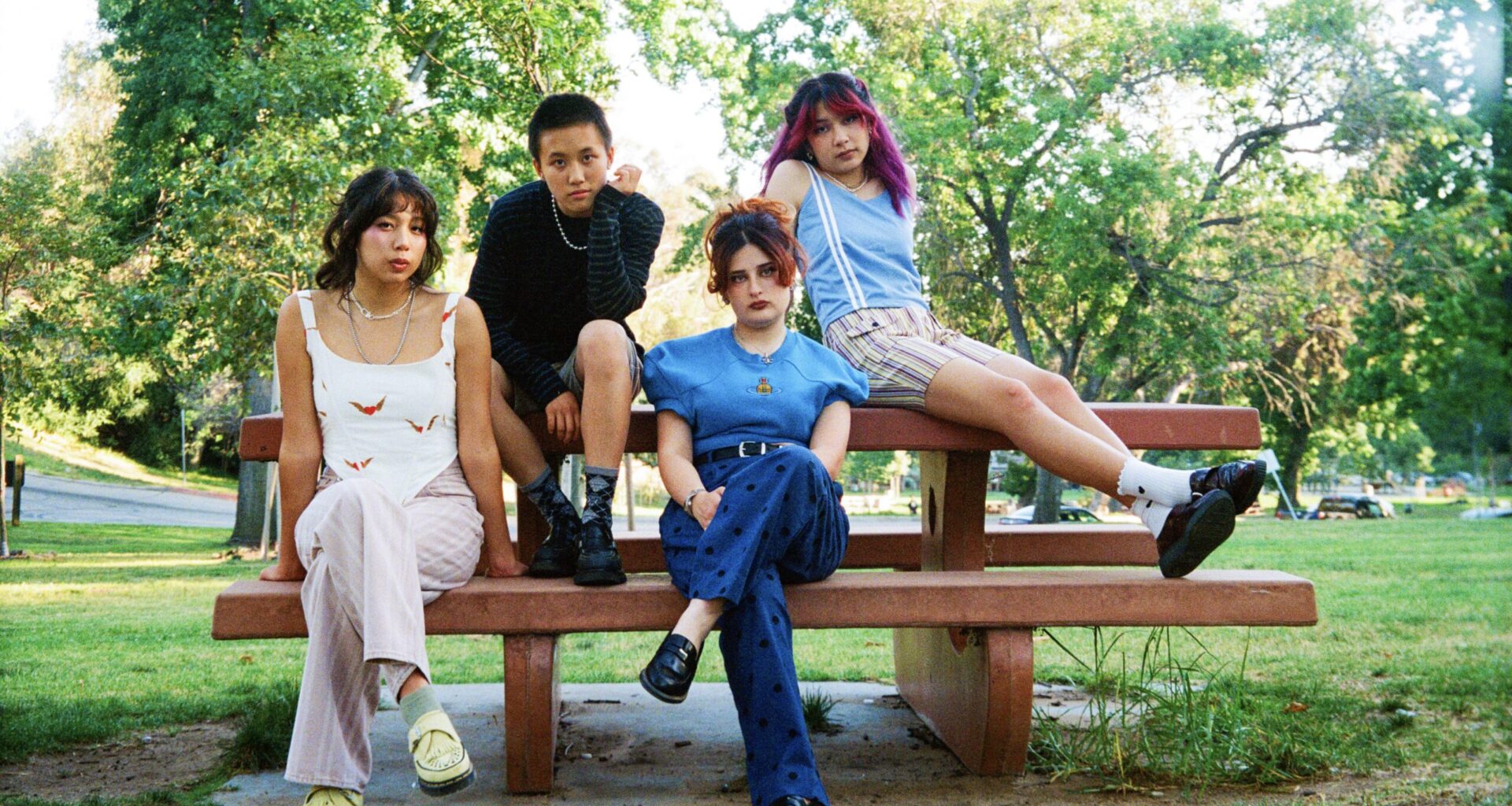
Guitarist Lucia de la Garza and bassist Eloise Wong talk growing up in the L.A. punk scene and their latest album “Gotta Get Out”
The Linda Lindas came of age on the stage. From their roots performing in small clubs in Chinatown to gaining international acclaim, playing alongside punk music legends on stadium tours, the young band members have had a uniquely Los Angeles adolescence.
Their third studio album, Gotta Get Out, dropped on Aug. 28, and guitarist Lucia de la Garza and bassist Eloise Wong joined Los Angeles magazine to discuss growing up in the L.A. punk scene and how the city has influenced them, and their latest album.
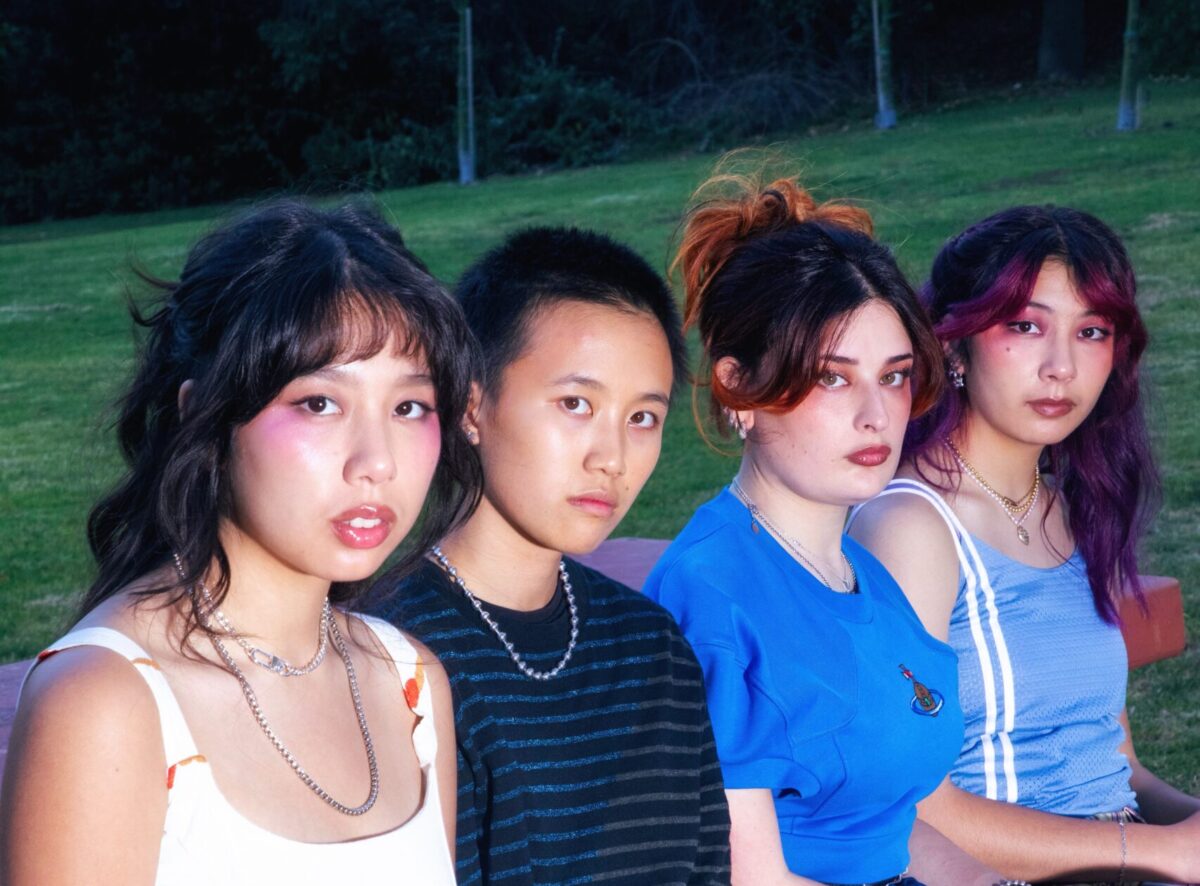 Credit: Jaxon Whittington
Sisters Lucia and Mila de la Garza, their cousin Eloise Wong and friend Bela Salazar formed the band in 2018, when they were only 8 to 14 years old. They began playing music together as part of Save Music in Chinatown, a concert series Wong’s father started to benefit their elementary school music program.
First wave L.A. punk artists like the Dills, and Phranc and Alice Bag, among others, performed alongside the elementary schoolers, giving them a first-class musical education. The shows were hosted at the Grand Star Jazz Club, in the same shopping center as notable venues the Hong Kong Cafe and Madame Wong’s, where bands like the Ramones, the Police and Guns N’ Roses once played. Wong said growing up in the L.A. punk music scene has been formative.
“There’s just so much local music going on, accessible music, and it’s amazing to be surrounded by so much culture,” Wong said.
They broke into the mainstream in 2021, with a viral performance at the L.A. Public Library. Though de la Garza said only their parents and some librarians were in attendance at the time, millions more came to see the girls play when the library posted the video online.
Scroll to continue reading
Over the past five years, they have taken their talents on the road, opening for renowned punk bands like Paramore, Green Day, The Rolling Stones and Bikini Kill. Though their music has taken them on grand adventures, L.A. will always be home. In a full-circle moment, the band performed at the library’s centennial festival in July.
The next time the band will hit the stage in L.A. will be at the Hollywood Bowl with Jimmy Eat World and The Format on Nov. 7. Though they have performed at some of the largest and most iconic venues in the city, some of Wong’s favorite shows the band has played have been at DIY music venues like the Smell in Downtown L.A.
“The energy is just always on point,” Wong said. “Everyone’s sweaty and happy, and screaming the lyrics together. It’s the most magical thing, live music in small venues. Now we’ve played bigger venues, we’ve played SoFi, and we’ve played stadiums with Green Day and arenas with Paramore, but there’s nothing like the smaller club energies.”
Another L.A. venue that has a special place in the band’s heart is the Echo, where they organized their own mini festival in July, “Schools Out / I.C.E. Out” benefiting the Coalition for Humane Immigrant Rights of L.A.
“That was another opportunity to bring all of our friends together,” de la Garza said. “Everyone that we know is either playing on stage or DJing or in the audience. It was really cool, and I would say that venue is really special. We’ve always wanted to play it, and then we’re like, ‘Well, we’re just gonna have to make it happen ourselves.’”
During the festival, the band shot the music video for their song “Blood on Your Hands,” off of the latest album. The song, which touches on prevalent political and social issues, de la Garza said is about making your voice heard.
“It’s really frustrating to feel like where you live or where you spend your money can make you complicit in a messed up system,” de la Garza said. “We are very grateful that we have a community to lean back on in L.A. when we feel a little hopeless.”
Wong said that in a time of uncertainty for so many in the community, music venues provide a place to find solace, where people can dance and come together. Wong said music can be a unifying force to bring a diverse group of people together to share their passion and lean on one another.
“It’s really easy to feel hopeless when friends and family are being kidnapped off the streets, and when they’re being thrown into camps,” Wong said. “But if people can really get together and connect on a human level, and find something to care about, and something to scream about, and sweat about together — maybe there is hope.”