

Whoever is elected to represent District 6 on the Oakland Unified School Board — a district that stretches from the East Oakland Hills to the flatlands — will grapple with challenging facilities concerns, violence spilling onto campuses, and systemwide questions about the schools budget and academic performance. Three candidates have lined up to run.
The District 6 incumbent, organizer Valarie Bachelor, who serves as the board’s vice-president, is seeking a second term. She faces two challengers: Alexandra Williams, a seasoned educator, and LeAna Powell, an involved parent and experienced family advocate — and briefly a former city council staffer — who describes herself on the campaign trail as a “Mama Bear.”
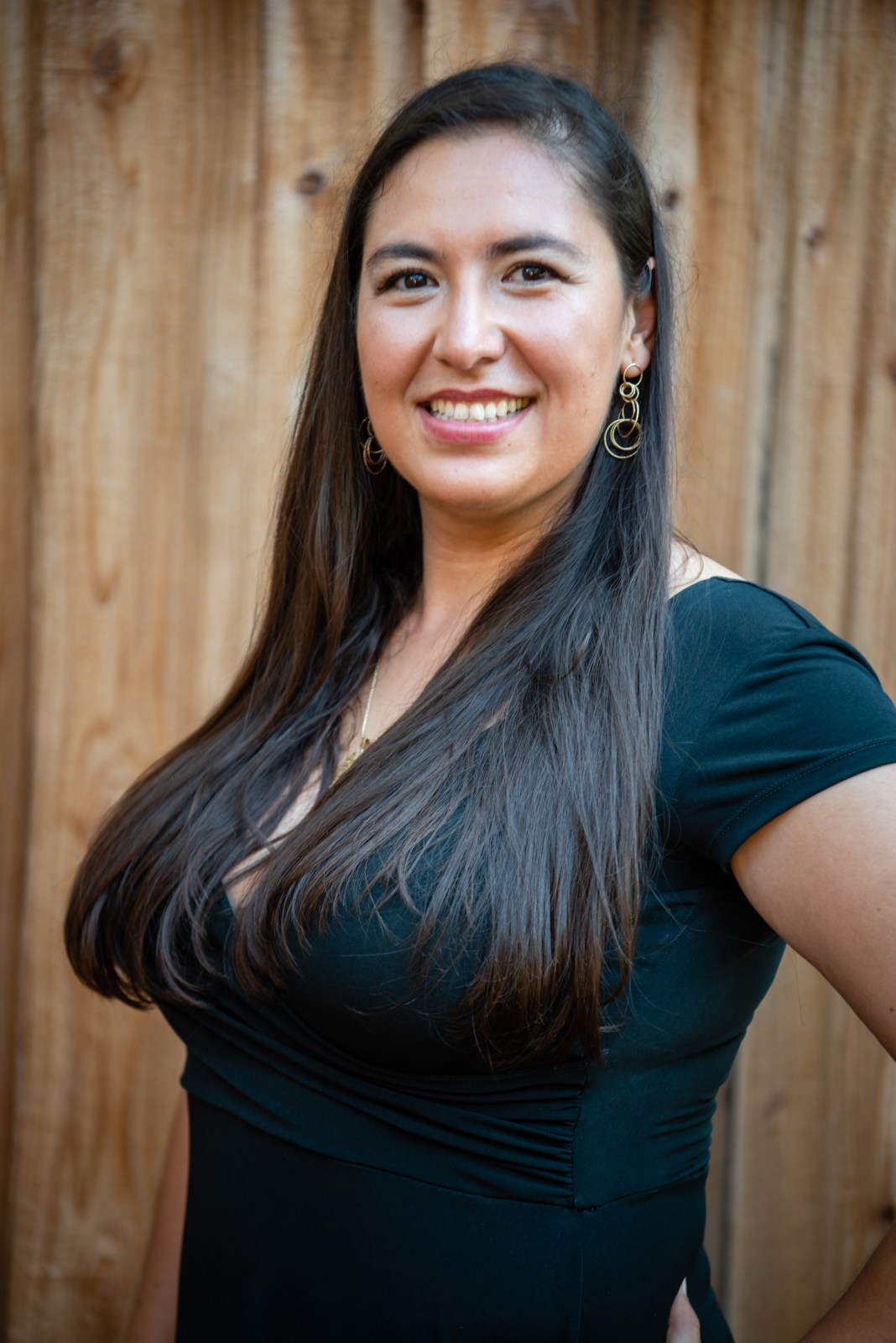
Valarie Bachelor, incumbent vice-president, tenants rights leader and former labor organizer
In an interview about her past term and what she hopes to achieve if re-elected, Bachelor said she’s running to build on what she sees as progress in the district’s financial outlook and in finding new uses for OUSD’s vacant properties. She was first elected in 2022.
 Credit: Courtesy Valarie Bachelor
Bachelor is currently the director of ACCE Oakland, a tenants’ rights organization. Before that, she was an organizer with the California Federation of Teachers, a union representing education workers including teachers, bus drivers, paraprofessionals and college faculty. Bachelor noted that she is married to a former OUSD teacher whose experience teaching in Oakland schools had a part in motivating her to run.
Based on her experience as a tenant organizer, Bachelor told The Oaklandside that she sees housing as one of the biggest challenges in Oakland right now. She wants OUSD to develop its vacant properties into workforce housing for staff or affordable housing for homeless families.
More than 2,300 OUSD students were considered homeless during the 2024-2025 school year, nearly 7% of all students according to the California Department of Education. That includes families who are temporarily living “doubled up” with others, staying in motels or shelters, sleeping in a place not designed for sleeping, or living in cars or substandard housing.
To streamline the budget, Bachelor said the district should prioritize cutting central office administrators and outside vendor contracts. This year, the board already decided to shrink OUSD’s central office by roughly two-thirds, which meant losing several positions that were key to supporting principals at school sites. Bachelor defends other steps the board and Superintendent Denise Saddler have taken to address the district’s deficits.
In June, the board passed a budget including $30 million in unidentified cuts for the 2026-2027 school year, which staff still have yet to bring to the board for approval. In a recent meeting, staff said they’ve found $41 million to cut, which they will present at a future meeting.
“We’ve been able to shift our resources so that they are drawing out of the most restricted funds first versus our general fund, which alleviates a lot of the pressure that we’re seeing on our general fund,” she said.
Bachelor also sees revenue opportunities through growing attendance and enrollment, saying she supports the opening of Saturday schools for students to make up absences, and pointing to four new transitional kindergarten hubs that opened at Carl B. Munck Elementary and Fruitvale Elementary this school year.
She said she regrets not being more present for Skyline High School families in the aftermath of a shooting that injured a student on the campus last November, when she missed a town hall meeting that the community had organized and invited her to. Following the Parker shooting, Bachelor said she met with local community groups about how to prevent future violence.
She said she has taken steps to address violence that has rattled District 6 campuses in the last year, including trying to secure contracts to staff the violence intervention and prevention teams that had been placed at OUSD high schools for four years, starting in 2022. The initial funding for those teams, which included a gender based violence specialist, a life coach, and a violence interrupter, expired at the end of the last school year.
This year, OUSD was able to fund life coaches from the community organization Youth Alive at Skyline and Castlemont high schools, and the Family Violence Law Center is providing a gender-based violence specialist at Fremont High School, Bachelor said. She pointed out that OUSD would need $1.9 million more to support these prevention teams at every high school.
Bachelor was the board member who moved to approve a separation from longtime superintendent Kyla Johnson-Trammell in a closed meeting last year, two years before her contract expired, and Bachelor supported the temporary hire of current superintendent Denise Saddler. This year, she was a yes vote when the board decided to extend Saddler’s contract for another year. Going forward, Bachelor said, she envisions a community-driven search process for a permanent superintendent that includes students, families, educators and staff.
“We also need to make sure that we’re taking the necessary time to find the right leader and the best fit for Oakland Unified, so that we’re not rushing through the process just to get a superintendent,” she said.
Bachelor is adamant that closing schools is a failed policy that risks compounding budget issues by causing families to leave the district. The debate around school closures, she said, takes up time and attention that should be spent on deciding what to do with properties that are already vacant, some of which have ended up sitting empty for years. Conversations about the district footprint, she said, should include working with city agencies, such as the Head Start office, or other community organizations, to come up with broader uses for district facilities. As enrollment in OUSD has declined, the district has not significantly downsized its number of schools.
“The focus has been solely on whether or not OUSD can maintain its enrollment, can maintain those facilities, but there haven’t been any discussions as to whether we could repurpose some of those spaces to support some of the other education that’s going on in the city,” Bachelor said. “Are there ways that nonprofit organizations or groups could utilize some of those spaces so that we can have them go towards community good? I’d like to focus on that.”
Bachelor chairs the board’s facilities committee, where she authored a resolution to conduct a feasibility study for three of the district’s properties: the former Ralph J. Bunche Academy in West Oakland, the former Lakeview Elementary on Grand Avenue, and the district’s former headquarters at 1025 Second Avenue. District staff estimated in 2024 that it could cost $108 million to rehabilitate the Second Avenue site, and $10 million for Ralphe Bunche.
“I’m the most focused on spaces that have been vacant for multiple years because they are drawing away from the resources that we need to support our students because they need additional safety patrols, additional kind of maintenance at times because of things that happen within those properties,” she said.
The feasibility study, which the school board approved last September, allows for district staff to evaluate the sites for potential development of workforce housing, affordable housing and a resource center for vulnerable youth who need support transitioning to adulthood.
“So many of our middle and high school students tell me they don’t go out, they don’t go to parks, they don’t go to places because there’s not really a place for them to be young people,” Bachelor said. “So I want to make sure that we’re creating spaces that our young people need to learn, grow, and thrive in our city.”
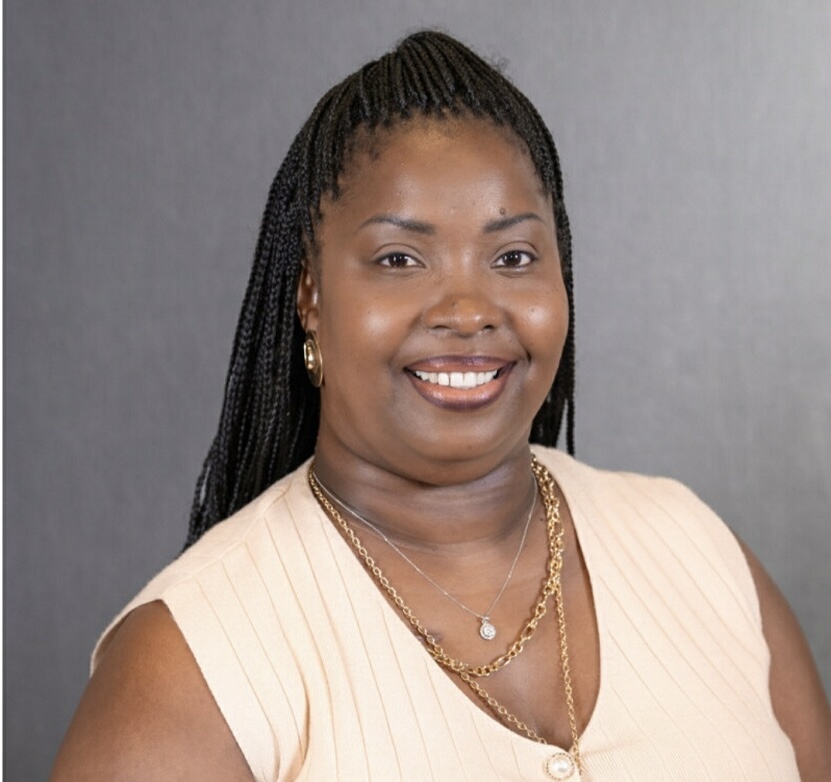
LeAna Powell, fifth-generation Oaklander, OUSD parent, family engagement expert
A parent of three, including two children at Burckhalter Elementary, Powell told The Oaklandside she decided to run for the school board after being diagnosed with breast cancer.
She recalls telling herself that if she beat it, she would pour much more of her time and energy into her children and their futures.
 Credit: Courtesy LeAna Powell
A fifth-generation Oaklander, Powell has helped a variety of organizations to support their family engagement work: Burckhalter; Oakland Promise, which offers scholarships to students heading to college; and Summer Search, an organization that offers mentorship and career guidance for students. In those roles, Powell served as a liaison to families, learning about their concerns and what their children needed to succeed, she said.
She has also served for several years on the board of California Mental Health Advocates for Children and Youth. Supporting students’ mental health is a crucial part of ensuring that they’re prepared to learn, she said.
“Mental health is directly tied to students’ academic progress, and I believe that has a lot to do with why our students are failing,” Powell told The Oaklandside.
Powell also worked briefly as a staffer for Sheng Thao while Thao represented District 4 on the City Council, and eventually brought a complaint against Thao to the Public Ethics Commission in June 2022, accusing her former boss of directing Powell to illegally work for her political campaign. That complaint remains unresolved.
At Burckhalter, located in the Millsmont neighborhood, Powell and her husband both serve as avid volunteers, she said, and parents often come to her to ask questions about how to get resources for their kids. Parents in the parent-teacher organization encouraged her to run because she seems so knowledgeable, she said.
“These past five years have been the experience that I wish we all could have had in some way because it felt like our kids belonged,” Powell said of her experience at Burckhalter, where her children are now in fourth and fifth grades.
Part of what motivated her to run are her concerns about what her kids will experience once they leave a school she trusts. “I’m worried about their psychological safety. I’m worried about their educational and academic outcomes,” she said. “I cannot leave that in the hands of someone else.”
Powell said if elected, she’d push OUSD to make aggressive investments in literacy tutoring and supporting phonics-based reading instruction. Learning to read by third grade is pivotal, Powell said, because students need to have mastered foundational reading skills to be successful for the rest of their time in school.
“The most urgent issue is that our children need to be able to read well by third grade,” Powell said. “Our kids need to be able to read and do math. Because if they cannot, there’s just so many different deficits that they have to face if they’re not able to read by third grade. It sets them up for failure for the rest of their life.”
In Oakland, the proportion of students meeting grade level standards is around one in four for math and one in three for reading.
She’d like to see the district provide more support for teachers who have to balance varied proficiency levels among their students. She also suggested holding back students if they’re struggling to read.
“My daughter’s fourth grade teacher last year said, ‘If I get a kid in the class that’s reading at a kindergarten level, I can get them up two grade levels,’” Powell said. “‘If I had them longer, I could get them up to a fourth grade level, but they move on.’”
Powell said she believes that the root cause of OUSD’s budget problems is overspending. OUSD’s fund balance decreased by $90 million from the beginning to the end of the 2025-2026 fiscal year. Powell suggested tying each line item in the budget to student outcomes. She also said it’s a problem that district leaders, school site leaders, teachers and families are not aligned on their goals.
Any discussion of closures should be rooted in history, she said, looking at which neighborhoods have already experienced closures, who was negatively impacted, and how students would get to a new school, she said.
OUSD should also prioritize addressing its vacant properties, Powell said. Living in District 6, her children walk past blighted lots such as the Edward Shands building on Church Avenue.
“I would love to see anything in the place of Edward Shands other than a vacant, half-burned-down building with trash that kids have to walk past every day,” she said. “It’s not in the communities of families who have privilege.”
The school board approved a lease with a developer in 2021 to build affordable housing on the Shands building site, but the lease was terminated after work never began. In June, the board’s facilities committee recommended a resolution to issue a fresh request for proposals to redevelop the site. That resolution still awaits approval by the full school board.
Powell supports more culture keepers on campuses — the staff who were previously called security guards before their roles evolved when the district disbanded its school police department — and more staff with training in mental health care. Safety goes beyond protecting students from violence, she said. It also means safe school facilities, classrooms that are at reasonable temperatures for learning, and psychological safety.
“There’s no break for the kids who are going home to violence, who are seeing it on their way home,” she said. “They don’t get a psychological break. We’re expecting these kids to sit down, be quiet and focus on reading in a super hot class after they just walked past a whole building full of blight.”
Alexandra Williams, charter school math teacher, past public school teacher and charter school administrator
 Credit: Courtesy Alexandra Williams
Williams is a high school math teacher at AIMS College Prep High School in North Oakland, part of the AIMS charter district, which also operates a second school in Oakland, a K-8 school downtown. Williams has taught at AIMS since 2024 and previously served as a public school teacher in Florida, as an administrator at the Summit Public Schools charter school network, and as a program director at an educational nonprofit. Williams attended Edward Waters University, a historically Black college in Florida, and taught in Florida before coming to the Bay Area in 2019.
Williams says she’s running for office to bring her classroom knowledge to the school board and district leadership.
“Right now is an opportunity to bring my experience of understanding schools and understanding how schools improve,” she told The Oaklandside. “Students need to be able to read and do math and we have to move the needle, and a large part of that is the best practices that are done inside of schools and understanding those best practices.”
Williams, who is working toward a doctoral degree in organizational development and leadership through a University of Arizona online program, said she believes the most pressing issue for the district right now is establishing goals and a budget centered on student outcomes, particularly literacy and math proficiency. The role of the board, she said, should be to set that kind of vision for the district.
“The board gives a vision to the superintendent,” Williams said. “The superintendent gives a vision to the principals. The principals give a vision to the teachers, and then the teachers get to deploy that vision to the students in the way that they deliver instruction.”
Williams said she sympathized with school leaders who are facing heavier workloads this year after layoffs the board approved in February cut vital staff at school sites. In August, the union representing school principals and district administrators protested during a leadership retreat two weeks before school started, calling attention to salaries, safety concerns and diminished school operations. Thirteen percent of the union’s membership was impacted by the cuts — the highest proportion of any union in OUSD — including assistant principals, literacy and STEM coordinators, and central office partners who support principals.
“The capacity load of an administrator right now is so high because the cuts have been so drastic to what supports them,” Williams said. “We’re saying, ‘We’re just going to keep stripping out the buildings, even though the buildings aren’t filled, we’re going to keep pulling the people out.”
Another area of focus, Williams said, should be school safety. District 6 schools have had a disproportionate share of violent incidents on campus in the last few years. Shortly before the school year began, an adult student was shot and killed on the campus of Parker Community Resource Center, the adult education school in the Eastmont neighborhood that was formerly a K-8 school. Last year, a student was shot on the campus of Skyline High School in the Oakland hills. Several years ago, six people were shot, one of whom died, at Rudsdale High School.
“When parents decide on where they want to put their kids, and where they want to keep them, they want to make sure they’re safe and we need to be able to provide reassurance that this is a place that is safe,” she said. “We also need to provide reassurance that this is a place where they are going to learn.”
As a school board director, Williams would be responsible for evaluating charter schools under the district’s authority while teaching at one of those schools. Williams is experiencing the renewal process for the first time as a charter employee this year, she said.
Charter schools are public schools, but they are financially and operationally independent from district schools. When a charter school comes up for renewal, its leaders must petition the district, county or state authorizer to remain open, marshalling evidence that it is serving students well.
Last year, AIMS K-8 had its charter denied by OUSD, despite its high achievement rates for Black students, because of concerns over governance, staffing and safety. The network appealed the decision to the Alameda County Board of Education, which allowed the school to remain open if it agreed to a memorandum of understanding with the county. The OUSD board will issue a renewal decision for AIMS High School on Oct. 6, 2026.
District employees are prohibited from serving on the elected board of the district where they work, but it’s “somewhat of a gray area” for charter school employees, said Troy Flint, the spokesperson for the California School Boards Association. Attorney General Rob Bonta found in 2021 that charter school employees are prohibited from serving on the county boards of education where their school is located.
Williams expects to complete her doctoral program next year and what happens after that is “still up in the air,” she said, but she hopes to land a new role with her degree. She doesn’t think that working at a charter school would be a conflict of interest.
Williams argued that the standards that authorizers apply to charter schools during the renewal process — academic performance, enrollment and finances, among other metrics — should be applied to district schools as well.
“If they’re being held to the equity of suspension rates for Black and brown students, then we also need to look at the equity and suspension rates of Black and brown students in the district, because those numbers are very high comparatively,” she said. “We’ve got to make sure that we understand that there are students in both locations who are depending on us to do our jobs and make sure that we are giving them the best education possible in both spaces.”
“*” indicates required fields