
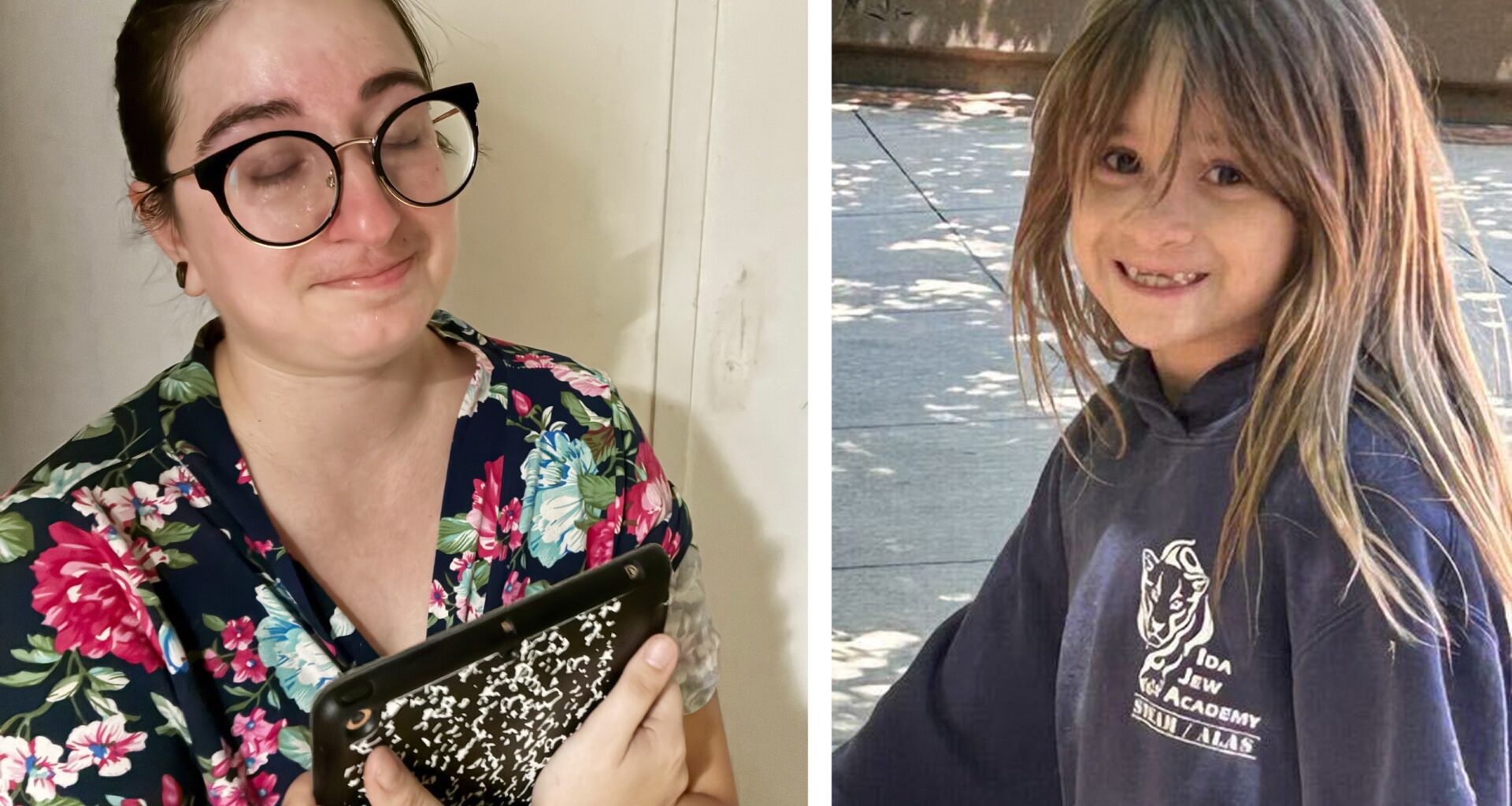
Gabrielle Hanson was in bed with her 2-month-old baby when her husband rushed in with Aurora’s limp body in his arms. Her 8-year-old daughter who had been suffering an asthma attack that May 13 morning had stopped breathing.
“Call 911!” Aurora’s stepfather, Jacob Randolph, said.
Hanson was so panicked, she said, she could barely follow the dispatcher’s instructions for CPR. Nonetheless, Randolph pushed on Aurora’s chest while Hanson tried desperately to breathe back life through her child’s mouth.
It didn’t seem to help.
“By the time they got here,” Hanson told the Bay Area News Group, “she was gone.”
Aurora was kept on life support until doctors declared her dead days later.
Now, nearly five months later, the tragedy has become far more than one family’s loss of a sick child. The county medical examiner classified her death as a homicide, finding that a failure to provide necessary medical care on the day she became unresponsive was a significant factor. The District Attorney is evaluating whether to file charges.
The county’s Department of Family and Children’s Services is left trying to explain how a seventh child involved with its social workers has died since 2022, despite teachers and medical providers making eight separate referrals to the county’s child abuse hotline with concerns about Aurora’s welfare, that she appeared neglected, malnourished and unkempt. And the superintendent of the Mount Pleasant Elementary School District where Aurora was a second grader is demanding what the superintendent called a “complete overhaul” of the child welfare agency. The agency did not remove children from the home, which social workers had described as filthy and vermin-infested, until after Aurora died.
“Our staff did everything within their power to sound the alarm,” Mount Pleasant’s Superintendent Elida MacArthur said. “This cannot be allowed to happen again. Aurora’s memory demands accountability, transparency, and meaningful change.”
County spokesperson Peter Gallotta said in a statement that “our hearts go out to all those who loved Aurora.”
“The death of any child in our community is a tragedy,” Gallotta said, “and we will continue working together across the community to ensure families have the support they need for children to thrive.”
In her first interview since her daughter’s death, however, Aurora’s 32-year-old mother stood on the front stoop of her East San Jose home and said the death was a tragic medical emergency. Nothing more.
“I don’t think anybody’s at fault for this. I think it was just a tragedy that could have happened anywhere,” Hanson said. “It could have happened at school. It just happened to happen at home. And I don’t blame CPS. I don’t blame myself. I don’t blame anybody.”
She doesn’t understand how Aurora’s death could be considered a homicide.
“If I had known she was that bad, of course I would have taken her to the hospital that night,” she said. “But I had no idea because I’ve heard her worse before.”
In a brief interview earlier Thursday with the Mercury News, her husband said he gave Aurora two medications for her asthma that morning and they “weren’t working.”
As Aurora lay unconscious in a hospital bed that week in mid-May, the same child welfare agency that had determined that eight separate concerns over Aurora’s welfare since 2023 were unfounded or inconclusive removed Hanson’s four other children and two step-children from the home and placed them in foster care. Police officers with a search warrant described the house on Lancelot Lane much as social workers had described it before — squalid, with open trash, an overwhelming smell of pet urine and cockroaches climbing on the walls.
Social workers filed a petition with the county’s dependency court to remove Aurora from her mother’s care, according to a county summary of the steps social workers took in Aurora’s case — documents obtained through a Public Records Act request by this news organization.
At a May 18 hearing before a dependency judge, Aurora’s mother and Richard Williams, her ex and Aurora’s father, appeared in the courtroom with lawyers representing them as well as Aurora. By then, however, their child was already dead.
“The Court was advised on the record that the child had died the day before the hearing,” the summary said.
The case has sparked outrage among county supervisors who have been overseeing two years of reforms at the agency. Wendy Kinnear-Rausch, the director of the Department of Family and Children’s Services, told supervisors last month she would give her agency “a failing grade” over recent events, and County Executive James Williams characterized the agency’s response as “actually 40 points below an F.”
The California Department of Social Services mandated reforms after the 2023 fentanyl overdose death of infant Phoenix Castro, who was sent home with her drug-abusing father despite a social worker’s warning she would be unsafe there. Seven-year-old Jordan Walker, who was placed by social workers in the home of his grandmother despite pleas from his out-of-state grandfather, was stabbed to death allegedly by an uncle a few months later. Jaxon Juarez, 2, died in April after he was placed by social workers in a relative’s home, where his teenage cousin is now accused of sexually assaulting him. And earlier this year, Medical Examiner Dr. Michelle Jorden issued a Child Death Review Team report showing that three children who had been involved with social workers died in 2022, and warned that neglect is often minimized within the child welfare system by social workers concerned about conflating it with poverty.
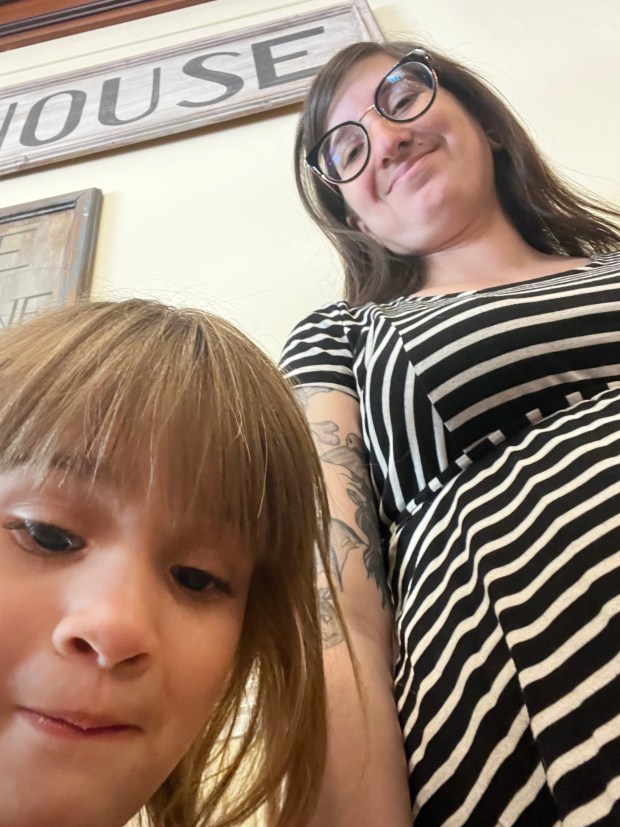 A selfie taken by Aurora Williams with her mom, Gabrielle Hanson, last year. Aurora’s death in May after an asthma attack in her cockroach-infested East San Jose home has spurred more demands for an overhaul of Santa Clara County’s child welfare agency.(Photo courtesy of Gabrielle Hanson)
Under her porch light Thursday evening, Hanson scrolled through pages of photos she took of Aurora over the years — trips to Happy Hollow and Disneyland, blowing kisses on her birthday, wearing a princess dress.
Aurora wanted to be a doctor or a teacher one day, “or both.”
“She was an angel on this earth,” Hanson said, choking up. “She loved me more than anything.”
Life was a struggle, she said, but “we tried our best” — a similar assessment made by social workers who visited the home over the past several years, according to county documents.
Hanson stayed home with the seven children while her husband worked as a security guard. They each brought two children into their relationship. Over the past six years together, they had three children together.
A total of 13 people, at least three dogs and five cats lived in her father’s small house, including Hanson’s three grown brothers, one of whom slept in a trailer in the front yard. Three of the children, including Aurora, slept in a pair of bunk beds and a trundle in the living room. A fourth bedded down “wherever he kind of fell asleep,” she said. The two youngest slept with her.
Some days they wouldn’t get their children to school on time. Others, Aurora faked she was sick, she said.
Pet hair and dander covered the furniture, social workers noted in reports obtained by this news organization. Flies swarmed the house. Cockroaches crawled in and out of kitchen cabinets and dishes piled up in fetid water.
With a new baby, she said, “I had a lot to handle.” Because the house belonged to her dad, she had little control of the household: “I’m the only adult female living here.”
Hanson said “of course” she knew that cockroaches and a dirty house could aggravate her daughter’s asthma, which had been diagnosed when Aurora was a toddler.
“But I didn’t have the money to get us out of here,” she said. “I didn’t. I still don’t.”
Besides, she said, “if the house is to blame, then why don’t my other kids have any problems like that?”
If social workers were really concerned about her children, she said, they would have provided money for a pest service, not just $100 worth of pest foggers and roach traps that she said didn’t work. Instead, “they dismissed everything,” she said, from the living conditions to the accusations of neglect.
“They didn’t help us very much,” she said. “I know they’re claiming that they did, but they really didn’t, and now they’re giving all kinds of money to these foster parents to take care of our kids when they could have helped us first before this happened.”
She took issue with reports that Aurora was malnourished and that she didn’t follow up with doctor’s visits. Aurora was a small child, like Hanson was as a girl, she said, and “I cook for my kids all the time, and if I ever could not afford to get them food, my dad made sure that they didn’t go without.”
School officials had told social workers that Aurora told them she was hungry and that she hoarded snacks into her pockets and backpack. Hanson said her children would sometimes skip breakfast ‘because they weren’t hungry,” and would naturally be hungry later. Besides, she said, “kids love snacks. They’re going to load up on anything they can.”
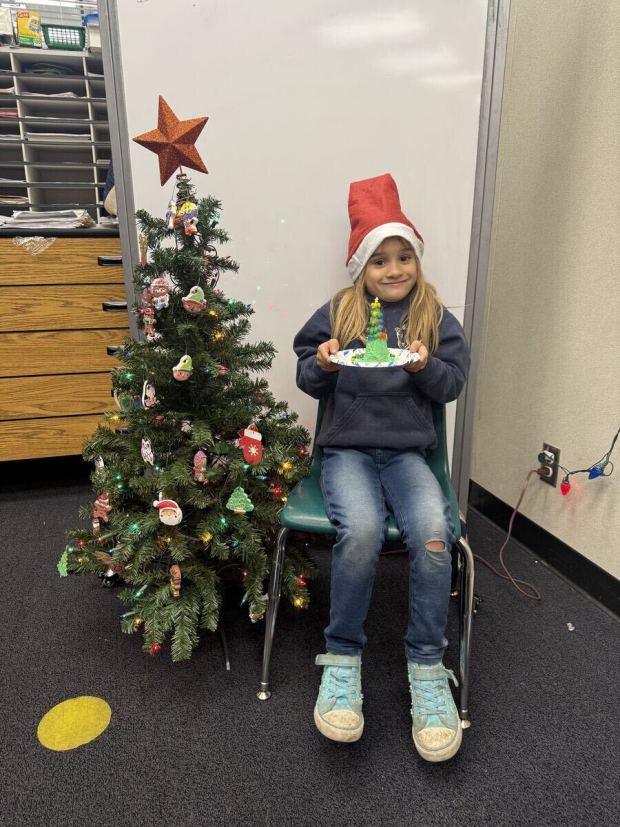 Aurora Williams, 8, at her school last Christmas. (Photo courtesy of Gabrielle Hanson)
She also knows of no follow up doctor’s visits that she missed.
Aurora’s asthma attack started the night before, Hanson said. Her husband stayed up late while she went to bed with her newborn. She checked on Aurora the next morning — the timing was unclear — and reminded her to keep the nebulizer on her face, then went back to bed.
Tears ran down Hanson’s face as she recalled Aurora’s death and the removal of the other six children from her care. Three of them are in foster homes in the Central Valley. She is allowed weekly visits at the agency in San Jose with each of them.
“Losing a child and then losing my other ones to CPS are both of my worst fears come to light,” she said.
At Mount Pleasant school district, staff there are also feeling the pain, Superintendent Elida MacArthur said.
“Aurora’s death is an unimaginable tragedy that has shaken our entire community and will leave wounds that will take years to heal,” MacArthur said in her statement. “Aurora deserved better. Every child deserves better.”
MacArthur called for a “full and independent examination of what happened, how the system failed Aurora, and why the concerns raised on her behalf did not lead to the intervention she needed.”
After Aurora’s death, Hanson’s father, Clay Hanson, hired a pest control company, scoured the house and repainted the walls.
“My dad’s been doing a lot of work on the house, I think partially because he felt so bad,” she said.
She wishes he would have done so before. “I was pretty upset about that. Why wait? Why did you wait until something horrible happened?”
Still, she said, “I don’t blame anybody.”
Hanson wants to find a new home for her family, but with a homicide finding from the Medical Examiner looming over her, she fears what lies ahead.
“I loved her so much, and the thought that I might go to jail now for something that I had no control over — she wouldn’t want that, you know?” she said.
“It seems like they’re looking for somebody to blame,” she said, “but I did everything I could. We all did.”