
Voters will be making decisions in November that will impact the future of several school districts.
For some, it will be their second or third attempt to secure basic funding for day-to-day operations. For others it will help renovate and restore district infrastructure.
There are six school improvement bonds asking for almost $840 million and three operating millage bonds in Oakland County.
Here is a look at what voters will see next month.
BIRMINGHAM
Of all the school improvements bond proposals on the ballot in Oakland County, Birmingham will have the largest.
The district is asking for approval on a 20-year, no tax increase, $270 million dollar bond.
Bond funding is projected to go toward safety and security improvements, replacing aging infrastructure such as roofs, flooring, boilers and aging playground equipment, modernizing security cameras, alarms, and emergency communication systems throughout the district and expanding the Midvale Early Childhood Center.
The current millage rate of 3.80 mills would remain in place.
“Safety and security is always evolving, and so it is important for us to have measures to improve our security camera systems, our emergency notification systems, and emergency radios to ensure that we’re able to continue our safety measures for students,” said Superintendent Embekka Roberson.
Funding would also go toward technological upgrades.
“We have these wonderful fabrication labs where students have access to 3D computers, 3D printers, laser cutters, and a number of other equipment that allows students to be creative, but most importantly, it allows kids to explore and use their critical thinking skills,” said Roberson. “We will be adding to that all the way from elementary through our high school.”
The district has 250 students in early childhood programs at the Midvale Center and other buildings. Roberson said the expansion of Midvale would allow the district to bring in more students.
“That is only 48% of the students that we can service, because that 250 students are students from the ages of 2 1⁄2 to 4, or actually to 5,” she said. “When you think about that number, while it sounds large, but it’s actually not as large as we would like considering that an average kindergarten class is anywhere from 450 to 600 students. There are a lot of students that we are not servicing in our program and so, we want to be able to service more of them.”
The last bond proposal in the district was a $195 million bond in 2020 that passed with 76% approval.
“I do believe that our community members in our district understand that strong schools equals a strong community,” said Roberson. “I believe that they support the schools, not only for what it does for the community, what it does for the economy, but also what it does for property values.”
For more information go to: https://www.birmingham.k12.mi.us/about/bond-2026.
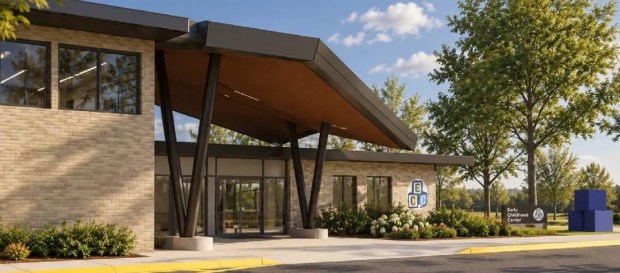 A concept photo shows what a new Midvale Early Childhood Center could look like for Birmingham schools.
photo courtesy BSD
FARMINGTON
After two successful school improvement bond proposals in the past, Farmington is looking for three in a row in November.
Voters approved bonds in 2015 and 2020 and the district is now asking for approval on a 20-year, $171 million, no tax increase bond that will keep the current millage levy at 3.20 mills.
Superintendent Kelly Coffin explained the process of bringing a new proposal to Farmington voters.
“We had a citizens’ oversight team that came in and really looked at the (2015) bond request and brought the bond request down from a larger amount to a smaller amount,” said Coffin. “In doing that in 2015, one of the main recommendations from that team was that every five to six years, the district would need to get their plan updated, their 10-year facilities plan updated, and then go out to the voters again. So, in 2020 we did that, and it was successful. So, here we are in 2026.”
The 2015 $131.5 million bond passed with 65% approval and the 2020 $98 million bond with 69% approval.
The current proposal would pay for improvements in all 17 school district buildings and at nearly every school, the existing Media Center would be transformed into an iCenter designed for hands-on learning, small-group collaboration, and flexible instructional opportunities.
The “i” in iCenter stands for Information. iCenters are designed to build on the traditional school media center by creating flexible spaces where students can read, research, collaborate, create, and learn in different ways.
“When we think about these iCenters, we do have media centers, and we have those in every building. So, it’s just bringing them up to the level of what our students now need,” said Coffin. “So, it isn’t new technology or increased technology; it’s more of these shared spaces, so books stay. The books are part of this Information Center.”
A districtwide facilities assessment identified nearly $390 million in potential improvements across Farmington schools. Rather than addressing all of those needs at once and increasing the current millage rate, the district developed a prioritized, long-term plan for maintaining and improving its schools over time.
This proposed $171 million bond represents the first phase of that plan.
Coffin said the community has been supportive of the district in the past.
“Years ago we right-sized our district, and we have maintained it. And our community has supported the maintenance of that,” she said. “So, we are not building a mega school down the road from us. That is not at all what our community wants. They like their home schools. We’re right-sized, and so we are just taking care of what we’ve already maintained and then doing the things based on feedback they want for their children for the next 10 years.”
For more information go to: https://www.farmington.k12.mi.us/page/bond-updates.
FERNDALE
Over a year after Ferndale voters approved a $114.8 million school improvement bond, the district is asking voters to restore their millage levy due to Headlee rollbacks.
It would not increase the tax rate, does not apply to primary residences and would restore 1.67-mills to regain the full 18-mills the district can levy.
Districts are assumed to be collecting their full 18-mills and those that do not have to cover the financial gap themselves.
This 20-year millage, if approved and levied, would provide revenues to the district of $6.7 million.
“This is a no-mill increase. This is just our Headlee override so that we can continue to not have to dip so deep into our funds,” said Superintendent Camille Hibbler. “This just allows for us to keep operations as normal, as planned and is not in any way bond work. The funds will not be used for bond work. We cannot do that. It’s against the law.”
In May 2025 voters passed the bond with 70% approval and millage restoration proposal with a 58% approval rate.
“If it does not pass, then we will be in a bit of a debacle and have to go into reserves that we didn’t plan to,” said Hibbler. “This allows us to keep the lights on and business as usual.”
The last day to register online or by mail is Monday, Oct. 19; after that, residents may register in person at their city or township clerk’s office through Election Day. Early in-person voting runs Saturday, Oct. 24 through Sunday, Nov. 1.
For more information on the proposal go to: https://www.ferndaleschools.org/o/fles/article/3162346
HOLLY
Holly schools are asking for a 30-year, no tax increase, $97.6 million safety, security, and school improvement bond.
Bond funds would pay for improvements around the district including: expanded athletic practice spaces, and new outdoor storage buildings; building, furnishing, and equipping additions to school facilities, including early childhood center at Davisburg Elementary, a secure entry at Holly Elementary, expanded band room space at Holly High School, and an addition at the high school for improving career-technical trades and robotics space.
Funding would also update spaces in other areas of the high school, including the library/media center, create new classroom space for early childhood students, provide increased space for elementary students and add security window enhancements and install building security entrance barriers around the district.
“At Holly Area Schools, safety and security is one of our top priorities. This proposal would fund safety enhancements that would help keep our students safe – all without raising the tax rate,” Superintendent Scott Roper said in a statement. “This bond would also address aging infrastructure like roofs, plumbing, and heating and cooling systems to help our students experience healthier and safer classrooms. As additional systems continue to age, the proposed bond would allow the district to proactively address remaining infrastructure issues in a planned, cost-effective manner.”
For more information go to: https://www.hask12.org/has-bond/2026-bond-proposal/
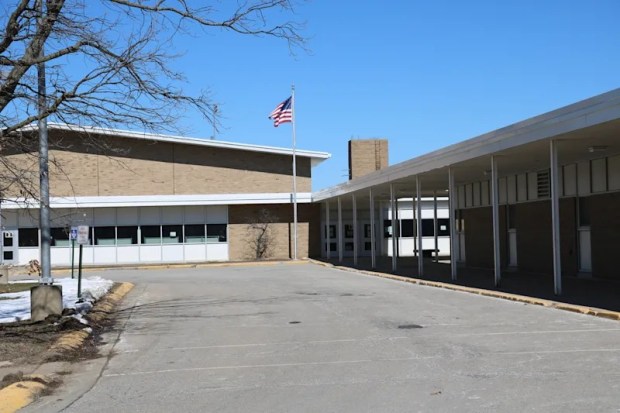 In the reconstruction, the north side of the CERC building would be torn down and rebuilt entirely with a new secure entrance and separate wings for the PHASES and Learning Options High School programs.
photo courtesy LOSD
LAKE ORION
Lake Orion schools has a $115.9 million bond on the ballot that has been readjusted after the failure of a proposal in November 2025.
The $272 million proposal failed with 50.3% (5,047 no votes) to 49.6% (4,982 yes votes).
A district survey taken earlier this year found support was down from an April 2025 survey by 20%, and those who “strongly oppose,” a bond rose from 10% to 18.5%.
Of the 1,149 residents who responded to the survey, 55.8% supported a bond and 28.5% opposed.
The district has adjusted their request by over $150 million, but major changes will still be made to the Community Education Resource Center (CERC).
In the reconstruction, the north side of the building would be torn down and rebuilt entirely with a new secure entrance and separate wings for the PHASES and Learning Options High School programs.
Superintendent Heidi Mercer explained the plans for the new building.
“What we are proposing is a STEM wing addition added onto the high school where our robotics programming would go. Currently it is housed at the CERC,” she said. “Robotics is quite a large program in Lake Orion and it takes up a fair amount of space at CERC. So we really need to relocate it so then we can also, as part of this proposal, reconstruct CERC for the two programs that we have there: Learning Options High School and PHASES.”
The bond would also pay for a range of projects including replacement of aging buses in their fleet, septic field replacement at Oakview Middle School, adding special education sensory rooms in certain buildings and the Lake Orion High School Commons would receive an update with a replacement of the signature overhead skylight and a major update to the stairs to the lower level.
“It really is a very slimmed-down version of the past November proposal,” said Mercer. “Our community really wanted us to focus on priority and needs, and so that’s what this proposal is. It is based on uh needs and priorities within the district.”
For more information on the bond proposal go to: https://www.lakeorionschools.org/district/bond2026
LAMPHERE
Lamphere may not have the largest proposal on the ballot next month, but they may have the most crucial.
For the third time in two years, the district is putting a school improvement bond on the ballot.
After voters rejected an $87 million bond in May 2025, the district sought input to assess next steps. The community feedback indicated that the district should focus on essential items only and take care of the facilities it currently has.
The proposal in May failed 42% yes to 58% no.
In November 2025 the district asked for approval of a $47.4-million improvement bond with a 2.5-mill tax rate.
The proposal failed 48% yes to 52% no with almost 3,500 votes cast
This year Lamphere is asking for a 30-year 47.3 million bond at 2.50 mills, or $2.50 for every $1,000 of taxable value.
According to Lamphere Schools, 96% of major building systems have reached or passed their expected service life. Many systems can no longer be reliably repaired and now require full replacement to prevent major disruptions to learning.
“We trimmed down the bond proposal from the first one to just the needs of the district, and our buildings are old. We’re not asking to build new buildings, we just want to keep our current buildings current,” said Superintendent Dale Steen. “Our buildings range from 57 to 70 years old, and a lot of the infrastructure is original. It’s just critical that we update these buildings.”
Steen said school district maintenance staff respond to more than 1,500 work orders each year, averaging about six work orders every school day.
The superintendent said there could be severe consequences if the measure fails.
“I think we’ll continue to spend a lot of our sinking fund money on putting out fires. We’ll be patching things together, and that’s what we’ve been doing,” said Steen. “Our maintenance department does a great job with it, but at some point, there could be interruptions to schooling. Something’s going to fail at some point that we won’t be able to fix quickly, and it will be during the school year.”
Steen said he thinks voters in the district have been supportive of the bond proposals, but low turnout has been the issue.
“We felt like a lot of the parents were supportive, but they just didn’t vote. So, this push is really to get the vote out. We need people to go out and, and cast a ballot,” he said. “The first one in May (2025) was the lowest. Last year was a little bit better. We only lost by 136 votes.”
He added, “Last year we showed the needs, but I think this time it’s, it’s going to become critical if this continues to go down.”
For more information go to: https://www.lamphereschools.org/page/bond-info-2026.
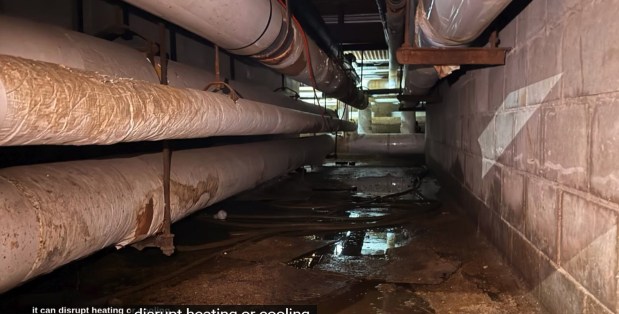 Superintendent Dale Steen said school district maintenance staff respond to more than 1,500 work orders each year, averaging about six work orders every school day. Crucial repairs are needed for an aging infrastructure.
Photo courtesy LSD
OXFORD
The Oxford school district will again try to get approval for a school operating millage.
Proposals failed in November 2025 and two months ago in the August primary.
The margin in August was only 23 votes.
Voters in Oakland County passed the 10-year, non-homestead millage with 34 more votes in favor, but voters in the Lapeer County portion of the district denied the millage request by a 57 vote difference – 162 opposed to 105 in favor. After combining the Oakland and Lapeer County votes, the proposal failed by 23 votes.
The current proposal would replace expiring authorization and restore the district’s non-homestead operating millage to the full 18 mills required under Michigan’s school funding formula. The district now levies 17.31-mills and needs voter approval to restore 0.68-mills.
If approved, it would provide revenues to the district of $252,288 during the 2026 calendar year.
According to the district, if they do not pass a replacement operating millage in 2026, the district would no longer be able to collect state funding which would result in a cut of approximately $7 million annually to the district’s budget.
“Because the district is currently able to levy only 17.31-non-homestead mills, instead of the full 18 mills required under Michigan’s school funding formula, Oxford receives approximately $10,016 per student rather than the full $10,050 foundation allowance,” Superintendent Tonya Milligan told the school board during a June 30 meeting.
If the proposal fails, Milligan said reductions could include approximately $2.1 million in transportation cuts, $2 million through facility and classroom consolidations — including the possible closure of Leonard Elementary — and $350,000 in extracurricular reductions or pay-to-participate fees.
For more information go to: https://www.oxfordschools.org/o/ocs/page/millage.
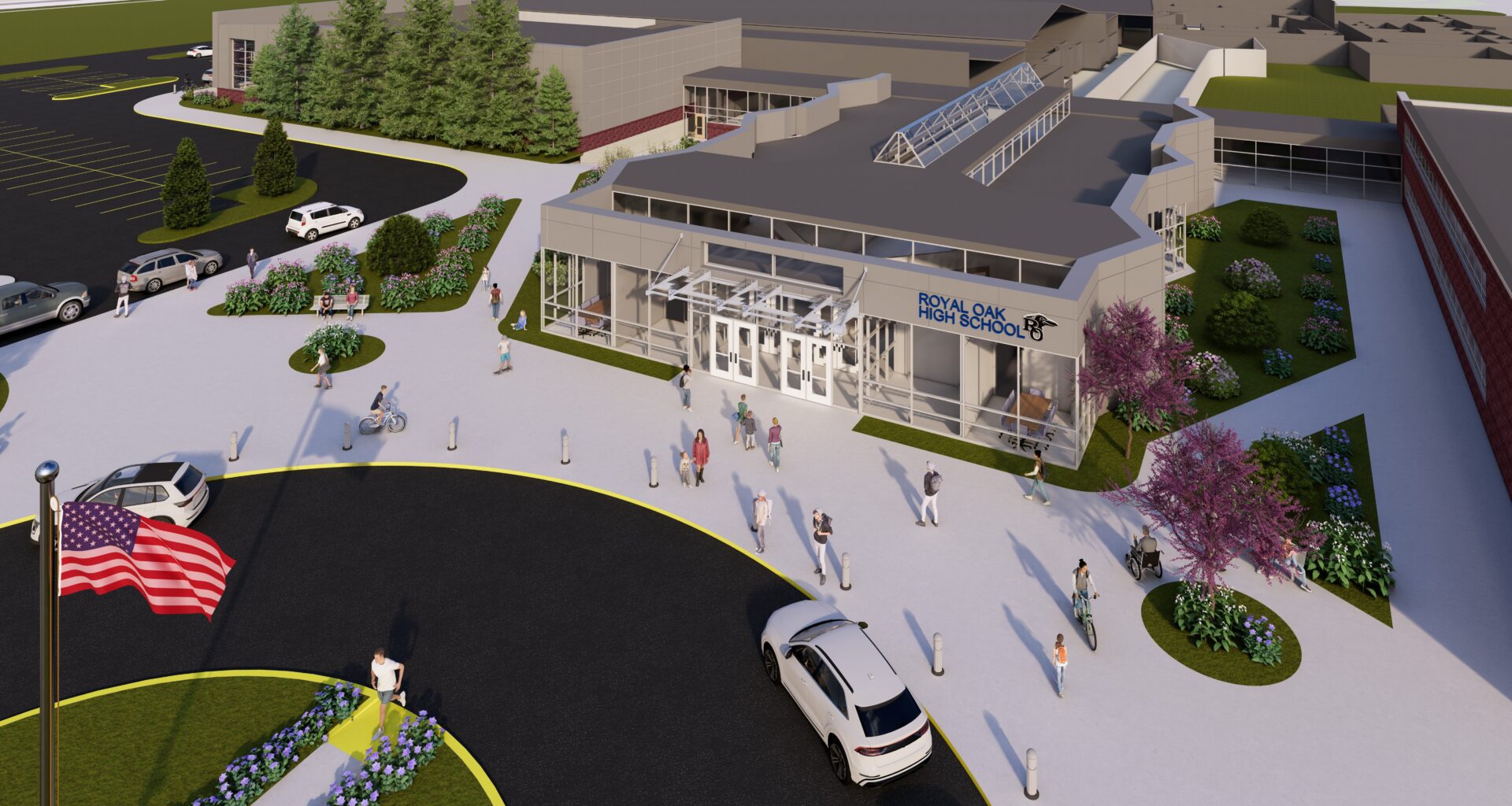
ROYAL OAK
It has almost been a decade since Royal Oak school has gone out for a school improvement bond and this request is slightly more than the last one.
In 2017, voters passed a $59.9 million bond with 72% support. In November the district is requesting a 15-year, no tax increase $165 million bond.
But Superintendent John Tafelski said the district is trying to stick to the basics on how they will spend the money if it is approved.
“There are going to be some new amazing things that are happening, but $90 million of it is critical infrastructure,” he said. “The old saying is to keep kids safe, warm, and dry. So you have your roofs, parking lots, boilers, secure entrances, all of those things and that is our focus.”
Tafelski said some of the bigger projects in the district over the past few years have been taken care of through sinking fund money and they were looking into different areas when investigating how to use bond funds.
“A lot of it was about accessibility for our students, whether you’re general education or special education. We’re looking at some of our underutilized space in some buildings, and how do we expand on that and make sure that they’re in use and then some of our space that we just don’t have what we need, and so we need to build that,” Tafelski said. “When we right-sized, we said, ‘What’s the best from a geography standpoint, from a student experience standpoint, from all of those things?’ How do we make sure that our families in every area still have neighborhood schools to go to?”
Tafelski said there will be changes throughout the district, including logistical changes in buildings like Oak Ridge Elementary.
“The library is basically a pass-through to the playground and when Oakridge was a smaller elementary school, it probably made sense, but now it’s our third largest elementary school, and so they’re packed to the gills over there,” said Tafelski. “So we’re going to move the gym, and then the gym now is going to become the library, and then the library is going to become an intervention space. All of these projects that are impacting another.”
For more information go to: https://www.royaloakschools.org/bond_2026
WATERFORD
Waterford schools is again asking to replace and restore the ability to levy the statutory limit of 18-mills on non-homestead property.
Headlee rollbacks have lowered the current rate levied to 17.67 mills and if the proposal passes the necessary 0.32-mills would be re-established through 2033.
The district had the same proposal on the August primary ballot and it failed by 865 votes out of over 20,000 votes cast.
Under Michigan’s Headlee Amendment formula, when commercial property values grow faster than inflation, the authorized non-homestead tax rate automatically rolls back.
The Waterford School District non-homestead millage is:
an existing levy on businesses and second homes in the district.
not a new tax and has no impact on a homeowner’s property taxes.
represents 13% of the operating funds for the district each year.
is required for the district to receive the full foundation allowance established by the state (18-mills).
funding helps pay operational costs.
“It’s a non-homestead restoration to get back to the full 18-mills that the state assumes that we’re collecting,” said Superintendent Adam Martin. “Those $501,400 (the 0.32-mills) go directly toward our operating expenses, teaching and learning, all of those pieces.”
Michigan school districts receive operating funds on a per-pupil basis known as the Foundation Allowance. For fiscal year 2026–27, the State of Michigan guarantees $10,300 per student.
Districts are assumed to be collecting their full 18-mills and those that do not have to cover the financial gap themselves.
Even though the Oakland ISD county school enhancement proposal and their millage failed in August, Martin is confident that Waterford residents will support the proposal in November.
“We looked at the breakdown of “no” votes for public education in Waterford in August, we looked at the Oakland County Enhancement Millage and the non-homestead,” said Martin. “You would think that the people that voted “no” for the enhancement millage would equally vote for our non-homestead, and that wasn’t the case. There was a pretty significant difference in the people that voted “no” for the enhancement millage than voted “no” for the non-homestead. So that gives us a sense of confidence that we do have a community that supports us.”
If the proposal does not pass, the non-homestead rate would remain rolled back, and the district will continue to face an annual loss of over $501,400 in state-calculated operating revenue.
For more information go to: https://www.waterford.k12.mi.us/community/resources/2026-millage-renewal/