
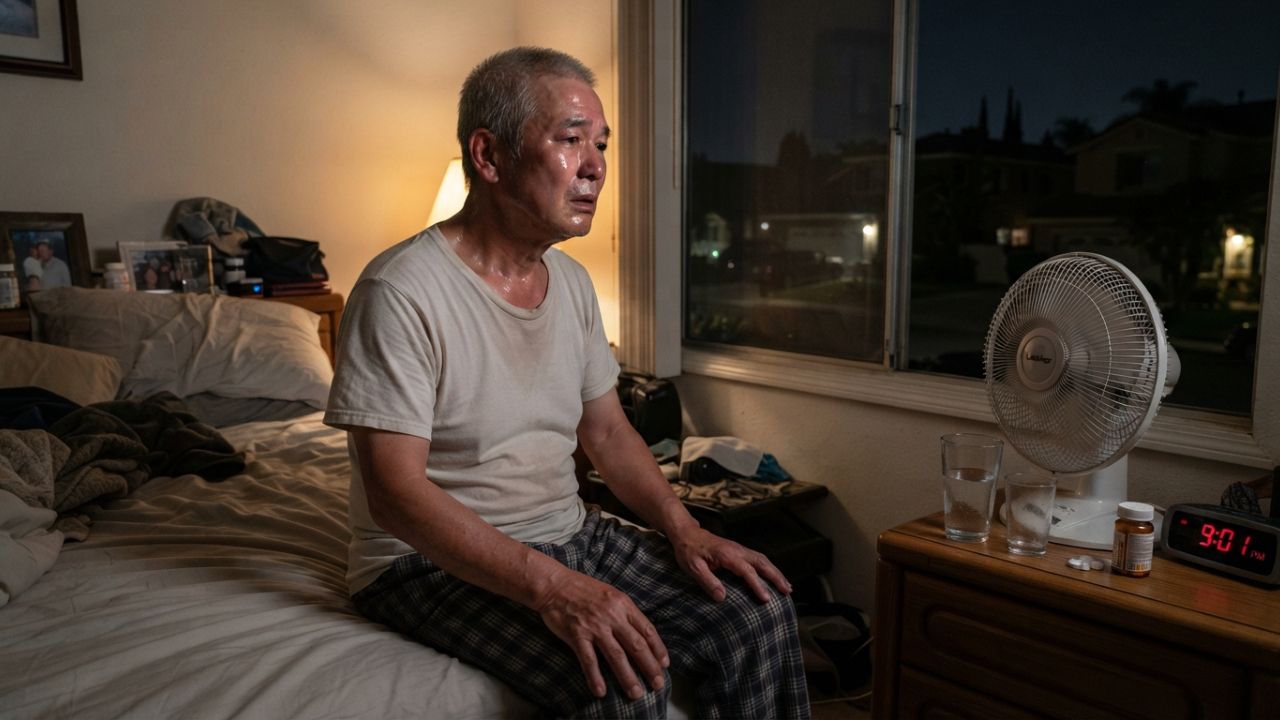
Southern California saw a string of record-warm overnight lows over the weekend. A preliminary National Weather Service San Diego record event report shows that on Oct. 4, Anaheim’s low was only 78 degrees, breaking the date’s record of 67. Santa Ana held at 77, and San Diego at 74, the warmest low for that date in records going back to 1875.
Those nights matter for health because the body uses cooler hours to recover from daytime heat. When temperatures stay in the mid-70s after dark, people without air conditioning get little relief before the next hot afternoon.
The warning period is not over. An Extreme Heat Warning for Los Angeles and Ventura counties covering the coast and valleys runs until 8 p.m. Thursday, with highs of 90 to 100 at the coast and up to 106 in the valleys.
Records Fell After Dark, Not Just at Midday
Weather service reports show the overnight records spread across Orange, San Diego, and Riverside counties. On Oct. 4, Oceanside Harbor recorded a low of 75, beating a record of 68 set in 1918. Riverside’s low of 71 broke a 1918 record of 65, while Chula Vista, Escondido, and Vista also set warm-minimum records.
Daytime records fell too. On Oct. 3, Santa Ana reached 107, five degrees above its old mark, while San Diego hit 105 and Vista 108. The weather service in Los Angeles reported that Burbank hit 102 that day and 101 on Oct. 4, both records.
Forecasters said high pressure aloft and gusty Santa Ana winds drove the heat. As reported by Forbes, the San Diego office forecast “warm nights with low temperatures in the low to mid 70s.” Climate scientist Daniel Swain said that while some daytime records might be set, the event “will be more notable for its persistence and breadth.”
MedicalDaily previously reported on Los Angeles County’s extreme heat warning for coast and valleys, when valley highs were forecast to reach as high as 107. The new development is the confirmed record lows across coastal and inland communities farther south.
Bodies Need Cool Hours to Reset
During a hot day, the body sheds heat through sweat and increased blood flow to the skin. That work strains the heart and drains fluids. Cooler nights allow the body to recover, but warm nights let heat stress build from one day to the next.
The weather service’s HeatRisk tool, developed in collaboration with the CDC, accounts for this. Its highest level describes “Rare and/or long-duration extreme heat with no overnight relief.” The EPA’s climate indicator on high and low temperatures also notes that unusually hot summer nights have increased “at an even faster rate” than unusually hot days.
According to the CDC, “People aged 65 years or older are more prone to heat-related health problems.” People with chronic conditions such as heart or lung disease, infants and young children, pregnant people, and outdoor workers are also at higher risk.
Older Adults and Homes Without Air Conditioning Carry the Most Risk
Renters in older apartments, people living alone, and anyone who skips air conditioning to save on power bills may face the longest exposure. Checking on older relatives and neighbors at night, not just during the afternoon, can catch problems early.
Heat exhaustion can cause heavy sweating, headache, nausea, dizziness, and weakness. Heat stroke is an emergency; signs include confusion, slurred speech, fainting, seizures, or a very high body temperature. Call 911 for those symptoms and begin cooling the person while waiting.
Cooling Options Through the End of the Week
San Diego County’s Cool Zones, including 33 branch libraries and community centers, offer air-conditioned spaces, according to the San Diego County News Center. Los Angeles County residents can find cooling centers by calling 211, Spectrum News reported. SDG&E issued an all-clear on Oct. 4 for customers notified of possible public safety power shutoffs, though residents should keep a plan in case power fails.
Simple steps help at night as well as during the day. Cool showers, fans used alongside open windows when outdoor air is cooler, and plenty of water can lower heat stress. Anyone taking medications that affect fluids or heart rate should ask a pharmacist or doctor about heat precautions rather than stopping a medicine on their own.
Some relief is expected by Thursday, with more significant cooling by the following weekend, according to Spectrum News. MedicalDaily will update this story if warnings are extended or heat-related illnesses are reported.
Key Questions Answered
Which cities set record warm nights? Anaheim, Santa Ana, San Diego, Oceanside Harbor, Riverside, Chula Vista, Escondido, and Vista set records on Oct. 4, according to preliminary National Weather Service data.
Why are hot nights dangerous? The body uses cooler nights to recover. Without that break, heat stress can build over several days.
How long will the heat last? The Los Angeles and Ventura warning runs until 8 p.m. Thursday, Oct. 8, with some relief expected by Thursday.
Who is most at risk? Adults 65 and older, young children, pregnant people, outdoor workers, and people with chronic illness or no air conditioning.
Where can residents cool off? San Diego County’s Cool Zones include 33 libraries and community centers, and Los Angeles County residents can call 211 for cooling
Published by Medicaldaily.com