
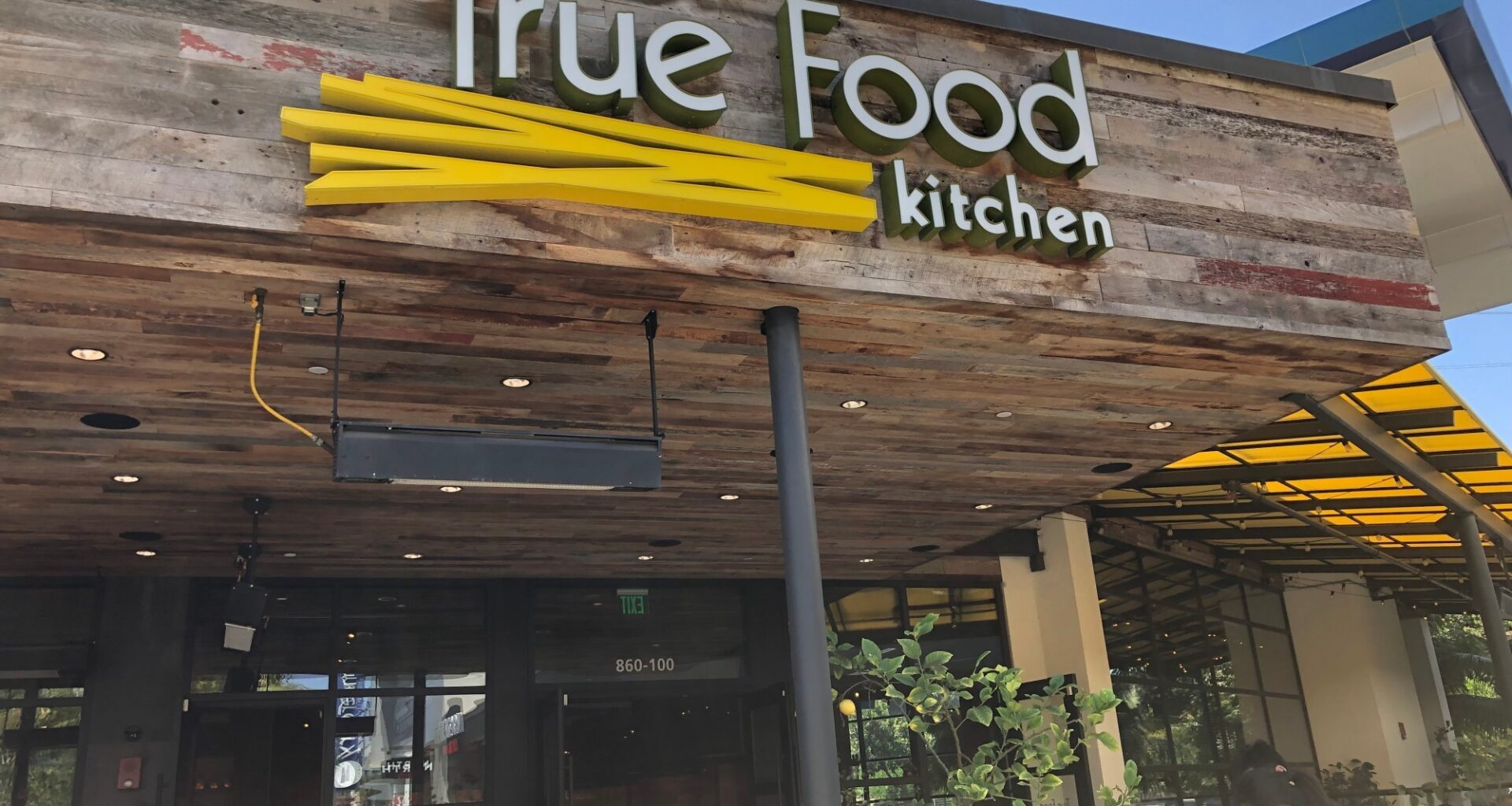
True Food Kitchen, which arrived in San Diego more than a decade ago touting its “good for you” menu, has filed for Chapter 11 bankruptcy and is closing a dozen stores across the country, including its restaurant at Westfield UTC.
The Arizona-based chain’s first San Diego restaurant, located in the Fashion Valley center, is among 34 restaurants across 14 states that will remain open. The final day of service for the UTC restaurant was Sunday, which was when the company formaly filed for bankruptcy protection.
At the time the first True Food Kitchen opened in San Diego, in 2012, then executive chef Michael Stebner sought to distance the brand from typical “health food.” Instead, he said the menu took its inspiration from the anti-inflammatory food pyramid developed by author Dr. Andrew Weil, then a partner in the True Food restaurant chain.
Menu items like edamame dumplings, teriyaki quinoa bowls, and spaghetti squash casserole were meant to entice diners, not only for their flavor, but their healthful ingredients and preparation.
In 2018, Oprah Winfrey raised the restaurant’s profile with her decision to make a “significant equity investment” in the chain and join its board of directors. But it wasn’t enough to forestall the company’s financial struggles, as it faced “significant management turnover” at the same it was expanding its footprint, said Nathan Cook, the company’s chief restructuring officer, in a bankruptcy court filing on Monday.
“Under successive leadership teams, the company invested capital outside its core market areas and in new product lines and restaurant concepts that were ultimately unsuccessful and outside of the company’s core mission and menu,” he wrote.
Once the pandemic hit, Cook said, the chain experimented with ghost kitchens and an off-site kitchen for delivery service to cope with the shutdown of in-person dining, but those moves only led to still more staffing issues.
“Additionally, while many of the restaurants are profitable and occupy highly desirable locations, several restaurants have struggled,” Cook added. “Some are in areas with lower-than-anticipated foot and driving traffic, while others were impacted by changing market forces and demographics that led to steady decreases in profitability over time.”
As part of the bankruptcy process, True Food Kitchen says it will pursue a court-supervised sale process to find a long-term partner “with the resources and mission alignment to support the brand’s future.”
San Diego restaurant consultant John Gordon suspects several forces drove the bankruptcy filing, among them costly leases in upscale areas, he said.
“It’s ultimately sales and profits that drive a closure, and I’ve talked to numerous people who pointed out that many of their restaurants are all in very high-rent locations,” Gordon said. “That’s a fixed expense, and a restaurant has to turn enough sales to cover that rent. When you go into such expensive locations, it produces a difficult financial burden to make those restaurants profitable.”
Gordon also thinks that many diners aren’t entirely clear on just what kind of food is offered at True Food Kitchen.
“Their ‘better for you’ menu options are confusing to customers and might not be the most popular,” he said. “That has retarded unit sales because of consumer unfamiliarity with it. So what the heck does that mean? It goes beyond the traditional restaurant themes — brewhouse, steakhouse, Italian restaurant; it’s none of those things.”
It does make sense, though, that the Fashion Valley location is remaining open, Gordon added. Because he lives nearby, he goes frequently to the east end of the center where there are a number of dining choices like Cheesecake Factory and North Italia, and True Food always appears to be busy, he said.
As for the chain’s future, Gordon expects that it will not be easy finding a new buyer given the financial struggles many restaurants face, from rising labor and product costs to a growing tendency for households to trim their dining budgets.
“There aren’t that many brands doing well, and we still have too many damn restaurants in the country right now, so selling that will be very difficult,” Gordon said. “Whatever debt they have on the books, they’ll want to cram it down and get the bank holders to surrender the value because it’s now considered a troubled brand.”