
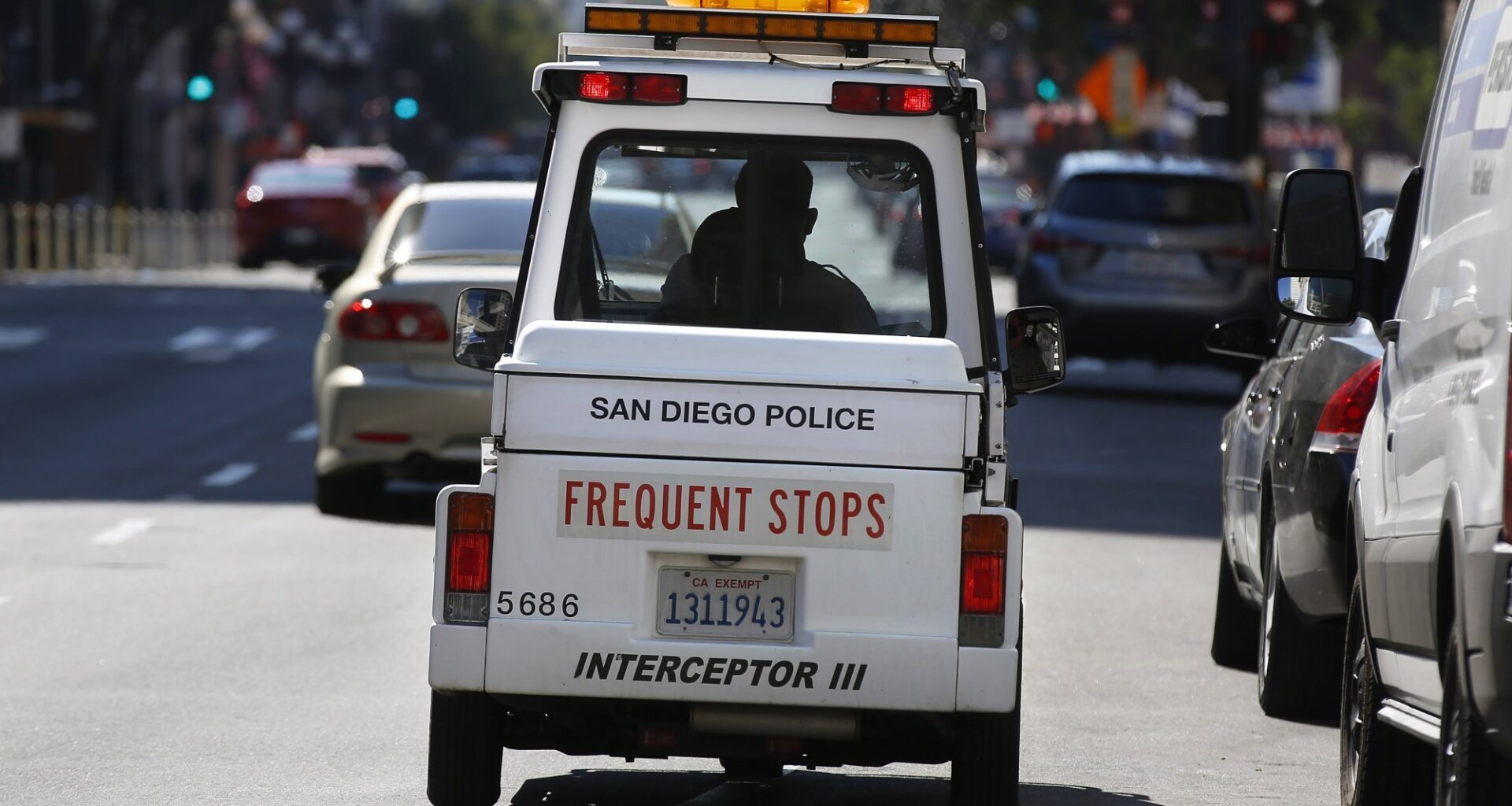
A new audit says cash-strapped San Diego could be overspending on rental cars because city officials don’t adequately assess their vehicle needs and struggle to decide whether to buy or rent certain vehicles.
The city dramatically outspent its rental car contract during fiscal years 2020 through 2024, running up $26.5 million in charges when the contract was supposed to be capped at $14.3 million.
The city recently completed its first comprehensive cost-benefit analysis for buying versus renting vehicles, but the new 44-page audit found that more analysis is still necessary.
City officials agreed to the audit’s key recommendation that every city department do a vehicle-needs assessment to determine how many vehicles it needs now and will need in the future.
Officials also agreed to create utilization standards to make sure the city doesn’t have more vehicles than it needs and to establish minimum thresholds for the number of vehicles each city department needs.
While city officials agreed to implement all eight of the audit’s recommendations, they stressed that the decision to rent versus buy is complex.
Challenges that come with owning vehicles are that staffing shortages often delay repairs and that it typically takes two years to get a new vehicle into operation because of delivery delays from vehicle makers and the need to install specialized equipment.
Officials also noted that the Chollas Operations Yard in southeastern San Diego, where most vehicle repairs and maintenance takes place, is relatively small for the city fleet and needs modernizing.
San Diego has a fleet of more than 5,000 vehicles with a replacement value approaching $500 million.
A key finding of the audit was that 56% of city vehicle rentals are for longer than six months, possibly indicating that city officials should consider buying in many of those instances.
“The city relies on long-term rentals because vehicle planning does not fully account for operational needs, future demand and cost effectiveness,” the audit says.
Other audit recommendations the city has agreed to implement include dividing up rental contracts by each city department to make it easier to evaluate which departments use rentals the most.
The city also agreed to monitor vehicle rental expenditures on a quarterly basis and include any large variances in budget updates to the City Council every three months.
In addition, any request for a rental contract presented to the council must include three years of data on that city department’s use of rental vehicles and an assertion that no city-owned vehicles could be used instead.
The audit found several instances where city officials rented a vehicle even though they owned a similar vehicle that wasn’t being used.
The council approved a new citywide rental contract last fall with a maximum outlay of $66.5 million.
The city’s recent cost-benefit analysis, which was presented to the council’s budget committee in June, found that it makes sense to buy most ordinary vehicles and rent some highly specialized vehicles.
Those specialized vehicles include bulldozers, water trucks, excavation trucks and mini-dump trucks.
The analysis also said more information and evaluation is needed to determine whether some vehicle types should be rented or bought. They include ordinary SUVs, flatbed trailers and skid-steer loaders.
The audit praised the city for the cost-benefit analysis, but still calls for more analysis.
“Additional steps are needed to improve the city’s vehicle planning process to understand how many vehicles departments need to meet daily service demands and reduce reliance on long-term rentals,” the audit says.
The audit notes that the city uses eight years as the expected life of a dump truck but that the city typically uses dump trucks for 13 years. If the city assumed dump trucks last 13 years instead of eight, it would make buying them a much smarter decision, the audit says.
The audit praises city officials for accelerating the process of getting new vehicles into operation by standardizing how specialized equipment, such as special computers in police cars, gets installed.
Rolando Charvel, the city’s chief financial officer, and Bethany Bezak, one of Mayor Todd Gloria’s top aides, said in a joint response that the audit’s recommendations could make a difference.
“Management agrees that effective planning, monitoring, and coordination are important to ensure vehicle and equipment rental are used appropriately, contract capacity is adequately managed and city resources are used efficiently,” they said in their response.