
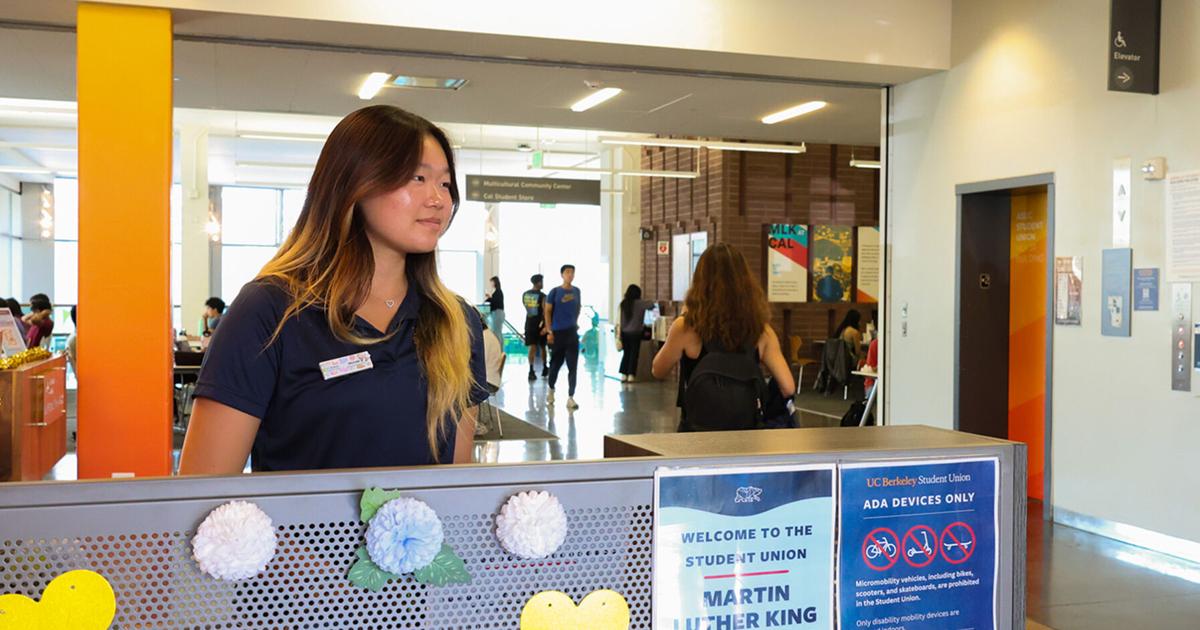
I came to UC Berkeley the way hundreds of international students do: visa in hand, suitcases packed and a budget carefully constructed, expecting everything to go according to plan. But of course, it rarely does. Rent goes up, textbooks cost more than expected and flight prices fluctuate. In such instances, most students can pick up a shift somewhere in the city. I can’t.
There were 6,879 of us on F-1 or J-1 student visas at UC Berkeley last year, and more than 10,800 if you include those on other non-immigrant visas and on postgraduate practical or academic training authorization. New international student enrollment even grew 29% last year even though it fell nationally. UC Berkeley is actively recruiting more of us, though it has not scaled the one legal way most of us can earn an income while we’re here.
International students are eligible for on-campus work, but during the fall and spring academic terms, we are capped at 20 hours per week. For students experiencing financial strain, these 20 hours are the only substantial financial safety net available to them. Domestic students can pick up part-time jobs around the city if they need extra income, but for most of us international students, on-campus work has become our only option without Degree Requirement Curricular Practical Training, or CPT.
Currently, as the processing of applications for Course Credit CPT processing has been indefinitely paused, even fewer opportunities exist for international students. For those who do not qualify for Degree Requirement CPT, on-campus employment is the only route to legal work authorization. Navigating these pathways can be complex, as on-campus employment structures often rely on funding frameworks such as the Work-Study Program, which leaves international students with narrow options. Not long ago, Gov. Gavin Newsom vetoed Assembly Bill 713, which would have allowed undocumented students to work on California public college and university campuses. Given that most of the on-campus employment structures operate under federal funding frameworks — including the Work-Study Program, which international students are not eligible for — the approaches to increase on-campus employment accessibility are largely limited.
On-campus employment is especially valuable to international students, largely because it allows them to obtain a work-authorized Social Security Number. An SSN is vital to building a financial life in the United States, as it makes it substantially easier for one to apply for a credit card, open certain credit accounts and participate in investment platforms in the U.S. stock market on apps such as Robinhood. My close friend worked in dining halls in our freshman spring semester, and, turns out, a lot of student employees there are actually international students. Back then, they often had two other fellow international students working on the same shift times.
For international students, on-campus employment is about far more than receiving a paycheck. It can make the difference between being able to focus on academics and having to constantly worry about financial strain. This income may determine whether or not a student has to choose between buying textbooks and affording groceries, or whether or not they can afford to visit family back home after a long time apart. Beyond financial relief, these jobs give international students an opportunity to gain professional experience, building resumes, references, connections and workplace skills that matter in the long run. Expanding access to on-campus employment is more than just an investment in students’ lives — it’s a way to ensure every student at UC Berkeley can truly thrive and fully participate in the few fleeting years they spend here.
International students brought an estimated $114 million in supplemental tuition to the UC system in 2025 alone, while also contributing to the university’s research output and global reputation. In return, we’re asking for something modest: a fair shot at the limited employment opportunities we’re legally permitted to hold. Equitable access to on-campus employment is what allows international students to stay at UC Berkeley without wondering how they’ll book that ticket to visit their family, handle financial instability or support their own education during their time in college. As UC Berkeley continues to welcome brilliant global minds, investing in creative ways to expand on-campus employment opportunities is a meaningful step to ensure international students can fully thrive during their time here.