
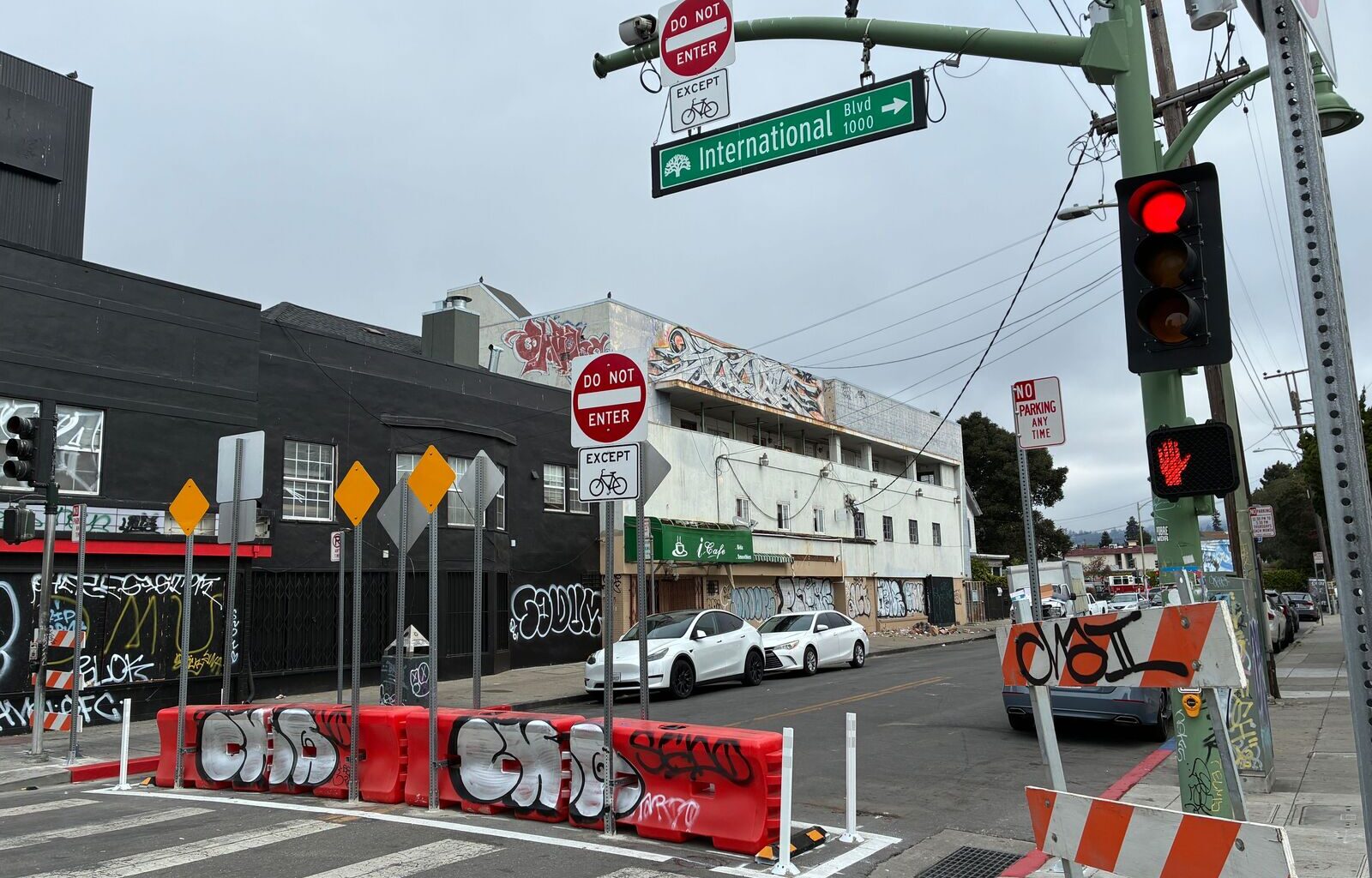
Sex trafficking is a problem across the East Bay, but for decades, the harms of commercial sexual exploitation have been concentrated in a relatively small area of Oakland, mostly within City Council District 2.
A stretch of International Boulevard running east from Lake Merritt through Little Saigon and San Antonio is known as “the Blade,” where street-based sex work and commercial sexual exploitation are most visible today. Women and girls can be seen around the clock standing along the corridor as prospective buyers cruise by. Exploiters who control and coerce some of the women and girls are known to keep watch nearby.
Not everyone working on the Blade is being trafficked. But survivors, advocates, and law enforcement officials say minors and adults being coerced or controlled by traffickers are among those working there, making it difficult to distinguish consensual sex work from exploitation.
The harms extend beyond those being exploited. District 2 residents and community organizations have described shootings, robberies, reckless driving, littering, and sex acts taking place in cars near homes, businesses, parks, and schools. Some traffickers and buyers, according to police and residents, have assaulted or killed people.
For years, residents have implored city leaders to find solutions.
Charlene Wang, the current District 2 representative on City Council, has made combating commercial sexual exploitation a priority during her 16 months in office. She has pursued a combination of enforcement, survivor services, and changes to the physical environment.
“For me, it feels like a calling to address this issue,” said Wang, whose experiences of being sexually abused as a child led her to focus on survivors of gender-based violence.
In the Nov. 3 election, Wang is facing a challenge from Nate Adams, a community organizer backed by the East Bay chapter of the Democratic Socialists of America. Adams supports survivor services and coordination among the city, county, and community organizations. He wants to see more emphasis on addressing the conditions that make people vulnerable to exploitation, including poverty, housing insecurity, and involvement in the foster care system.
“The way to address economic issues is to provide stability, and that stability can come through housing and jobs,” Adams told The Oaklandside.
When District 2 residents fill out their ballots beginning Oct. 5, many might base their choice on who they think is offering better solutions to the neighborhood’s persistent sex trafficking problem.
Interviews with residents, nonprofit leaders, and trafficking survivors show there’s no consensus on a single solution. Instead, they view it as a problem requiring interventions on several fronts: disrupting buyers and pimps, helping people safely leave exploitative situations, addressing economic instability, and giving residents relief from an issue that has become part of daily life in some District 2 neighborhoods.
How Oakland thinks about commercialized sex has changed over decades
In the 1970s and 1980s, sex workers were visibly present in many parts of Oakland, including along San Pablo Avenue and West MacArthur Boulevard in West Oakland, Foothill Square in East Oakland, and Jefferson Street downtown. Back then, the city’s approach was to arrest and prosecute sex workers, their clients, and exploiters.
But the nature and geography of the problem, and the city’s approach, started to change. Oakland police and city officials began paying greater attention to the commercial sexual exploitation of children in the late 1990s.
Starting in 1999, the Oakland Police Department noticed a surge in “run-a-ways who were being arrested for prostitution,” most of whom were 15 or younger, according to city records. In response, OPD created a Child Exploitation Unit to investigate cases involving sexually exploited children. At the time, exploited minors were often treated as offenders rather than victims, an approach that police and community organizations have since moved away from as understanding of human trafficking has shifted.
“We shouldn’t criminalize the victim for you to feel better about what you’re seeing outside your door,” said Saraí Smith-Mazariegos, a trafficking survivor and founding executive director of the SHADE Movement, an East Bay nonprofit supporting survivors of sexual exploitation and domestic violence.
In the early 2000s, Oakland police and the Alameda County District Attorney’s Office doubled down on their efforts to arrest and prosecute buyers and traffickers. In 2004, OPD merged its Vice Crimes Unit with the Child Exploitation Unit to coordinate operations and investigations. Around the same time, Nancy O’Malley, a prosecutor in the DA’s office, led at the time by Thomas Orloff, helped establish the office’s Human Exploitation and Trafficking, or H.E.A.T., Unit, which specialized in prosecuting trafficking cases.
In a recent interview with The Oaklandside, O’Malley, who later served as district attorney from 2009 to 2023, said one challenge was helping exploited youth recognize that they were victims. Many came from abusive homes or the foster care system and had been isolated from their support networks, she said.
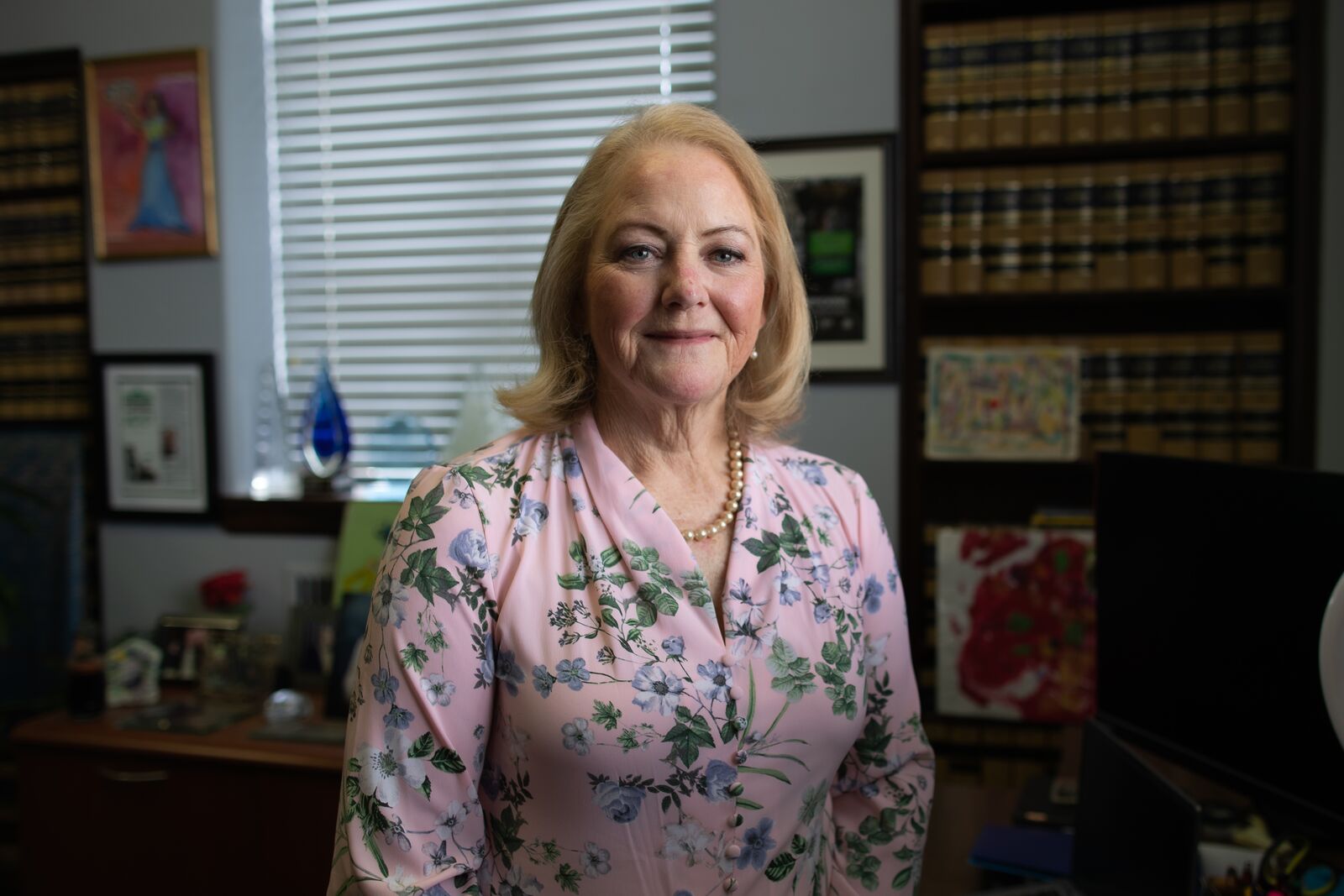 Former Alameda County District Attorney Nancy O’Malley, seen here in July 2021, made combating sex trafficking a priority for the DA’s office. Credit: Amir Aziz/The Oaklandside
“They were moved from their home or their place of familiarity,” O’Malley said. Someone brought from Los Angeles to Oakland, for example, might suddenly have no idea where to get food or whom to trust. Some of the girls and women being exploited on the Blade came from other states like Nevada and Oregon, according to O’Malley.
Under her leadership, the DA’s office tried different strategies to deter buyers, including a fake website advertising underage girls for sex. When people tried to contact the girls, O’Malley said the DA’s office would respond and say they would be caught and prosecuted.
“We were getting calls at noon or lunchtime from men in Silicon Valley. There were a lot from southern Alameda County and the San Jose area,” O’Malley said.
Ultimately, she said, the DA’s office was unable to catch buyers through that website. But the office used other tactics, including collaborating with police, community-based groups, and faith-based organizations to hold rallies connecting exploited people on the streets with resources. The office also launched a 12-week Young Women’s Empowerment Program to build survivors’ self-esteem and expose them to alternative paths. The youngest participant was 15, O’Malley said.
District 2 becomes Oakland’s street-level sex trafficking epicenter
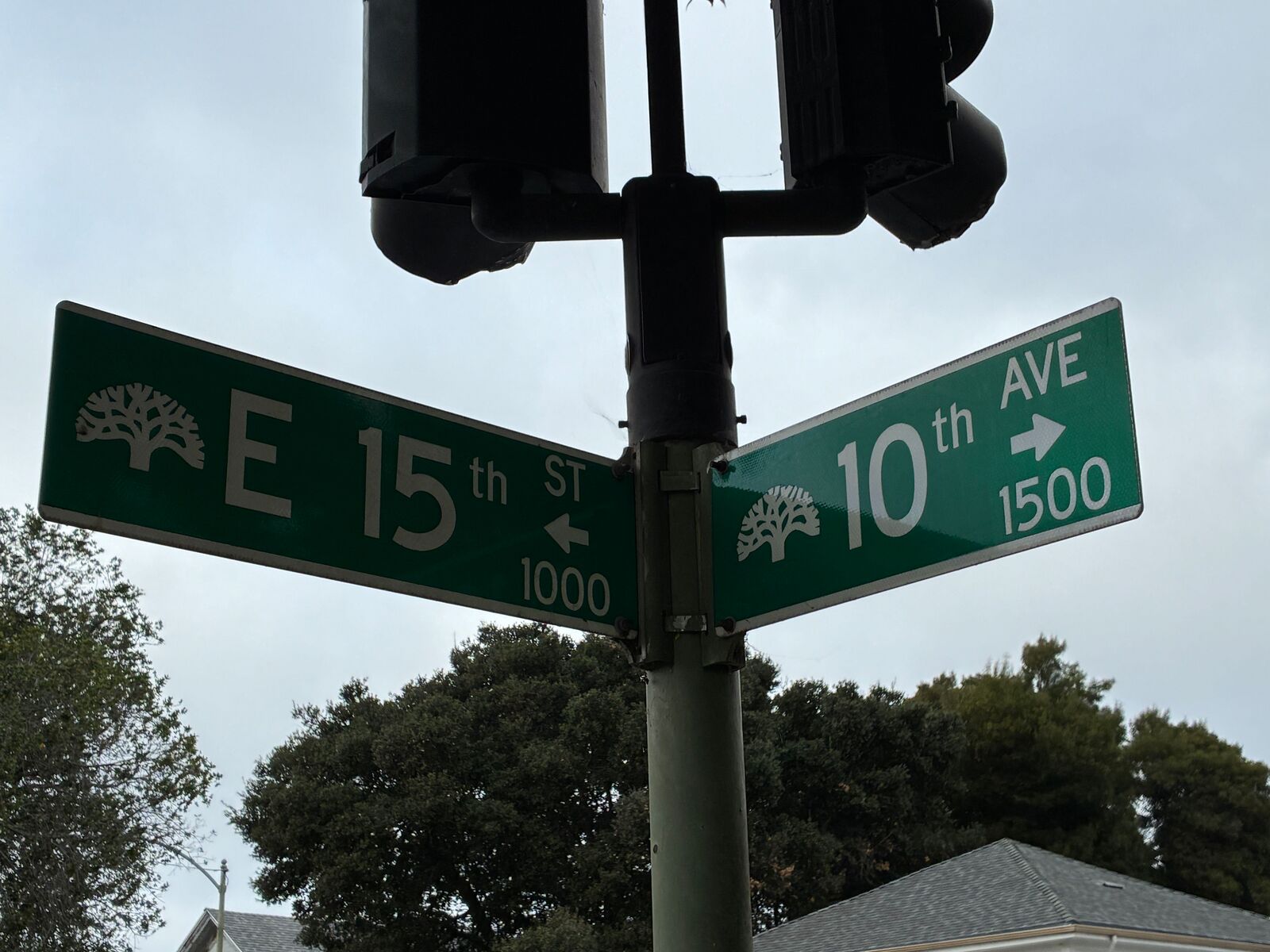 East 15th Street and 10th Avenue is one of the intersections where commercial sexual exploitation and sex work have taken place. Credit: Darwin BondGraham/The Oaklandside
By 2014, city records show the DA’s office had prosecuted nearly 43% of California’s human trafficking cases, with OPD opening and investigating the overwhelming majority. Oakland had evolved into a hub for the regional sex trade, prompting a coordinated law enforcement focus on the issue, according to O’Malley.
Over time, street-level sex work and sex trafficking mostly disappeared from other parts of the city, further concentrating along International Boulevard and its side streets.
David Kakishiba, executive director of the East Bay Asian Youth Center in District 2, said that in 2010, his organization surveyed about 400 families with children attending Garfield Elementary, Franklin Elementary, and other neighborhood schools. Public safety was their top concern, he said, and sex trafficking was the issue families raised most frequently.
Over the years, EBAYC and other community groups tried everything from billboards discouraging people from buying sex to shutting down the National Lodge motel at 17th Avenue and International Boulevard, which Kakishiba said was notorious for hosting commercial sexual exploitation.
Once the COVID-19 pandemic hit, the scope of sex trafficking on the Blade changed.
Smith-Mazariegos said street-based sex work and sex trafficking had existed along International Boulevard for decades but used to be more dispersed. According to O’Malley, the Blade had extended all the way to deep East Oakland.
“Since COVID, everything condensed,” Smith-Mazariegos said.
Kakishiba said residents saw the sex trade move off International Boulevard and onto East 15th Street, a largely residential area one block away. At its height, he said, buyers were driving through the neighborhood around the clock.
“Families with children and the elderly were afraid to come out, not just in the nighttime, but in the daytime,” Kakishiba said. “There was growing gun violence occurring at the same time in the neighborhood related to the trafficking activity.”
Can changing the environment disrupt the exploitative sex trade in Oakland?
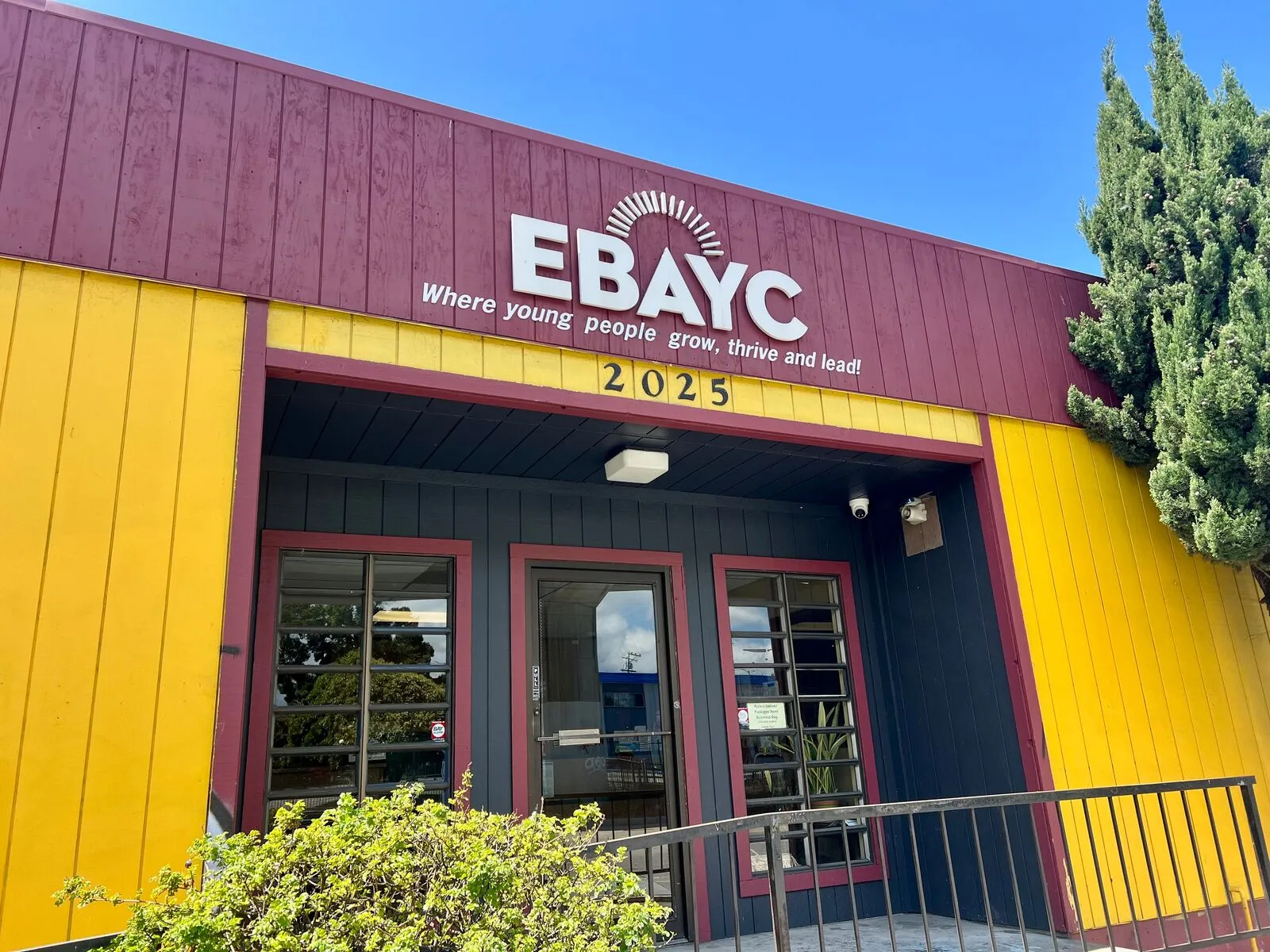 The East Bay Asian Youth Center has played a central role in advocating for traffic barriers in San Antonio to disrupt sex trafficking. Credit: Roselyn Romero/The Oaklandside
In 2022, EBAYC, Trybe, Faith in Action East Bay, and other community organizations began knocking on doors and asking East 15th Street residents what they wanted the city to do about trafficking.
Several residents said they didn’t necessarily think more police would solve the problem. Instead, they proposed closing their street to through traffic overnight, Kakishiba said.
The idea behind these street closures, according to city reports, is that they eliminate “convenient entry points for sex buyers (‘Johns’) who use residential side streets to solicit and engage in illegal activity,” and give police officers better visibility.
The city turned down the idea, arguing it would require more funding and coordination than Oakland could afford.
Under then-District 2 Councilmember Nikki Fortunato Bas, Oakland’s Department of Transportation developed a compromise: temporarily installing traffic diverters that prevented drivers from traveling uninterrupted along East 15th Street.
After two barriers were erected in February 2023, Kakishiba said the difference was almost immediate.
“Within two weeks, the sex trafficking activity on East 15th had stopped completely,” he said. “It was night and day.”
But after the 60-day pilot program ended, trafficking activity gradually returned to International Boulevard, Kakishiba said, becoming more concentrated around the lower-numbered avenues in Little Saigon.
How Charlene Wang brought anti-trafficking traffic barriers back to District 2
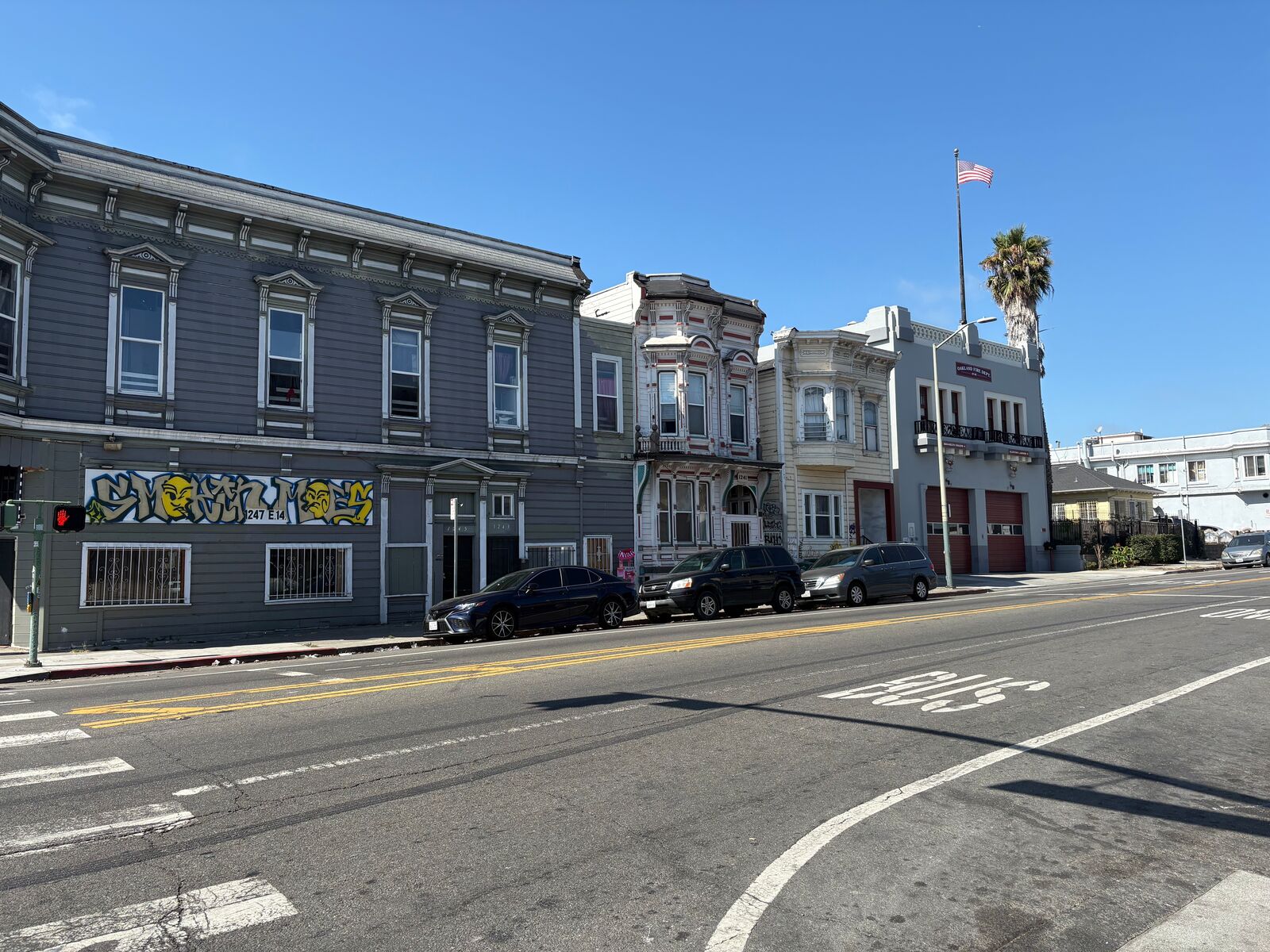 Businesses and housing along the Blade on International Boulevard. Credit: Natalie Orenstein/The Oaklandside
A similar pilot involving traffic barriers launched last month under Wang. In mid-September, city workers erected temporary barricades at Ninth, 10th, and 11th avenues between International and East 15th. After the program ends, city officials will evaluate its effectiveness using traffic, emergency-response, crime, and community-feedback data.
The pilot grew out of years of advocacy by the San Antonio Neighborhood Coalition, which includes EBAYC.
Since the barriers have been installed, Chien Nguyen, Trybe’s site director at Clinton Park, said the activity has largely disappeared from the three affected blocks. But again, it appeared to move elsewhere.
“Now it’s heavily concentrated to the left and to the right” of Ninth, 10th, and 11th avenues, Nguyen said.
Wang said she initially had her own skepticism about traffic barriers but became convinced that providing immediate relief to residents was worthwhile, even if the intervention did not eliminate sex trafficking.
“We need to try things,” she said.
Kakishiba said it’s too early to tell how effective the barricades are, but described Wang’s initiatives as a “welcome effort.”
Yannez Bronko lives on 13th Avenue near International Boulevard. Since moving to the neighborhood in 2022, he said he and his wife have gotten to know some of the women working outside their home.
On one occasion, Bronko said a woman ran into their house seeking refuge from an exploiter who was abusing her. In another incident, a bullet tore into his house, narrowly missing someone inside.
Bronko said he supports the barriers.
“Is it a perfect solution? Absolutely not,” he said. “But it’s desperate out here. People are literally looking for anything.”
Sara Rowley, another District 2 resident, said she wants interventions that make the neighborhood safer without treating exploited women and girls as the problem.
“I just want a safe community, and I want these girls to be safe,” Rowley said.
That requires more than installing barricades or arresting pimps, she said. Survivors need safe housing and services that don’t depend on them being arrested before they can get help, while law enforcement should focus on the people exploiting them.
“I think it needs to be a multi-pronged solution,” Rowley said.
Wang has more ideas for addressing sex trafficking in District 2
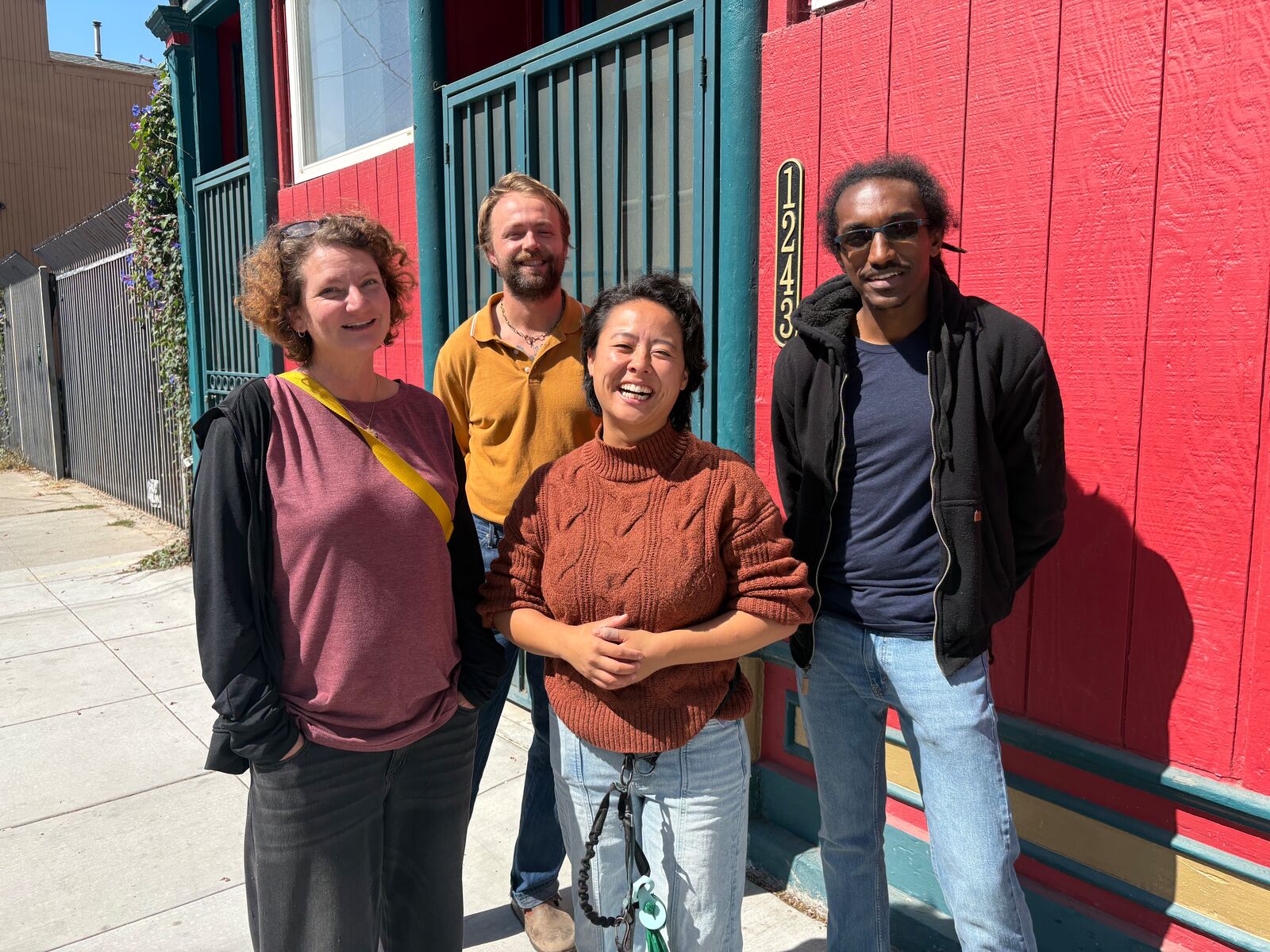 Councilmember Charlene Wang with supporters and residents of the Blade. Credit: Natalie Orenstein/The Oaklandside
Earlier this year, Wang introduced legislation creating a trafficking survivor support fund, funded through fines against buyers, traffickers, and businesses involved in commercial sexual exploitation. Wang said the fund is the first of its kind in California.
But the city has yet to collect any fines because the administrative process is not fully in place.
Under the proposed process, OPD officers would issue citations, a paralegal in the City Attorney’s Office would handle notices and appeals, and the Finance Department would oversee collections.
Wang said she secured funding for a paralegal dedicated to administering the penalties and is working with Assistant City Administrator Michelle Phillips to begin collections, potentially including fines dating back to the legislation’s passage.
Some survivor advocates say implementing the survivor fund has exposed a familiar problem: Oakland can pass policies faster than it builds the infrastructure needed to carry them out.
Smith-Mazariegos said she supports the idea behind the fund but believes the city rushed its rollout without ensuring that departments were ready to assess and collect the new penalties.
“I think the intentions were good,” she said. “I just think that it was rolled out too soon.”
Nola Brantley, a survivor of commercial sexual exploitation as a child and now a leading advocate who founded Nola Brantley Speaks, echoed Smith-Mazariegos’s view.
“It’s somewhat negligent — and perhaps a bit naïve — to implement a policy like this without first ensuring that mutual aid, outreach, and crisis services are visibly available and adequately funded,” she wrote in a blog post.
Smith-Mazariegos also wants Oakland to create education programs for people arrested for buying sex, arguing that many buyers have also experienced trauma and that financial penalties alone may not change their behavior.
“A lot of buyers used to watch their moms have dates,” she said. “They’ve seen all of the abuse and rapes, and they were conditioned to understand this is the worth of a woman.”
Beyond the fund, Wang said she has pushed for more police operations targeting buyers and traffickers and increased city and county funding for survivor services. She also wants Oakland’s 211 system to become a centralized way for survivors — or librarians, healthcare workers, business owners, and other people who encounter them — to connect with services.
“Sometimes these organizations are not speaking to one another, so I’m trying to force some more coordination between all the services,” Wang said.
Nate Adams wants to focus on conditions that make people vulnerable and provide survivor resources
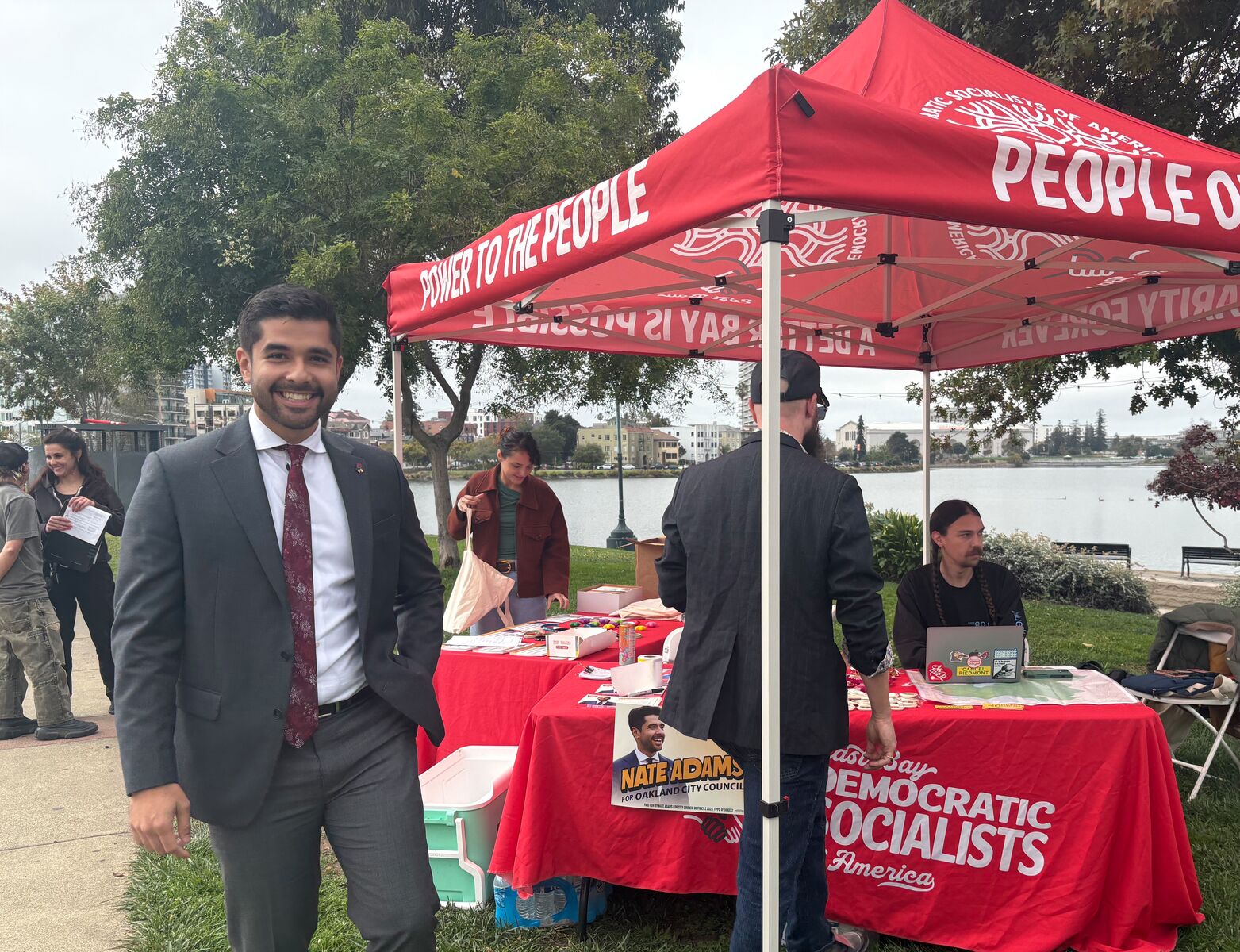 Nate Adams with campaign volunteers on Sept. 19, 2026. Credit: Natalie Orenstein/The Oaklandside
Nate Adams, the East Bay DSA-backed candidate challenging Wang, said his background as a community organizer, including for GLIDE Memorial Church, a social justice organization in San Francisco’s Tenderloin neighborhood, has shaped his understanding of how poverty, homelessness, and other forms of instability can leave people vulnerable to exploitation.
Tenderloin’s history of racism and economic hardship, in Adams’ view, mirrors that of the flatlands and the Blade. “The way that we address that is economic, and that means providing the needs for working people who live on the streets,” he said.
If elected, he said he would implement a “coordinated response” involving different city departments, the county, and local nonprofits, and put greater emphasis on long-term prevention.
Adams wants to establish a “standing, accountable table,” rather than a one-off task force. He would include the county’s H.E.A.T. Watch program, sex trafficking survivors, schools, and community organizations. The group, he said, would focus on creating trauma-informed processes to refer survivors, especially foster youth, to services, and to collect data on those activities.
He wants to see more street lights in areas where trafficking is prevalent, and more crossing guards and community ambassadors in the neighborhood so there are more eyes on the street.
“The goal is to make it easier for survivors and exploited young people to get help, and to address the conditions that make people vulnerable to exploitation in the first place,” he said.
Pointing to the large share of trafficking survivors who have had contact with the child welfare system, he said he would also push Alameda County to expand safe placements for foster youth.
Adams supports multi-year funding for organizations serving exploited young people rather than forcing them to rely on short-term grants that can disappear from one budget cycle to the next. He pointed to organizations such as MISSSEY, WestCoast Children’s Clinic, Safe Passages, Asian Health Services, La Clínica, Family Violence Law Center, and Bay Area Legal Aid as examples of groups that have built relationships with survivors and could benefit from more stable funding.
“Almost every sex worker and every sex trafficking victim I’ve spoken to so far can tell me at least one experience where they’ve been either overpoliced or oversurveilled,” he said. Helping someone leave an exploitative situation, he said, “is going to require trust and relationships.”
In his conversations with Franklin Elementary parents, sex workers, trafficking survivors, and local advocates, Adams said he has consistently heard that commercial sexual exploitation cannot be separated from people’s material conditions.
“People are trying to survive the cost of rent, food, and childcare, unstable housing, involvement in the foster care system, immigration concerns, and a lack of stable, well-paying jobs,” he said.
“*” indicates required fields