
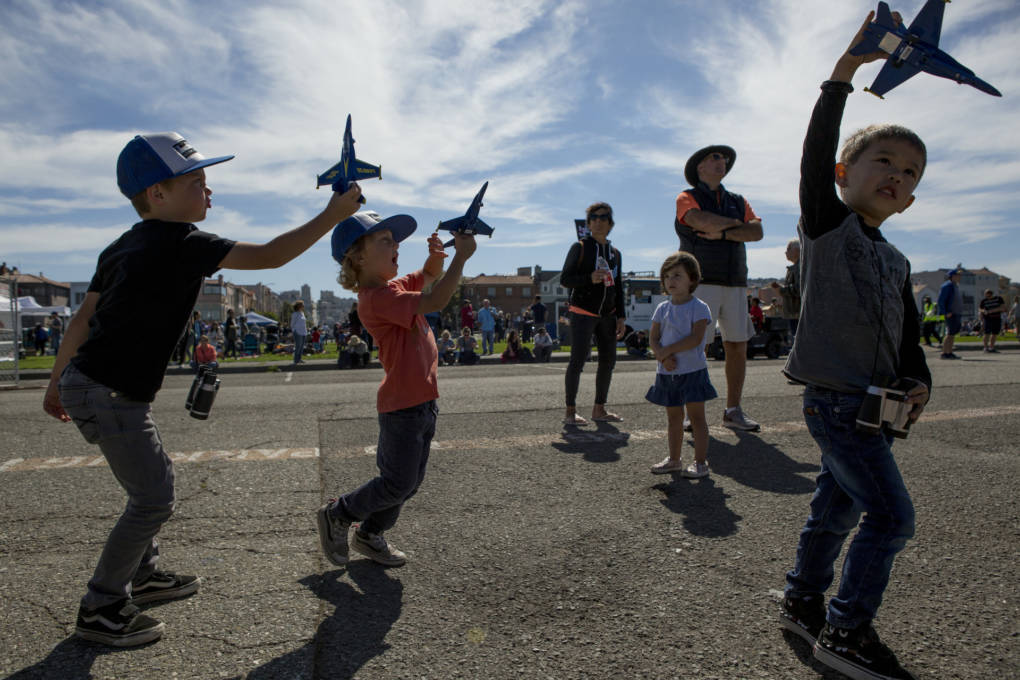
San Francisco transit officials say restrictions on autonomous vehicles are based on “lessons learned” from the last July 4 traffic meltdown.
Oct 9, 2026
Updated 5:18 pm PT
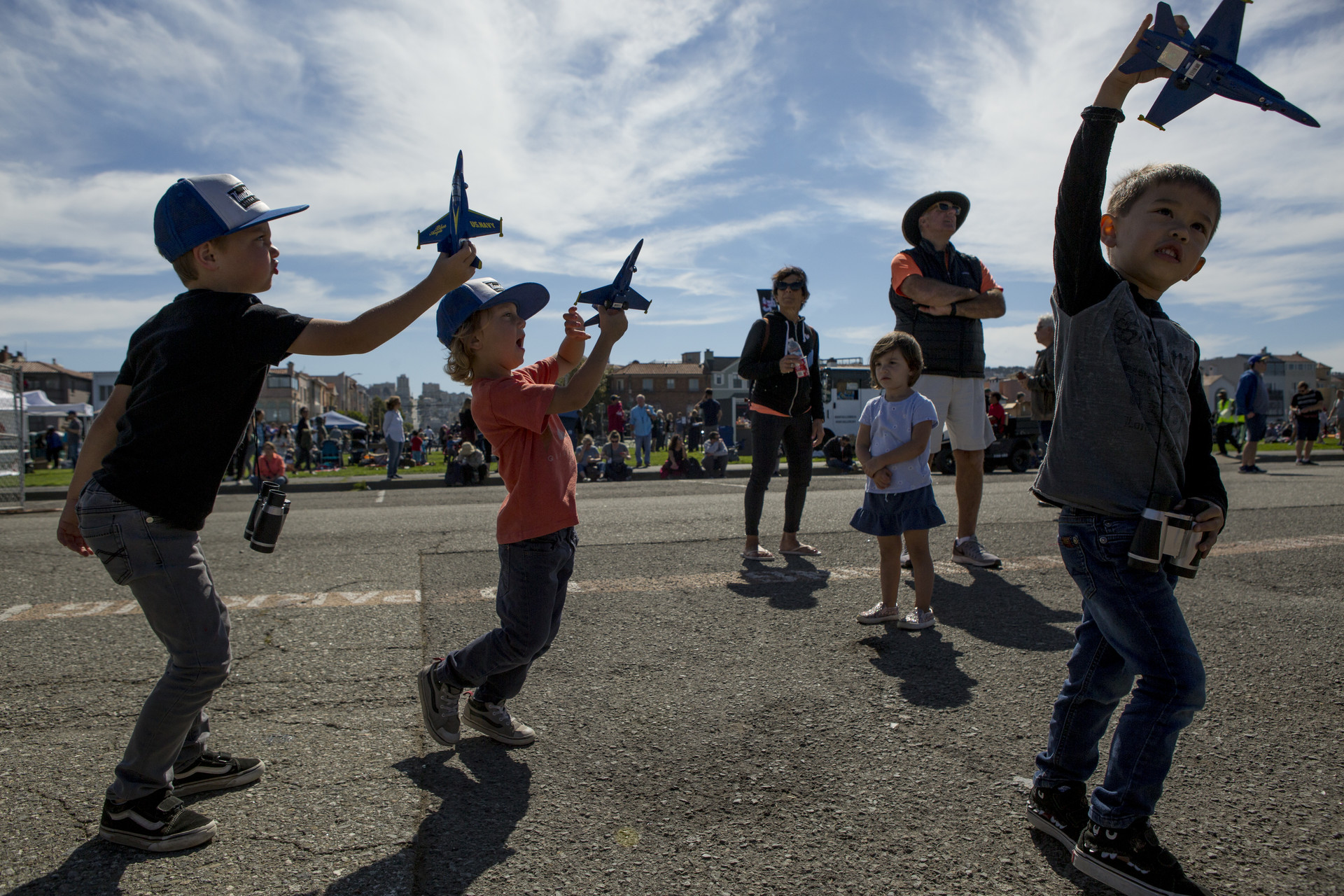
From left: Jackson Buttler, 4; Wyatt Buttler, 3; and Kai Super, 4, play with toy Blue Angel jets as a little girl looks on during the Fleet Week air show at the Marina Green in San Francisco on Oct. 5, 2018. This year will mark the first time that San Francisco has ever geofenced Fleet Week. (Anne Wernikoff/KQED)
In an effort to prevent a repeat of the city’s July Fourth traffic meltdown, city transportation officials have expanded public transit service, restricted autonomous vehicle operations and discouraged spectators from driving to Fleet Week this weekend.
”Just be aware that parking is very tough. If you can take Muni or walk or we have lots of bike sharing,” said Viktoriya Wise, director of streets at the San Francisco Municipal Transportation Agency at a news conference on Friday, pointing to a nearby Lyft bike rack.
Wise said the decision to restrict the robotaxi companies Waymo and Zoox from operating across a large swath of the Marina District, The Embarcadero and the entire Presidio — a practice called “geofencing” — was based on “lessons learned” from this year’s Fourth of July fiasco.
It’s the first time the city has ever geofenced Fleet Week, although the practice is common for other large-scale events, such as the Outside Lands music festival, according to SFMTA.
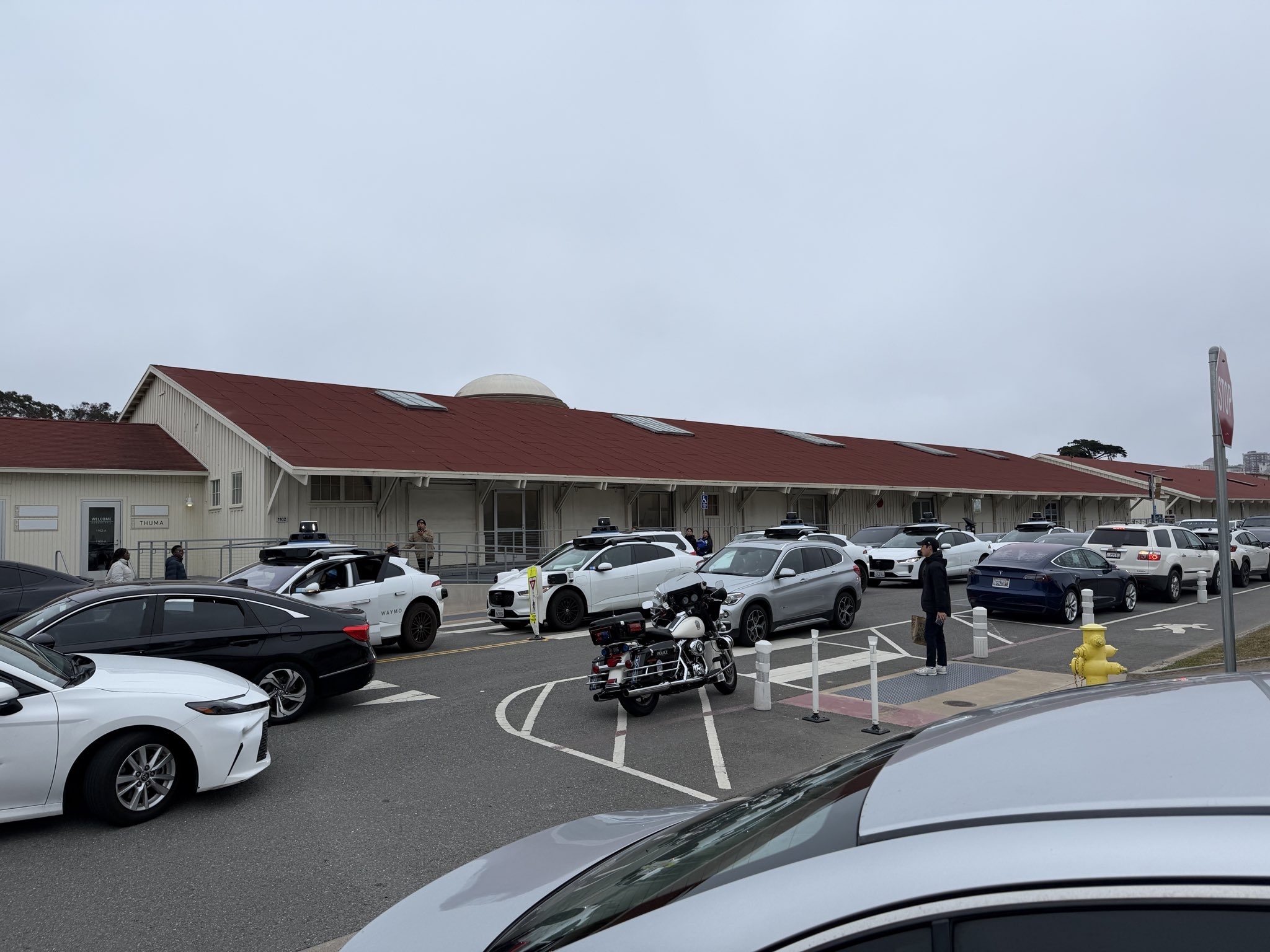 More than 30 Waymos became stuck in the only parking area for the fireworks show on July 4, 2026, blocking parking for hours. (Courtesy of Dr. R, AGI Summit 2026)
On the last Fourth of July, thousands of people streamed into the areas around the Golden Gate Bridge to watch a special fireworks show, bringing traffic to a standstill across a large section of the Marina District and surrounding neighborhoods as crowds left en masse.
In the days that followed, city officials said the mess was caused partly by autonomous vehicles that blocked traffic and drivers who illegally used transit-only lanes.
“We have had challenges with autonomous vehicles, and the congestion that they can create sometimes when they brick, for example,” Wise said, referring to when the cars freeze in place. “ We’ve since partnered with them to make sure that we do not have those kind of traffic [disruptions].”
This year’s Fleet Week is likely to be more popular than past years, Sherrill said at a September hearing, partly because the U.S. Navy’s aerobatic team, the Blue Angels, are set to return after last year’s government shutdown canceled them.
The SFMTA is increasing Muni service on routes that serve the city’s eastern and northern waterfront, where it expects people to watch the Blue Angels. Wise said the agency will have parking control officers in “areas where we expect the most crowding.”
“Make sure that you take the time to get to the events or wherever it is you’re going in the city,” she said.