
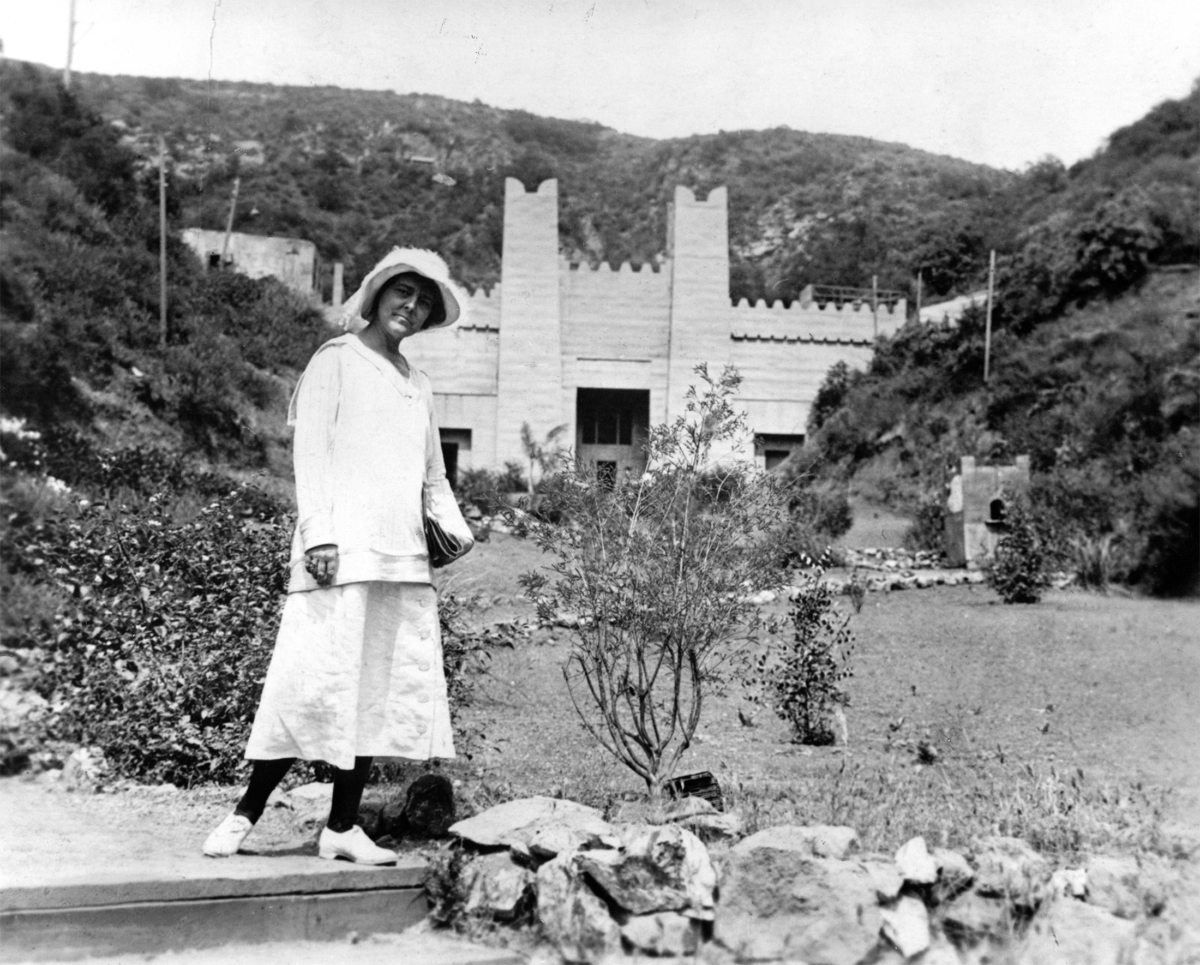
Charlie Chaplin played piano and Jean Harlow attended school on the grounds of the Woman’s Club of Hollywood. This hidden gem was integral in the origin story of the entertainment capital of the world, however, at the time of this printing, the once-thriving property is scheduled to be sold at auction.
In 1905, at a time when women couldn’t yet vote, a group of about 20 dedicated and powerful members — led by its first elected president, Mrs. J. O. Churchill— worked to create The Woman’s Club of Hollywood.
Before that, there was no Chinese Theatre or Hollywood Sign. There was no film industry in California, and movies themselves barely existed as novelties imported from Europe or Thomas Edison’s plant in New Jersey. Hollywood itself was an independent city of some 500 residents — a sleepy patch of rural farmland along the Cahuenga Pass that was mostly barley fields and orange trees. A single set of railroad tracks ran down what would become Hollywood Boulevard.
A few years earlier, developer Harvey Wilcox and his wife Daeida purchased 120 acres of this farmland with the hopes of luring what the writer Hadley Meares described as “cultured, wholesome Midwesterners looking for fresh air and a second act in California.”
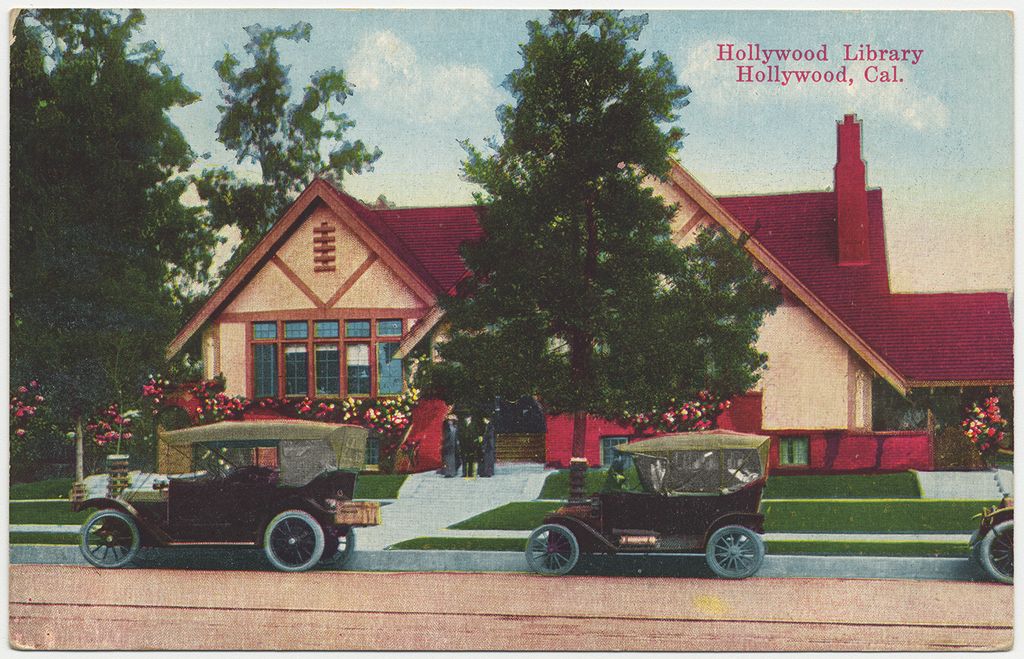
Members of the new Woman’s Club came together to improve their new community with the goal of bringing the town a public library. By February of 1906, the club rented two rooms in a frontier-era building at Hollywood and Cahuenga and built the city’s first library. A year later, with money from steel magnate Andrew Carnegie and land donated by Mrs. Wilcox, a magnificent new library resembling an English cottage, with a basement meeting room for the Woman’s Club, rose at Hollywood and Ivar. Facing a lack of water and sewers, Hollywood voted itself out of existence and was absorbed into the city of Los Angeles in 1910. Los Angeles immediately evicted the ladies from their building when L.A. city librarian Charles Fletcher Lummis had the idea to create a men’s smoking room in the space.
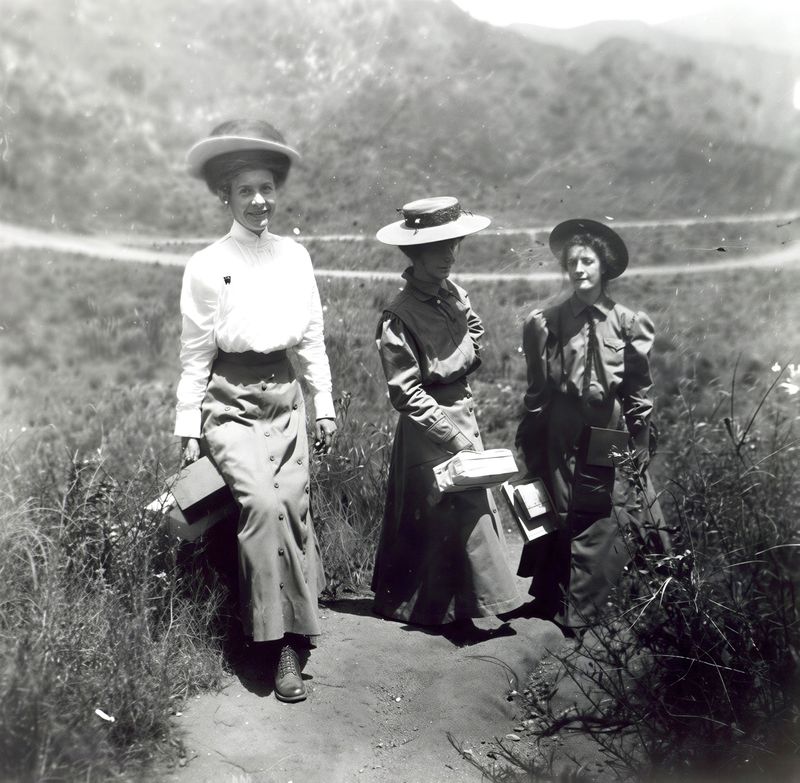 Artie Mason Carter and friends picnicking in Daisy DellCredit: Courtesy LA Phil
Following the success of Cecil B. DeMille’s The Squaw Man, the first feature film shot in Hollywood, the movie industry exploded across the Los Angeles landscape in the 1910s with makeshift studios popping up in former barns, saloons and even a Chinese laundry downtown. The allure of the nascent entertainment industry attracted young girls from across the country to come make it big in the movies — which didn’t always end well.
Have questions? Get answers.
Scroll to continue reading
The Hollywood Woman’s Club stepped in again to improve Hollywood by creating a “Studio Club” in 1916. Budding actresses under 30, which later included Marilyn Monroe and Rita Moreno, could crash at the clubhouse, which offered cheap rent, laundry, loans and a theatrical practice room. The venue kept young ladies away from the lascivious forces that led Hollywood buildings to ban both actors and animals. During both World Wars, the ladies turned over their clubhouse to the Red Cross as a relief center.
In between embarking on ambitious building projects, the club ladies enjoyed lectures, art shows and hiking into the nearby hills. It was during an exploration of Daisy Dell, a natural amphitheater in the Cahuenga Pass, that the Woman’s Club dedicated itself to its most audacious venture yet. Starting in 1919, club members Artie Mason Carter and Christine Wetherill Stevenson led the creation of a magnificent outdoor music venue that would come to be known as the Hollywood Bowl.
“We paid for the land and gave it to the Bowl,” says club president Rosemary Lord, “then raised a million dollars for construction.”
The club also helped to found the Hollywood Hospital (today the Hollywood Presbyterian Medical Center) and Hollywood Union High School (today Hollywood High School). In the mid-1940s, the group sold its original clubhouse and built a new one on La Brea completed in 1949 — which Hollywood celebrities like Joan Crawford and Mary Pickford visited to host events and lectures. By the 1960s, the thriving club boasted more than 900 members.
 Credit: Courtesy California State Library
After 121 years, the nonprofit remains committed to education, wellness, arts and community. Mentors in the club keep up traditions, like the Christmas parties for orphans that began when the club was founded in what was then a rural farm town outside of the Los Angeles city limits.
Just a few years ago, the organization was on a firm financial footing, headquartered in a quaint Spanish-style building surrounded by canary island date palms on lushly landscaped grounds boasting an auditorium, club rooms and a historic 1904 schoolhouse that had once educated stars like Harlow and Carole Lombard, the Hollywood School for Girls. Plus, it had a generous parking lot near La Brea and Franklin, in the heart of Hollywood. Time moved slowly at the clubhouse as the neighborhood changed around them.
Club members continue to make care packages for the homeless, work on charity projects benefiting autistic children and donate to Meals on Wheels and Salvation Army food programs. “Every Christmas,” club president Lord says, “we have 200 foster children here for a luncheon with Santa Claus.” Last year’s tax forms show income from membership dues and gifts totaled just over $2,000.
“These ladies all have their heart in it,” says former board member Claudia Deutsch. The issue in general for women’s clubs is that the membership gets old. Funerals were a regular thing. They don’t actively look for younger members, and these elderly women are like a target for bad actors.”
Besides the usual leaky roofs and deferred maintenance issues that come with old buildings, all accounts are that the club was sailing along into the 21st century.
“It’s really looking wonderful,” Lord remarks about their historic clubhouse, where she says many of the ladies have picked up paintbrushes and personally contributed to a touch-up. “We have totally redecorated and returned it to how it was supposed to be when it was first built. The chandeliers are totally stunning.”
Then, between 2010 and 2012, the Woman’s Club of Hollywood declared bankruptcy three times. Today, the club owes upwards of $7 million dollars to its private money lender — most of which did not go to the club.
Lord remains upbeat in the face of the massive debt and financial knots the club is wrapped up in. “Too many sharks,” Deutsch remarks. “It’s like a feeding frenzy.”
 Credit: Irvin Rivera
No matter how thoughtful, their efforts seem akin to rearranging the deck chairs on the Titanic. As of their last filing, The Woman’s Club of Hollywood had $214,076 in assets and $5,375,462 in liabilities. “Over the years,” Lord says, “the older ladies running the place were sometimes, how can I say, tricked. So we’ve ended up with a huge debt that we’re really questioning.” Lord set up a “Save the Woman’s Club of Hollywood” GoFundMe that had, at press time, raised just over $10,000 for “legal advocacy and financial restructuring.”
Former board member Marcella Ruble believes the root of the debt problem was internal. “[The club was] sitting on all these assets. Scot-free. No liens. No loans. No nothing,” Ruble says. “Jennifer Morgan was the most important person. We’ve been in lawsuit after lawsuit. Our initial thing was to stop her from stealing the club.”
Lord says that Morgan and another board member, Nina Van Tassel, were part of a breakaway faction that tried to take over the organization. “Somebody talks themselves onto the board and pretends to be all pro-club,” Deutsch adds. “Once they establish themselves, they get rid of people who would oppose them.”
According to a 2011 story in The New York Times, that was when Van Tassel appointed herself president and hired Morgan as executive director at an annual salary reported at over $100,000. When a judge intervened in upcoming elections, Morgan and Van Tassel had the club file for bankruptcy. “I have no idea which party is right,” a federal judge said at the time. “But this is not a bankruptcy case, this is an internal fight. The main thing is to figure out who is really in charge, and that is not my job now here today.”
Ruble claims that before Morgan left, she took out a loan. “She finagled getting a mortgage on the property to which she had no right,” Ruble says. “The guy who built the luxury condos next door gave her the financing … and she took all the money.”
Lord says the club doesn’t know where the loan money went. “It didn’t go to the club,” she says. “We’re not business people and had no idea what was going on. There was a scheme to steal the property.”
Peter Famulari is a longtime Hollywood club owner who volunteered to untangle the club’s finances. “I came here to set up a cystic fibrosis fundraiser six months ago,” he says. “Rosemary regaled me with their tale of woe, and I haven’t left since.”
The valuable real estate the club sits on has been owned by the organization since 1945. “A woman came in and surreptitiously took over the club,” Famulari says. “She took out a loan, a first trust deed. [The club] had no idea. When they finally got in control of the property, they found out they were being foreclosed on.”
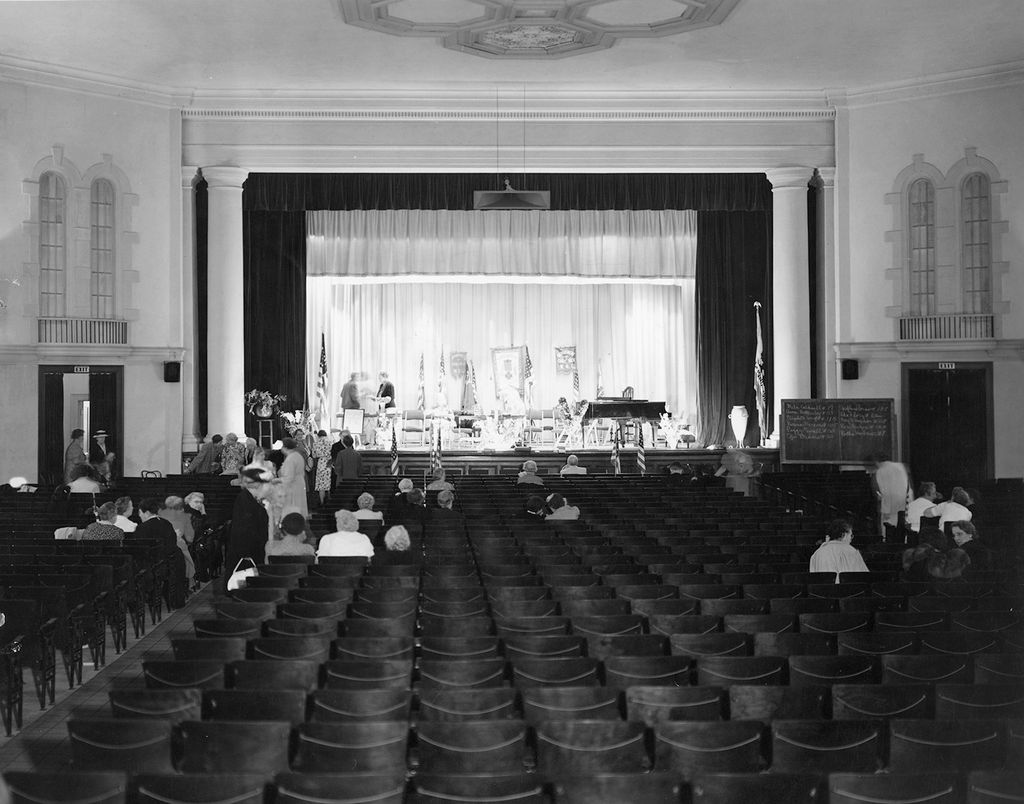 The original Woman’s Club of Hollywood theater located at 7080 Hollywood Blvd.Credit: Courtesy Marc Wanamaker/Bison Archives
In the midst of cleaning up that debacle, the bankruptcy court appointed Heide Kurtz as a trustee to sort out the debts. In court documents, Kurtz claimed that taking out a loan was a breach of Morgan’s fiduciary duty and further investigation was necessary.
The building was declared a City of Los Angeles Historic- Cultural Monument in 1994 but was suffering from deferred maintenance and was not generating income. The COVID-19 lockdown knocked out the club’s events business, which never came back. Location filming, which had included Grey’s Anatomy, ABC’s 9-1-1 and a slew of Hallmark movies, also dried up. Club members have tried to reactivate the space with comedy nights, music events, flea markets, painting classes, meditation and yoga open to the community.
One board member reports that the group’s former executive director removed historic furniture and lighting fixtures from the building as she left. The organization’s historical archive also went missing. All that, and the historic schoolhouse building on the property had tenants that the club leaders would rather replace with a wellness center. “What we call the squatters,” says Lord. “Two actors — mother and son actors. They weren’t paying rent since 2010.”
Famulari envisions a future where the property would operate akin to Mid-Wilshire’s The Ebell of Los Angeles, another woman’s group founded around the turn of the 20th century. “It’s not a tea and crumpets thing,” Famulari says. “[The Women’s Club of Hollywood] did amazing things for this city. If they survive, they can go back to building another library or another Hollywood Bowl.”
“The toughest part of this case is all of the women were elderly, and I don’t think they knew or understood the permutations of what occurred,” Famulari says. He contends that the group should not be liable for a loan made through what he calls a “fake board,” the proceeds of which did not benefit the club. “What’s even more insane,” Famulari says, “is how the court-appointed trustee dealt with it. They decided they should pay back that loan that had ballooned to $1.6 million.” Famulari says Kurtz first decided to challenge the original loan, but changed her mind and borrowed more money — a second loan of $4 million, which he says the lender increased to $5 million. “The trustee had accrued $2 million in legal fees and paid herself $300,000.”
Famulari is convinced that this cure was worse than the disease. “A trustee’s obligation is to creditors,” he says. “But they weren’t legitimate creditors. The club did not benefit from that first loan. That was the fuse that ignited the entire disaster that has befallen this club.”
According to Famulari, the club’s second loan was for $4 million, which has since grown to $6.7 million due in part to prepaid interest. “A hard money lender charges 10% interest and has a two-year payback.” He calculates that, exclusive of principal, the debt service alone would cost more than $40,000 a month, which far exceeds their annual income. “No bank on Earth,” Famulari says, “would look at the financials of this club and say, ‘I’ll give you $4 million bucks.’ This is textbook predatory lending. It’s about siphoning equity and nothing more … it’s just grotesque.”
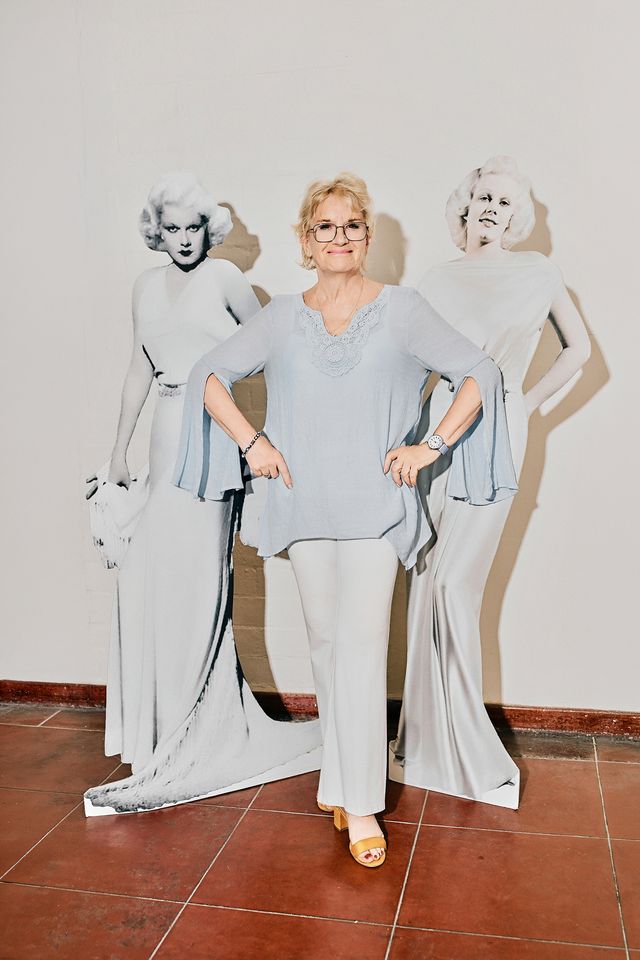 Rosemary LordCredit: Irvin Rivera
Lord says the club has sought help from elected officials without much luck. But at press time, Councilmember Nithya Raman’s office offered to use her “bully pulpit” to lobby the lender for more time.
In the face of a financial situation as grim as this, Famulari maintains the same Hollywood “Let’s put on a show!” attitude as Lord and other members of the club. The nightlife veteran (SkyBar, Boulevard3) thinks a unique venue with a huge parking lot in the heart of Hollywood could become a hot new event space.
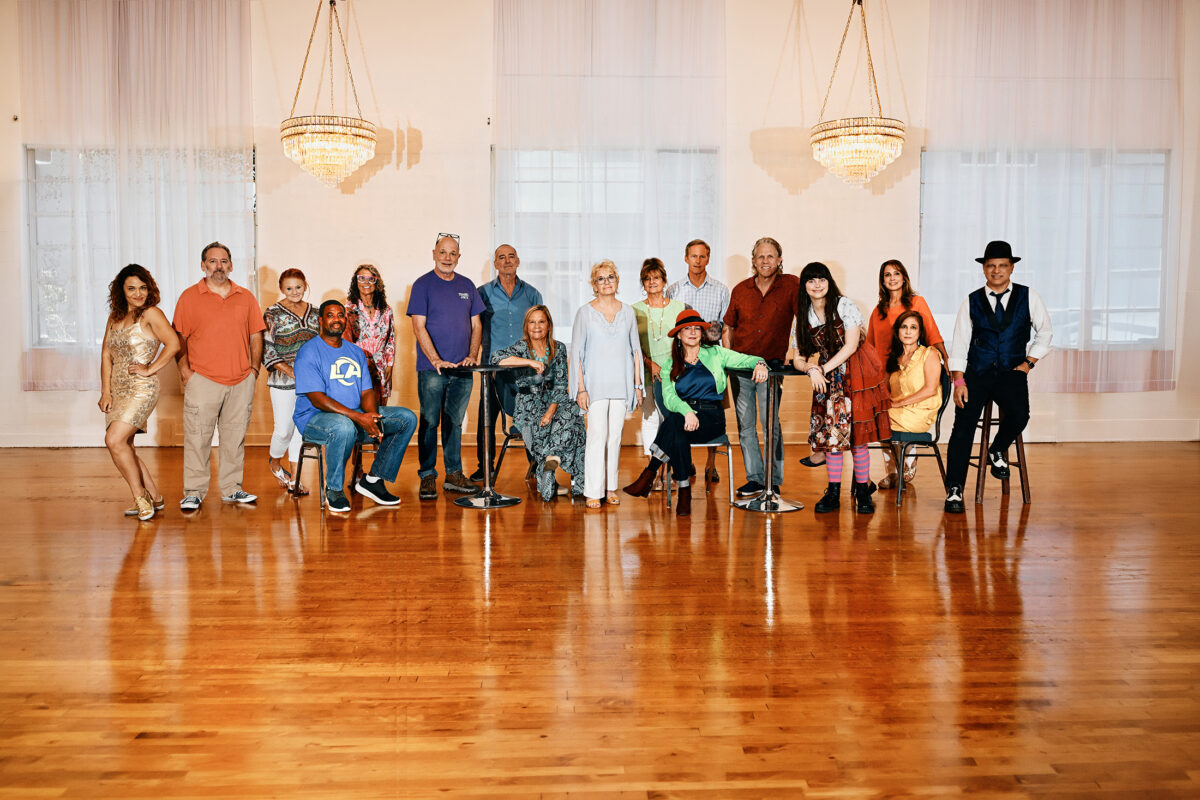
With a grant from Home Depot, members have been improving their building, and on one hot Saturday night in August, the place was packed with young supporters at a dance party fundraiser, which raised $15,000. DJ Shane Thomas, electronic musician Gianna Geller and even the Bob Baker Marionettes showed up to sing and dance and try to find a way to save the club with a variety show.
“It was a very eclectic mishmash — all races, ages, cultures. And it was a dynamic and alive experience,” says Famulari. “It was a bunch of people who really believed this was something worth saving, and they put their hearts and souls into it. There’s power to that, and I am optimistic a solution will happen.”