
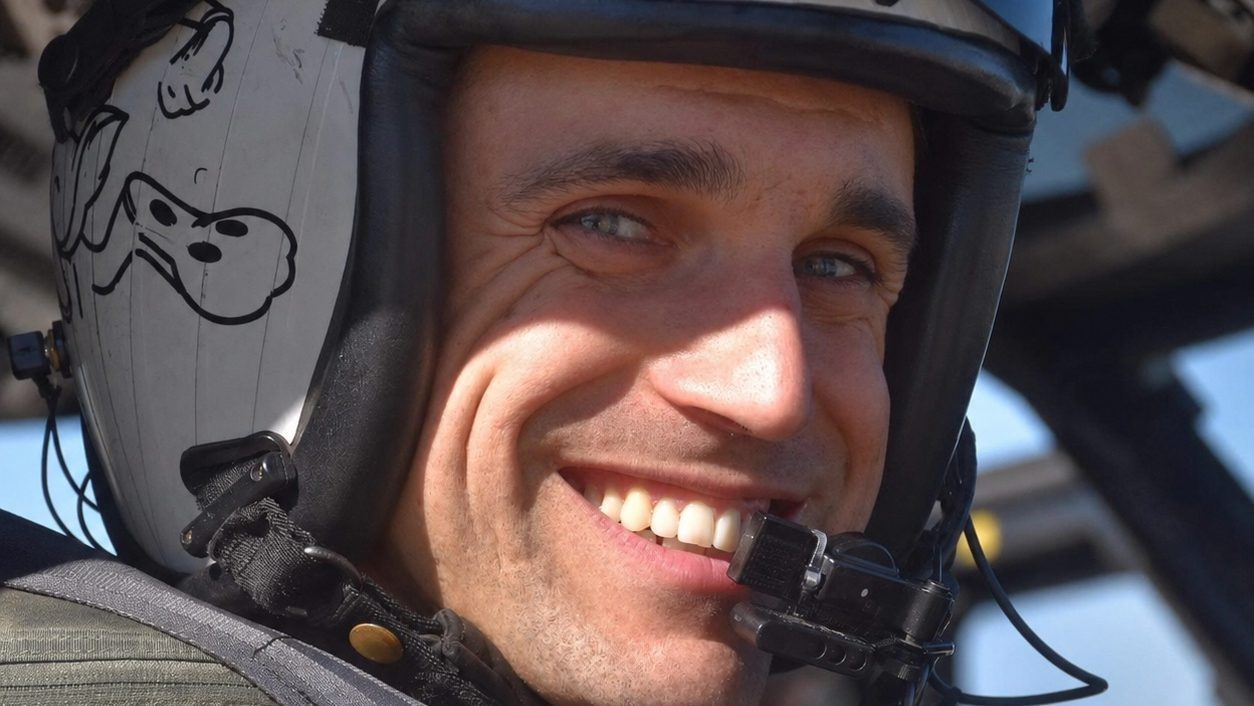
Ricky Hoyt, a Navy Reserve pilot and small real estate business owner, is running for a seat on the Coronado City Council. The mayor and four council members are directly elected by registered voters of Coronado.
Hoyt, 36, who lives in Coronado, is one of four vying for two council seats.
The lieutenant commander said his military deployments and world travels inspired him to run for office, hoping to bring the organizational skills and commitment to public service he developed in the military to the community he now calls home.
He has been endorsed by current Coronado Mayor John Duncan, former Mayor Richard Bailey, current Councilmember Mark Fleming and current school board member Fitz Lee, as well as additional Coronado city leaders.
City council races are nonpartisan.
The Union-Tribune emailed a series of questions to Hoyt and other candidates to help inform voters about their positions, priorities and plans if elected.
Hoyt said he used AI tools in responding to the Union-Tribune’s questions to check his grammar, spelling and formatting. He then reviewed and approved the final answers, which reflect his views and positions, he said.
1.) Why are you running, and what makes you the best candidate?
After my first deployment, I came home with a new appreciation for what we have here in America. I had seen countries where corruption, lawlessness, weak property rights, and limited economic opportunity held people back. It inspired me to start a business and someday participate in government in some form or fashion.
I bring military and business experience along with a younger generation’s perspective, energy, and work ethic.
I spent most of my 13 years on active duty at North Island and continue serving here as a Navy Reserve pilot. For more than 50 consecutive years, Coronado’s City Council has included someone with military experience. I am the only candidate with military service and the only opportunity to continue that tradition.
I understand firsthand Coronado’s unique relationship with the Navy. I’ll bring that perspective to Council while working to preserve what makes our community special and keep Coronado exceptional.
2.) What are the top three issues facing this district and the city generally?
First, we must achieve a permanent solution to the cross-border sewage crisis. Clean beaches and clean air are fundamental to our health, environment, economy, and quality of life.
Second, public safety. Coronado should remain one of the safest communities in America. That means addressing e-bike regulation and enforcement, speeding, and traffic while ensuring our police, firefighters, lifeguards, and Public Works staff have the personnel, facilities, and resources they need.
Third, responsible management of our critical infrastructure. Coronado has major capital projects ahead, and taxpayers deserve disciplined budgeting, competitive contracting, realistic timelines, and transparent reporting of costs and progress.
These issues share a common theme: government must deliver results. Whether we are dealing with sewage, public safety, or infrastructure, I will focus on accountability, collaboration, and measurable outcomes; not simply spending money and assuming the problem is solved.
3.) What are the first three things you would do in office if elected?
My first priority would be to listen and learn. I would meet individually with City department heads, our public-safety leadership, regional partners, and residents to understand what is working, what isn’t, and where Council attention can make the greatest difference.
Second, I would conduct a detailed review of every major capital project — scope, budget, schedule, risks, and accountability — and make that information easier for residents to track.
Third, I would establish clear objectives for my first year on the issues residents elected me to address, including the sewage crisis, public safety, traffic, and infrastructure, and regularly report my progress publicly.
That reflects how I intend to govern: Listen. Learn. Discern. Lead. Listen before assuming I have the answer, learn the facts, discern the best course of action, and then lead decisively and accept responsibility for the results.
4.) Currently, there is a cross-border sewage crisis. What programs or plans to address the crisis do you think the city should fund or continue to support?
Coronado must continue treating the cross-border sewage crisis with urgency until we achieve a permanent solution. We should advocate for emergency declarations while ensuring the South Bay International Wastewater Treatment Plant’s expansion is completed and receives reliable long-termoperations and maintenance funding.
We must also hold Mexico accountable for completing and maintaining its remaining infrastructure commitments. Recent progress is encouraging, but success means consistently clean beaches and coastal waters; not simply projects underway.
We should never give away leverage without tangible results. SANDAG is working to advance the Otay Mesa East Port of Entry. We should continue advocating for SANDAG to stop advancing major projects that facilitate cross-border commerce without simultaneously demanding measurable progress on sewage infrastructure affecting San Diego County.
Coronado cannot solve this alone, but we can build regional pressure, demand accountability from both governments, and keep the issue a priority until the problem is solved.
5.) In terms of public safety, what do you see as the three biggest challenges facing the city?
The first is e-bike safety. E-bikes provide tremendous mobility in a parking-constrained city, but speed, unsafe riding, and increasingly powerful bikes have created real risks. We need smart rules, education, parental involvement, and consistent enforcement without eliminating their benefits.
Second is traffic safety. Speeding, congestion, navigation apps diverting vehicles onto residential streets, and the unique traffic generated by the Navy require solutions tailored to Coronado rather than one-size-fits-all approaches.
Third is maintaining exceptional first responders. Coronado residents expect outstanding police, fire, and lifeguard services. We must remain competitive in recruiting and retaining talented personnel while providing them with the facilities and equipment necessary to do their jobs.
Public safety is government’s most fundamental responsibility. Coronado is an exceptionally safe community, and my goal is not simply to preserve that standard but continually look for ways to improve it.
6.) How would you improve transparency and accountability for the city of Coronado?
Coronado already provides significant public information online, including budgets, financial reports, agendas, staff reports, meeting videos, public records, and capital improvement documents. My goal would be to make that information easier to access, understand, and use.
I would advocate for a simple, mobile-friendly City accountability dashboard where residents could quickly see major projects, approved budgets, actual spending, timelines, upcoming milestones, delays, and project status, all in one place. Transparency is clear, concise, and accurate information made readily available so residents can understand what their government is doing.
My military and business experience taught me that accountability works best when objectives, responsibility, timelines, and results are clear. Residents should be able to quickly answer three questions about major City initiatives: What did we promise? What are we spending? Are we delivering?
7.) Coronado has been successful in years past addressing homelessness issues on the island, recording a population in the single digits in some years. How do you believe the city can continue to aid and assist its unhoused people?
Coronado’s approach should continue combining compassion, services, and accountability. Our Police Department already works to connect people experiencing homelessness with available resources and has access to specialized resources for behavioral-health crises. We should continue strengthening those partnerships and take advantage of regional resources that bring trained outreach and mental-health professionals into the response.
When someone needs help, our first objective should be connecting that person with shelter, treatment, mental-health services, veterans’ resources, or other appropriate assistance. But compassion and accountability go together. When appropriate shelter and services are available, the alternative cannot be permanently occupying our parks, beaches, sidewalks, or other public spaces. We should treat every person with dignity, offer a genuine path toward stability, and enforce our laws fairly and consistently so Coronado’s public spaces remain safe and accessible to everyone.
8.) What should the city do to combat its shortage of affordable homes, and what priorities should guide its housing plans? How would you assess the city’s progress?
Coronado faces a difficult housing reality: extremely limited land, high demand, and state mandates that often fail to account for our unique constraints. I favor market-driven solutions wherever possible. The City should make permitting efficient and predictable and remove unnecessary barriers to housing already permitted under existing law. My position is straightforward: allow what state law requires without voluntarily going beyond those requirements simply to increase density.
We should preserve existing affordable housing where practical and evaluate workforce-housing opportunities based on their actual costs and benefits, and not make promises the City cannot realistically deliver. With another state housing cycle ahead, Coronado should prepare early, advocate for a fair allocation, preserve local control wherever possible, and challenge unreasonable mandates when we have sound legal grounds.
I would measure progress by housing actually produced or preserved, permitting times, taxpayer cost, and whether we met our legal obligations while protecting Coronado’s community character.