
In a crowded mayoral field and two city council races, Santa Clara’s contentious relationship with the 49ers – and the team’s exceptional spending on the race – have stood out as key issues in this November’s election, even as the city struggles with maintaining vital infrastructure projects.
Santa Clara is home of the 49ers’ Levi’s Stadium, and the city leases the stadium to the 49ers through a complex series of management and revenue-sharing agreements that have long been the subject of a contentious relationship marred by litigation and highlighted in civil grand jury reports.
Even before their arrival to the city, the 49ers have sought to put their thumb on the scale of local politics by funneling millions of dollars towards city races – astronomical sums for a city the size of Santa Clara. This year, the 49ers have continued those efforts, directing over $2.6 million to the mayoral race and one city council race, according to most recent campaign finance filings.
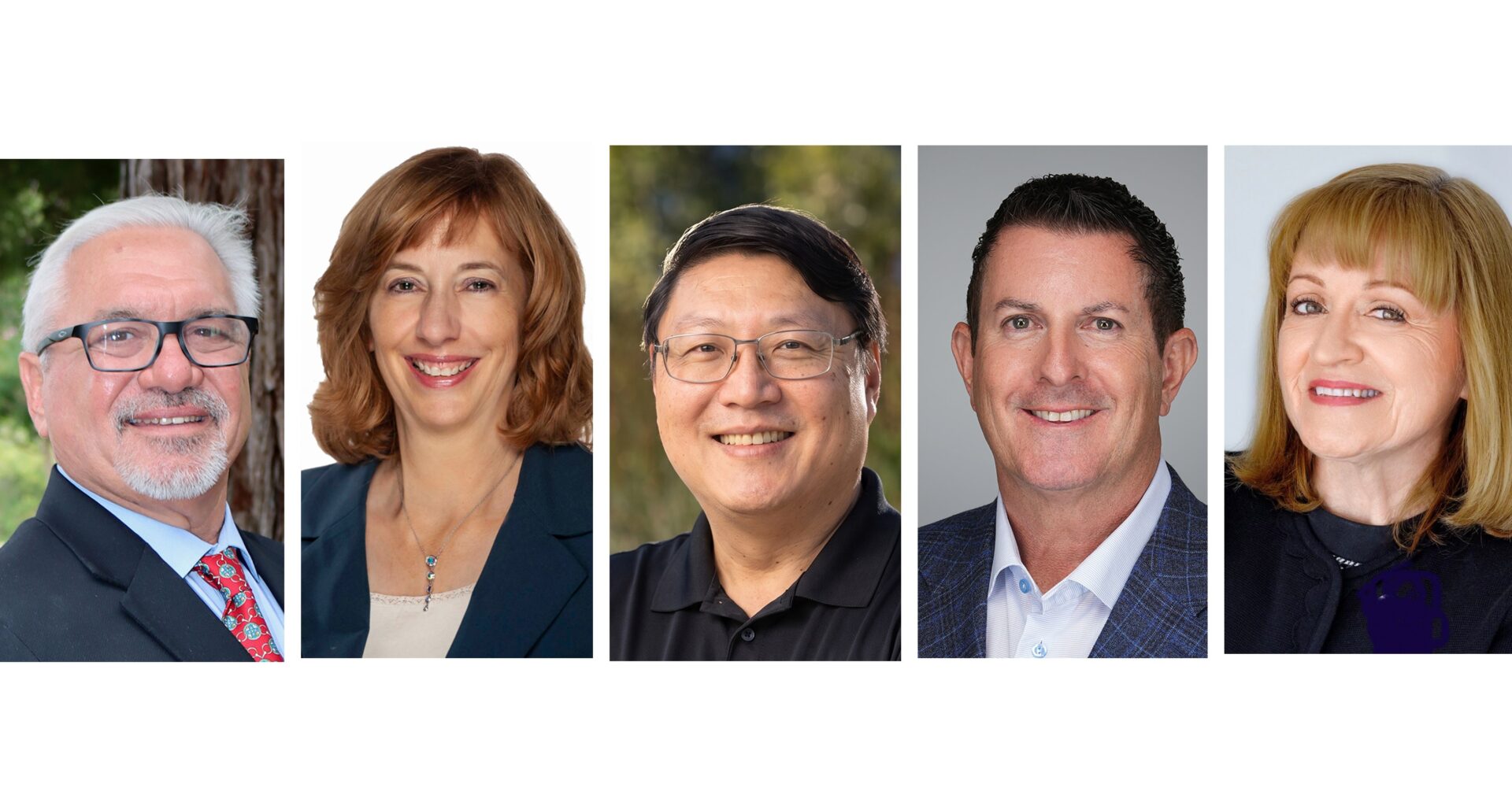
Amid the political fray, six candidates seek the mayor’s seat in Santa Clara: Kathy Watanabe, 67, a former city councilmember and library trustee; Gary Ferraris, 59, a union leader and former city worker; Karen Hardy, 65, a current city councilmember and former planning commissioner; David Kertes, 56, with a background in marketing and sales; Kevin Park, 56, a current city councilmember; and Mike Wiltberger, a research scientist who did not respond to requests to be interviewed.
This year, the 49ers are spending $1.8 million in support of Ferraris and opposing Watanabe and Kertes.
“I didn’t ask them for any of that, and I told them I was running whether they support me or not,” said Ferraris, pointing out that as a union leader, he had opposed them on an issue involving prevailing wages. Even so, he maintained that his experience in labor negotiation meant he was willing to have an “open mind” and “focus on what we have in common” even in cases where there was disagreement.
Meanwhile, Kertes said that the 49ers “don’t want anybody that’s going to ask questions,” and instead wanted to be “the fox guarding the henhouse.”
Watanabe took those critiques further, voicing “grave concerns … about how the 49ers management wants to take control of the city.” She also cast doubt on Ferraris’s assertions of independence. “He will do their bidding, that’s what happens when you take money from the 49ers,” she said.
Current councilmember Park echoed the concerns about the 49ers’ intervention, saying it had a chilling effect, discouraging some potential candidates from running for fear that they would face well-funded opposition from the 49ers. “This is a very bad sign for the city,” he said.
The 49ers framed their spending quite differently.
“We are proud to once again support a diverse slate of candidates running for city leadership — consensus builders who will tackle the affordability crisis, and manage the city’s finances responsibly while investing in the city’s future,” wrote a spokesperson for the 49ers when asked why they are spending on the races.
Despite the candidates’ concerns, they each acknowledged that a productive relationship with the 49ers was essential to the city.
“What I don’t want to do is keep fighting and going back and forth on the agreement that’s in place right now. That’s what we have. We have a marriage right now. We need to make it work,” said Kertes.
Meanwhile, the city continues to grapple with hundreds of millions of unfunded infrastructure improvements, even after passing a $400 million dollar bond measure to help the city pay for improving failing infrastructure, from outdated fire stations to a beleaguered aquatic center.
For Ferraris, the bond measure showed a failure of prior city leaders to adequately plan. “The fact that we had to go out and get a $400 million bond … is unacceptable,” he said. He suggested setting up compounding savings for large infrastructure projects to help ensure that they could be maintained over time.
He did not outline specific plans to grow the city’s revenue or name specific ways to cut costs, but suggested being “better stewards of what we have.”
Park argued that there is enough money in the city’s budget to pay for its operations, but that the budget needs more scrutiny, noting that Santa Clara has a far larger general fund than similarly sized cities. “We have to do an assessment on how things are being run … You have to prioritize what is essential,” said Park. Though he did not specify what might get cut, he said his approach distinguished him from his peers on the council. “I’m the person that’s looking at cutting spending.”
Watanabe, however, disagreed with that approach, saying “I don’t know that there’s room to cut anything.” Instead, she proposed reaching out to the business community and waiving fees for developers to encourage more investment in the city.
Hardy touted her role in negotiating for the city to make more money off of concerts held at Levi’s Stadium. She recommended streamlining construction projects to make them more affordable for the city and “trying to put the brakes” on increases in wages for firefighters and police officers.
Finally Kertes said he would push to increase the cap on business license taxes for large businesses, and use the money to help with programs for small businesses such as reducing fees. He also recommended making a rainy-day fund to help pay for infrastructure.
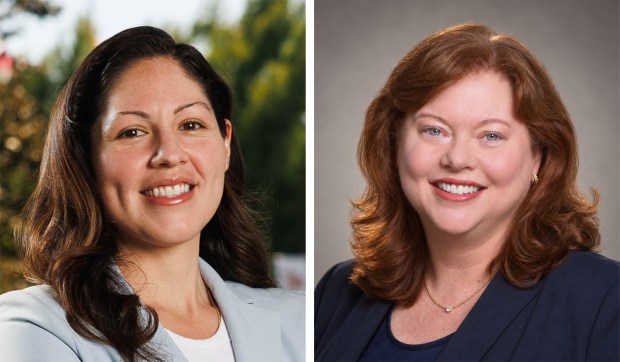 Yvonne Inciarte, left and Kimberley Williams are candidates for the Santa Clara City Council District 2. (Photos courtesy of candidates)
District 2
Two candidates face off in the race for District 2, which includes the city’s civic center and borders San Jose to the East.
Kimberley Williams, 48, is an administrator in higher education with a history of involvement in the local and state Parent Teacher Association and the school board.
She hopes to help boost production of low-income housing, especially by building near transit. “We’re still really underproducing … affordable housing,” she said. “If we can’t provide the housing for our city workers, for our teachers, for our public safety workers. What does our city look like 10 years from now?”
She added that she hopes to improve financial planning for infrastructure projects and boost civic engagement, in part by providing automated translation at city meetings.
Yvonne Inciarte, 37, works in the office of Representative Ro Khanna and argues her background in government has prepared her to take on a role at city council.
Inciarte also noted that affordability – and particularly housing affordability – was a top priority, highlighting the need for student and teacher housing, and voiced concerns of community members displaced by the high prices.
She did not outline a plan for housing affordability, but rather she positioned herself as an advocate for “community input” in housing and other decisions.
“We need to have input from everyone … so that we can make sound decisions,” she said.
The race also has garnered over $700,000 from the 49ers in support of Williams and in opposition to Inciarte.
Williams said the move was a surprise to her. “I actually strongly believe that there is too much money in politics,” she said. “I’m not comfortable with that amount of money being spent to support me.”
Even so, she said the current relationship with the 49ers needed to be on “more solid ground.”
“It means that we are able to hold them accountable, but that we don’t just revert to conflict for conflict’s sake,” said Williams.
Inciarte said the 49ers’ spending to “manipulate voters and push a corporate agenda with no end in sight” should concern “every Santa Clara resident.”
Of the 49er’s, Inciarte added that she would be “happy to have conversations with them … but we have to make sure that Santa Clarans are not being taken advantage of.”
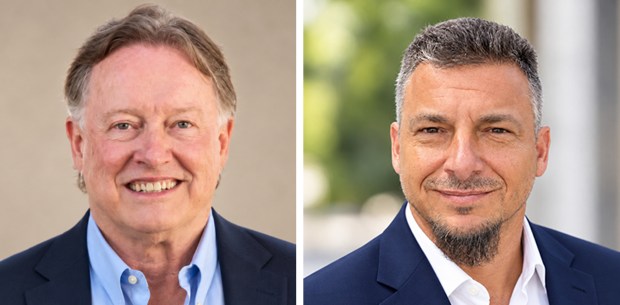 Candidates for the City of Santa Clara council, District 3, from left, Eric Crutchlow and Kyle Madej in the November 2026 election. (Photos courtesy of the candidates)
District 3
Two candidates are vying to represent District 3, which sits in a compact region towards the western edge of the city, bordering Sunnyvale.
Eric Crutchlow, 66, works in cybersecurity and serves as chair of the city’s planning commission.
“I love Santa Clara, and I basically want to make sure that we’re doing the best that we can for my neighbors,” said Cruchlow.
In response to concerns around the city’s struggle to maintain its infrastructure, he proposed creating a committee dedicated to planning how to maintain its facilities and fund that maintenance. He added that he would advocate for meetings that are run more efficiently – noting the tendency of city council meetings to run into the late hours of the night. He also noted that he would push for data centers to be considered “in the aggregate” rather than individually, given that Santa Clara houses a disproportionate number of data centers.
Kyle Madej, 45, has a baseball academy and a consultant firm and formerly worked in parks and recreation. He said his business experience, including navigating regulations and permitting as a business owner, helped prepare him to deal with the intricacies of government on council.
As a native resident, he said his main motivation for running was to improve the quality of life in the city. He wants more housing that could offer a pathway to ownership rather than to rent – including through a potential first-time home buyer assistance program. “I grew up when this was a place where families could succeed,” he said. “I want to have a place where more people can own.” He also voiced his desire to spend more money on parks and programs like youth sports.
The District 3 race lacks financial input from the 49ers. Both candidates voiced a desire to lower the temperature of the relationship between the city and the sports team.
For more information on the candidates and where they stand on issues affecting Santa Clara, see their websites, linked online when available, and their candidate statements on the city website under “2026 General Municipal Election.”