
Psychedelics are having a moment. Tech executives brag about their microdosing regimens (opens in new tab). Demand is growing for wellness retreats (opens in new tab)built around psilocybin. And in April, President Donald Trump signed an executive order directing the Food and Drug Administration to expedite review of psychedelic therapies for depression and PTSD, allocated $50 million for psychedelic research, and cleared a pathway for patients to access ibogaine and other compounds that are still in clinical trials. “Can I have some, please?” the president cracked after signing the order in the Oval Office.
It’s hard to miss the parallel to the 1960s — the last time a generation discovered psychedelics at the exact moment society was coming apart around them, and technology was accelerating in leaps nobody could fully comprehend.
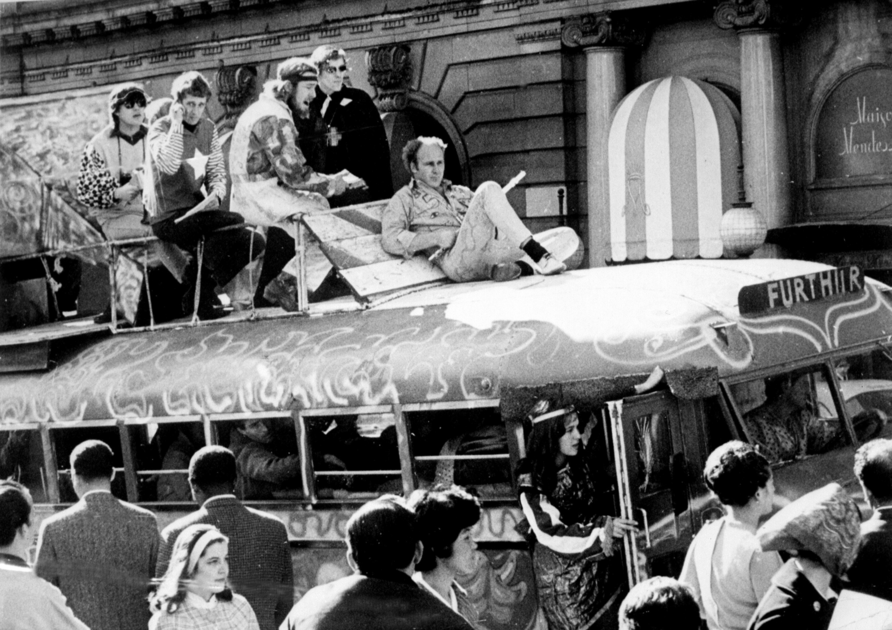
But it also raises the question: Which 1960s are we returning to? The therapeutic ’60s, when Sandoz Laboratories distributed LSD-25 free to researchers and a thousand papers on its psychiatric benefits were published before the door slammed shut? The recreational ’60s, when author Ken Kesey hosted LSD-soaked parties around San Francisco known as “Acid Tests”? Or some third ’60s most people have forgotten — the one I argue actually mattered. It is the ’60s whose absence, more than anything else, explains what is wrong with Silicon Valley today.
In 2005 I published “What the Dormouse Said,” a history of the countercultural roots of the personal computer. A number of readers concluded I was arguing that LSD made the engineers and scientists who built Silicon Valley more creative.
I wasn’t. In fact, I spent years looking for evidence that it did. Steve Jobs didn’t help my cause when he told me, the year before the book came out, that taking LSD had been one of the two or three most important things in his life. But Jobs never pointed to a specific invention; what he described was a shift in self-understanding, a sense of being an outsider that he carried into Apple’s corporate world.
While researching the book, I tried to find the computing equivalent of Kary Mullis — the biochemist who credits LSD with the conceptual leap that became the polymerase chain reaction — and couldn’t find it. Early Apple engineer Bill Atkinson has said his revolutionary HyperCard software came out of an acid trip, but hypertext itself had been conceived a generation earlier, separately by both Doug Engelbart and Ted Nelson, before anyone in their orbit had touched a psychedelic. Engelbart eventually became a subject in James Fadiman’s 1966 study of whether LSD fostered creativity at the International Foundation for Advanced Study in Menlo Park — but he had already invented the mouse. The causal arrow ran the wrong way.
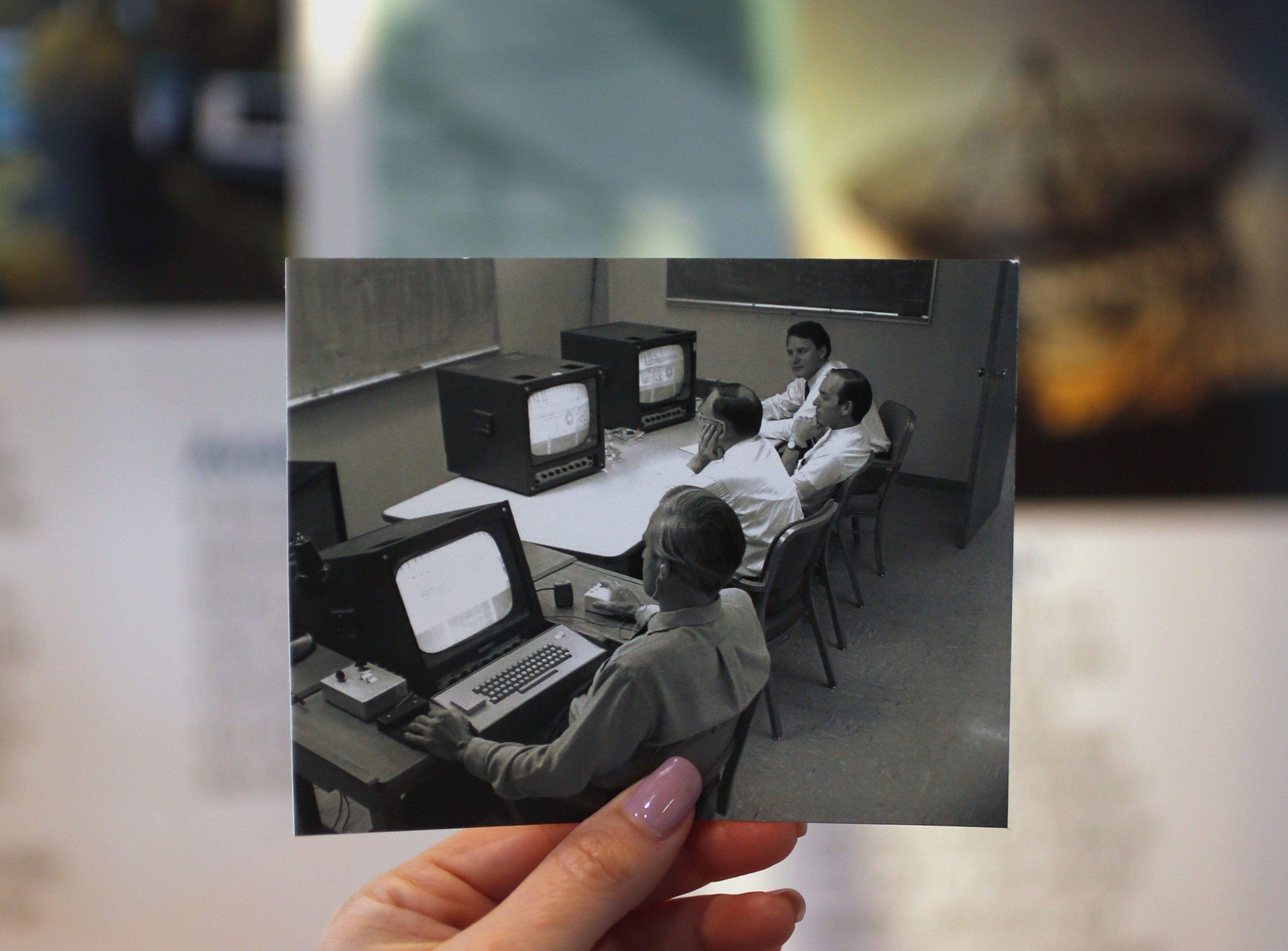 Doug Engelbart gives the first demonstration of the computer mouse and interactive computing in 1968.
| Source: Michael Macor/The San Francisco Chronicle via Getty Images
And yet the question hasn’t gone away.
Three laboratories within a few miles of one another, all in Stanford’s orbit, produced most of what we now recognize as personal computing and the internet during a chaotic decade — the same one in which the U.S. was involved in its failed war in Vietnam. Engelbart’s Augmentation Research Center at the Stanford Research Institute pioneered the mouse, hypertext, videoconferencing, and interactive computing. The Stanford Artificial Intelligence Laboratory, led by John McCarthy, trained a generation and produced foundational work in AI, computer music, and robotics. Xerox PARC, founded in 1970, invented the graphical user interface, the laser printer, Ethernet, and the modern personal computer.
Researchers at the three laboratories accomplished all this during the wildest cultural period in post-WWII American history, in the same small world where Kesey’s Acid Tests were taking place, where the Free Speech Movement had recently spilled south from Berkeley, and where Haight-Ashbury swelled to as many as 100,000 young people for the Summer of Love, then emptied out almost as quickly. The laboratories bracketed Stanford University, where an explosive antiwar movement had forced the administration to move classified research off campus.
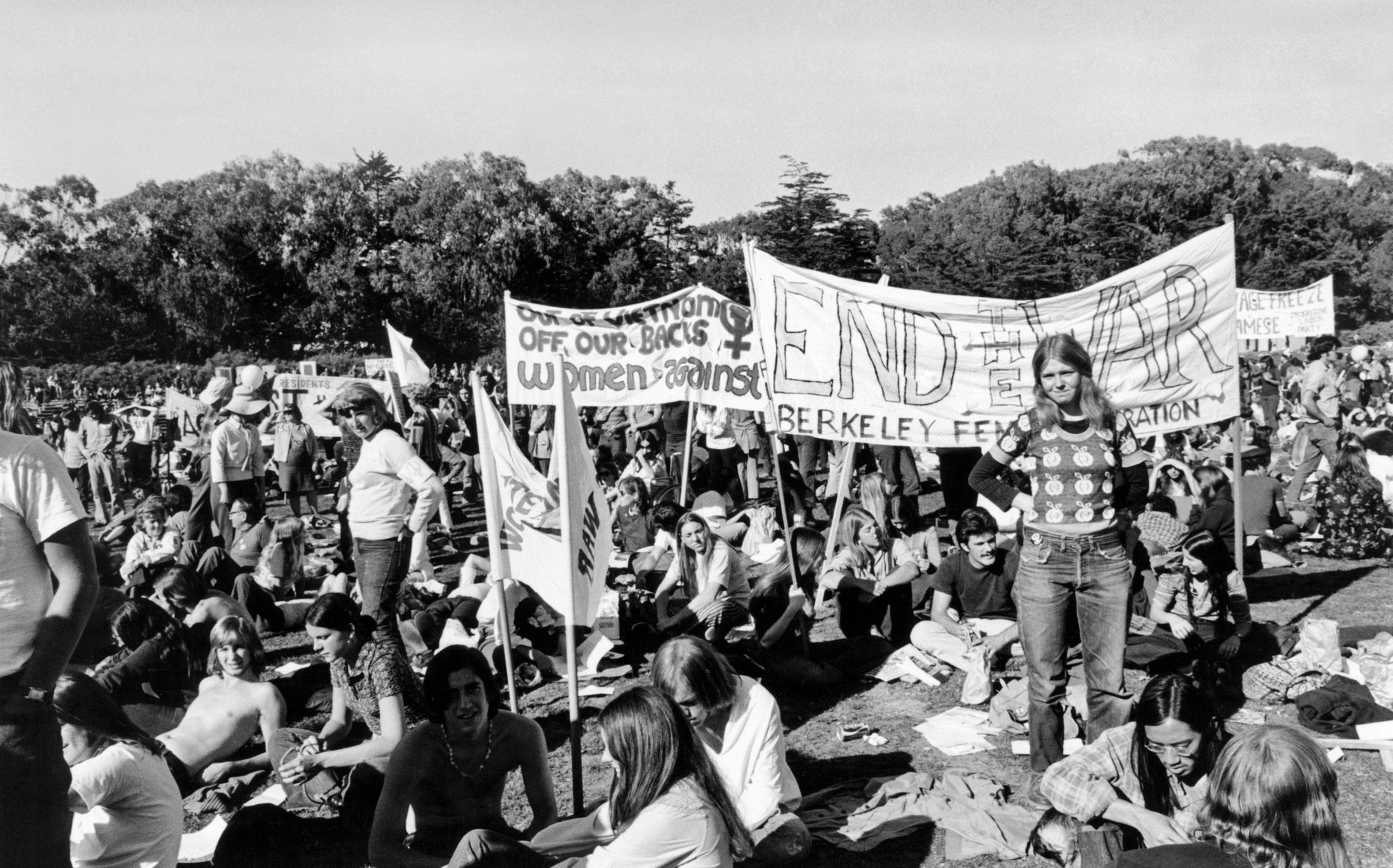 Source: Harold Alder/Getty Images
I ultimately found an explanation in biology, not history. In the late 1980s, a group of theorists associated with the Santa Fe Institute began describing certain complex natural systems as operating “at the edge of chaos.” Fully ordered systems, they argued, are too rigid to produce novelty. Fully chaotic systems are too noisy. But systems that sit between the two appear to be where genuine novelty in nature appears. The argument was originally about ecosystems and cellular automata. By the 1990s, social scientists had begun applying it to economies, cities, and intellectual communities.
I think it describes the Bay Area between roughly 1963 and 1973 better than any other explanation. The three computer science laboratories were focused on hard computing problems located adjacent to a world that had both politically and culturally been knocked off its rails.
Psychedelics were not the only force driving the chaos. The Vietnam War and the civil rights movement were driving a postwar collapse of American cultural authority. But psychedelics were one of the distinctive engines of the era, and they had a particular character: They produced a generation that set out to explore consciousness and what would be called “human potential,” in a variety of ways, from designing computers to creating religions. They took drugs in order to expand the human mind, and they thought of technology as a way to do the same.
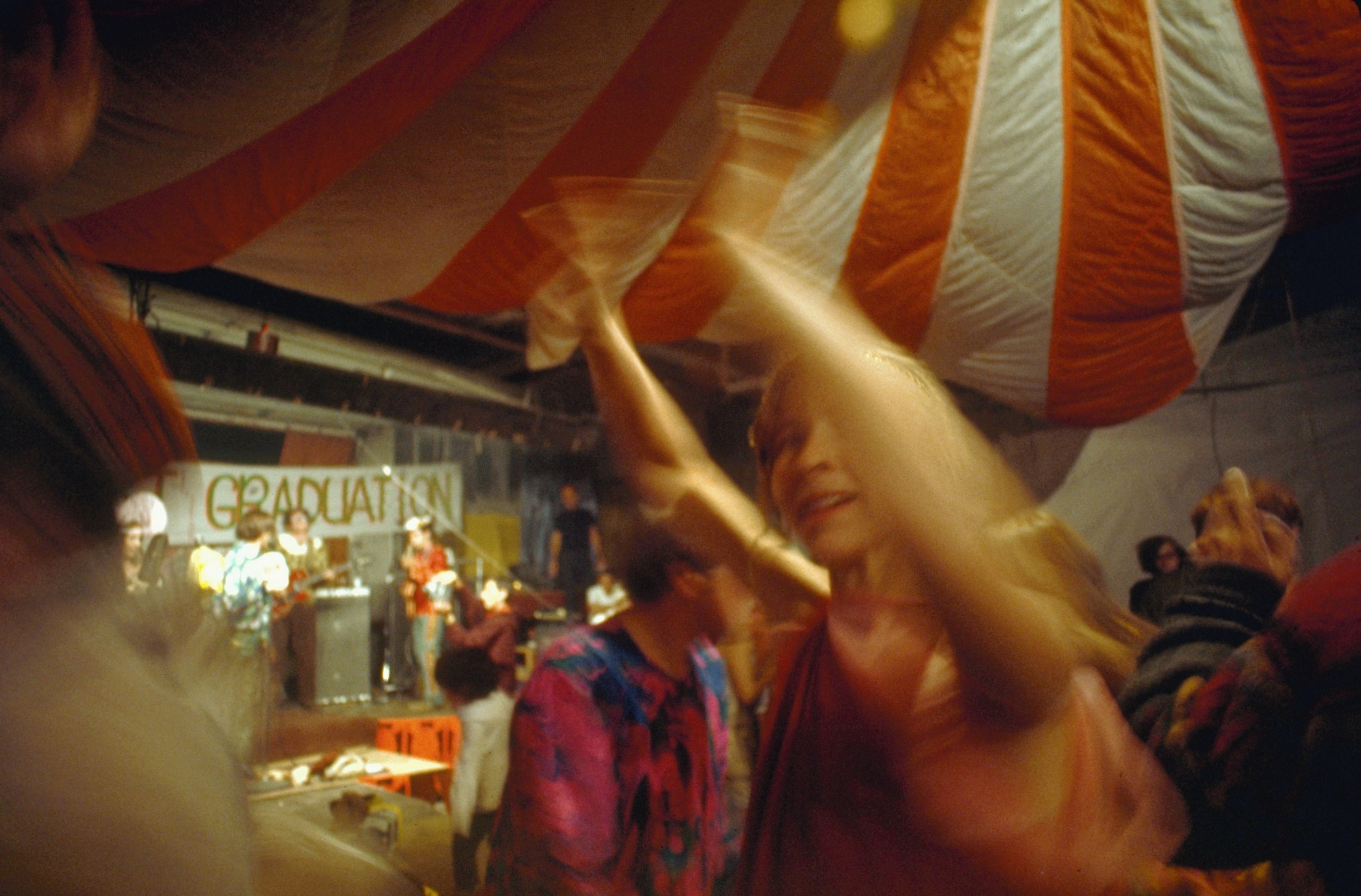 At Ken Kesey’s Acid Test Graduation, people celebrate life after acid.
| Source: Ted Streshinsky/CORBIS/Corbis via Getty Images
Stewart Brand, an aspiring photographer who created the counterculture magazine Whole Earth Catalog (opens in new tab), offers the cleanest illustration. In January 1966, Brand and Kesey staged the Trips Festival at Longshoremen’s Hall, three nights that transformed the Acid Test culture into a public spectacle: The Grateful Dead, slide projectors, strobe lights, and 10,000 attendees packed into a labor union hall transformed into one immersive event. It was when the Bay Area’s psychedelic underground became visible to the public. Three years later, in December 1968, Brand was in Menlo Park, running the live video feed for Engelbart’s demonstration of his oN-Line System to the Fall Joint Computer Conference in the Civic Auditorium in San Francisco. There was the mouse, a windowing display, hypertext, and real-time collaboration with researchers at Stanford Research Institute in Menlo Park — what the journalist Steven Levy would later name the “Mother of All Demos.” Engelbart brought Brand in because of his multimedia experience — the multisource projection that let the audience see Engelbart’s screen, his hands, his face, and his colleagues 30 miles away, all at once. The form of the demonstration — interactive, multichannel, immersive, presented as something closer to a rock concert rather than a conference talk — came directly from the sensibility Brand had been refining since the Trips Festival. Personal computing was introduced to the world with a bit of the flavor of a rock concert at the Fillmore Auditorium.
 Hippies celebrate “the death of the hippie” parading down Haight Street during the Summer of Love in 1967.
| Source: Bettmann/Getty Images
The appearance of personal computing and computer networks did not emerge from the use of psychedelics. But the conviction that the most important question was human capability itself, that technology should “augment human intellect,” was incubated in a world where consciousness itself was a frontier. When Engelbart told colleagues he wanted to make people smarter, he was speaking directly to a San Francisco Peninsula culture that had been asking the same question with different tools.
That was the ’60s that is worth remembering. Not therapy, not pharmacology, not Kesey’s bus (opens in new tab). Rather, a blue-sky laboratory culture and a remarkably chaotic civic one, in which fundamental questions about what technology was for were answered by small groups of computer hackers who believed their technologies were destined to change the world.
We are in the midst of a Silicon Valley bubble that dwarfs all of the region’s previous financial bubbles. After decades of failure, artificial intelligence has arrived with a vengeance. The companies are larger and richer and more powerful than anyone in Engelbart or McCarthy’s orbit would have guessed possible. The technical talent is dramatically more concentrated. San Francisco, 30 miles north, has become the new center of gravity for Silicon Valley, and wandering through it now, what is visible is the vast investment in AI, not the cultural creativity that surrounded the laboratories in 1968.
Jonathan Taplin made this argument in “Move Fast and Break Things,” his 2017 book about what had gone wrong in Silicon Valley. Taplin distinguished between two distinct cultures. The first was the technological utopianism of the Whole Earth Catalog era — engineers, designers, and entrepreneurs who believed the tools they built would make the world more humane, more democratic, more individually empowered. He dubbed the second, which he associated with the rise of Peter Thiel and the PayPal Mafia, “technological libertarianism.” Its founders were not, in the original sense, building tools for users; they were attempting to control markets. Technology was supplanted by money as the defining coin of the realm, and the question of what the technology was for receded to the extent of becoming a bullet point for a marketing department. It is not that everyone working in Silicon Valley today shares those politics or those convictions; it is that the cultural center of gravity in certain rarified circles of the industry has shifted in that direction. The Stanford student journalist Theo Baker has documented this from the inside (opens in new tab): He describes a generation for whom founder has become less a calling than a job description. Venture accelerators now match founders to problems, screening for personality types, all in a dismal cliche of an HBO series.
The institutions of today’s tech boom are, if anything, more formidable than ever: The technical work coming out of the San Francisco AI labs is extraordinary. But the surrounding culture that once pressed the laboratories about purpose — the artists, activists, and pranksters who lived next door and asked bigger questions — has been priced out, professionalized, or simply vanished. The result is a region that is vastly wealthier and intellectually narrower: superb at the “how?” but less interested in the “what for?”
To be sure, the Valley’s original Technological Utopianism has not vanished, but it has been at least partially drowned out by a cacophony of ideologies and quasi-religious movements, all claiming some different vision of how to harness technology. There are naked capitalists like Thiel and Marc Andreessen, effective altruist-adjacent executives such as Anthropic’s founders, promising to give away 80% of their immense wealth (to causes as wide ranging as mosquito nets for preventing malaria to shrimp welfare to staving off the AI apocalypse they could plausibly help create), as well as assorted AI doomers forecasting the end of our species. Against this background, the Valley’s original open-source movement probably does the best job of upholding the earlier “technology will change the world” (for the better, hopefully) values that were part of the region’s original foundation. The founders of OpenAI and Anthropic publicly insist that they have similar values, but it is folly to take them at their word. Considering that both companies are discussing IPOs that will reach more than a trillion dollars, critics might be forgiven for questioning high-minded and altruistic claims. Let’s watch what they do rather than what they say.
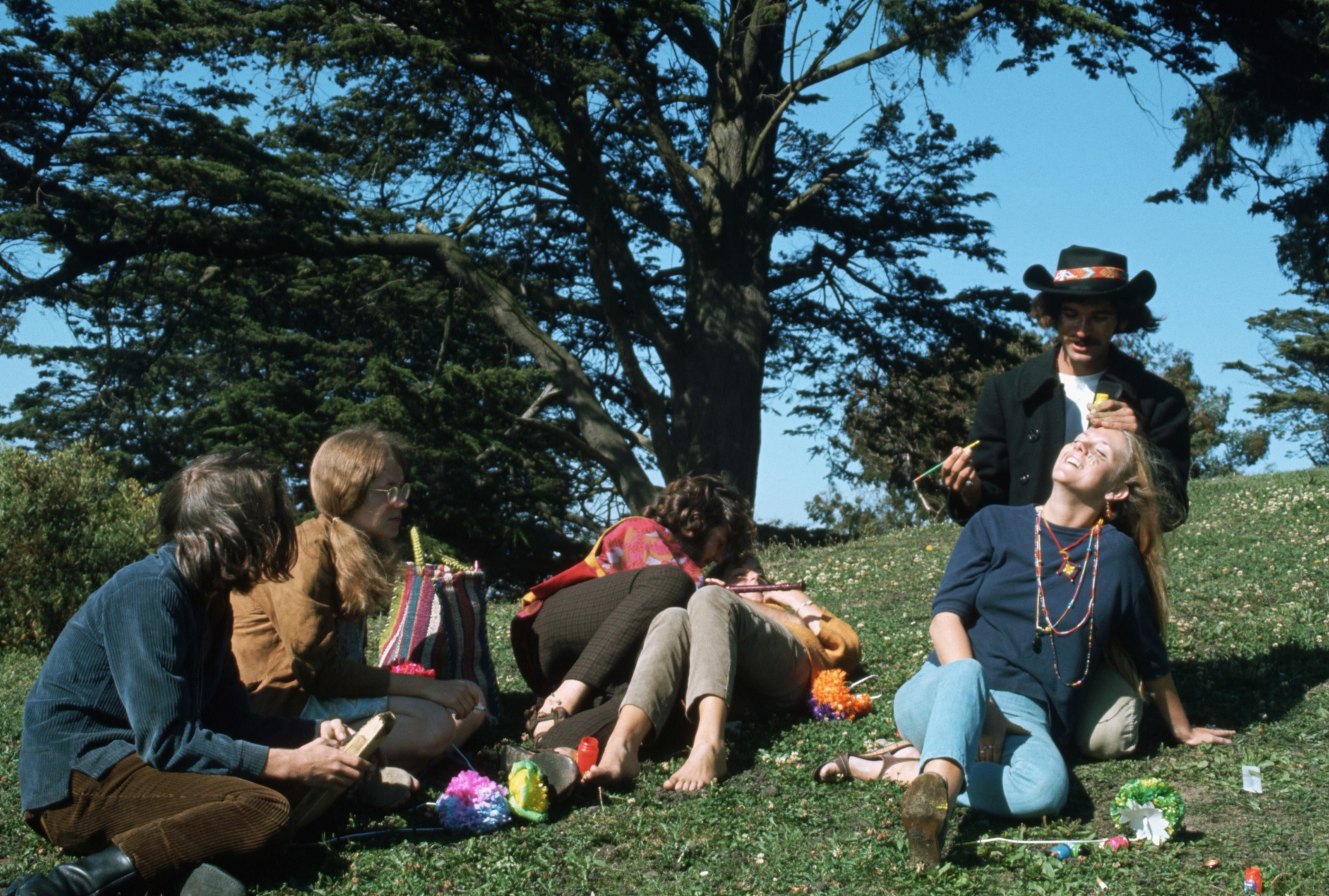 100,000 young people converged on Haight-Ashbury for the Sumer of Love in 1967. | Source: Ted Streshinsky/CORBIS/Corbis via Getty Images
There is great opportunity right now. The country appears to be sliding toward an edge of chaos at least as deep as the one that consumed the Bay Area in 1968 — political, economic, technological. So the raw conditions for a third ’60s moment may soon exist. But chaos was never the scarce ingredient; the scarce ingredient was a culture that knew what to do with it. The dot-com years taught me caution on this point. I was a judge at Ars Electronica, a European technology festival created during that era. I watched genuine artistic creativity in San Francisco evaporate within a few years as everyone with a pulse acquired a day job. Booms, it turns out, don’t necessarily lead to explosions of creativity. Going back to the original San Francisco Gold Rush, they have been principally about greed, not humanity.
I do not think the way out of this is psychedelic, and I do not think it is generational in any straightforward sense; the tech bros who have come to San Francisco have not arrived with flowers in their hair. I also do not think it is a matter of policy — no executive order will produce what is missing, just as no executive order in 1968 would have produced what was present then. What is needed is a cultural revolution, one that takes shape in an intense decade when Silicon Valley is forced to come to terms with the technology it has created and figure out new ways to control a technology that threatens to displace us.
There is a version of the AI revolution that goes badly because the companies building the systems can’t articulate why they are building them. There is another version that goes well because a new generation working in close proximity in an unusually unsettled country decides that the most important goal is a more humane world and acts accordingly. Engelbart’s lab did not save the world. It did inspire a generation to augment it. That is a ’60s inheritance worth claiming.
John Markoff is the author of 2022’s “Whole Earth: The Many Lives of Stewart Brand.” His new book, “The Edge of Chaos: How Two Visions of Computing Created Silicon Valley,” is due next year.