
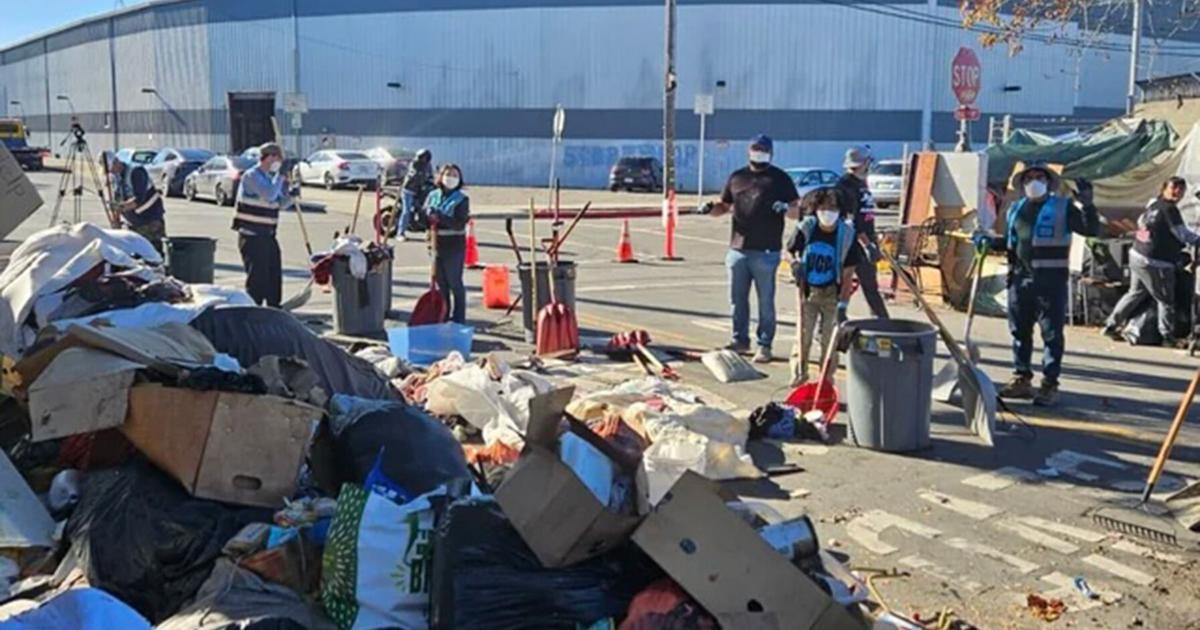
On Saturday, the Urban Compassion Project — an organization focused on clearing illegally dumped trash and providing aid to houseless individuals — completed its very first Berkeley cleanup, where volunteers and unhoused residents united to remove 24,000 pounds of trash buildup from 8th and Harrison, one of Berkeley’s long-standing encampments.
Overall, 60 volunteers, including some unhoused residents, contributed to the cleanup. Supriya Golas, the co-founder of Urban Compassion Project, said the non-profit organization expanded its efforts into Berkeley because of a desire to expand their efforts beyond Oakland, as well as Berkeley’s alleged status as a “hot spot” for illegal dumping.
According to Yesica Prado, an officer for the Berkeley Homeless Union, or BHU, 8th and Harrison has been a “place … of refuge” for displaced and unhoused individuals from other areas of the city, especially since many other encampments have been dismantled.
On June 4, the encampment was subject to a surprise sweep by the city, which was halted shortly after it began by U.S. District Judge Edward M. Chen. He later ruled that the city must provide a week’s notice before executing a sweep, and granted temporary immunity to residents who filed for accommodations through the Americans with Disabilities Act.
Prado said the nearby dumpster was removed from the area during the June 4 sweep and that BHU has been involved in a constant back-and-forth with the city to recover it ever since.
Prado added that not having a consistent trash service and dumpster for the area “makes conditions worse, because now you have an open pile of garbage which attracts more rats,” contributing to uncontained trash buildup as well as vector and storm drain issues.
Prado alleged the dumps of trash that build up on 8th and Harrison are often blamed on the residents there, but that really they are a product of illegal dumping. She commended the Urban Compassion Project for engaging in the cleanup, saying that they cooperated with the encampment’s residents to make the clean-up happen.
“We were very happy to see that the community has shown up for us to help us keep our community clean,” Prado said.
According to CEO and co-founder Vincent Ray Williams, the Urban Compassion Project went to the encampment in advance to coordinate and build relationships with the residents of the area. Williams himself experienced houselessness for a long period of time, starting from when he was a child; he said cities often don’t have a clear plan on how to interact with people suffering from mental health and substance abuse issues.
“It was important to go in a month or two in advance and just start getting to meet people, to start having conversations with them in a way that they can communicate to us, ultimately, about what their specific need was and what their challenges were,” Williams said.
Keeping spaces clean is not only the city’s responsibility, but the responsibility of nonprofits and communities who must fill in the gaps of what the city cannot provide, according to Golas.
Moving forward, the Urban Compassion Project hopes to continue their work with the city.
“We want to find sustainable solutions for 8th and Harrison before we try to move forward,” Williams said.