
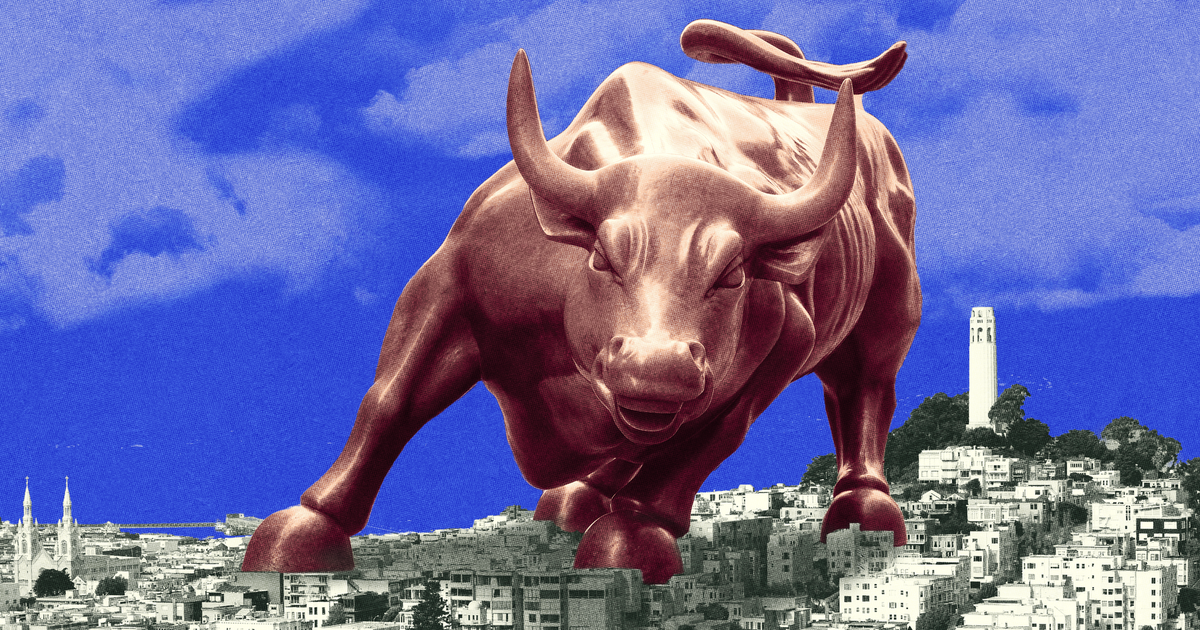
Even as AI leaders warn that the technology they are building could have catastrophic effects on humanity, San Francisco’s two biggest AI firms appear to be moving ahead with plans to go public.
Anthropic and OpenAI are each expected to be valued at more than $1 trillion, larger than the GDP of most countries (opens in new tab), and to unleash a flood of wealth for their investors and employees. The money is already reshaping San Francisco, but what will happen when the biggest million- and billion- dollar windfalls hit?
The exact dates of the public listings are unknown. Anthropic, the maker of Claude, has pushed back its IPO and is eyeing November, after the midterm elections, according to The Wall Street Journal (opens in new tab). OpenAI has postponed its listing to 2027, CEO Sam Altman told Fortune (opens in new tab).
San Francisco has seen waves of IPO wealth pass through with every tech boom. But the first major IPOs of the AI era will be different, economists say. SpaceXAI went public this year with a $1.8 trillion valuation. Anthropic and OpenAI are already valued higher than other tech giants at their debuts: Google (opens in new tab) went public in 2004 with a $23 billion valuation, Facebook (opens in new tab) in 2012 with $104 billion, and Uber (opens in new tab) in 2019 with $82 billion. Anthropic is seeking a valuation of $2 trillion, according to Reuters (opens in new tab), and OpenAI is in talks with investors for a $1.2 trillion valuation, according to The Financial Times (opens in new tab).
“We’re talking more dollars, more wealth, but it may be concentrated in fewer people than we saw in previous tech booms,” said Jeff Bellisario, executive director of the Bay Area Council Economic Institute. “These companies are just a little less human-capital-centric. They’re investing much more money into data centers, energy, and large language models.”
An IPO of a highly valued company changes not only the company but the world around it. Economists have found that the closer (opens in new tab) a home is to a firm that’s going public, the more expensive that home becomes. San Francisco is already seeing this: Rents hit new highs this year, with the average one-bedroom going for $4,500 (opens in new tab), according to Zumper, while the median home price is $1.7 million (opens in new tab), according to Redfin. A recent analysis by Redfin said former and current OpenAI and Anthropic employees could theoretically buy nearly a third of the San Francisco metro area’s homes with their IPO money.
“It’s like the rising tide that actually sinks all the boats if you’re middle class in the city,” said Mat Honan, editor-in-chief of MIT Technology Review and a San Francisco resident of about 30 years. “Home prices here have gone up so much that this is probably my final home in San Francisco. I certainly don’t think I’m going to be able to upgrade again. It’s daunting.”
There’s an expected ripple effect of job growth, as economists (opens in new tab) have found that IPOs bring additional jobs and businesses to the surrounding areas. Even tech workers’ personal lives can stimulate outside industries: Divorce attorneys and wedding planners have said (opens in new tab) their businesses are affected by IPO money (opens in new tab).
‘Those employees are not going to wait until the day after a lockup period to go buy a Lamborghini.’
San Francisco Chief Economist Ted Egan
Over 10 years, each new tech job creates five (opens in new tab) more jobs outside the sector in the same city, according to Enrico Moretti, an economist at UC Berkeley. The AI IPOs, he said, are not going to immediately add more jobs and make everyone richer, as that wealth will be “very concentrated.” Instead, as with previous tech booms, Anthropic and OpenAI have already given a push to local hiring, adding jobs and fueling a wider boom. That effect is here even before the companies go public. But there’s a catch: The new jobs haven’t been enough to make up for the number lost to layoffs and the pandemic.
“The number of jobs created in the AI boom is large and compares with the number of jobs that we’ve seen in previous booms,” Moretti said. “But the difference is that the so-called AI boom comes at the time where there’s been mass layoffs in the tech sector.”
Though we’re already seeing the effects of an AI boom with an increase in jobs and rental prices — which are also the result of low housing supply — the city will feel some direct impacts from the IPOs. San Francisco’s chief economist, Ted Egan, said those will depend largely on how the IPOs perform overall and less on details like how long employees must wait before they are allowed to sell their shares, known as the “lockup period.” Anthropic (opens in new tab) is reportedly considering a longer lockup than the standard six months. But employees can get cash even before selling their shares, as some banks (opens in new tab) lend against private shares.
“My sense is those employees are not going to wait until the day after a lockup period to go buy a Lamborghini,” Egan said.
The city could also end up collecting revenue from the new AI millionaires, of whom there could be as many as 12,000 (opens in new tab), according to outlets that cite figures from the investment platform Hill.com (opens in new tab). That money could flow into the city’s coffers in the form of sales taxes when employees make purchases, property taxes when they buy homes, and higher business taxes for the companies if employees cash in their stock.
The money employees and investors get from their Anthropic and OpenAI shares may also ripple through the city in nontaxable ways, including charitable donations, according to Moretti. “People feel wealthy after an IPO,” he said. “Some of that ends up taking the form of donations to local charities.”
But the biggest impact depends on how the IPOs perform. If they’re really successful, Egan said, they could be a sign that the boom has a long way yet to run, drawing more investors to San Francisco’s AI companies. Like past tech booms, these IPOs may be followed by a wave of others that make more millionaires. And if that happens, said Bellisario, the effects of that wealth — whatever shape they take — may spill over to the rest of the Bay Area.
“There’s a whole other wave of companies coming behind them that people have not even heard of,” Bellisario said. “Like we saw in the previous tech boom, this kind of multiplying of wealth did, in fact, definitely filter out across nearly all parts of the nine-county Bay Area.”