
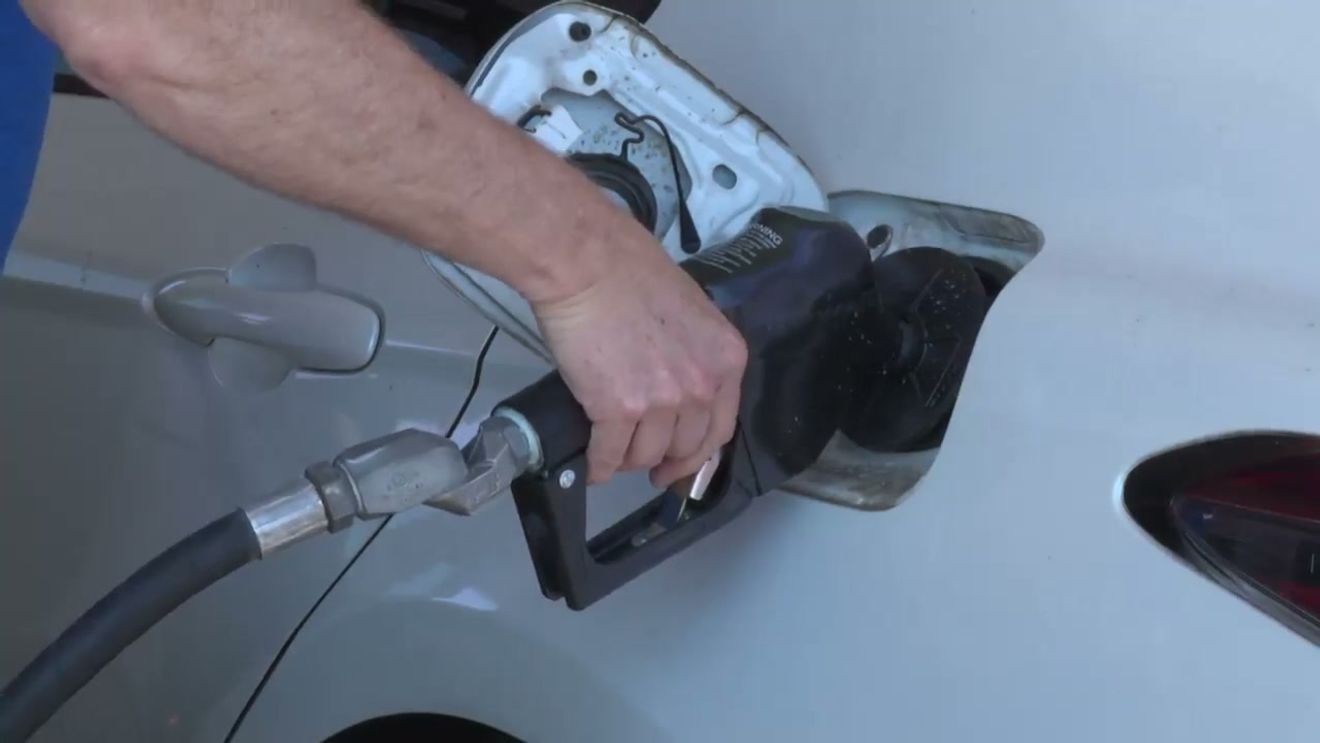
High gas prices are rippling through the economy far beyond the cost of a daily commute, pushing up the price of transporting goods and adding pressure to household budgets, according to a California State University, Bakersfield economics professor.
Dr. Richard Gerhardt, a professor of economics at CSUB, said the higher costs are changing behavior for both consumers and businesses. He said he is seeing “a lot of secondary impacts,” including truckers stopping at rest areas rather than refueling centers, which he said means they are spending less at travel centers. He also said there appears to be less road traffic, which he linked to fewer people taking vacations and spending money on travel and other “luxuries.”
As a result, Gerhardt said, people are shifting more of their spending online. But he said that does not eliminate the impact of fuel prices because shipping still depends on transportation. “It still takes a lot of money to transport these goods from one area to the other,” he said. He described a shift in where consumers spend rather than a complete pullback, saying spending is decreasing in some areas and increasing in others.
Gerhardt said the change is especially hard on businesses that rely on in-person customers. He said “a lot of the foot traffic that a lot of small businesses and restaurants rely on is slowing down,” and that is having an impact.
Looking ahead, Gerhardt said he does not expect quick relief at the pump, pointing to refining capacity as a key bottleneck. He said some refineries “have either been blown up or need significant repairs,” and that those repairs take time. Even with crude oil moving through the Straits of Hormuz, he said, “the bottleneck is the refining capacity.”
In the meantime, Gerhardt said consumers should be careful with spending. “It’s just gonna be rough through the end of the year through the Christmas season,” he said. “Just be mindful of how and when you spend and just be mindful of the impacts on small businesses.” He added that businesses are not raising prices because they want to, but because “they kind of have to.”