
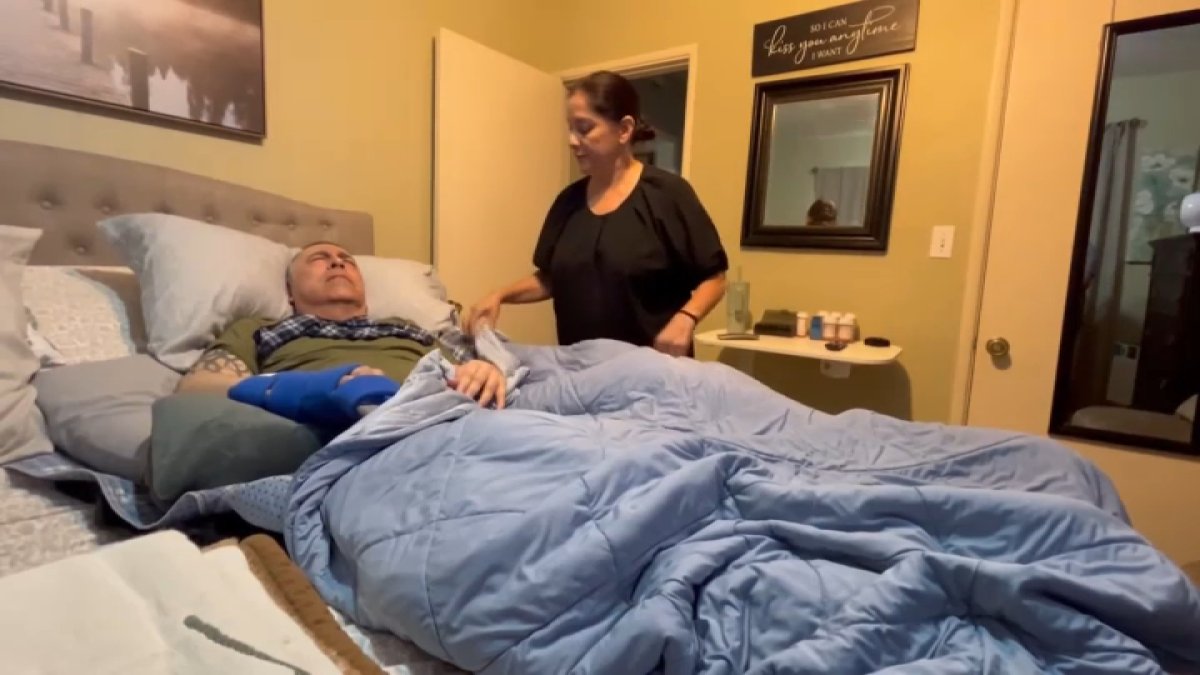
A Covina couple is reeling after a severe case of West Nile virus left a once-healthy man paralyzed.
As West Nile virus infections surge across Los Angeles County, Marty and Debra Guzman are warning the public of how severe the disease could become. Experts say severe cases such as Marty’s are rare, but the couple says they want to share their story in case others find themselves in similar conditions.
Debra said Marty became sick after an insect bit him in June 2022. What began with swelling and flu-like symptoms quickly took a devastating turn.
“As the weeks progressed, the months, by September 2022, he had his first seizure,” Debra said.
After months of testing and doctors’ visits, nearly a year later, Marty was diagnosed with West Nile virus.
The illness rendered Marty blind, paralyzed on his right side and bedridden. He now requires around-the-clock care. Debra left her job to care for her husband, with whom she once shared a very different life with.
“He was very healthy; at the gym,” Debra said. “He has Harleys. We were always out riding, out and about.”
Marty’s condition is extreme, but doctors say complications this severe are rare.
“About 80% of the cases are without noteworthy symptoms,” said Dr. Charles Bailey, Medical Director of Infection Prevention at Providence St. Joseph Hospital Orange County. “About 10% have this mild flu-like illness, fever, muscle aches, and then 1% or so start getting the neurologic symptoms that he manifested.”
With no cure for West Nile virus, Bailey said prevention is critical.
“The only way you can prevent it or limit the chance of getting it is to avoid things that bring about mosquito bites,” he said.
Mosquito control officials say the threat isn’t over. With recent rain and warmer temperatures ahead, even the smallest amount of water can become a breeding ground for the pests.
“A bottle cap will produce mosquitoes, so just make sure that we remove all the standing water from our backyards,” said Susanne Kluh, General Manager of the Greater Los Angeles County Vector Control District.”
Vector control officials said the Culex mosquito, which is the primary carrier of West Nile virus, is most active around dawn and dusk. Those who are concerned about mosquitoes near their homes can contact their local vector control district for help in identifying potential breeding sites.