

City crews dismantled the patio outside the Mediterranean restaurant Les Amis at 6:30 am on October 27. The owner, Jinan Montecristo, could no longer afford the space after Fullerton raised outdoor dining fees by 90%. The small business owner tried to negotiate a fair solution by meeting with councilmembers, city staff, and the mayor, but was met with broken promises, bureaucratic obstruction, and favoritism toward political allies. This is the story of how a small business lost its patio.
 In June 2022, the Fullerton City Council voted to “update outdoor dining fees to market rate.” For restaurants serving alcohol, that meant raising rates from $0.90 to $1.71 per square foot; a 90% increase. City staff determined those numbers internally and were granted discretion on when to implement them.
Two years later, in late 2024, Montecristo was informed that her prior agreement was void and replaced with a new one reflecting the higher rates. The change greatly increased her costs, making the patio, one of the city’s most vibrant community spaces, financially impossible to sustain. Her options were simple: sign or remove the patio. She signed to buy time.
Montecristo sought help from city leaders and was invited to meet with Mayor Fred Jung. She described his behavior as “condescending and rude,” with Jung repeatedly going off-topic about how people accuse him of being controlled by “a certain developer.” When she redirected the discussion, Jung said he couldn’t do anything about the fees due to an ongoing lawsuit involving Mickey’s Pub, but told her to make good-faith payments and circle back later.
Montecristo then met with City Manager Eric Levitt and Public Works Director Stephen Bise to explore a purchase or long-term lease for the patio space, which sits on city-owned property. Purchasing it would have given her stability, but staff said a sale wasn’t feasible. They suggested an easement, a right to use the space while the city retains ownership. Montecristo agreed, but the easement was denied by the City Council in closed session, without any public explanation.
That closed-session denial was unusual. The Brown Act allows private meetings only for narrow purposes, like real estate negotiations or pending litigation. Deciding a small-business easement behind closed doors deprived Montecristo of the opportunity to make her case publicly and left other business owners wondering whether political factors were at play.
In July, City Manager Levitt announced his resignation and eventual move to San Bernardino. Before leaving, he and the Interim City Manager Eddy Manfro met with Montecristo again and offered a 90-day stay; time for the Council to potentially agendize a discussion on patio fees or for her to bring her account into compliance. Montecristo paid $3,900 in back rent to demonstrate good faith.
She also began organizing a small business coalition to advocate against city policies that made operations harder. Mayor Jung took offense, telling her that any business owner with concerns should speak to him directly. Another owner did, and shortly afterward received a steep discount on their patio rate. That owner later told Montecristo the Council was unlikely to revisit the outdoor dining issue anytime soon.
 Ninety days passed with no Council discussion. Several meetings were cancelled for having “nothing of note” on the agenda. When the deadline arrived, City staff removed the patio before sunrise. The space now sits empty, awaiting conversion back into a wide, unused sidewalk.
Throughout the dispute, Tony Bushala’s political blog mocked Les Amis, calling its owners “squatters.” Bushala is a real estate investor and major political donor whose spending has helped elect a majority of the current Council. He also leases City-owned property for his Santa Fe Express Café, and pays $0 for his patio space.
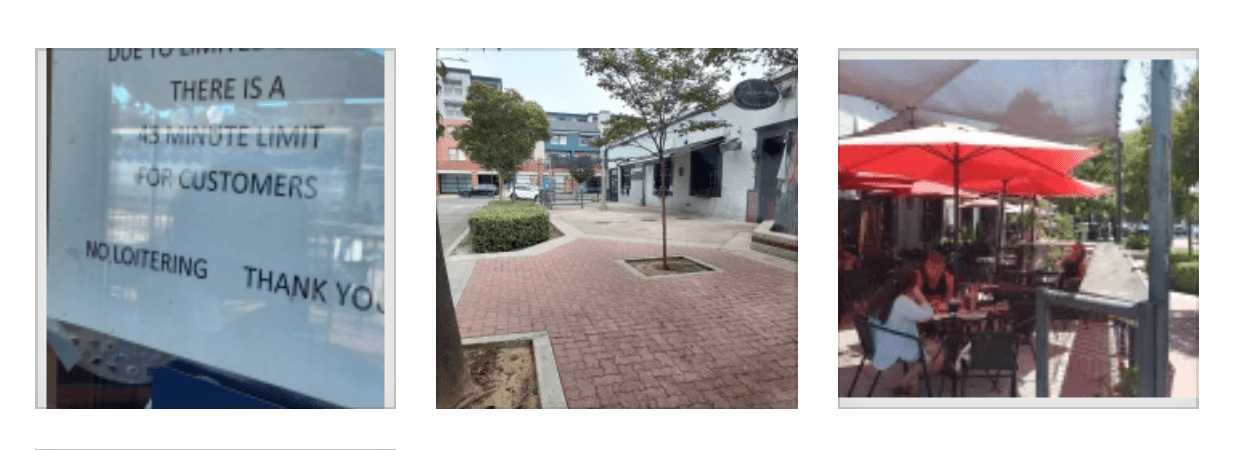
 When the disparity was brought up publicly, Mayor Jung and Councilmember Jamie Valencia defended Bushala’s free patio, claiming it’s open to nonpatrons. But the patio is fenced and displays a sign reading:
 “Due to limited seating, there is a 45-minute limit for customers. No loitering. Thank you.”
Montecristo said her own patio was equally open, welcoming anyone who wished to sit and enjoy the music so long as they were respectful.
Bushala’s personal comments only deepened the irony. According to Montecristo, he once told her, “You’re an idiot for paying them for that patio,” encouraging her to seek an abatement, only for his blog to attack her for not paying during the dispute.
Outdoor dining is rarely a profit center. It brings extra costs for staff, heaters, maintenance, and, in Les Amis’ case, live musicians. Restaurants maintain patios to beautify downtown, attract foot traffic, and create a sense of community. “Our patio is our thank you to the community,” Montecristo said.
Charging excessive fees doesn’t raise meaningful revenue; it only drives out small businesses and weakens the city’s character. What was once a lively corner filled with music and conversation is now a lifeless expanse of concrete.
Fullerton’s leaders call this “market rate.” But when City Hall sets the market, political access decides who gets to stay.
Like this:
Like Loading…
Related
Discover more from Fullerton Observer
Subscribe to get the latest posts sent to your email.