
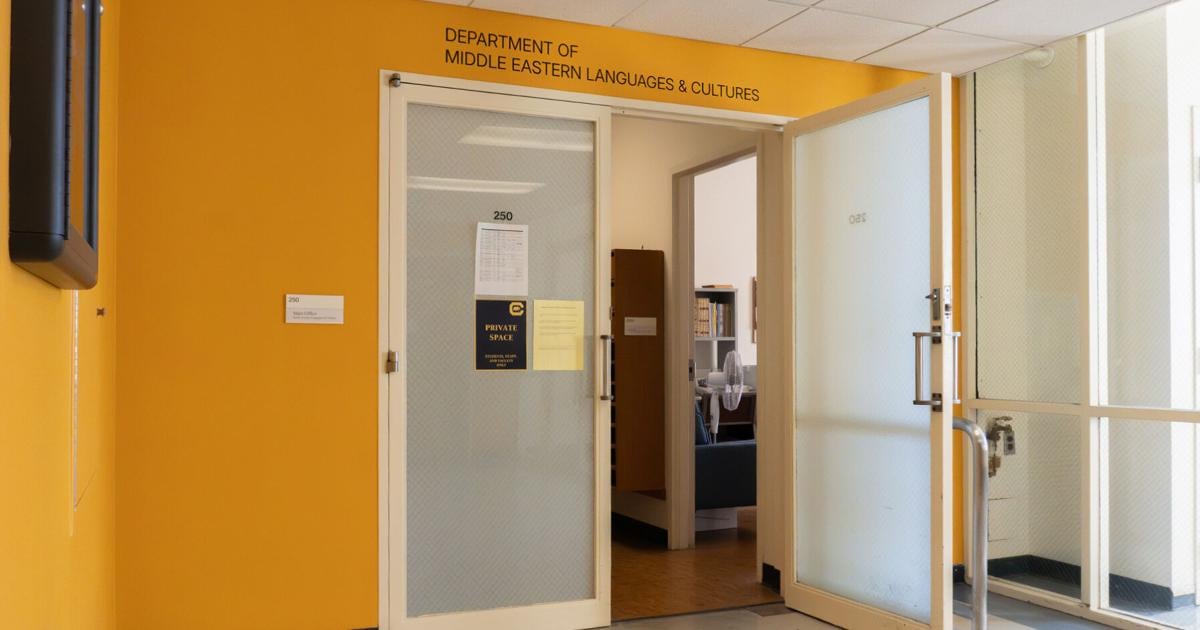
The UC Berkeley Middle Eastern languages and cultures department has temporarily paused admissions for the Arabic language and literature and Hebrew language and literature graduate programs. The decision comes following several faculty retirements and new hires.
Applications for the Hebrew language and literature program are set to reopen in the 2027-28 academic year, while the Arabic language and literature program does not have a specific reinstatement date for admissions. The MELC graduate program website states that the Arabic language and literature program will resume accepting new applicants “in the near future.”
Currently enrolled students have been continuing all classes and work with their advisers while the curriculum is reconstructed, according to campus spokesperson Sarah Fullerton.
There is currently only one student listed as a graduate student of Arabic language and literature on the MELC graduate students page, and there are no graduate students listed for Hebrew language and literature. Faculty graduate adviser Adam Benkato said the remaining students in these programs finished their degrees this year.
According to Yonatan Binyam, an assistant professor of ancient Mediterranean and Ethiopic studies, Benkato “spearheaded the revision of the Graduate Handbook.”
The department is joined by three new faculty: assistant professor Rama Alhabian, specializing in premodern Arabic; assistant professor Joseph Cross, specializing in the Hebrew Bible and early texts; and Rafael Neis, professor of Talmudic culture.
“There isn’t a target year. (The Arabic language and literature program) will reopen when the graduate curriculum is redeveloped; the relevant faculty have just joined the Department,” Benkato said in an email.
The Hebrew language and literature program is set to begin admissions next year because the relevant faculty members have joined and are ready to admit new students, according to Benkato.
The MELC department will continue to look for new faculty members broadly, a process that Fullerton described as a “huge time commitment” for current faculty. The department is currently accepting applications for an assistant professor of cuneiform cultures through Oct. 19.
“Part of their task as new members of the department is to rebuild the Hebrew and Arabic language and literature graduate programs during their first year,” Binyam said in an email.
In previous years, the MELC department has been in flux. In 2024, the department’s language lecturers underwent a series of layoffs.