
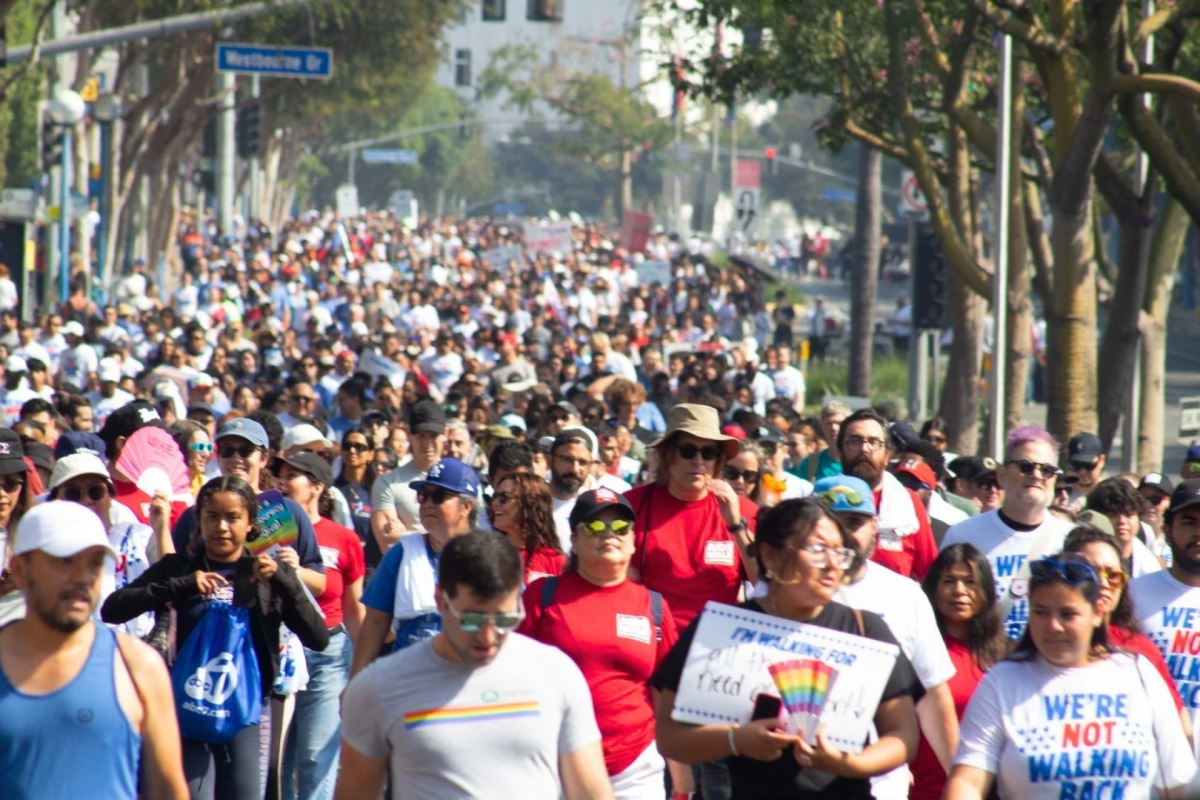
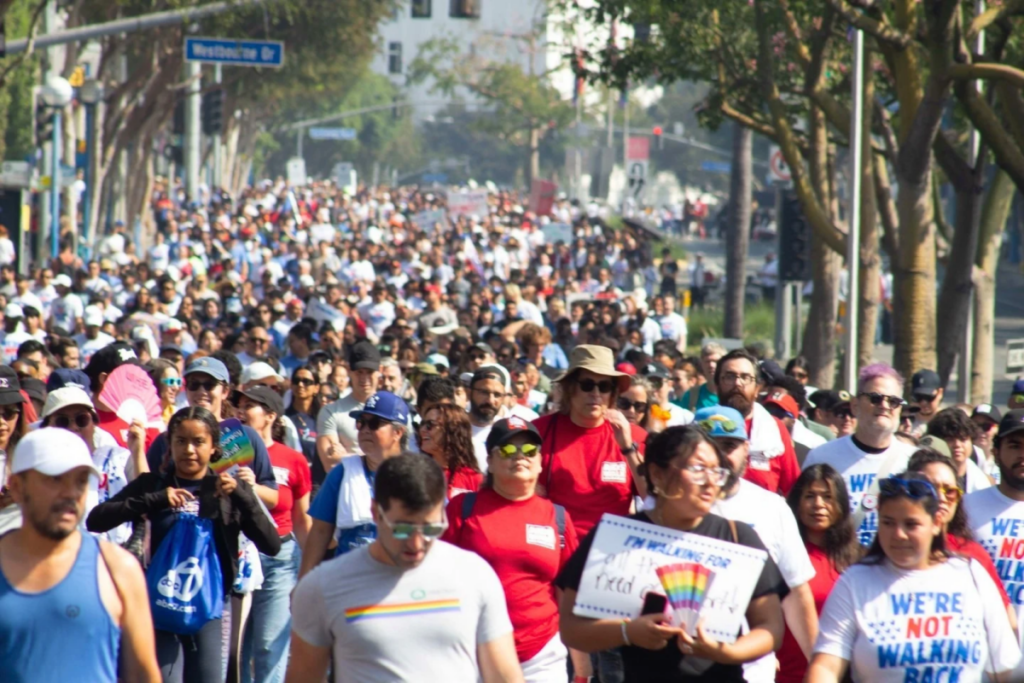
Courtesy of AIDS Walk Los Angeles.
Finding community and standing up for a cause have long been part of Los Angeles’ identity. From LGBTQ+ rights marches to neighborhood rallies, the city has a history of uniting people to fight for a better future.
This weekend, that spirit returns to WeHo as AIDS Walk Los Angeles takes over local streets, drawing participants, advocates, and supporters to raise awareness and funds for a cause that continues to affect communities across the country.
AIDS Walk Los Angeles route and street closures
AIDS Walk Los Angeles returns this Sunday, October 18, 2026, starting and finishing at West Hollywood Park, located at 647 N. San Vicente Boulevard. The walk follows an approximately two-mile loop that takes around 45 minutes to complete.
The park will also host community booths, food trucks, and music starting at 9 a.m., followed by the opening ceremony at 10:30 a.m.
The walk will bring several street closures and traffic restrictions throughout the day. According to the City of West Hollywood’s official notice, drivers should plan for the following closures and restrictions:
🚧 San Vicente Boulevard: Closed between Santa Monica Boulevard and Melrose Avenue from 5 a.m. to 5 p.m.
🚧 Santa Monica Boulevard: Closed between Doheny Drive and La Cienega Boulevard from 7 a.m. to 3 p.m.
⚠️ Doheny Drive: Lane closures and traffic diversions from 7 a.m. to 3 p.m.
⚠️ La Cienega Boulevard: A southbound lane closure near Santa Monica Boulevard from 7 a.m. to 3 p.m.
🚗 Melrose Avenue: Limited local access and restrictions near the intersection with Doheny Drive from 7 a.m. to 3 p.m.
Drivers should plan alternate routes and allow extra travel time, especially during the morning. For real-time traffic updates, check Caltrans QuickMap before heading out.
About AIDS Walk Los Angeles
Now in its 42nd edition, AIDS Walk Los Angeles is an annual fundraising event supporting HIV/AIDS prevention, treatment, and community services. Organized by APLA Health, the walk raises money for programs that provide essential resources, including healthcare, housing, and food assistance.
The event first took place in 1985, during the early years of the AIDS epidemic, when community organizing and fundraising were vital to supporting people living with HIV. Over the decades, it has grown into a major local tradition, with attendance at past editions reaching 20,000 to 30,000 participants, reflecting the scale of community support behind the cause.
If you’d like to be part of this year’s event, you can register by clicking here.