
“Absurd.”
“Fantasy.”
“Inflated.”
When reacting to Pacific Gas & Electric’s price tag for its San Francisco grid — a whopping $20 billion — city officials pulled no punches Thursday.
“It’s a ridiculous number,” said Supervisor Myrna Melgar. “This is like selling your house, and you want to get the most.”
To put it into perspective: The city’s annual budget is $16.9 billion. The Warriors are worth (opens in new tab) $14.5 billion. The GDP of Afghanistan is about (opens in new tab) $17 billion.
So why did PG&E throw out the big figure — nearly six times the price the city put on the utility’s assets?
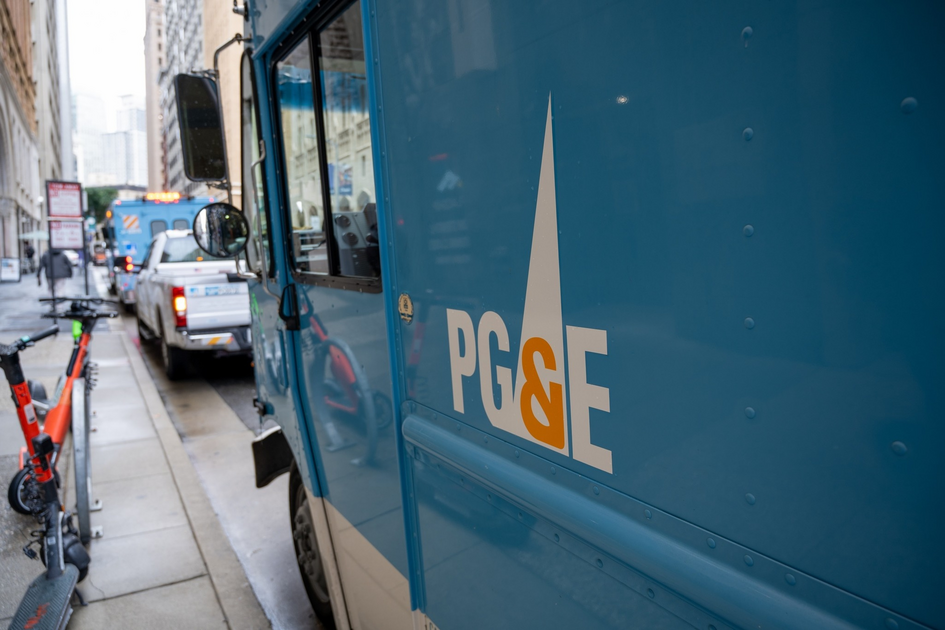
 PG&E CEO Patti Poppe offered up the $20 billion figure Wednesday. | Source: Photo by Ilya S. Savenok/Getty Images for GE
Supervisor Stephen Sherrill summed it up as a negotiating strategy. “I’m not surprised to hear PG&E anchor their pricing at an incredibly high end,” he said. “These are opening salvos.”
Other city officials shared similar sentiments, noting that the math doesn’t add up. “PG&E’s entire electric system is worth about $60 billion, and San Francisco accounts for only a tiny part of that — representing about 5% of PG&E’s electricity system demand,” said Nancy Crowley, a spokesperson for the city’s Public Utilities Commission. “We’ve gone to the state utility regulator to get an impartial assessment of what the assets San Francisco wants to buy are really worth.” The SFPUC would be in charge of the public power system if the city were to take over the grid.
City Attorney David Chiu described PG&E’s price as “quite bold.” He added that San Francisco has “had 40 large-scale outages in the last year,” referring to a figure the city cited in a letter to PG&E this month. “PG&E has not provided any information to back up their absurdly inflated number, but we look forward to learning more through the CPUC valuation process.”
There’s one person who remains tight-lipped about it all: Mayor Daniel Lurie.
In an interview with The Standard on Thursday morning at Salesforce Park, Lurie said “all options are on the table” on the issue of public power. When pressed on what would be the deciding factors in his decision-making, he said, “I’m not happy with the performance of PG&E right now, and I’m going to leave it at that, because it still needs to go through a lot of process before we can make a determination.”
The answer is in line with The Standard’s previous reporting on Lurie’s position on public power: He’s skeptical about the process but also angry at PG&E, especially since the December blackout that left wide swaths of the city without power.
A possible takeover of PG&E’s grid has been discussed for decades. December’s blackout prompted increased calls for a divorce between the city and the utility, and there’s widespread support among the Board of Supervisors to take such action. The board unanimously rejected the utility’s bureaucratic maneuver to delay the takeover through a California Environmental Quality Act appeal.
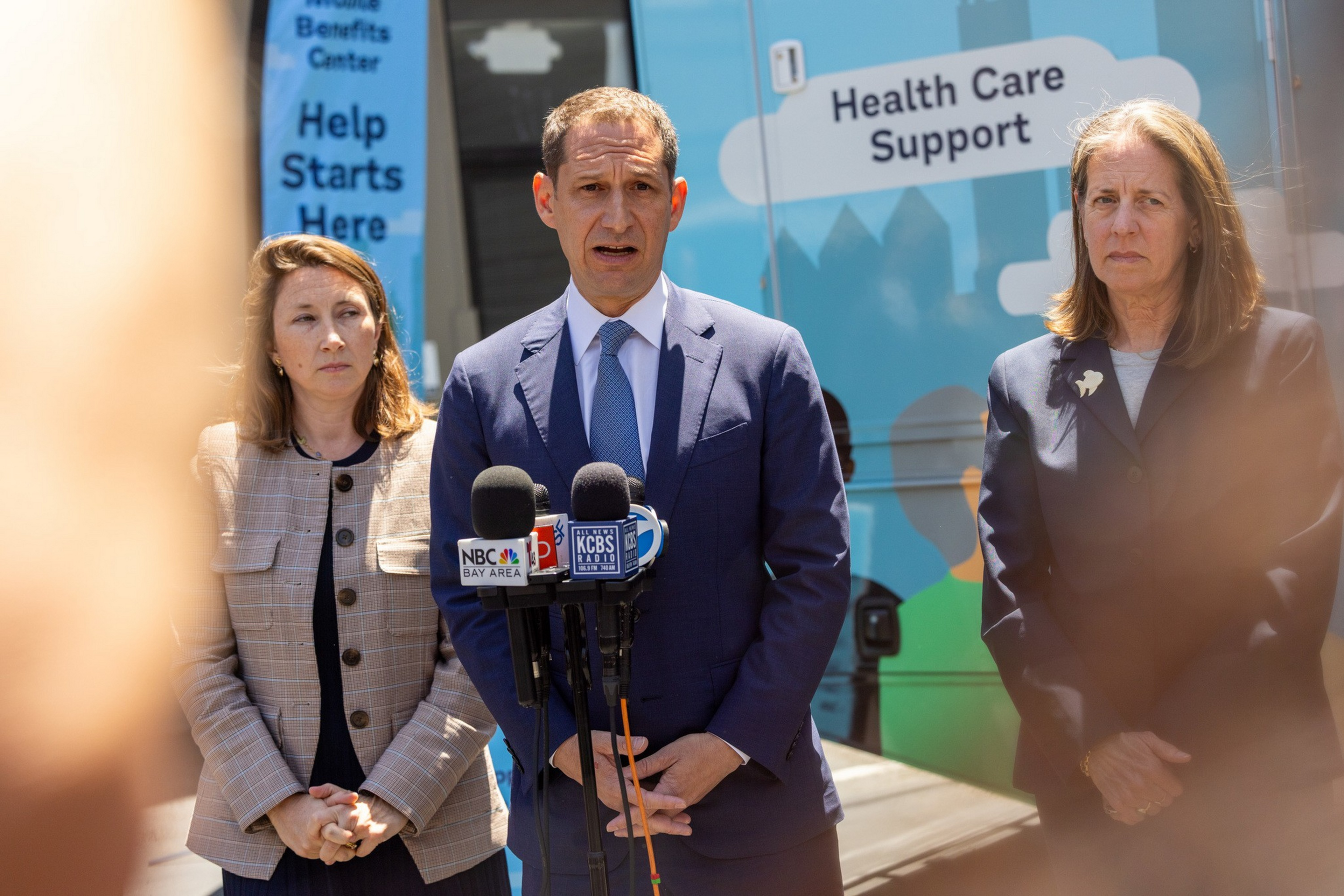 Mayor Daniel Lurie has stayed out of the fray on the PG&E takeover issue. | Source: Morgan Ellis/The Standard
The city has argued that a municipal-owned utility, as opposed to PG&E’s investor-owned model, would be cheaper for ratepayers. But PG&E has opposed the idea for years, claiming that the city is in no position to take over its infrastructure.
The $20 billion figure, announced Wednesday evening by PG&E CEO Patti Poppe, is part of an ongoing evaluation proceeding at the California Public Utilities Commission to determine the value of San Francisco’s grid. The proceeding, started under Mayor London Breed’s administration, will culminate in state regulators placing a price tag on the city’s electrical system. In April, the city revealed its own number: $3.4 billion, stating that this was “based on new information, including additional asset details identified by PG&E and updated cost estimates.”
Jennifer Robison, a spokesperson for PG&E, said Thursday that the two figures — the city’s and the utility’s — are “not an apples-to-apples comparison,” explaining that San Francisco’s estimate does not include the totality of expenses associated with a public power takeover. Robison said the city’s missing expenditures include severance, which is the price of shifting costs to remaining PG&E customers for mandated statewide programs like wildfire risk reduction. (Robison did not comment on the city’s claim that the total value of PG&E’s system is $60 billion.)
“My coworkers and I love serving San Francisco. San Francisco’s expectations are high, and we intend to measure up,” Poppe said in a statement Wednesday. “We have 600 people who serve you every day, and if San Francisco were to take over those assets, those people would leave. I imagine a day when a whole convoy of blue-and-white trucks are driving across the Bay Bridge heading to Oakland, never to come back. I don’t think that’s in San Francisco’s best interest.”
Before San Francisco makes the final plunge for public power, there are hurdles to overcome. The first step is the back-and-forth between the city and PG&E at the CPUC.
The utility will provide more details on its rationale for the $20 billion figure in its response to the CPUC on Tuesday. According to the SFPUC, the city has until Feb. 22 to respond to that, and PG&E can respond again by March 24. Evidentiary hearings could take place in the spring or summer.
 The SoMa substation that sparked the December blackout. | Source: Jessica Christian/SF Chronicle/AP
A lawsuit could stretch out the process for years.
The CPUC did not respond to a request for comment.
Some don’t feel the city will get a fair shake during the state proceedings.
Loretta Lynch, former president of the CPUC and a supporter of public power, said she is concerned that state regulators will be overly deferential to the utility in the valuation proceedings, a criticism (opens in new tab) made by other officials over the years.
She compared the situation to Volodymyr Zelensky negotiating with Vladimir Putin — San Francisco being the president of Ukraine, and PG&E being the president of Russia.
“I’m worried the CPUC is Donald Trump,” Lynch said, referring to criticism that the president is too obedient to Putin.
Lynch, who has observed the public power debate for decades, said the $20 billion figure puts the takeover issue “at the end of the beginning.”
“This will be one of the defining issues for the future of our city,” she said. “It will define who we are as San Francisco.”